51° and Overcast
Image



ST. PAUL, MN (October 8, 2026).
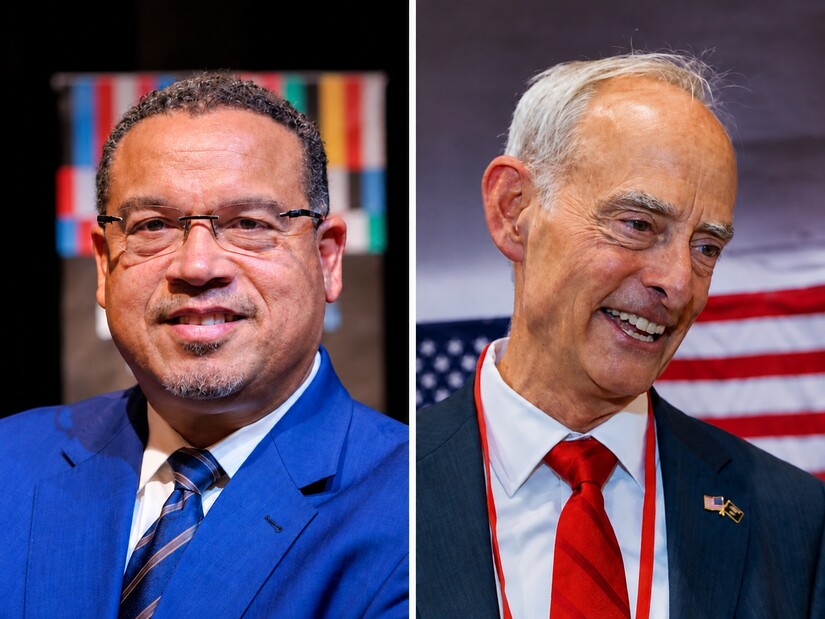
With Minnesota's November 3 general election approaching, Attorney General Keith Ellison and Republican challenger Ron Schutz have presented voters with sharply competing visions of how the state's chief legal officer should confront government fraud, protect consumers, challenge federal authority and exercise the considerable legal responsibilities entrusted to the office.
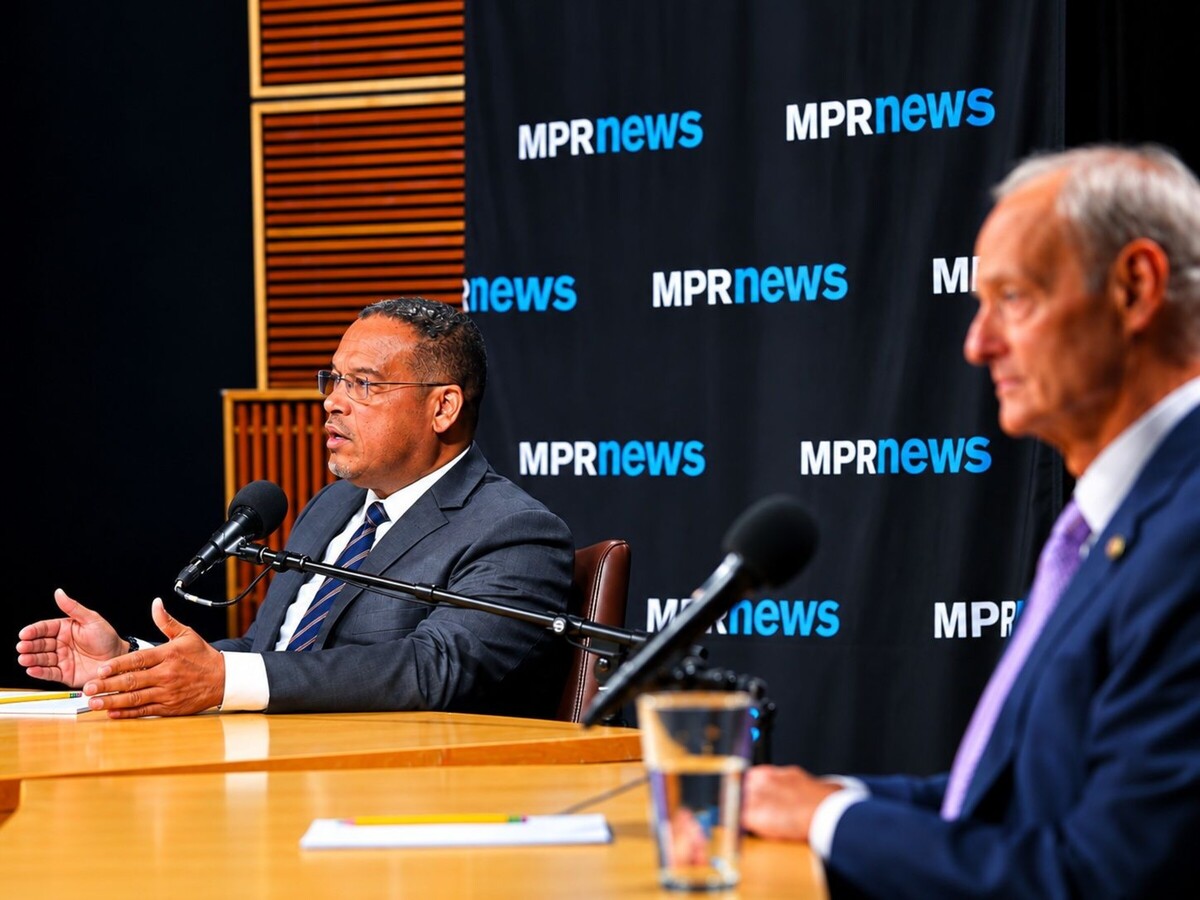
Their first head-to-head debate, held Friday, October 2, at Minnesota Public Radio's headquarters in St. Paul, exposed disagreements that extend beyond the familiar divisions between Democrats and Republicans. Moderated by MPR News politics editor Brian Bakst during a special edition of Politics Friday, the hour-long discussion examined the legal and ethical responsibilities of an office that has become increasingly central to Minnesota's response to major public controversies.
Ellison, a DFL incumbent seeking a third term, defended his record of prosecuting Medicaid fraud, pursuing consumer protection cases and challenging actions by President Donald Trump's administration. Schutz, a Republican trial attorney and Army veteran with longstanding ties to Minnesota Republican politics, argued that the attorney general's office needs a stronger emphasis on criminal accountability, independent legal judgment and litigation directly connected to Minnesota's interests.
The debate comes during a closely contested statewide race. A KSTP poll reported before the event placed Schutz at 45 percent, Ellison at 43 percent and undecided voters at 12 percent. The figures indicate a competitive election, although a two-point difference cannot establish a clear leader without considering the poll's margin of error.
Republicans have not won a Minnesota attorney general election since 1966, making Schutz's candidacy a potentially consequential challenge to decades of DFL control of the office. Ellison, however, has already demonstrated an ability to win statewide elections in competitive political environments.
Fraud Prosecutions and the Question of Accountability
The candidates' sharpest disagreement concerned Minnesota's continuing problems with fraud involving publicly funded programs, particularly Medicaid.
The attorney general's office oversees the state's Medicaid Fraud Control Unit, a division of approximately 50 employees responsible for investigating and prosecuting fraud involving Medicaid funds as well as certain cases involving abuse or neglect of vulnerable people.
Ellison pointed to more than 350 Medicaid fraud convictions secured by his office since 2019 as evidence that his administration has taken enforcement seriously. He also emphasized the work of career investigators and prosecutors rather than political appointees.
Schutz challenged whether those convictions have produced consequences severe enough to deter future fraud. Citing a KSTP investigation examining the outcomes of Minnesota fraud cases, he argued that defendants frequently avoid prison sentences or emerge from proceedings without felony convictions remaining on their records.
His criticism focused on prosecutorial decisions, plea agreements and the overall message sent to individuals considering whether to exploit public programs.
Ellison responded by distinguishing the responsibilities of prosecutors from those of judges. Prosecutors bring charges, negotiate cases and seek convictions, while courts determine sentences within the applicable legal framework.
The distinction is legally important, but it does not fully settle the broader policy dispute. Prosecutorial charging decisions, plea negotiations and sentencing recommendations can influence outcomes even though judges retain authority over final sentences.
For Minnesota residents, the underlying issue is whether the state has established a system capable of identifying fraud early, recovering public money, prosecuting serious offenses and preventing similar schemes from recurring.
Fraud involving programs intended to serve low-income families, people with disabilities and other vulnerable residents carries consequences beyond financial losses. It can weaken public confidence in essential services and place additional pressure on agencies responsible for delivering legitimate assistance.
Schutz argued that the state needs a more aggressive prosecutorial approach. Ellison maintained that his office has produced measurable enforcement results and accused Republicans of turning fraud into a political weapon.
Neither position eliminates the need for continued scrutiny of how cases are investigated, how defendants are charged, how much money is recovered and whether existing penalties provide an effective deterrent.
The Killings of Renee Good and Alex Pretti
The debate also addressed the deaths of Renee Good and Alex Pretti, two Minnesotans killed by federal immigration enforcement agents during January's Operation Metro Surge.
The shootings generated widespread public concern and raised difficult questions about federal law enforcement accountability, access to evidence and the ability of state authorities to investigate incidents involving federal officers.
Both candidates agreed that the shootings warranted investigation and that potential criminal charges should depend on the evidence.
Ellison defended his administration's response, including litigation intended to preserve evidence and protect Minnesota's ability to investigate the incidents.
His office obtained evidence from federal authorities following a legal dispute, and state officials have been considering whether criminal charges are warranted.
Schutz said he was outraged by Pretti's killing and had publicly called for a joint federal and state investigation. He argued that the inquiry should proceed wherever the evidence leads, regardless of the political consequences.
The agreement between the candidates was notable because they otherwise differ substantially over the Trump administration and the appropriate relationship between state and federal authorities.
Ellison questioned whether a Republican attorney general could be sufficiently independent when confronting a Republican president. He criticized Schutz for what he regarded as an inadequate public response to federal actions affecting Minnesota.
Schutz rejected the implication that party affiliation would prevent him from pursuing accountability. His position was that a state investigation should be conducted fairly and that any prosecution must rest on evidence rather than political considerations.
The attorney general's role in such cases is not unlimited. Minnesota county attorneys ordinarily exercise significant criminal prosecutorial authority, and the attorney general may assist local prosecutors or receive authority to handle particular cases under applicable state law.
That division of responsibility matters because any decision to prosecute federal officers would involve complex questions of jurisdiction, constitutional authority, evidence and potential federal defenses.
The debate therefore presented voters with a question extending beyond the two shootings: whether the attorney general can exercise independent judgment when the legal interests of Minnesota conflict with the actions of the federal government.
Seventy-Five Lawsuits Against the Trump Administration
Ellison's extensive litigation against the Trump administration became another major point of disagreement.
According to a spokesperson for his office, Minnesota has participated in 75 lawsuits against the administration during Trump's second term.
Ellison defended those cases as necessary to protect Minnesota residents, state institutions and the constitutional balance between federal and state authority.
His position was that an attorney general must be willing to challenge federal policies when they threaten the state's legal rights or the interests of its residents, regardless of the political consequences.
Schutz questioned the scale and direction of the litigation. He argued that many cases are filed outside Minnesota, often with other Democratic-led states, and that Minnesota is frequently not the lead plaintiff.
He characterized the approach as too closely aligned with the priorities of attorneys general in other states, particularly California.
The disagreement concerns both legal strategy and political accountability. Multistate litigation can allow states to combine resources and challenge federal actions affecting residents across several jurisdictions. At the same time, participation in such cases requires decisions about which disputes merit Minnesota's involvement and how public resources should be allocated.
Schutz said he would not hesitate to sue the Trump administration or a future federal administration if its actions genuinely harmed Minnesotans. His argument was that the attorney general should make those decisions based on Minnesota-specific legal interests rather than national partisan alliances.
Ellison maintained that coordinated legal action is sometimes necessary to defend the state effectively, particularly when federal policies have consequences extending across state boundaries.
For voters, the disagreement raises a practical question about how aggressively Minnesota's attorney general should participate in national constitutional and regulatory disputes and what standards should determine when litigation is justified.
Schutz's Stock Portfolio Raises Conflict-of-Interest Questions
One of the debate's most consequential exchanges concerned Schutz's personal investments and the possibility that his financial interests could intersect with the state's legal responsibilities.
A September 29 investigation by the Minnesota Reformer found that Schutz had disclosed individual stock holdings in 174 companies, each valued at more than $10,000, representing at least $1.74 million in investments.
The portfolio includes shares in corporations facing litigation brought by Minnesota, including Amazon, Uber and Exxon Mobil.
The significance of those holdings is tied directly to the powers of the attorney general. The office brings lawsuits against corporations accused of violating consumer protection, competition, environmental and other laws. Those cases can affect corporate finances, business practices and shareholder interests.
If elected, Schutz could be responsible for overseeing litigation involving companies in which he has a personal financial stake.
Ellison argued that residents should not have to question whether an attorney general's investment portfolio influences decisions about investigating or suing a corporation.
Schutz responded that his investments are professionally managed by RBC Wealth Management and that he does not personally select individual stocks.
He also made a significant commitment during the debate: if elected, he would divest from companies involved in litigation with Minnesota and place his remaining individual stock holdings into a structure intended to prevent him from exercising direct control over investment decisions.
The pledge represented a development from the earlier financial disclosure controversy.
However, ethics specialists interviewed by the Minnesota Reformer have questioned whether a blind trust alone would adequately eliminate conflicts involving investments already known to the officeholder. An individual may remain aware of the companies originally placed in a trust, even without controlling subsequent investment decisions.
Minnesota law also differs from federal conflict-of-interest rules, creating additional questions about what safeguards would be required for a state attorney general.
The issue is not whether a candidate is entitled to accumulate personal wealth or invest in publicly traded companies. It is whether the person responsible for enforcing Minnesota's laws can make decisions affecting those companies without actual or perceived conflicts of interest.
Schutz's promise to divest from corporations involved in state litigation provides voters with a specific commitment that could be evaluated if he wins the election.
A Dispute Over the State Board of Pardons
The candidates also disagreed over the attorney general's role in granting pardons, focusing on the controversial pardon of Tou Vang.
The Minnesota Board of Pardons consists of the governor, attorney general and chief justice of the Minnesota Supreme Court. Its decisions can carry lasting consequences for people seeking relief from criminal convictions.
Ellison supported Vang's pardon in June. Vang had been convicted of a child sex offense, and his case subsequently became the subject of additional controversy when federal authorities deported him to Laos in July.
Ellison defended his decision by emphasizing that the victim had submitted a letter supporting the pardon. He argued that victims' perspectives deserve serious consideration in the criminal justice system and that their wishes should not automatically be disregarded when clemency decisions are made.
Schutz strongly disagreed. He maintained that Vang had been properly convicted and argued that a pardon should not have been granted in such circumstances.
Their exchange exposed competing views about the purpose of clemency.
Ellison's argument placed weight on the circumstances of an individual case, the passage of time and the expressed wishes of the victim. Schutz's position emphasized the seriousness of the original offense and the importance of preserving accountability for a lawful conviction.
The dispute also illustrates why pardon decisions can be among the most difficult responsibilities of public officials. They require consideration of the original offense, the applicant's subsequent conduct, the views of victims, the interests of public safety and the broader meaning of forgiveness within the justice system.
Neither candidate's position changes the original conviction or eliminates the seriousness of the underlying offense.
The Attorney General's Office and the Next Four Years
The debate demonstrated how the Minnesota attorney general's office has become a focal point for several of the state's most consequential political and legal controversies.
The office is responsible for far more than criminal prosecutions. Its work includes consumer protection, civil litigation, representation of state agencies, Medicaid fraud enforcement and participation in proceedings affecting the rights and responsibilities of Minnesota residents.
The attorney general also serves on the State Board of Investment and the Board of Pardons, placing the officeholder in decisions involving public finances and the exercise of executive clemency.
Ellison has made his record of litigation, consumer protection and resistance to federal actions central to his campaign. He argues that Minnesota needs an attorney general prepared to challenge powerful corporations and government officials when their conduct threatens residents.
Schutz has built his campaign around the argument that the office needs a different legal and managerial approach, particularly concerning fraud prosecutions, the allocation of litigation resources and the independence of the attorney general from partisan political interests.
Their debate also exposed questions that remain unanswered.
Voters still have reason to ask how Schutz would resolve every potential financial conflict associated with his investment portfolio, how Ellison would strengthen fraud prevention beyond convictions already secured and how either candidate would handle future confrontations between Minnesota authorities and federal law enforcement.
Those questions are not peripheral campaign issues. They concern the legal powers that the winner will exercise on behalf of millions of Minnesotans.
A Competitive Race With Statewide Consequences
The October 2 debate came during a period of unusually intense political attention to the attorney general's office.
Ellison is seeking another four-year term after two elections in which his margins were relatively narrow. Schutz is attempting to become the first Republican elected Minnesota attorney general in six decades.
The competitive polling reflects the political significance of the contest, but the outcome remains uncertain with undecided voters still weighing their choices.
The debate offered those voters an opportunity to compare not only the candidates' political arguments but also their understanding of the legal office they seek to occupy.
Their differences over fraud prosecutions, federal immigration enforcement, corporate accountability and pardons demonstrate that the election could influence how Minnesota approaches several major areas of law and public policy.
The next attorney general will inherit ongoing investigations, litigation against major corporations, disputes involving federal authority and public demands for stronger accountability in government programs.
Whether Ellison retains the office or Schutz succeeds in unseating him, those responsibilities will remain.
For Minnesota voters, the central question is which candidate has demonstrated the judgment, independence, legal competence and commitment to public accountability necessary to exercise those powers.
The November 3 election will determine who receives that responsibility for the next four years.

Local stories matter. Subscribe free to MinneapoliMedia and receive independent news, community reporting and important updates from Minneapolis, the North Metro and communities across Minnesota.
SUBSCRIBE FREE: https://minneapolimedia.town.news/subscribe
MinneapoliMedia | Community. Culture. Civic Life



Overcast, with a high of 64 and low of 48 degrees. Overcast during the morning,