40° and Light rain
Image
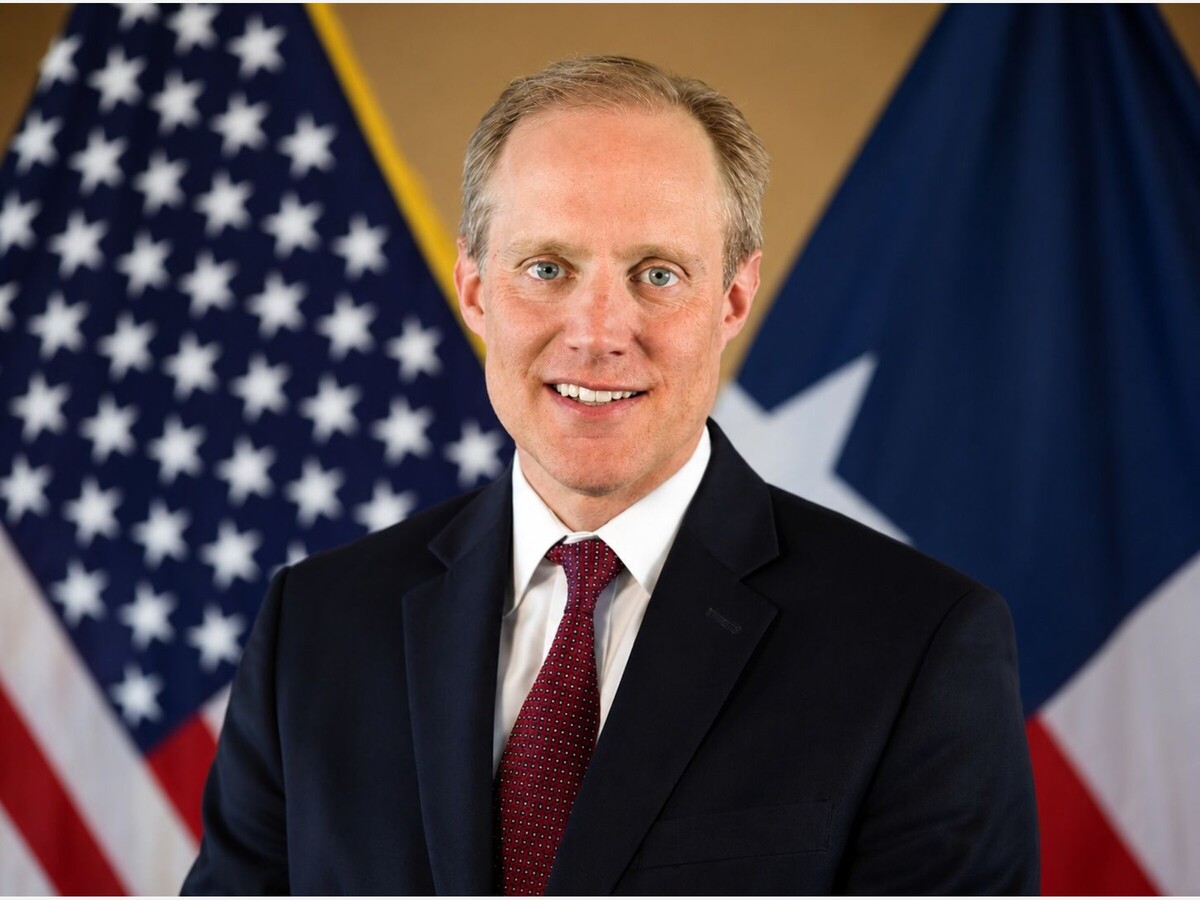



ST. PAUL, MN (October 7, 2026).
Less than a month remains before the November 3 general election, but for Minnesota Secretary of State Steve Simon, his staff and election officials working across the state's 87 counties, the work of preparing for this election began long before most Minnesotans started thinking about their ballots.
During the past year, Simon and his office have traveled across Minnesota, met with local election administrators, convened election and information technology officials, participated in public demonstrations of voting equipment and continued explaining a system that has come under extraordinary scrutiny. County auditors, municipal and township clerks, election judges, information technology workers and other public employees have been doing the less visible work required to prepare polling places, maintain voter records, secure equipment, train workers and administer absentee and early voting.
Much of this work receives little attention because election administration tends to become news when something goes wrong. When the system works, a voter registers, receives the correct ballot, marks it privately, feeds it into a machine or returns it through the absentee process, and eventually sees the results reported. The complexity behind those ordinary actions is largely invisible.
Minnesota should not wait for something to go wrong before recognizing the people responsible for making the process work.
Simon completed his ninth tour of all 87 Minnesota counties in January 2026. Those tours have included meetings with election administrators, local officials, students, business owners and Minnesotans who use other services administered by the secretary of state's office. The visits have become a recurring part of Simon's tenure rather than an activity reserved for election years.
The significance of those visits becomes clearer when one considers how Minnesota elections are actually administered. The secretary of state does not personally run every polling place from St. Paul. Minnesota's system depends heavily on local administration. Counties, cities and townships carry substantial responsibility for voter registration, election workers, polling places, ballots and other parts of the process, while the secretary of state's office operates statewide systems, provides guidance and performs responsibilities established under state and federal law.
That means preparation must reach far beyond one state office.
In April 2025, election and information technology officials from 42 counties gathered at Camp Ripley for two days of security training. The program included exercises and workshops involving Minnesota IT Services, the Minnesota National Guard, Homeland Security and Emergency Management, the Minnesota Fusion Center and other state and federal partners. The purpose was to prepare officials for threats that could affect election administration, including physical and cybersecurity problems.
Preparation expanded this spring. From April 21 through April 24, more than 320 local and state election officials and election partners attended Minnesota's County Election Administration Conference at Breezy Point. Every Minnesota county was represented. Sessions covered election procedures, equipment, safety, security and other administrative responsibilities ahead of the 2026 elections.
These are not glamorous responsibilities, and they should not be mistaken for proof that no problem can occur. They show something more practical. Minnesota is preparing for its elections through a system that requires state and local officials to work together well before voters arrive at polling places.
An Election System Should Be Willing to Show Its Work
Simon has repeatedly told Minnesotans that election systems should be open to questions. That principle becomes meaningful only when the public has ways to examine what election officials are doing.
Minnesota law requires voting equipment to undergo public accuracy testing before elections. Election officials prepare ballots containing predetermined votes, run those ballots through the equipment and compare the machine totals with the expected results. At least two election judges from different major political parties must witness the testing, and members of the public may observe.
Simon attended one of those tests in Washington County in July. Speaking with residents who came to observe, he encouraged people to question government and then examine the answers they receive.
That is the correct approach to public confidence in elections. Minnesotans should not be asked to trust voting equipment simply because an elected official says it works. They should be able to see the safeguards, understand how the equipment is tested and know what happens when results are checked afterward.
Minnesota's post-election review process provides another layer of accountability. After state general elections, randomly selected precincts conduct public hand counts in specified races and compare those counts with the totals recorded by optical scanners.
Paper ballots matter because they leave a physical record that can be examined independently of the machines that originally counted them.
These procedures do not eliminate every possible human error, nor do they establish that every decision made by an election administrator is correct. What they provide is something essential to public confidence: the ability to test important parts of the system rather than relying entirely on assurances from the people operating it.
Minnesota's Election Performance Has Been Independently Measured
There is independent evidence with which to evaluate Minnesota's election administration.
In April 2026, the Massachusetts Institute of Technology Election Data and Science Lab released its Elections Performance Index covering the 2024 election. Minnesota ranked first among the states.
The index examines election administration using measures involving registration, turnout, mail ballots, in-person voting and other aspects of the election process. Minnesota recorded a registration rate of 90.66 percent, voter turnout of 76.35 percent and an average voting wait of 6.7 minutes.
Simon is entitled to point to that result, but he is not entitled to claim it as his accomplishment alone. Minnesota elections depend on thousands of people working at the county, municipal and township levels. Many of them have no connection to Simon beyond their shared responsibility for administering the same statewide election system.
The first-place ranking nevertheless belongs in any serious evaluation of the institution he leads.
So does another independent examination that produced a more complicated picture.
The Minnesota Office of the Legislative Auditor released an evaluation of voter registration in July. Auditors found that the secretary of state's office had generally established appropriate procedures for counties to process voter registrations, but they also identified problems in how some registrations were handled.
According to the audit, counties correctly followed identity-verification procedures for 99.9 percent of the new voter-registration applications examined and residency-verification procedures for 99 percent. Counties processed 96 percent of the new applications in the sample within the time required by law. The report also found that registrations arriving within 20 days of an election were frequently not processed within required timelines and that counties sometimes made inaccurate status updates.
Those findings deserve attention precisely because Minnesota takes pride in its election administration.
A system does not become trustworthy by insisting that it has no weaknesses. Public confidence is better served when independent auditors can examine records, identify problems and recommend changes.
The Legislative Auditor also explained an important feature of Minnesota's structure. Simon's office maintains the statewide voter-registration system and provides procedures and guidance, while county officials perform much of the registration processing. The secretary of state's office does not possess unlimited authority to enforce every county's compliance with those procedures.
That division of responsibility does not excuse mistakes. It helps Minnesotans understand where responsibility resides and what changes may require county action, state administrative changes or legislation.
Questions About Eligibility Cannot Be Dismissed
The most serious challenges to Minnesota's voter-registration system concern eligibility.
Federal prosecutors have brought cases accusing noncitizens of illegally voting in Minnesota elections, including indictments announced in late September.
Those cases cannot be brushed aside merely because the numbers are small.
Voting by noncitizens in federal and Minnesota elections is illegal. When evidence indicates that an ineligible person voted, authorities should investigate. When evidence supports criminal charges, those cases should proceed through the judicial system.
Republican members of Minnesota's congressional delegation have also questioned whether Minnesota's eligibility safeguards are sufficient, particularly where automatic voter registration intersects with the state's Driver's License for All law. Rep. Brad Finstad has sought information from Simon about how Minnesota prevents noncitizens from entering the voter-registration system. Members of Congress also questioned Simon about eligibility verification and Minnesota's registration rules during his April appearance before the House Administration Committee.
Those questions should be answered with evidence.
Simon has said Minnesota uses multiple checks intended to prevent ineligible people from registering and voting. His office has also cooperated with lawful federal subpoenas in investigations involving suspected illegal voting.
Following the recent federal indictments, Simon emphasized the scale involved. If all ten defendants were ultimately convicted, he said, the cases would represent ten people during elections in which approximately 8.5 million ballots were cast.
Both facts matter.
Ten potentially illegal votes should not become acceptable because millions of lawful ballots were cast. At the same time, ten cases should not automatically be transformed into evidence that millions of lawful ballots are unreliable.
Minnesota has an obligation to determine how ineligible voters entered the system, whether existing safeguards operated as intended, whether administrative failures contributed and what changes could reasonably prevent similar cases.
That is a more useful response than either denying a problem or exaggerating one.
Minnesota Refused to Hand Over Its Voters' Private Information
The most significant confrontation involving Simon during the past year concerned a different aspect of election administration: the government's responsibility for information citizens have entrusted to it.
The U.S. Department of Justice sought an unredacted copy of Minnesota's statewide voter-registration list. The federal request included information not ordinarily available to the public, including dates of birth, portions of Social Security numbers and driver's license information.
Minnesota refused to provide the unredacted database.
The Justice Department sued Simon and the state in September 2025, relying on federal election and civil-rights laws to argue that it was entitled to the records for its enforcement responsibilities. Simon and Minnesota Attorney General Keith Ellison disputed that interpretation and argued that the federal government had not established lawful authority for the breadth of information it demanded.
There was no reason for Minnesotans to accept either side's interpretation simply because government officials asserted it. The dispute went to court.
On August 17, U.S. District Judge Katherine Menendez dismissed the Justice Department's case.
The court concluded that the federal government had not established the legal basis necessary to compel Minnesota to turn over the information under the claims it had brought. In addressing the government's argument that access to the database might help uncover violations, Menendez rejected the proposition that the government could obtain broad discovery first and determine afterward whether the information supported a viable claim.
The decision deserves to be understood for what it was.
Minnesota did not establish a right to disregard federal election law. The federal government did not lose its legitimate authority to investigate violations of federal law.
The court determined that the government had not established sufficient legal authority for this particular demand.
Simon was right to insist that the question be resolved according to law rather than surrendering sensitive information merely because a federal agency requested it.
That is an important part of public stewardship.
Minnesotans provide personal information to government because laws and public programs require it. The collection of that information creates responsibilities for the government holding it. Protecting voter information is not separate from protecting an election system. It is part of maintaining the relationship of trust upon which that system depends.
Congress Challenged Simon From Another Direction
Minnesota's Republican congressional delegation has taken a sharply different position on the federal dispute.
In February, Reps. Pete Stauber, Tom Emmer, Michelle Fischbach and Brad Finstad introduced the Minnesota Voter Integrity Act of 2026. The legislation would withhold certain federal Help America Vote Act funding from Minnesota until the secretary of state provided specified election records to the U.S. attorney general.
Simon called the proposal irresponsible and argued that withholding federal election assistance would hurt counties by taking resources away from physical and cybersecurity protections.
Congress has legitimate oversight responsibilities. Federal authorities have legitimate responsibilities to enforce federal election laws. Minnesota has an equally legitimate responsibility to maintain accurate voter records and ensure that only eligible voters participate.
None of those responsibilities establishes that every federal demand for state-held information is lawful.
That question was placed before a federal court, and the government's case was dismissed.
Minnesota was right to require the government to establish its authority before releasing information the state had a legal responsibility to protect.
The principle should remain the same regardless of who occupies the White House or which political party controls Minnesota government.
Election Security Has Become More Difficult
Another change has complicated Minnesota's preparation for 2026.
Federal election-security assistance that state officials had relied upon in previous cycles has been reduced. Reporting this summer found that Simon and state election officials were no longer receiving some of the classified federal briefings, intelligence sharing and coordinated planning that had previously helped states prepare for cyberattacks and other election threats.
The change places greater importance on Minnesota's own preparations and relationships among state, county and municipal officials.
It also provides context for the training that had already occurred.
At Camp Ripley in 2025, election and information technology officials worked through security exercises with state and federal partners. This year's statewide conference brought every Minnesota county into the same preparation process.
Modern election security requires much more than securing voting machines. Officials must prepare for cybersecurity threats, physical disruptions, misinformation, threats against election workers, failures of technology and the ordinary administrative mistakes that can occur whenever thousands of people are carrying out a complicated process.
Minnesota's election officials have spent considerable time preparing for those possibilities.
That work deserves recognition before Election Day rather than only after a crisis tests it.
Public Confidence Requires Officials to Meet the Public
Simon has also continued taking the discussion outside St. Paul.
During National Voter Registration Day activities in September, he traveled to Duluth and Silver Bay and visited the University of Minnesota Duluth, Lake Superior College, Marshall School and William Kelley High School.
Later that month, Simon joined Hennepin County Elections Program Manager Ragini Algole, Minnetonka City Clerk Becky Koosman and Deputy City Clerk Nicole Tingley for a public event in Minnetonka addressing voter registration, election law, polling places, election safety and ballot security.
There is value in that kind of public engagement, particularly at a time when distrust of election administration has become widespread.
Officials cannot reasonably demand confidence from people who do not understand the system and then make themselves unavailable when those people ask questions.
Public officials should be prepared to explain how voter eligibility is checked, how ballots are handled, how machines are tested, how results are audited, what happens when errors occur and what prevents somebody from simply changing an election result.
Simon has made public explanation a significant part of his work.
That does not require Minnesotans to agree with every answer he gives. It allows them to question those answers with a better understanding of how the system operates.
The Office Simon Leads Does More Than Run Elections
The intense attention surrounding elections can obscure the other responsibilities entrusted to Minnesota's secretary of state.
One of them is Safe at Home.
The program protects people who fear for their safety by providing a substitute legal address and receiving mail on their behalf so their actual residential address can remain confidential. Participants include survivors of domestic violence, stalking and other threats.
Safe at Home reached 5,000 active participants in July 2025. Legislation strengthening protections for minors and restricting disclosure of participant information passed both chambers of the Minnesota Legislature unanimously this year.
The secretary of state's office also maintains Minnesota's business filing system.
A Business Identity Recovery process that took effect January 1 allows victims of fraudulent business filings to seek administrative correction without first obtaining a court order. By late February, Simon's office reported that it had corrected 24 wrongful filings and was reviewing additional claims.
In September, the office held its first pop-up business filing event in St. Cloud, allowing people who wanted in-person assistance to receive it without traveling to St. Paul.
These programs rarely generate the attention that surrounds elections, but they help provide a fuller measure of an office and the person responsible for leading it.
A secretary of state should not be evaluated only by what happens during presidential elections or partisan disputes. Stewardship includes the ordinary work of government that continues when television cameras leave.
Less Than a Month Remains
Minnesotans began early voting on September 18. By the end of the first week, the secretary of state's office reported that 384,995 absentee and mail ballots had already been sent to voters.
The election is therefore no longer something Minnesota is merely preparing to conduct.
It is underway.
Simon is also a candidate in that election. He is seeking another term as secretary of state, and voters will decide whether he should receive one.
That political question is theirs to answer.
MinneapoliMedia's assessment here concerns something different.
After examining Simon's stewardship of the office, the preparations undertaken with local election officials, Minnesota's independent election-performance measures, the findings of the Legislative Auditor, the legitimate questions surrounding voter eligibility, the state's defense of private voter information and the responsibilities his office carries beyond elections, we find a public institution that has generally been taken seriously by the person entrusted to lead it.
That conclusion does not require pretending that Minnesota's election system is flawless.
It is not.
The voter-registration audit identified problems that should be corrected. Cases involving alleged noncitizen voting deserve investigation and prosecution where the evidence supports it. The circumstances that allowed ineligible people to register or vote should be examined carefully rather than dismissed as statistically insignificant. Questions from legislators and members of the public should receive direct answers.
Simon and his office should be expected to address those weaknesses with the same seriousness they bring to defending the system from outside challenges.
That is what stewardship requires.
It also requires recognizing what has been accomplished.
Steve Simon deserves credit for the seriousness with which he has approached those responsibilities, and so do the employees of his office and the county, municipal and township election officials whose work makes Minnesota's statewide system possible. Their task has become more difficult as cybersecurity threats evolve, election workers face intimidation and routine administrative decisions become national political controversies.
The strongest evidence supporting that judgment is not a campaign advertisement or a statement from Simon. It is found in public equipment tests, paper ballots, post-election reviews, independent performance measures, the Legislative Auditor's examination, security preparation involving officials from every county and a federal court decision confirming that Minnesota could demand lawful justification before surrendering sensitive voter information.
Some of that evidence reflects achievement. Some identifies work still unfinished. Both belong in an honest assessment.
When Minnesotans vote, they should not have to rely on faith in Steve Simon, a county auditor or an election machine. A well-administered election provides evidence that its procedures can withstand scrutiny. Public testing allows voters to observe equipment being checked. Paper ballots preserve a physical record. Hand counts provide a way to compare selected results with machine totals. Independent audits expose weaknesses that administrators must correct. Investigations and prosecutions address allegations of illegal voting. Privacy laws limit what government may do with information citizens were required to provide.
Those safeguards provide a better basis for confidence than any politician asking voters simply to trust the system.
Election Day will eventually arrive, the polls will close and attention will turn quickly toward winners and losers. The people administering the election will have a different responsibility. They will have to account for ballots, reconcile records, report results and begin the post-election work that receives far less attention than the campaigns preceding it.
Minnesota's political arguments will continue after that work is finished. They always have.
The election system itself has a more basic obligation. It must give eligible Minnesotans a fair opportunity to participate, protect the integrity of their ballots, accurately count lawful votes, safeguard information entrusted to the state and provide enough transparency for citizens to examine whether those responsibilities were fulfilled.
Steve Simon and the thousands of Minnesotans working with him have spent much of the past year preparing to meet that obligation while continuing to administer programs protecting domestic violence survivors and victims of fraudulent business filings.
Less than a month before Election Day, that work deserves to be seen.
❤️ SUPPORT MINNEAPOLIMEDIA

Local stories matter. Subscribe free to MinneapoliMedia and receive independent news, community reporting and important updates from Minneapolis, the North Metro and communities across Minnesota.
SUBSCRIBE FREE: https://minneapolimedia.town.news/subscribe
MinneapoliMedia | Community. Culture. Civic Life


Patchy rain nearby, with a high of 56 and low of 41 degrees. Light drizzle for the morning, mist for the afternoon and evening, patchy rain nearby overnight.