58° and Light drizzle
Image



COON RAPIDS, MN (November 2, 2026).
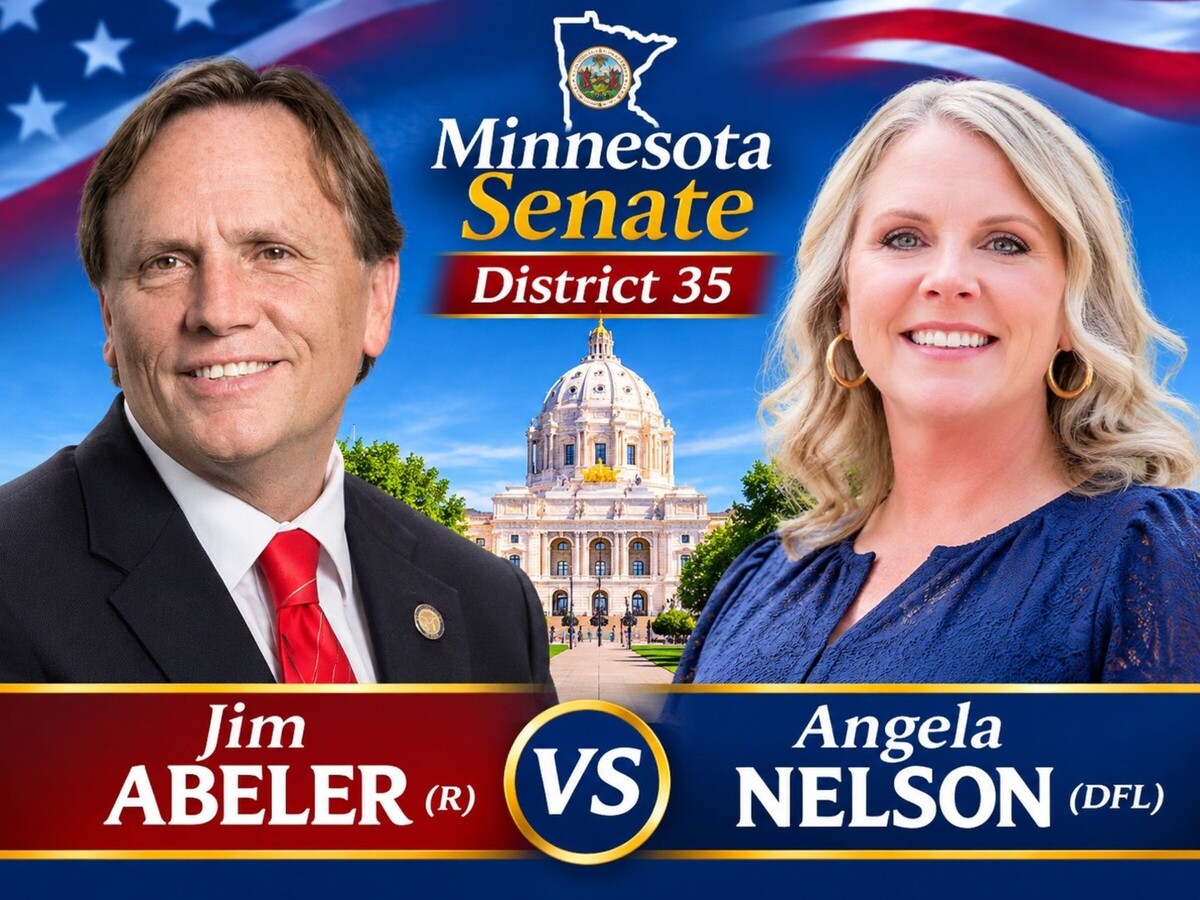
One of Minnesota's most closely watched legislative contests enters its final full day Monday as Republican state Sen. Jim Abeler and DFL challenger Angela Nelson compete for Senate District 35, which includes portions of Coon Rapids, Anoka and Andover.
The November 3 election will determine who represents the district at the Minnesota Capitol and could contribute to the balance of power in a narrowly divided state Senate.
The contest has attracted significant campaign spending, including more than $1.3 million in independent expenditures reported in late October.
Its competitiveness is rooted partly in the district's recent electoral history.
Abeler won reelection in 2022 by only 186 votes out of more than 34,000 cast.
That narrow margin has made District 35 a significant target for Democrats seeking to strengthen their legislative position.
Minnesota's state Senate entered the 2026 election cycle with Democrats holding a one-seat advantage.
All 67 Senate seats are on the November 3 ballot.
With such a narrow partisan margin, individual district results could help determine which party controls the chamber in 2027.
That outcome will influence legislative decisions involving taxes, education funding, healthcare, transportation, housing, public safety and the state budget.
The House of Representatives is also closely divided, increasing the potential importance of competitive legislative districts.
District 35 is therefore more than a local contest.
Its outcome could contribute to the broader political balance at the Capitol.
Abeler, a longtime Republican legislator, has made his experience and record of working across party lines central elements of his reelection campaign.
His stated priorities include education, healthcare affordability, mental health services, public safety, fraud prevention and support for seniors and people with disabilities.
On education, Abeler has emphasized academic achievement, attendance and school safety.
He has also identified concerns about the affordability of housing and healthcare, particularly for older residents and vulnerable adults.
His campaign presents his legislative experience as an advantage in addressing complicated policy issues.
Abeler has also emphasized his willingness to work with lawmakers from both parties.
Those positions reflect the incumbent's campaign arguments and should be distinguished from an independent evaluation of his legislative record.
Nelson, a school principal seeking elected office for the first time, has centered her campaign on household affordability, public education, healthcare access and government accountability.
Her proposals include public preschool for four-year-olds, tax relief for working families and caregivers, lower prescription drug costs and expanded access to MinnesotaCare.
Nelson has also advocated additional school-based mental health services and measures intended to improve educator recruitment and retention.
Her campaign emphasizes the financial pressures affecting families and the importance of public institutions that respond to community needs.
On public safety, Nelson supports firearm restrictions and greater investment in prevention and behavioral health services.
She has also called for increased transparency in campaign financing for school board elections.
The differences between the candidates reflect competing approaches to the role of government, public spending and the priorities that should guide legislative decisions.
The District 35 contest has attracted substantial attention from political organizations operating independently of the candidates' campaigns.
According to an October 27 MPR News report cited in earlier MinneapoliMedia coverage, independent expenditures in the race had exceeded $1.3 million.
That figure was considerably larger than the amounts raised directly by either campaign during the reporting period examined.
Campaign receipts through October 19 totaled approximately $133,427 for Abeler and $142,712 for Nelson.
The independent spending has helped finance advertising and other election communications intended to influence voters.
Both candidates expressed frustration with attack advertising during the campaign.
The financial scale of the contest illustrates how a legislative district covering parts of the North Metro can become a focus of statewide political competition.
It also raises broader questions about the influence of outside organizations in races where relatively small numbers of votes may determine the result.
The figures reflect the reporting period available in late October and should not be interpreted as final election-cycle spending totals.
Abeler's 186-vote victory in 2022 provides an important historical reference.
It demonstrates that relatively small changes in voter participation or candidate support can affect the outcome in District 35.
However, a previous narrow result does not guarantee another close election.
Candidate recognition, campaign spending, turnout, national political conditions and local concerns may all influence Tuesday's outcome.
The district's communities also include residents with varied political priorities.
Some voters may place greater emphasis on taxes and government spending, while others may focus on education, healthcare, housing affordability or public safety.
The election will determine which candidate's message receives greater support.
Both campaigns have identified education and healthcare as important priorities, although their approaches differ.
For residents of Coon Rapids, Anoka and Andover, those issues connect directly to household budgets and the quality of local public services.
Education policy influences school funding, classroom resources, special education, student achievement and the financial responsibilities of school districts.
Healthcare policy affects insurance coverage, prescription drug costs, mental health services and access to care.
Housing affordability and public safety are also significant concerns for communities throughout the North Metro.
The next District 35 senator will participate in legislative decisions affecting these areas.
Monday, November 2, is the final day for early in-person voting before Tuesday's general election.
Coon Rapids residents may vote early at City Hall, 11155 Robinson Drive NW, from 8 a.m. until 5 p.m.
Residents should verify their voting eligibility, legislative district and assigned polling place before traveling.
Not every Coon Rapids voter lives in Senate District 35, meaning the Abeler-Nelson contest will not appear on every city ballot.
Election Day polling places will generally be open Tuesday from 7 a.m. until 8 p.m.
Voters who are in line at closing time are permitted to cast their ballots.
The District 35 election will determine whether Abeler continues representing the area or Nelson becomes its next state senator.
But the result will also contribute to the larger question of which political party controls Minnesota's Senate.
That control can influence committee leadership, legislative priorities and the ability to advance or block legislation.
With every legislative seat on the ballot, the statewide outcome may depend on a collection of competitive races.
For District 35 residents, the immediate choice is between an experienced Republican incumbent emphasizing his legislative record and a Democratic challenger advocating a change in leadership.
The campaign has featured significant spending, competing policy proposals and reminders of the district's narrow electoral history.
On Tuesday, voters will deliver their decision.
Until then, the race remains unresolved, and neither candidate's previous performance nor the volume of campaign advertising can substitute for the ballots that will be counted.

Local stories matter. Subscribe free to MinneapoliMedia and receive independent news, community reporting and important updates from Minneapolis, the North Metro and communities across Minnesota.
SUBSCRIBE FREE: https://minneapolimedia.town.news/subscribe
MinneapoliMedia | Community. Culture. Civic Life



Patchy rain nearby, with a high of 64 and low of 57 degrees. Don't forget your umbrella! Light drizzle in the morning, patchy rain nearby in the afternoon,