59° and Partly Cloudy
Image




On December 4, 2025, ACOSI officially unveiled FacesOfHopeAnoka.org, a comprehensive, county-level website intended to serve as a digital lifeline for individuals and families in Anoka County, Minnesota, who are grappling with opioid misuse, addiction, and recovery.
The site offers a suite of resources aimed at prevention, harm reduction, treatment access, and community support. At its core is a documentary, “Faces of Hope”, which chronicles the real-life journeys of local residents impacted by opioid misuse. The film provides a raw, unvarnished depiction of addiction, loss, resilience, and the path toward recovery. By spotlighting personal stories, the film seeks to humanize the crisis and reduce the stigma surrounding substance use disorders.

Beyond storytelling, FacesOfHopeAnoka.org serves as a centralized hub with a curated directory of trusted local services for prevention, treatment, and recovery, details on free naloxone training and pickup locations across the county (naloxone is a medication that can rapidly reverse opioid overdoses), announcements of upcoming community trainings scheduled for summer 2026, and additional narratives of hope and healing contributed by community members in recovery.
“Faces of Hope shows personal stories of successful recovery and the growing network of support in our county,” said Mandy Meisner, District 7 Anoka County Commissioner. She described the array of website resources as truly astounding and said the site will be an integral resource for those looking to break away from opioids.
The launch of the site comes amid a deeply troubling overdose crisis in Anoka County and across Minnesota, driven largely by synthetic opioids such as illicitly manufactured fentanyl. According to the most recent publicly available data from the Minnesota Department of Health (MDH), between 2015 and 2024 Anoka County recorded 294 overdose deaths involving synthetic opioids (health.state.mn.us).
In total, drug overdose deaths in Anoka County climbed from 44 in 2019 to a peak of 82 in both 2021 and 2022, before falling to 59 in 2023, then 49 in 2024 (health.state.mn.us).
These trends reflect a broader statewide and national pattern in which synthetic opioids have become the dominant driver of fatal overdoses (mnmed.org).
State-level data suggests a modest but meaningful improvement. From 2022 to 2023, Minnesota saw an estimated 8 percent drop in total drug overdose deaths, falling from 1,384 to 1,274, which was the first statewide decrease since 2018 (health.mn.gov). Still, public health officials caution that despite the decline in fatal overdoses, nonfatal overdoses, particularly those involving fentanyl and other synthetic opioids, have continued to rise, highlighting the ongoing peril (health.mn.gov).
In this context, the launch of FacesOfHopeAnoka.org represents a strategic local response, combining prevention and harm reduction measures, like naloxone distribution and training, with pathways to treatment and a platform for community storytelling.
ACOSI was formed to manage opioid settlement funding, coordinate community partners, and deploy evidence-based interventions to tackle substance use disorders at the local level. The initiative is guided by an advisory council that includes both professionals and individuals with lived experience, ensuring that affected community voices help shape strategic funding and resources.
According to official county communications, Anoka County expects to receive approximately $18 million over 18 years through the multi-state opioid settlement. These funds are dedicated to supporting treatment, prevention, harm reduction, and long-term recovery efforts. The creation of the FacesOfHopeAnoka.org website is among the first major undertakings under this funding framework.
Through ACOSI and the new website, county officials and community partners hope to offer a more accessible and less fragmented system that reduces barriers to care, provides life-saving interventions, and supports recovery with dignity, compassion, and community backing.
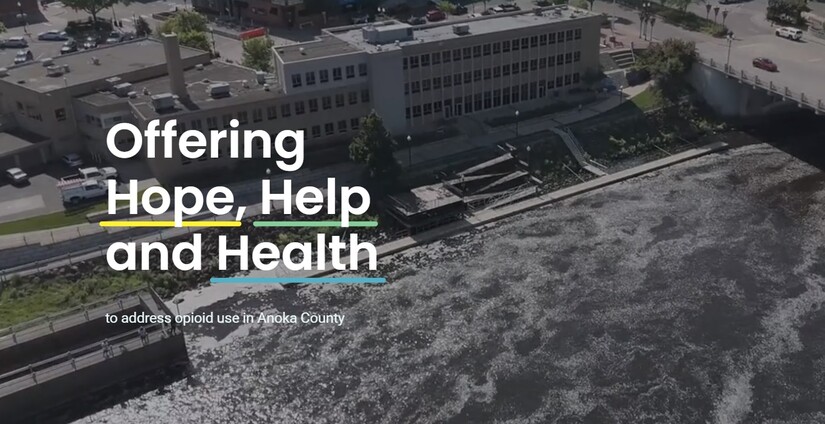
Available data confirms a steep rise in synthetic-opioid–related overdose deaths in Anoka County over the past decade. The 294 deaths documented between 2015 and 2024 represent a major public health burden (health.state.mn.us).
The recent downward trend in total drug overdose deaths, from 82 in 2022 to 49 in 2024, offers a glimmer of hope (health.state.mn.us). However, these numbers do not capture nonfatal overdoses, which remain high, especially those involving synthetic opioids. Statewide data shows nonfatal opioid overdoses have increased, partly attributed to expanded naloxone availability and use (health.mn.gov).
Moreover, while county-level overdose data is publicly available, the detailed demographics, including age, race, and socioeconomic status, along with geographies within the county and underlying factors such as co-occurring substance use and access to care, remain underreported or publicly opaque.
That underscores the importance of ACOSI’s long-term data tracking and transparent reporting, including naloxone distribution numbers, treatment and recovery program enrollments, demographic breakdowns of overdose and recovery, and outcomes over time.
The opioid crisis, particularly today’s surge in synthetic opioid overdoses, is not uniform across geographies. National research shows that synthetic opioids, rather than prescription painkillers, now account for the majority of fatal overdoses (mnmed.org).
Solutions must therefore be locally tailored. A statewide approach misses critical variation in how addiction, stigma, access to treatment, socioeconomic conditions, and community resources intersect in each county.
By combining harm-reduction tools such as free naloxone training and distribution, a trusted local resource directory, free access to personal stories of recovery, and long-term planning supported by settlement funding, ACOSI and FacesOfHopeAnoka.org aim to meet people where they are, offer immediate help, and build hope for sustained healing.
For residents and families in Anoka County, this site could serve as a first port of call in crisis or a path toward community, recovery, and renewal. For the broader region, it may serve as a model for how counties can leverage settlements, local partnerships, and digital platforms to address the evolving challenges of the opioid epidemic.



Patchy rain nearby, with a high of 64 and low of 53 degrees. Overcast during the morning, clear during the afternoon and evening, patchy rain nearby overnight.