64° and Clear
Image




Minneapolis City Council Vice President Robin Wonsley is calling on Tim Walz to declare a peacetime emergency that would allow the state to implement a temporary eviction moratorium, arguing that community fundraising efforts cannot substitute for government intervention.
“This is not something that we will GoFundMe our way out of,” Wonsley said, referencing a surge of mutual-aid campaigns aimed at helping residents cover rent and food costs following a large-scale federal immigration enforcement initiative known publicly as “Operation Metro Surge.”

Community leaders report that intensified federal enforcement activity by U.S. Immigration and Customs Enforcement in parts of Minneapolis, particularly Cedar-Riverside and South Minneapolis, has contributed to residents staying home from work out of fear of detention. Local advocates say that the resulting income disruption has increased requests for emergency rental assistance.
In response, residents and community organizations launched crowdfunding and direct-cash assistance campaigns to help neighbors pay rent and avoid eviction. The Associated Press, in reporting carried by CBS Minnesota, documented residents matching donors directly with families facing housing instability.
City officials have described the mutual-aid response as significant but insufficient to address what they characterize as a broader housing stability risk.
On February 5, 2026, the Minneapolis City Council approved $1 million from city cash reserves for emergency rental assistance. Council members said the allocation was intended to prevent a surge in eviction filings while state-level action remains under consideration.
St. Paul city leaders have passed a similar resolution urging state intervention.
Municipal governments, however, do not have the authority to impose a statewide eviction moratorium. That authority would depend on action by the governor under Minnesota emergency management statutes.
Under Minnesota Statute 12.31, the governor may declare a “peacetime emergency” if events such as civil disturbances or other crises endanger life and property and local resources are inadequate to respond.
A declaration activates emergency authorities outlined in Chapter 12 of Minnesota law. During the COVID-19 pandemic, peacetime emergency powers were used to issue executive orders affecting eviction proceedings.
The current debate centers on whether the conditions associated with Operation Metro Surge meet the statutory threshold for such a declaration.
Some legal advocates have raised questions about language in Minnesota Statute 12.21, subdivision 3, clause 7. That provision authorizes the governor to cooperate with the federal government in matters related to emergency management.
Critics argue that invoking Chapter 12 during a crisis linked to federal immigration enforcement could create ambiguity regarding state-federal coordination. Supporters of an emergency declaration note that the statute permits cooperation but does not automatically transfer authority to federal agencies.
Legal scholars have not identified any provision in Chapter 12 that directly grants new command authority to the federal government over state operations solely as a result of a peacetime emergency declaration.
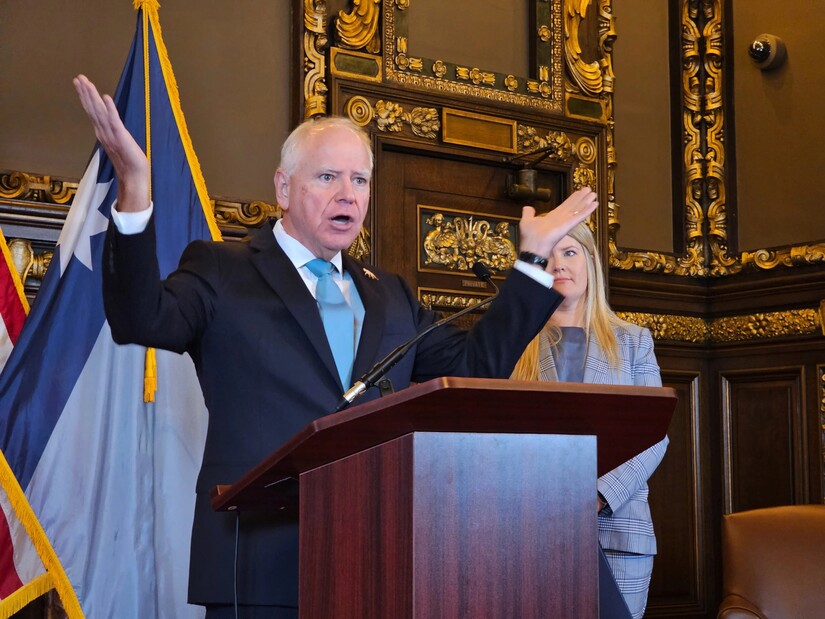
As of mid-February 2026, Governor Walz has not declared a peacetime emergency related to Operation Metro Surge. Administration officials have cited legal considerations and the statutory threshold required under Chapter 12.
Housing advocates continue to press for temporary protections, while city officials have emphasized that emergency rental assistance alone may not prevent broader displacement if income disruption persists.
The Legislature has not introduced standalone legislation creating a housing-specific emergency authority that would operate outside Chapter 12.
For now, Minneapolis and St. Paul remain engaged in municipal-level interventions while urging the state to determine whether broader emergency action is warranted.



Patchy rain nearby, with a high of 94 and low of 63 degrees. Sunny in the morning, patchy rain nearby in the afternoon and evening, clear overnight.