82° and Sunny
Image



The proposal, House File 3739, was introduced by Representatives Zach Stephenson, Erin Koegel, and Brad Tabke, lawmakers whose districts intersect with the communities Hortman represented for more than two decades. A companion measure, Senate File 4073, was introduced in the Minnesota Senate by Senator John Hoffman of Champlin, who survived the same attack that claimed the Hortmans’ lives.
If enacted, the legislation would formally designate Highway 610 as the Hortman Memorial Highway and direct the Minnesota Department of Transportation (MnDOT) to design and install memorial signage along the corridor.
The measure was referred to the House Transportation Finance and Policy Committee on March 2, 2026, beginning what supporters expect will be a largely bipartisan legislative process.
Highway 610 is more than a transportation route. It is a corridor that cuts across the northwestern suburbs of the Twin Cities, connecting Brooklyn Park, Maple Grove, and Coon Rapids.
For decades, these communities formed the geographic and civic landscape of Melissa Hortman’s legislative district. The highway itself functions as a major east west artery linking Interstate 94 in Maple Grove to Highway 10 in Coon Rapids, carrying tens of thousands of vehicles each day through the heart of the north metro.
Supporters of the bill say that geography matters when memorializing public service.
Naming the corridor after the Hortmans would place their memory within the physical map of the communities where they lived, raised their family, and served.
Under the legislation, MnDOT would erect route markers and guide signs identifying the roadway as the Hortman Memorial Highway, ensuring that the designation becomes a permanent part of Minnesota’s transportation landscape.
Unlike many memorial highway designations that require private fundraising for signage, this bill specifically directs the commissioner of transportation to use state resources to install the signs.
The legislation arises from one of the most shocking acts of political violence in Minnesota’s modern history.
In the early morning hours of June 14, 2025, authorities say a gunman carried out a series of attacks targeting state lawmakers in the north metro.
According to investigators and federal prosecutors, the suspect, Vance Boelter, impersonated a police officer. He allegedly drove a vehicle modified to resemble a law enforcement squad car and wore a realistic silicone mask in an effort to deceive victims and neighbors.
The first attack occurred around 2:00 a.m. at the home of Senator John Hoffman and his wife Yvette Hoffman in Champlin. Both were shot multiple times but survived after undergoing emergency surgery and extensive medical treatment.
Roughly ninety minutes later, at approximately 3:30 a.m., the suspect arrived at the home of Melissa and Mark Hortman in Brooklyn Park.
Both were fatally shot during the encounter.
The killings triggered an enormous law enforcement response involving local police, the Minnesota Bureau of Criminal Apprehension, and federal agencies. The search for the suspect quickly escalated into what authorities described as one of the largest coordinated manhunts in state history.
Boelter was later arrested and indicted on multiple federal charges including murder, attempted murder, stalking, and firearms offenses.
The attack reverberated far beyond Minnesota. National leaders, governors from across the country, and members of Congress issued statements condemning the violence and mourning the loss of one of the state’s most prominent political figures.
Governor Tim Walz described the events as “a night of targeted political violence that shook Minnesota to its core.”
Melissa Hortman’s rise in Minnesota politics was defined by persistence, discipline, and an ability to navigate the often brutal mechanics of legislative compromise.
First elected to the Minnesota House of Representatives in 2004, she represented District 34B, which includes Brooklyn Park and portions of neighboring communities.
Over the course of two decades, she built a reputation as one of the Legislature’s most skilled procedural strategists. Colleagues across the political spectrum frequently described her as a leader who combined deep policy knowledge with an unwavering command of parliamentary rules.
In 2019, she became Speaker of the Minnesota House, the chamber’s presiding officer and one of the most powerful elected positions in state government.
During her tenure, the Legislature grappled with issues ranging from transportation funding and education policy to public safety and economic recovery following the COVID 19 pandemic.
Even political opponents often acknowledged her effectiveness.
She was known for long negotiating sessions that stretched late into the night, a methodical approach to legislation, and a belief that governing required the difficult work of compromise.
Her husband, Mark Hortman, though less publicly visible, was widely described by friends and colleagues as a deeply supportive partner whose quiet civic engagement complemented Melissa Hortman’s demanding public career.
Together they raised two children in Brooklyn Park and were active in local community life.
In the days following the attack, Minnesota witnessed an extraordinary outpouring of grief.
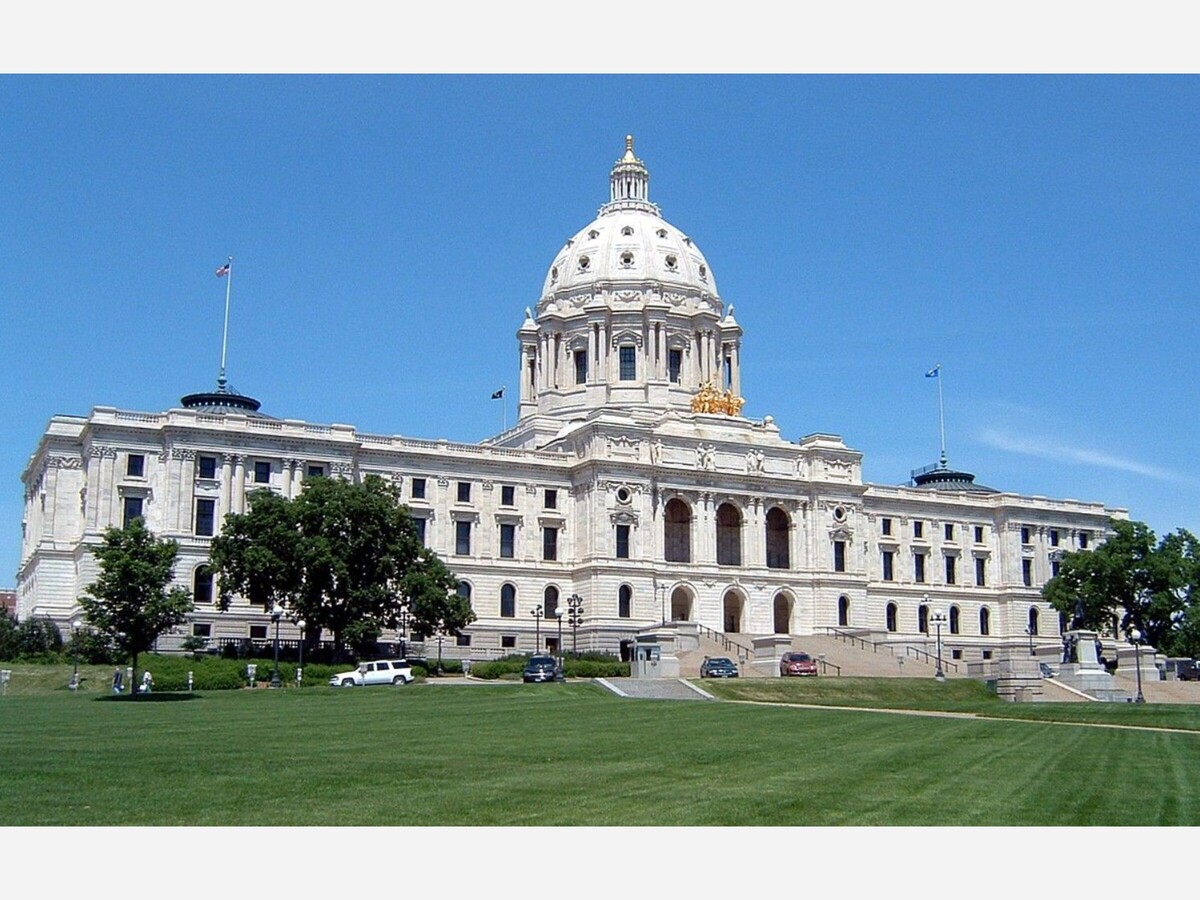
Melissa Hortman became the first woman in Minnesota history to lie in state at the Minnesota State Capitol, an honor traditionally reserved for governors, military heroes, and a small number of transformative public figures.
Thousands of residents, lawmakers, and public officials filed past her casket beneath the Capitol dome.
The ceremony placed Hortman among a small group of Minnesotans whose contributions to the state were considered historically significant.
For many lawmakers, the effort to rename Highway 610 represents a continuation of that recognition.
Memorial highway designations have long been part of Minnesota’s civic tradition. Roads across the state bear the names of fallen soldiers, police officers, firefighters, and political leaders whose lives intersected with the state’s public institutions.
By placing the Hortman name on a major north metro highway, legislators hope to create a visible, enduring marker of the couple’s legacy.
While the legislation is procedural in nature, its symbolism runs far deeper.
The attack that killed the Hortmans was not only a personal tragedy. It was also a stark reminder of the growing climate of threats facing elected officials across the United States.
Security concerns for public officials have intensified nationwide in recent years, with federal authorities reporting a steady increase in threats against lawmakers at every level of government.
For many Minnesota legislators, the memorial highway proposal is therefore about more than remembrance.
It is also about reaffirming the stability of democratic institutions in the face of political violence.
Highways, after all, are among the most enduring forms of public infrastructure. They carry the daily rhythms of ordinary life: commuters, school buses, freight trucks, and families traveling between neighborhoods.
Attaching a name to such a roadway ensures that memory becomes part of that everyday movement.
Drivers crossing the north metro on Highway 610 would encounter a name that invites curiosity, reflection, and remembrance.
The bill’s future now rests with the Legislature.
Lawmakers must approve the measure in both chambers before it can be sent to Governor Tim Walz for signature.
Given the bipartisan sponsorship and the extraordinary circumstances surrounding the Hortmans’ deaths, observers at the Capitol say the proposal is likely to receive broad support.
If enacted, MnDOT would move forward with sign design and installation, formally marking the corridor as the Hortman Memorial Highway.
For the communities of Brooklyn Park, Champlin, Maple Grove, and Coon Rapids, the designation would create a permanent geographic tribute.
A highway that thousands of Minnesotans travel each day would carry a name tied to a moment that reshaped the state’s political memory.
And for those who served with Melissa Hortman inside the Capitol, the road would stand as a quiet but enduring reminder of a leader whose life ended in violence, but whose legacy remains woven into the civic life of Minnesota.



Patchy rain nearby, with a high of 89 and low of 69 degrees. Cloudy during the morning, partly cloudy in the afternoon, sunny during the evening, patchy rain nearby overnight.