Image



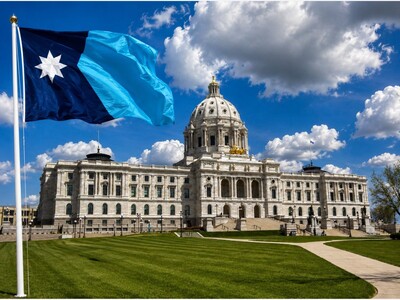
Inside the State Capitol, Republicans have concentrated their message around what they argue are unacceptable oversight failures in state-administered programs. They have proposed structural reforms including the creation of an independent inspector general and expanded investigative authority. They contend that recent scandals, most notably the Feeding Our Future case, demonstrate that Minnesota’s internal controls are insufficient.
Governor Tim Walz and Democratic lawmakers, meanwhile, have advanced a bonding proposal roughly equivalent in scale to the projected surplus. Their focus is capital infrastructure. Roads, bridges, wastewater systems, public buildings, higher education facilities. They argue that Minnesota has an obligation to modernize critical systems while it has fiscal capacity to do so.
At first glance, these appear to be competing priorities. Fraud prevention versus infrastructure investment. Oversight versus expansion. Enforcement versus growth.
But that framing is incomplete. The real question is not which priority is legitimate. Both are. The question is whether Minnesota’s leaders can integrate accountability with investment, or whether political escalation will turn a surplus into a stalemate.
Minnesota Management and Budget’s latest projections show an improved short-term balance for the current biennium. The 3.7 billion dollar figure reflects stronger than expected revenues and the lingering effects of federal pandemic relief. It is not a permanent structural windfall. Forecasts indicate tighter margins in future biennia.
Still, in a national climate where many states are confronting revenue uncertainty and federal volatility, Minnesota’s near-term position is enviable.
Historically, Minnesota has used surplus cycles in several ways. In the late 1990s, the state returned funds through rebates under Governor Jesse Ventura. In the early 2010s, following deficit periods, surplus funds were directed toward reserves and structural stabilization. More recently, lawmakers have balanced a mix of one-time rebates, social investments, and infrastructure spending.
Bonding bills have traditionally required bipartisan cooperation because they involve long-term borrowing. Minnesota’s capital investment cycles often range between one and two billion dollars, depending on economic conditions. Some cycles have stalled due to partisan impasses. Others have succeeded when geographic equity was negotiated carefully across rural and urban districts.
The current proposal is larger than many past bonding packages, reflecting accumulated deferred maintenance and cost escalation in construction sectors.
The Republican focus on fraud oversight has been sharpened by the Feeding Our Future scandal. Federal prosecutors have described the nonprofit’s actions as one of the largest pandemic-related fraud schemes in the country. The organization was accused of exploiting federal child nutrition program reimbursements during COVID-19, allegedly billing for meals that were never served.
Dozens of individuals have been indicted in connection with the scheme. The alleged losses have been estimated in the hundreds of millions of dollars.
The scandal exposed weaknesses in oversight mechanisms involving federal pass-through funds administered at the state level. It revealed gaps in verification processes and raised uncomfortable questions about how quickly red flags were escalated and acted upon.
Republican lawmakers have pointed to this case as evidence that Minnesota’s fraud detection infrastructure requires overhaul. They argue that public trust demands visible reform. Some have proposed statutory changes to enhance auditing authority, interagency coordination, and investigative independence.
To dismiss these concerns would be irresponsible. The scandal damaged institutional credibility.
But the presence of scandal does not automatically dictate a singular governing agenda.
Complicating the debate is renewed federal scrutiny. The Trump administration has signaled a willingness to withhold or condition federal funding based on fraud compliance concerns. Medicaid and childcare assistance programs are at the center of that tension.
Medicaid represents one of the largest streams of federal funds flowing into Minnesota. The state administers medical assistance programs that cover hundreds of thousands of residents, including low-income families, seniors, and individuals with disabilities. Federal matching funds account for billions annually.
Childcare stabilization funds and childcare assistance programs similarly rely heavily on federal dollars. These programs support working families and small childcare providers, particularly in rural communities where margins are thin.
If federal authorities were to withhold hundreds of millions in funding pending fraud remediation, the immediate consequences would extend beyond political messaging. Providers would face liquidity crises. Families could lose coverage. Rural healthcare networks, already under strain, could experience destabilization.
The administration has framed its posture as fiscal protection. Minnesota officials have argued that withholding funds harms beneficiaries rather than perpetrators and have signaled willingness to challenge punitive measures.
Thus the debate inside Minnesota’s Capitol is no longer insulated from national political dynamics. Oversight rhetoric now carries potential financial consequences.
Fraud prevention is politically durable. Voters across ideological lines reject waste. By centering debate on oversight, lawmakers can occupy moral terrain that appears nonpartisan.
Infrastructure investment, by contrast, is diffuse. Benefits accrue over time. Costs are visible upfront. Borrowing invites scrutiny. Projects require negotiation across districts.
This asymmetry creates incentives. Elevating fraud as the primary lens simplifies messaging. Elevating bonding requires coalition building.
Yet Minnesota’s history demonstrates that capital investment and accountability have often advanced together. Bonding packages typically include project-level oversight, compliance standards, and legislative review.
The current standoff suggests that trust between caucuses has eroded to the point where sequencing, not substance, drives disagreement.
Political theorists have long debated how governments behave in moments of abundance. Surpluses test discipline differently than deficits test restraint.
In deficit environments, policymakers are forced to prioritize. Scarcity imposes clarity. In surplus environments, temptation shifts toward expansion, distribution, or ideological signaling.
One school of thought argues that surpluses should be conserved. Strengthen reserves. Harden oversight. Prepare for inevitable downturns.
Another argues that surpluses represent opportunity. Address deferred needs. Invest in long-term productivity. Modernize infrastructure while fiscal capacity exists.
Minnesota’s current debate maps onto these frameworks.
Republican legislators emphasize the conservation model. Strengthen internal controls before expanding commitments.
Democratic leaders emphasize the opportunity model. Use capacity to modernize and stimulate economic resilience.
Neither theory is inherently reckless. The failure would be refusing to reconcile them.
For many Minnesotans, the debate is not abstract.
A childcare provider in Greater Minnesota operating on narrow margins cannot absorb prolonged federal withholding. Reimbursement delays translate into staff reductions or closures.
A wastewater treatment facility in a small town facing Environmental Protection Agency compliance deadlines cannot defer upgrades indefinitely. Delays compound cost and regulatory risk.
A construction worker anticipating bonded infrastructure projects watches Capitol negotiations with direct economic interest.
A medically vulnerable parent navigating Medicaid eligibility experiences policy shifts as personal anxiety.
The surplus, therefore, intersects with daily life in concrete ways.
The Feeding Our Future case demonstrated that oversight mechanisms can fail under pressure. The question is whether that failure is systemic across all state programs or concentrated in specific administrative pathways.
Available evidence suggests that fraud schemes exploit complexity and emergency conditions. Pandemic-era program expansions created speed and scale challenges nationwide. Minnesota was not alone in confronting such vulnerabilities.
The investigative lesson should be precise reform. Enhanced verification protocols. Data analytics improvements. Clear escalation pathways. Transparent reporting requirements.
What it should not become is paralysis across unrelated sectors.
Infrastructure bonding does not inherently weaken fraud detection. Nor does oversight reform preclude capital investment.
The danger lies in conflating separate policy domains into a single political litmus test.
As rhetoric sharpens, the risk of stalemate increases. Bonding bills in Minnesota require supermajority support. Without bipartisan agreement, projects stall.
Failure to pass bonding in prior cycles has resulted in deferred maintenance, increased long-term costs, and frustration among local governments awaiting state partnership.
Simultaneously, failing to enact visible oversight reforms risks reinforcing narratives that Minnesota has not internalized lessons from past scandals.
The state stands at a junction where both inaction paths carry cost.
The surplus presents a rare moment of capacity. The responsible path is not choosing fraud or funding. It is sequencing reform and investment in tandem.
Minnesota can enact strengthened inspector general authority, enhanced auditing, and real-time transparency mechanisms.
It can also pass a disciplined bonding bill that prioritizes critical infrastructure with demonstrated statewide impact.
It can protect federal funding streams by demonstrating compliance without accepting punitive withholding that harms beneficiaries.
It can communicate clearly to residents that accountability and ambition are complementary.
If Minnesota fails to govern effectively during abundance, it will struggle profoundly during contraction.
Surpluses do not last indefinitely. Economic cycles shift. Federal policy evolves. Construction costs escalate.
The question is not whether fraud prevention matters. It does. The question is whether fear of mismanagement will eclipse confidence in collective investment.
Minnesota’s identity has long been tied to pragmatic governance. Infrastructure built in prior generations supports today’s prosperity. Oversight frameworks constructed in earlier eras protect today’s taxpayers.
The present surplus offers a test of whether those traditions endure.
This is not merely a budget fight. It is a referendum on governing maturity.
The state can emerge from this debate with stronger oversight and stronger infrastructure.
Or it can allow escalation to transform opportunity into inertia.
Abundance reveals character. Minnesota now reveals its own


Sunny, with a high of 67 and low of 42 degrees. Sunny in the morning, partly cloudy during the afternoon and evening, clear overnight.