38° and Light rain
Image
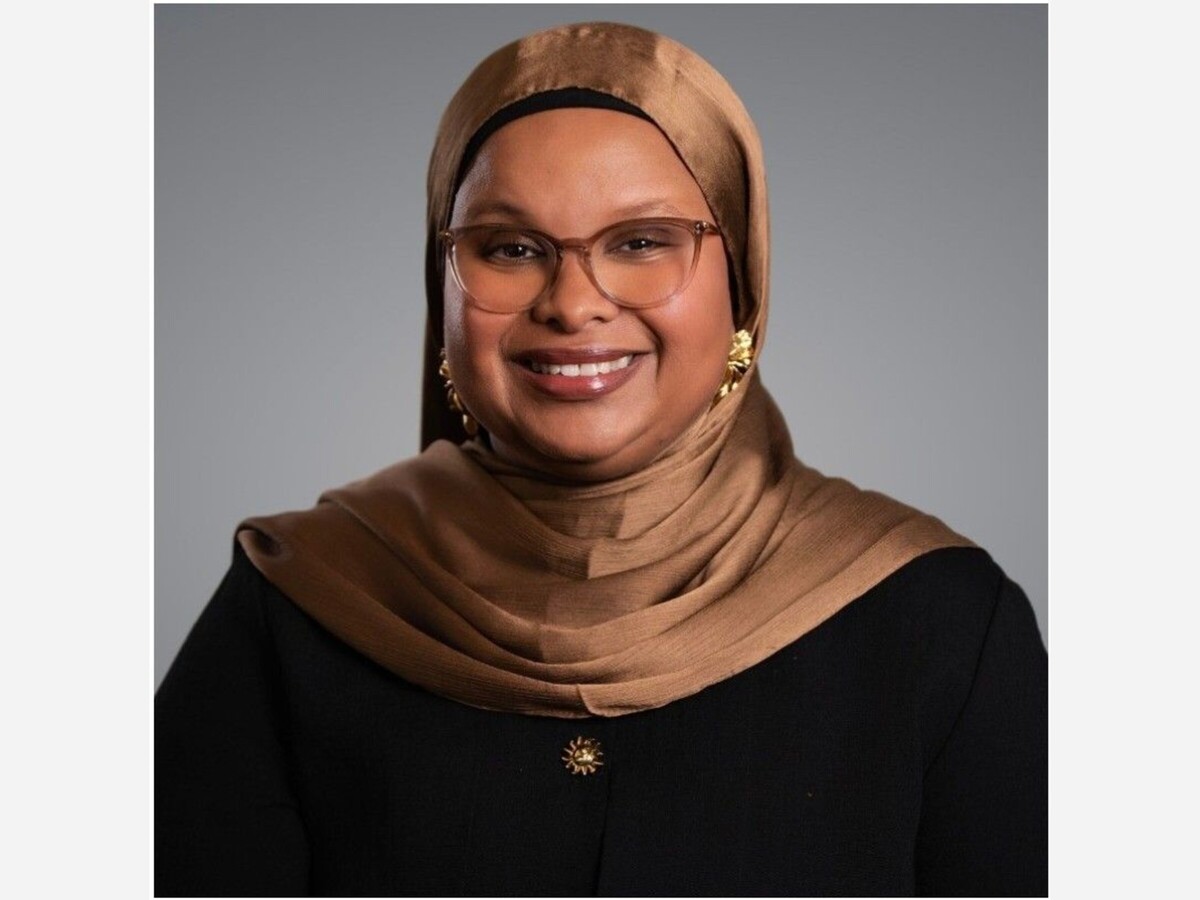



THE POWER OF HER | Malika Dahir And The Work Of Building What Endures
Malika Dahir speaks carefully, but with unmistakable resolve. Even as the political climate hardens and communities across the United States brace for policies that threaten belonging, safety, and dignity, her voice remains steady. She does not flinch from naming what is happening. Nor does she allow despair to define the moment.
“This is a very challenging time for all of us,” she says quietly. “What we are witnessing feels deliberate. It is happening in real time, right before our eyes.”
Dahir, the Executive Director of Reviving the Islamic Sisterhood for Empowerment, known as RISE, has spent much of her life navigating systems that were never designed with women like her in mind. A Somali American woman, a mother, a faith leader, and a community organizer, she stands at the intersection of race, gender, religion, and power. She does not treat those identities as burdens to be minimized, but as truths that shape her leadership.
Her work, she explains, has always been personal.
“I have always been a champion for women’s rights,” Dahir says. “I watched women close to me struggle with poverty while men made all the financial decisions. They were brilliant, capable women, but the system did not give them what they needed to thrive.”
That early witnessing planted a question that still drives her today. What would happen, she asks, if those barriers were removed? If women had access to resources, financial independence, childcare, transportation, and language support? What would they build?
“How would their dreams take flight?” she says.
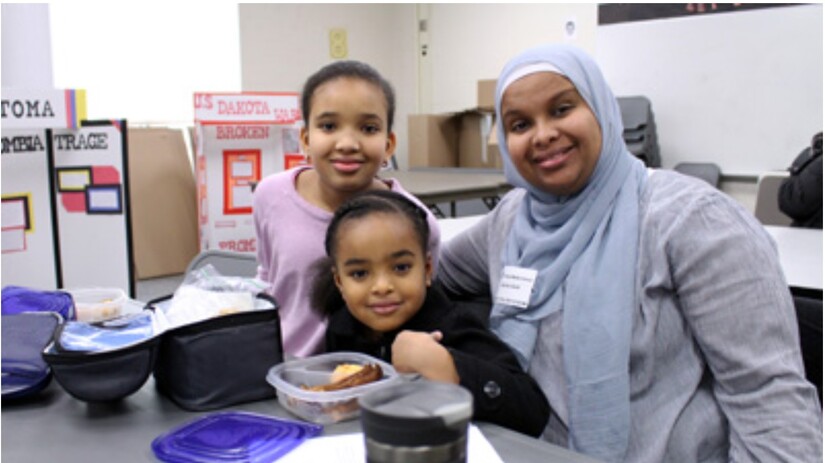
Dahir’s career did not follow a straight line. It grew alongside her children. When her youngest daughter was just over two years old, Dahir worked in a childcare center that allowed her to bring her child with her. That experience, she says, shaped her understanding of how deeply structural support matters.
“I could lead because I had access,” she reflects. “That changed everything.”
As her children grew, her work expanded. Through youth mentoring and a program called Pearls of Hope, Dahir helped young people imagine futures they had never been shown. She invited professionals from banking, healthcare, nonprofits, and corporate spaces to speak directly to them, not as abstractions, but as living examples.
“When young people see someone who looks like them and comes from their culture, it shifts something inside,” she says. “It changes the internal narrative.”
Today, her eighteen year old daughter is a political science major, stepping into her own path of advocacy. Dahir watches her closely, not with fear, but with intention. The work she does now, she says, is inseparable from the future she wants for her daughter and for her community.
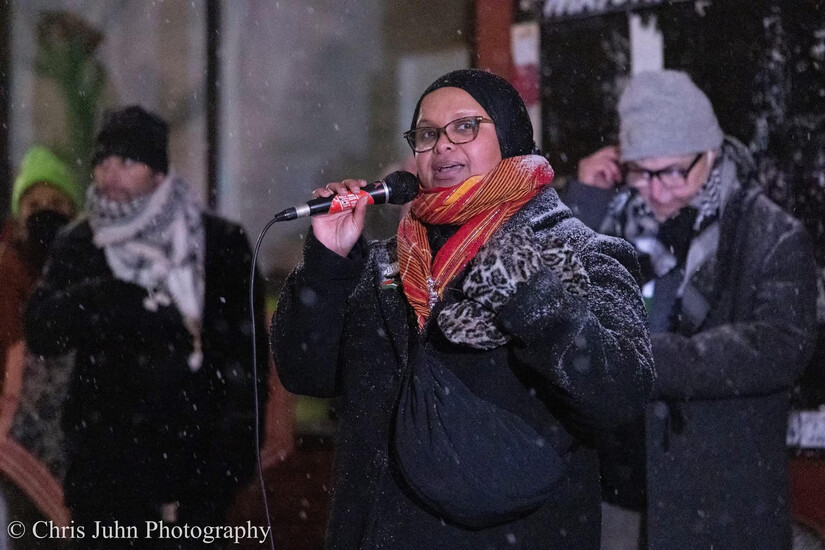
If there is a single throughline in Dahir’s leadership, it is her insistence on narrative ownership. She learned early that silence invites distortion.
“If you do not tell your own story,” she says, “someone else will tell it for you, and they will do a terrible job.”
Her commitment to storytelling began at home. When her children were young, she noticed the absence of Muslim families in popular culture. There were no stories they could point to and say, that is us.
So she began telling stories herself. Small gatherings at co-ops and libraries. Somali spiced tea shared alongside stories passed down from mothers and grandmothers. Stories of resistance, survival, and women who stood on the front lines of history.
When Dahir joined RISE, first as a volunteer and later as Executive Director, she recognized an organization already committed to that same principle. Through initiatives like Muslim Sheroes of Minnesota and partnerships with public media, RISE had begun documenting what mainstream narratives ignored.
Under Malika’s leadership, that work has expanded to include RISE introducing the Black HERstory Series to intentionally center the histories, voices, and lived experiences of women of color, particularly Muslim women. The series affirms our history as foundational to Muslim and community narratives, creating space for truth, reflection, and collective healing.
When the genocide in Gaza sent waves of grief and trauma through our community, RISE shifted its storytelling to center the voices of Palestinian sisters, many of whom were mourning profound personal loss. Through poetry and prose, they shared memories of Palestine, journeys toward activism, and visions for liberation.
RISE also uplifts Muslim women doing transformative work, building clinics and businesses, addressing homelessness, and shaping policy, while honoring everyday stories of grief, loss, motherhood, menopause, and healing. All stories were published on our digital platform, where they consistently received strong engagement from Muslim women and allied Minnesotans.
“These are human stories,” Dahir says. “They deserve to be heard.”
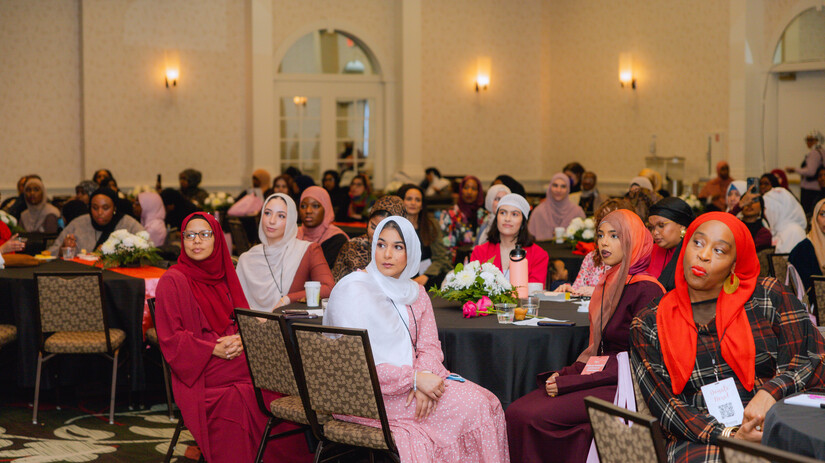
Dahir does not romanticize community. She builds it deliberately.
As a Somali American woman, she comes from a culture rooted in generosity. As an extrovert, she opens doors easily. Coffee, conversation, shared meals. These are not small gestures to her. They are acts of inclusion.
But she is also aware that not everyone has the ease or language to navigate spaces of power. Her responsibility, she believes, is to ensure others are not left outside.
“It is important to me that people are at the table,” she says. “That their voices are amplified. That they are given platforms.”
Her marriage, she adds, has deepened her connection to the broader Pan African community, expanding her understanding of solidarity across cultures and histories.
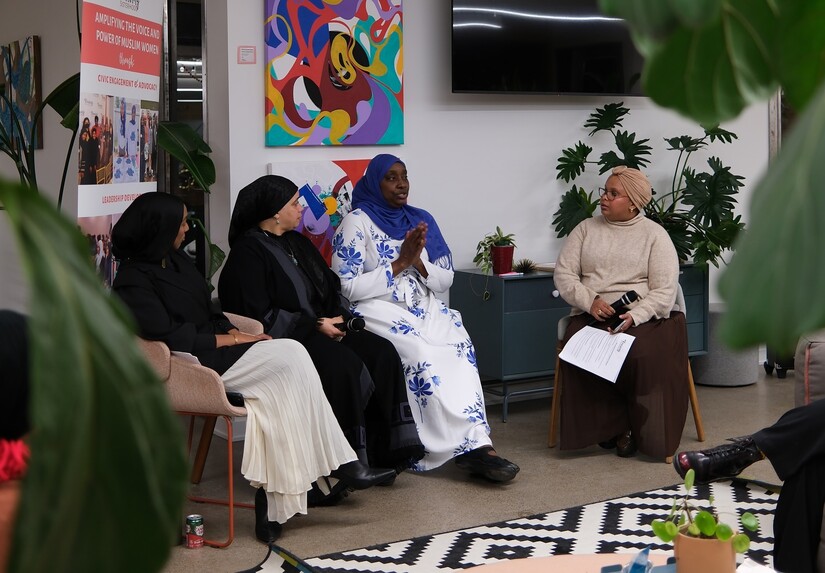
For years, RISE has focused on civic engagement, helping Muslim women vote, serve as election judges, caucus, and participate fully in Minnesota’s democratic process. Educational materials are translated into multiple languages. Training is made accessible.
But Dahir is clear-eyed about what comes next.
“Education is not enough,” she says. “We have to build structural power.”
RISE is now working toward becoming a C4 organization, a move that would allow it to engage in lobbying and candidate endorsements. It is a strategic shift, one aimed not just at participation, but at influence.
“That is how systems change,” Dahir says.
The urgency of this work has intensified as political rhetoric increasingly targets Muslim women as visible symbols of faith.
“It puts a target on our backs,” Dahir says.
In response, RISE has expanded its safety and education efforts. Workshops on Islamophobia and discrimination. Reporting tools in Somali, Arabic, Oromo, Spanish, Swahili, and American Sign Language. Partnerships with the Minnesota Department of Human Rights. Hate crimes toolkits. Self-defense training.
This, Dahir emphasizes, is not about fear. It is about preparedness and dignity.
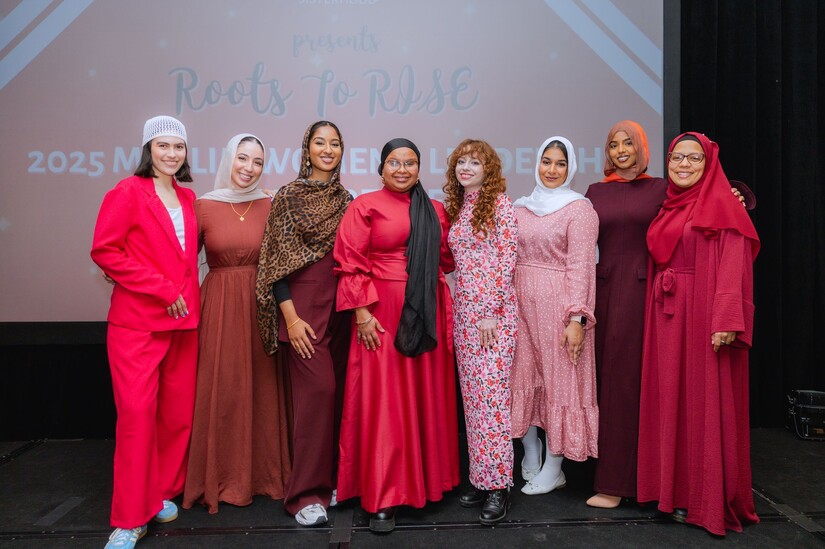
Despite the weight of the work, Dahir does not present herself as depleted. Asked what sustains her, she does not hesitate.
“My faith,” she says. “Our tradition teaches that after hardship comes ease.”
Her family grounds her. Her husband supports her. And her community, the people she serves and serves alongside, keeps her anchored in what is real, beyond online noise or hostility.
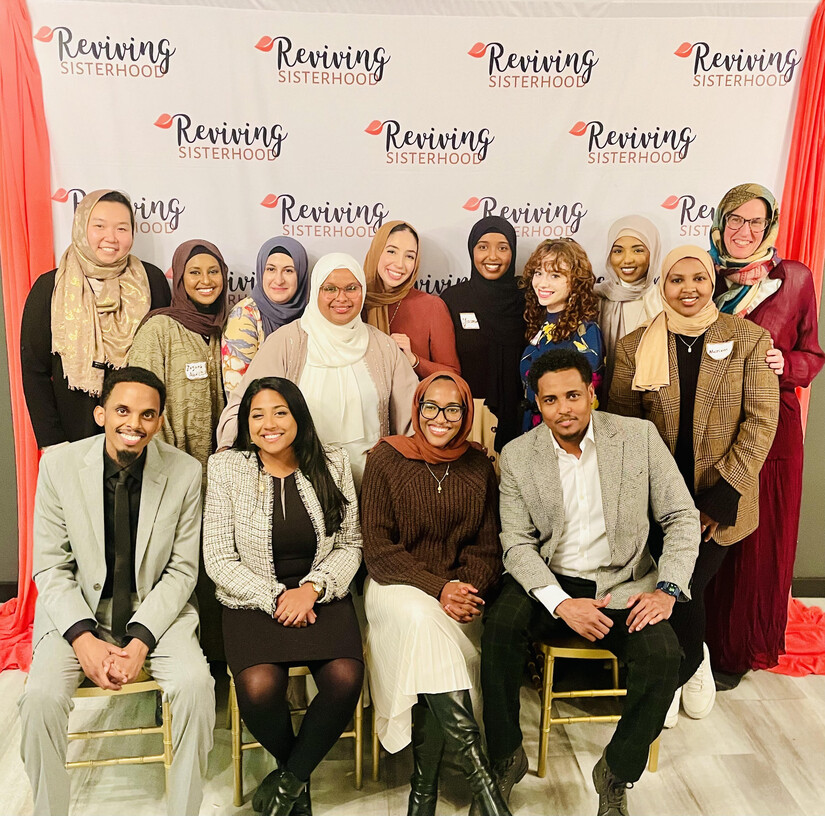
When asked about legacy, Dahir rejects the idea of personal permanence. What she wants to leave behind is not a name, but a framework.
“A blueprint,” she says. “Systems that outlast any one leader.”
She wants the women who come after her to take what has been built and make it bigger, stronger, and more expansive than she ever imagined.
Before the conversation ends, Dahir is asked to name another woman whose work deserves greater visibility. She does not hesitate.
Jamila Keisar, she says. A licensed independent clinical social worker and founder of Keisar Counseling. A leader providing trauma-informed mental health care to Black and Brown women impacted by immigration enforcement and community trauma. A woman showing up with skill, generosity, and courage in a moment of deep need.
As the interview draws to a close, Dahir offers one final reflection, grounded not in optimism, but in historical truth.
“We have survived colonization, famine, war, and displacement,” she says. “We will survive this too.”
In an era defined by uncertainty, Malika Dahir is not simply responding to crises. She is building what endures.


Light snow, with a high of 37 and low of 30 degrees. Light snow in the morning, moderate snow in the afternoon, mist during the evening, patchy moderate snow overnight.