48° and Sunny
Image
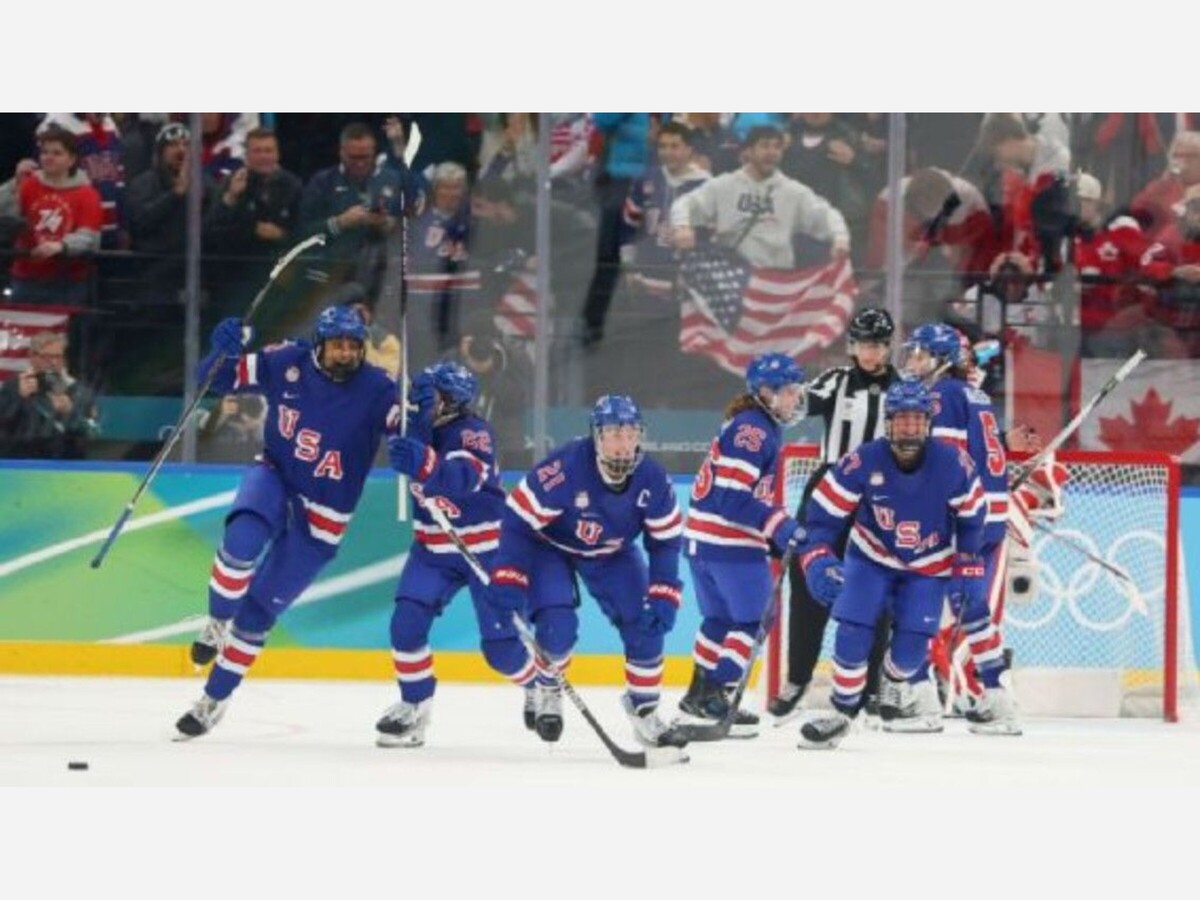



MILAN, Italy — Rivalry games rarely need help from history. The United States and Canada have spent a generation turning Olympic finals into something closer to shared mythology. On February 19, 2026, inside the Milano Santagiulia Ice Hockey Arena, they authored another chapter.
At 4:07 of 3-on-3 sudden-death overtime, Megan Keller gathered a stretch pass in stride, slipped past a defender, and beat Ann-Renée Desbiens with a backhand that slid beneath her right pad. The goal delivered a 2–1 victory over Canada and secured the United States’ third Olympic women’s hockey gold medal, joining 1998 and 2018.
It was the kind of ending that feels inevitable only after it happens.
The play began with space, the most dangerous commodity in 3-on-3 overtime. Taylor Heise spotted Keller streaking up the left wing and threaded a long pass through the neutral zone. Keller accelerated, capitalizing on a Canadian line-change moment that left the ice briefly unbalanced. She deked around Claire Thompson, opened her blade, and lifted the puck past Desbiens.
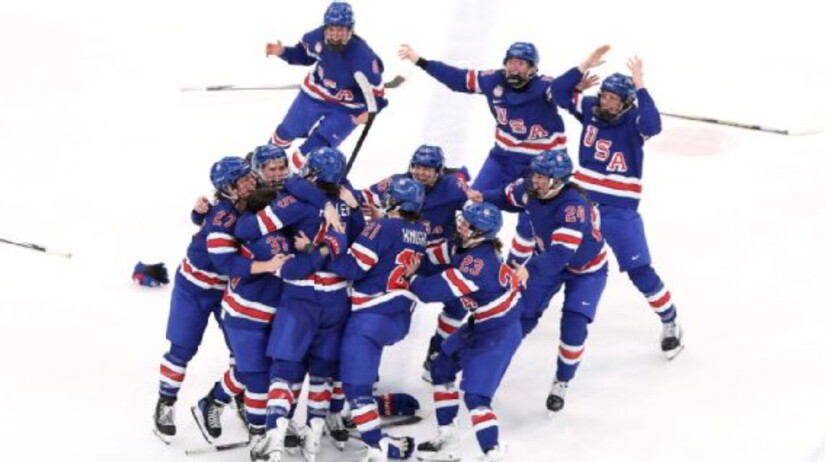
American players vaulted off the bench. Gloves, sticks, helmets scattered across the ice. For a rivalry defined by narrow margins, this one ended with a single, clean exhale.
“I don’t know if I’ve scored an OT winner in my life,” Keller said afterward, smiling. “I’ll cherish this one for a while, but I’m just so proud of our team.”
The final did not begin as an American coronation. Though the United States entered undefeated and having outscored opponents 33–2 through the tournament, Canada dictated much of the early rhythm.
After a scoreless first period, Kristin O'Neill broke through just 54 seconds into the second. On a short-handed 2-on-1 rush, assisted by Laura Stacey, O’Neill tucked the puck past U.S. goaltender Aerin Frankel for a 1–0 lead.
Canada’s structure tightened from there. Desbiens turned aside American pressure. Blue-line gaps closed quickly. Passing lanes disappeared. The clock became Canada’s quiet ally.
Through two periods, the United States pressed but could not solve the Canadian defensive box. The Americans finished with 33 shots on goal to Canada’s 31. Frankel stopped 30 of 31 shots. Desbiens turned away 31 of 33. The margins were microscopic.
With 2:04 remaining in regulation and gold slipping away, U.S. coach John Wroblewski pulled Frankel for the extra attacker.
The puck found the point. A shot came through traffic. In front of the crease, captain Hilary Knight angled her stick and redirected the puck into the net.
Tie game.
The goal was Knight’s 15th career Olympic tally, establishing a new U.S. record. It was also, as she later confirmed, part of her fifth and final Olympic Games. For a player who has spent nearly two decades as the face of American women’s hockey, the moment felt both earned and symbolic.
The equalizer altered the emotional geometry of the game. Canada had played with a lead. The United States now carried momentum.
Three-on-three overtime in international play strips the sport to its essentials. Space widens. Decisions accelerate. The next mistake ends the night.
Keller’s goal did not arrive from chaos but from composure. The Americans controlled possession long enough to create the rush. Heise trusted the seam. Keller trusted her hands.
Final score: United States 2, Canada 1.
The Americans finished the tournament undefeated at 6-0-0-0. Canada concluded 5-0-1-1. The United States reclaimed Olympic gold on European ice, a fitting setting for a rivalry that has become the sport’s defining narrative.
Women’s Olympic hockey has been shaped, almost exclusively, by these two flags. Gold has rotated between them across decades. Each meeting feels both repetitive and utterly new.
In Milan, the script required patience. It required resilience. It required a captain extending her legacy and a defenseman seizing a rare open lane at precisely the right second.
For Keller, the image will endure: the red goal light flashing, teammates converging, the realization settling in.
For Knight, it was a storybook closing act to an Olympic career that helped build the modern era of the women’s game.
And for the United States, it was confirmation that even in a sport defined by its most familiar rivalry, there are still new ways to win — and new names to remember.



Patchy rain nearby, with a high of 73 and low of 48 degrees. Patchy rain nearby during the morning, clear overnight.