74° and Overcast
Image
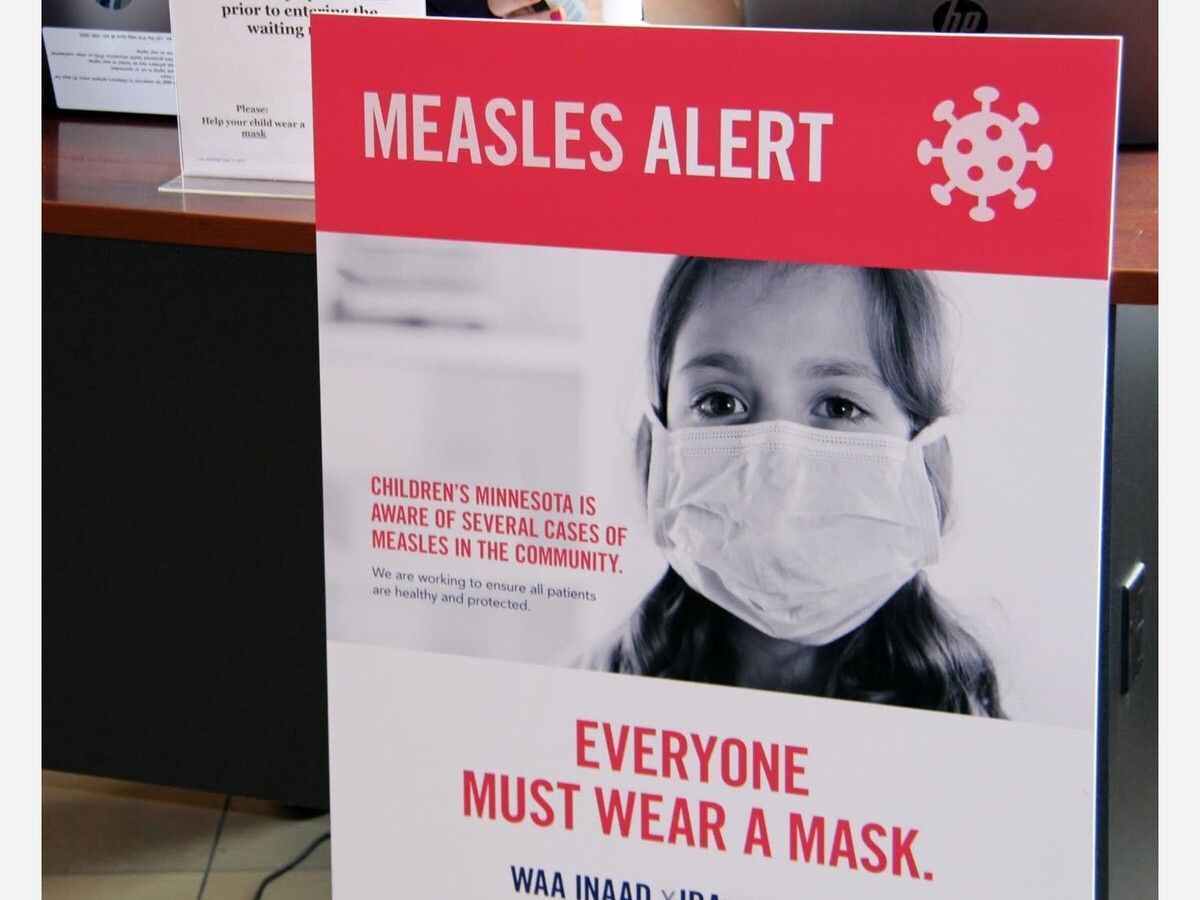



According to the Minnesota Department of Health, all five individuals — a mix of children and adults — were unvaccinated. Four of the five cases are epidemiologically linked, meaning public health investigators have identified a transmission chain connecting them. Notably, officials say all five infections were acquired within the United States, not through international travel.
The number is small, but the warning embedded in it is not.
Measles was declared eliminated in the United States in 2000, a public health milestone built on high vaccination coverage. But elimination does not mean eradication. When vaccination rates fall, even slightly, measles can regain a foothold.
Nationally, the resurgence has been swift. The Centers for Disease Control and Prevention reports nearly 1,000 confirmed measles cases nationwide as of late February 2026, the fastest pace of spread in a generation. Federal data show that approximately 94 percent of this year’s cases have occurred in unvaccinated individuals, underscoring a consistent pattern seen in Minnesota’s cluster.
Public health experts often describe measles as one of the most contagious viruses known. If an infected person enters a room, the virus can linger in the air for up to two hours. In communities where vaccination rates dip below a critical threshold, outbreaks can accelerate quickly.
While Minnesota’s five cases may appear modest against the national total, recent history shows how quickly those numbers can rise.
|
Year |
Minnesota Cases |
Context |
|
2026 (to date) |
5 |
All U.S.-acquired; all unvaccinated |
|
2025 |
26 |
Part of broader Upper Midwest activity |
|
2024 |
70 |
Included a major outbreak; majority U.S.-acquired |
|
2023 |
0 |
No reported cases |
Health officials say the early timing in 2026 is what raises concern. Measles season traditionally peaks in late winter and spring, particularly as families travel and children gather indoors.
The current uptick coincides with a national decline in childhood vaccination coverage. According to federal kindergarten immunization reports, MMR vaccination rates have fallen from 95.2 percent in 2019 to 92.5 percent for the 2024–2025 school year.
Because measles spreads so efficiently, epidemiologists estimate that 95 percent community coverage is needed to maintain herd immunity.
The MMR vaccine remains highly effective:
Minnesota officials emphasize that breakthrough infections in fully vaccinated individuals remain rare and typically less severe.
Minnesota has long been recognized for its laboratory capacity. The state’s Public Health Laboratory serves as one of only four National Vaccine Preventable Disease Reference Centers in the country, assisting other states with confirmatory testing and complex case analysis during outbreaks.
That infrastructure becomes critical when rapid identification and genetic sequencing are needed to determine whether cases are linked, imported, or part of a broader domestic chain.
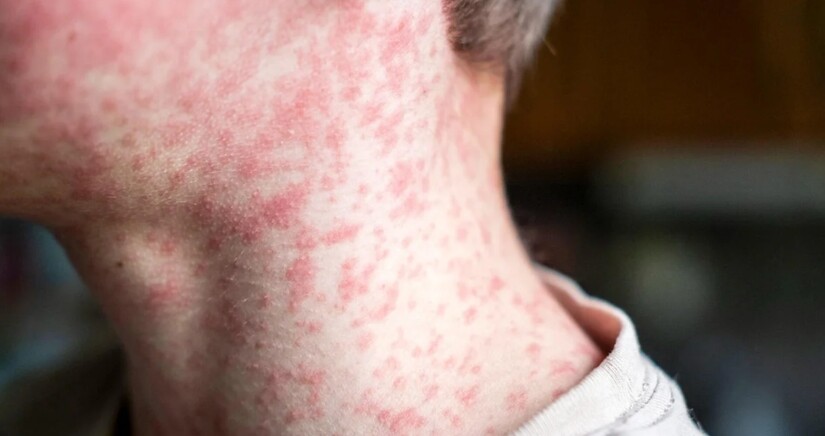
Measles symptoms typically appear 7 to 14 days after exposure and follow a predictable course:
Health officials urge anyone experiencing symptoms to call ahead before visiting a clinic or emergency room, to prevent exposing other patients.
For now, Minnesota’s cluster remains contained within the metro area. The linkage among four cases suggests a defined transmission chain, a key advantage for contact tracing teams working to prevent further spread.
Still, public health leaders are clear: five cases can become 15, and 15 can become 50, if immunity gaps widen.
The lesson of recent years is that measles returns not because medicine has failed, but because protection has thinned.
In 2023, Minnesota recorded zero cases. In 2024, a major outbreak pushed the total to 70. In 2025, the number settled at 26. Now, in the first weeks of 2026, five cases have already been confirmed, each one a reminder that elimination is a status that must be maintained, not assumed.
For Minnesota families, the immediate action is simple and practical: check immunization records, speak with a healthcare provider if unsure, and respond promptly to any public exposure notices issued by health authorities.
In an era defined by rapid information and polarized debates, measles offers a starkly measurable truth. When vaccination rates fall below 95 percent, the virus returns.


Overcast, with a high of 64 and low of 52 degrees. Overcast in the morning, partly cloudy during the afternoon, overcast in the evening,