Image
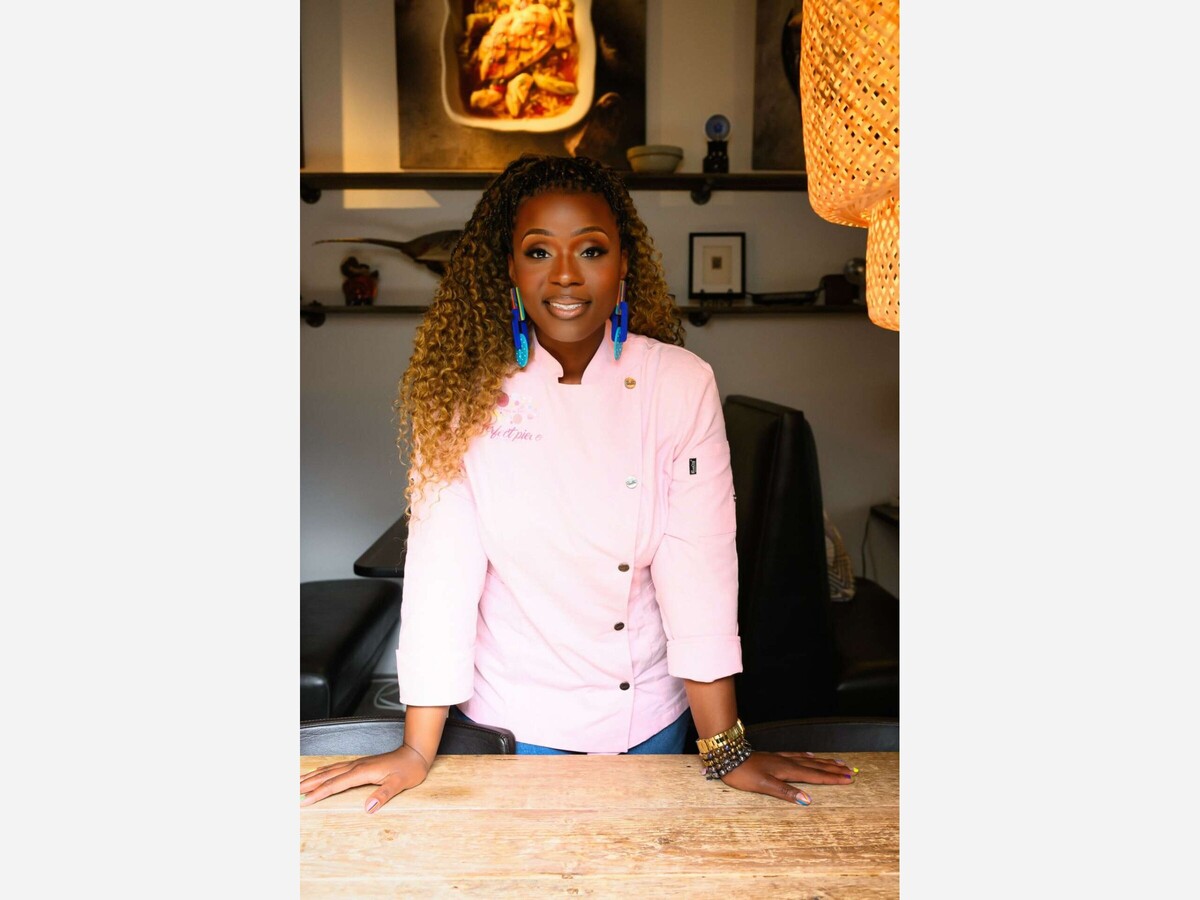



Before there was a brand, there was a sound.
Wood scraping across linoleum.
A small dining room chair dragged across a North Minneapolis apartment floor in the 1980s.
Five-year-old Melanie Lewis pulling herself closer to the table where her grandmother stood.
The neighborhood was Sumner Field, the public housing development that would later become Heritage Park. Concrete courtyards. Tight-knit families. A city still deciding who it would protect and who it would overlook.
Her grandmother had come from the East Coast carrying something more precious than luggage. A bread starter. Alive. Fermenting. Decades of discipline folded into flour and water. The woman had worked in the same New York bakery for nearly thirty years before retiring back to South Carolina. Baking was not hobby. It was trade. It was craft. It was consistency.
Melanie does not remember every detail. She remembers enough.
Chocolate cake batter thick and glossy in a bowl.
Rolls proofing quietly.
The smell of warmth rising into winter air.
Her father remembers more. He remembers his daughter dragging the chair and planting herself beside her grandmother as if proximity alone could transfer skill.
That afternoon, something irreversible happened.
Not ambition.
Not business.
Possibility.
Raw ingredients became something finished. Steps led to transformation. Heat made structure hold.
At five years old, she saw the miracle.

When Melanie describes baking, she does not romanticize it.
“Ten grams means ten grams,” she says. “You cannot fudge that.”
She began culinary school on the savory side where instinct carried weight. A pinch. A stir. Adjust. Taste. Correct.
But pastry is not forgiving. Fractions matter. Salt is not suggestion. Temperature is law. A quarter teaspoon shifts outcome.
Baking is chemistry disguised as comfort.
Patience is built into its architecture. You cannot rush fermentation. You cannot intimidate buttercream into stability. You cannot skip steps and expect excellence.
Those lessons moved from kitchen to character.
Patience.
Discipline.
Measurement.
These are not just culinary traits. They are survival tools.
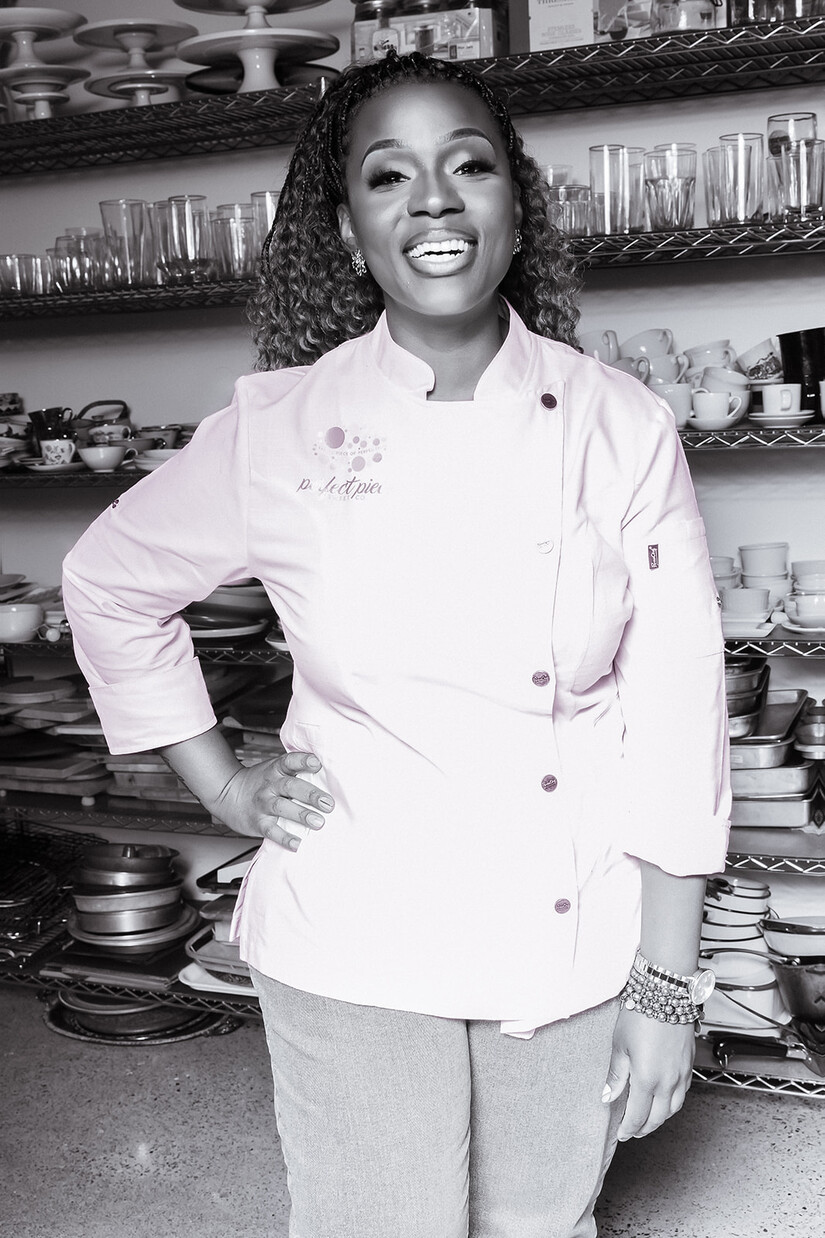
In the early 2000s, before pastry chefs were fixtures in every fine dining restaurant, Melanie entered professional kitchens across the Twin Cities.
There were rooms where she was the only woman.
There were kitchens where she was the only person of color.
She did not narrate these spaces as battles. She narrates them as classrooms.
She learned plating discipline. Organizational systems. Inventory management. Timing. Consistency.
“If someone orders a dessert on Monday,” she says, “they should be able to come back two weeks later and it tastes exactly the same.”
Consistency became doctrine.
She began consulting at multiple restaurants while maintaining a primary role. Different cuisines. Different expectations. Different teams. Leadership became less about title and more about observation.
Who was strongest at plating.
Who needed reinforcement.
Who could execute without supervision.
She learned to read people the way she read recipes.
Those skills would later anchor her entrepreneurship. But first, she had to leave.

In 2015, she had security.
Promotion. Stability. A respected position as sous pastry chef. A paycheck that arrived on schedule.
And then came the internal unrest.
“I was scared out of my mind,” she says without ornament.
She knew food. She did not know business. Restaurants had accounting departments. Restaurants had payroll systems. Restaurants had insulation.
Entrepreneurship had exposure.
She did not move impulsively. She prayed. She wrestled. She resisted the idea. She questioned whether she had heard correctly. She sought counsel. She waited.
The conviction did not leave.
Eventually, her resignation letter rested folded on a stainless steel prep table. Fluorescent light overhead. The hum of refrigeration behind her. Buttercream still on her sleeve.
Comfort is predictable.
Calling is not.
“I would rather move forward with God,” she says, “than stay comfortable.”
Courage is not chest out and fearless. Courage is a pounding heart that walks anyway.
She walked.
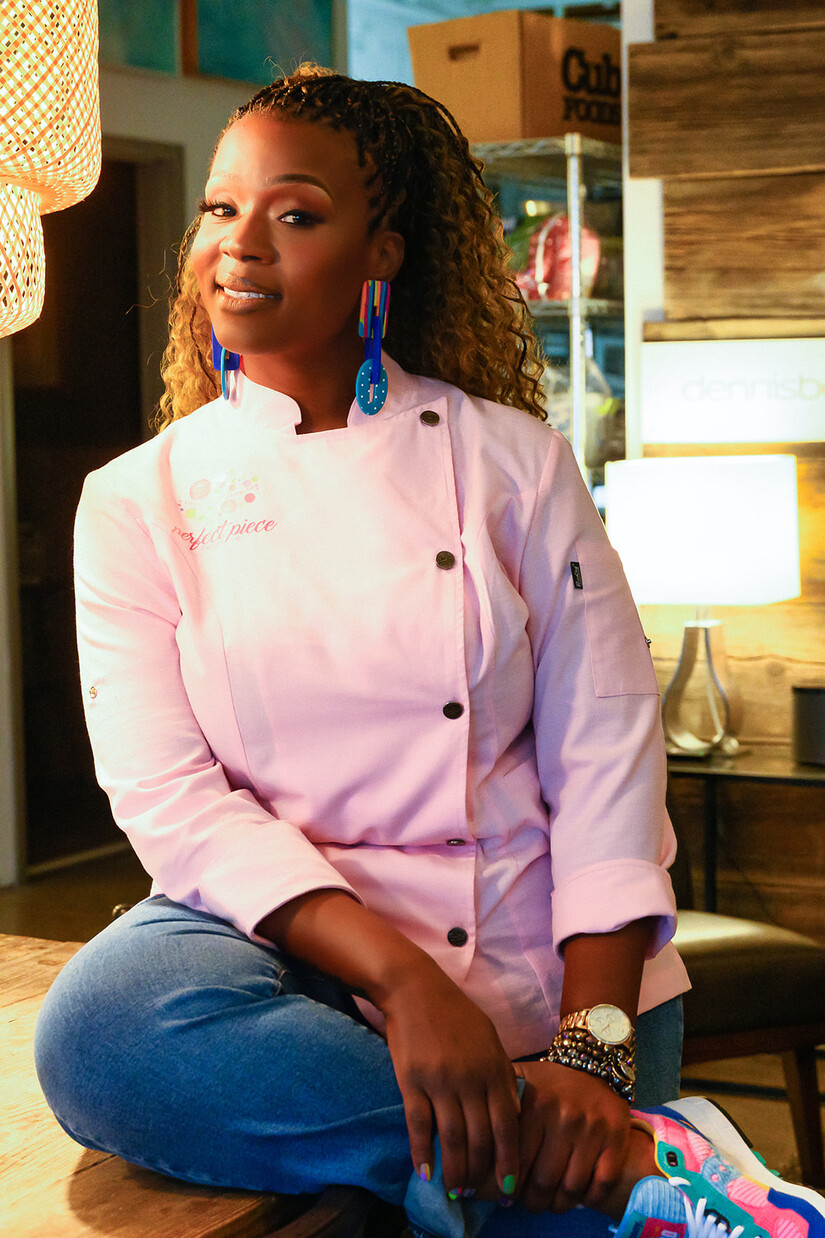
Launching The Perfect Piece Sweets Co. did not introduce open hostility. It introduced suggestion.
An advisor told her she should use former restaurant employers as validation.
“If you can use them,” he implied, “you will get more clients.”
She was not asking for validation. She was asking for business guidance.
A banker questioned her desire to place a retail space in North Minneapolis. Insurance costs. Break-ins. Viability. Risk.
“Do you really think a business like yours would thrive there?”
A woman once tasted her work and said, “I thought a white lady made these cakes.”
At weddings, she has been mistaken for delivery staff rather than owner.
None of these moments were violent. None required confrontation.
They accumulated.
Each one tested her resolve.
Each one asked her to shrink.
Instead, she sharpened.
Premium ingredients only.
Email response within structured time frames.
Website clarity.
On time delivery.
Customer service, she insists, begins before money changes hands. It begins when someone searches for your name.
Consistency became rebuttal.
Excellence became argument.
She did not defend her capacity. She demonstrated it.

Entrepreneurship is often marketed as freedom.
Melanie laughs at that mythology.
“If I do not invoice, I do not eat,” she says plainly.
Emails do not stop on Sundays. Creativity does not turn off at five. Strategy is constant. Responsibility is continuous.
Freedom is tethered to discipline.
Retail expansion brought rejection in waves. Tasting after tasting. Coffee shop owners praising the product but declining shelf space. Emails that began with compliments and ended with no.
Rejection is loud in quiet rooms.
There were moments she questioned timing. Questioned direction. Questioned whether she was misaligned.
But while retail stalled, her wedding clientele grew. Reputation expanded. Word traveled.
Good news travels.
Bad news travels faster.
She built systems that left little room for either.
Her business coach once told her she had changed. That fear no longer dominated her introductions. That confidence had settled in.
Entrepreneurship had refined her voice.

Long before brand language, her mother had given instruction.
If you are kind at church, be kind at school.
If you are respectful at home, be respectful on the playground.
Consistency of character is not seasonal.
Her father was a youth minister. Her mother taught Sunday school and sang in the choir. Church was not occasional. It was structure.
Treat people the way you want to be treated.
That principle now undergirds her business.
When event planners book her, they know what will happen. She will arrive early. She will execute efficiently. She will leave without disruption.
Reputation is cumulative.
Character is compound interest.

Melanie does not see her business as solely financial.
“I have nieces and nephews watching,” she says. “This is not just about me.”
There are days she has considered quitting. Days when revenue felt slow. Days when rejection weighed heavy.
But quitting would signal something she is unwilling to model.
“Because I said yes,” she says, “they can say yes.”
Her long-term vision includes a brick and mortar space in North Minneapolis. Culinary classes. Structured teaching. Passing technique to young African American and other aspiring chefs of color.
She wants to demystify excellence. To make discipline accessible. To show that precision is learned, not inherited.
The bread starter her grandmother carried did not die. It multiplied.
That is the blueprint.

When asked what she wants remembered, she does not speak of awards.
“That I kept going.”
That she did not abandon the work when it became inconvenient.
That she did not leave assignment undone.
That she finished.
In a city that has known reconstruction, redefinition, and resilience, finishing is radical.
North Minneapolis has been renamed. Rebuilt. Reinterpreted.
But discipline does not rename itself. It repeats.
Measure carefully.
Stay when it is hard.
Do not rush what requires heat.
Chef Melanie Lewis understands structure.
The dough does not care about doubt. It responds to discipline.
And somewhere in Minneapolis, in a kitchen not yet renovated, a child may be dragging a chair across the floor, pulling closer to possibility.
History is not always declared.
Sometimes it rises quietly, held together by precision, faith, and the refusal to fold.



Patchy rain nearby, with a high of 38 and low of 32 degrees. Fog during the morning, patchy rain nearby in the afternoon, light snow overnight.