82° and Sunny
Image
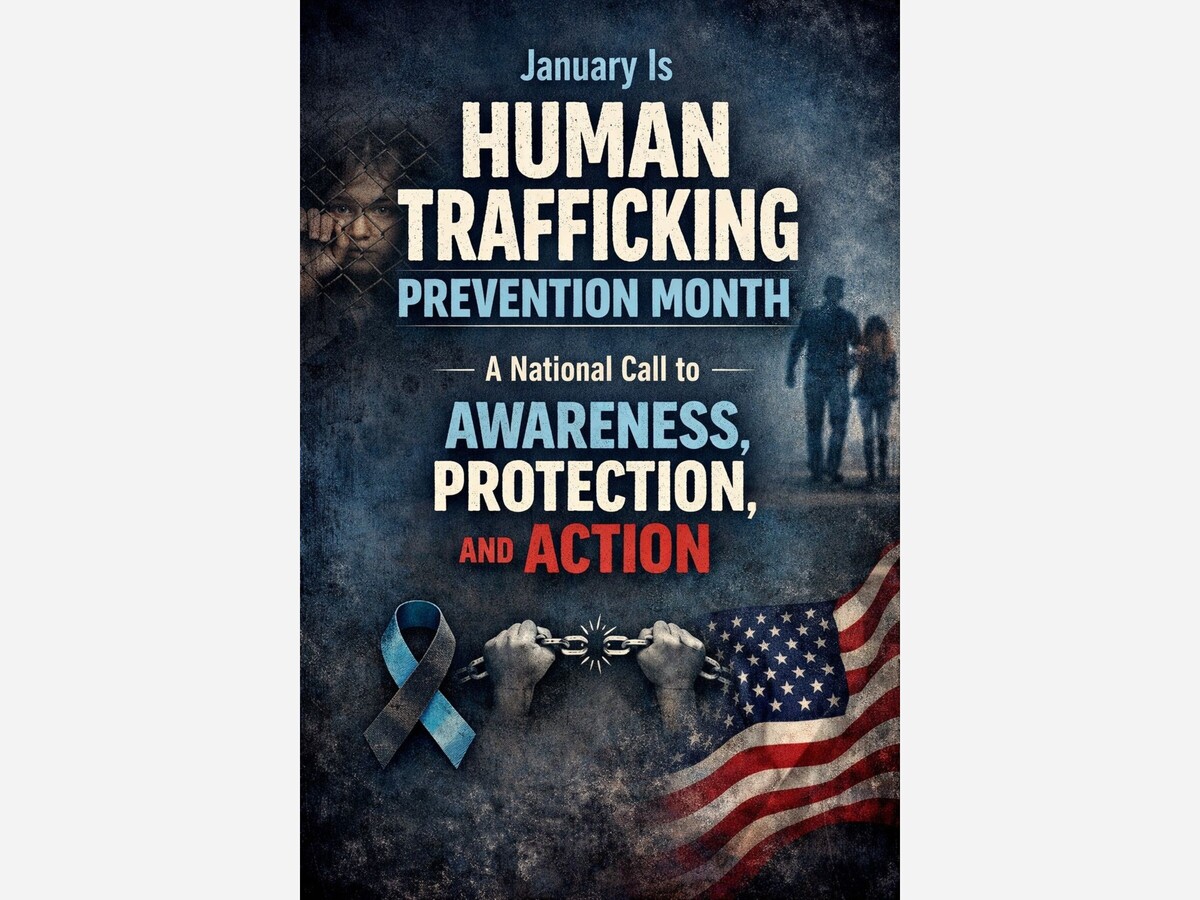



January 2026 marks the 16th anniversary of National Human Trafficking Prevention Month, a designation first established in 2010 to strengthen the nation’s response to human trafficking, often described as modern-day slavery. Each January, federal agencies, state governments, advocacy organizations, and local communities renew a shared commitment to prevention, survivor support, and accountability for those who exploit others.
Human trafficking is defined under U.S. law as the use of force, fraud, or coercion to compel labor or commercial sex. It is a crime that cuts across age, gender, race, immigration status, and socioeconomic background. It occurs in cities and rural communities alike, often hidden in plain sight.
The central message of Human Trafficking Prevention Month remains clear and unequivocal: Every person has the right to live and work safely. No one has the right to exploit another human being. Not a family member. Not a friend. Not a partner. Not an employer. No one.
Human trafficking generally falls into two legally recognized categories:
Labor trafficking, which can occur in industries such as agriculture, construction, domestic work, hospitality, manufacturing, and food service. Victims may be forced to work through threats, debt bondage, withheld wages, confiscated identification, or fear of harm.
Sex trafficking, which involves coerced commercial sex. Under federal law, any commercial sex involving a minor under the age of 18 is legally defined as trafficking, regardless of whether force, fraud, or coercion can be proven.
Traffickers frequently exploit vulnerability, including housing insecurity, financial hardship, language barriers, immigration fears, disability, or social isolation. Contrary to popular myths, trafficking does not require physical restraint. Psychological coercion, manipulation, and control are often the primary tools.
January serves as a national moment to educate the public on how trafficking operates and how it can be prevented. Federal and community-based efforts emphasize early identification, trauma-informed responses, and survivor-centered systems of care.
A key date within the month is January 11, National Human Trafficking Awareness Day, when communities across the country wear blue to signal solidarity with survivors and spark conversations that can lead to intervention and prevention.
This year’s national prevention framework emphasizes coordination across sectors, recognizing that trafficking prevention requires collaboration among healthcare providers, educators, employers, faith leaders, law enforcement, social service agencies, and community members.
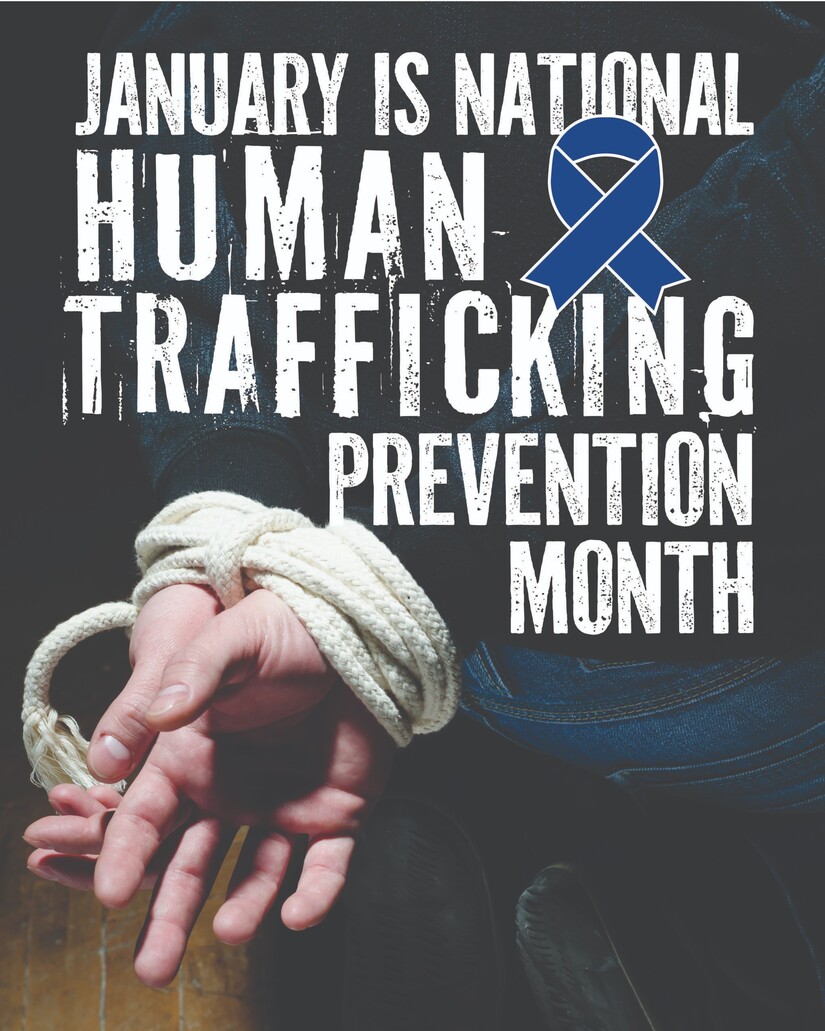
For individuals who may be experiencing trafficking, or for those who are concerned about someone else, confidential help is available at any time.
The National Human Trafficking Hotline operates 24 hours a day, seven days a week, providing free and confidential support, safety planning, and connections to local resources nationwide.
You do not need proof or certainty to reach out. The hotline is available both to people seeking help and to community members who want guidance on what to do next. In situations involving immediate danger, individuals are urged to contact local emergency services by dialing 911.
Human trafficking thrives in silence and isolation. Prevention depends on public awareness, informed vigilance, and a collective refusal to look away. It also depends on listening to survivors and ensuring they have access to safety, dignity, legal protection, and long-term support.
As Human Trafficking Prevention Month continues, advocates emphasize that awareness alone is not enough. Ending trafficking requires sustained commitment, policy enforcement, community engagement, and the recognition that safety and freedom are not privileges but fundamental human rights.



Sunny, with a high of 88 and low of 64 degrees. Sunny during the morning, patchy rain nearby overnight.