Image




COON RAPIDS, Minn.
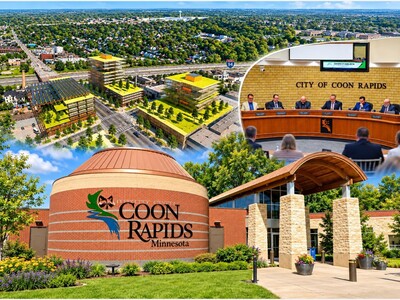
After a decade marked by cranes, concrete, and construction crews reshaping nearly every corner of its park system, the City of Coon Rapids is turning back to its residents with a simple but consequential question: what should the next ten years of parks, trails, and recreation look like?
City officials this month formally launched a broad public engagement effort to develop the 2026 to 2036 Park and Recreation System Master Plan, a guiding document that will shape investment decisions, programming priorities, and long-term maintenance strategies for one of the city’s most visible public assets.
Residents are being asked to share their ideas through an online survey and an interactive project map hosted on the Social Pinpoint platform, allowing both high-level feedback and location-specific suggestions. City leaders say the goal is to ensure the next chapter of the park system reflects how Coon Rapids has changed and how it is expected to grow.

The planning effort builds directly on a period of unusually intensive capital investment. In 2013, Coon Rapids voters approved a parks bond of approximately $17.4 million, commonly cited as $18 million, which funded a sweeping set of improvements between 2014 and 2024.
Over that decade, the city completed full redevelopments at 11 parks, modernizing aging facilities and expanding access. Signature projects included the transformation of the 40-acre Sand Creek Athletic Complex into a regional destination capable of hosting large youth and amateur sports tournaments, drawing visitors from across the metro area.
The bond era also ushered in amenities that were previously absent from the system. The city opened its first public splash pad at Boulevard Plaza, added dedicated pickleball courts at Riverwind Park, and made accessibility a central design principle. Many playgrounds were rebuilt with ADA-compliant features and rubberized surfacing, while trail connectivity expanded through projects such as the 85th Avenue Trail, linking neighborhoods to Springbrook Nature Center and the broader regional trail network.
City planners now describe the coming master plan as a pivot point, shifting from a period of rapid construction to one focused on stewardship.

The 2026 to 2036 Master Plan, developed in partnership with consulting firm ISG Inc., is intended to answer a different set of questions than its predecessor. Rather than concentrating primarily on what to build next, the plan will evaluate how to maintain, program, and adapt the substantial public investment already in place.
According to project materials, the update will include a full inventory of park assets, cost projections for long-term maintenance and replacement, and recommendations for more systematic asset management. City officials have emphasized that sustaining the value of the $18 million added over the last decade will require deliberate planning and reliable funding.
At the same time, the plan will assess emerging recreation trends that have gained momentum since the last planning cycle, including the rapid growth of pickleball, demand for flexible outdoor event spaces, and evolving expectations around year-round programming.
Equity and inclusion are also central themes. Coon Rapids continues to diversify demographically, and the planning process is designed to examine how parks and programs can better serve youth, older adults, and communities with differing cultural and recreational needs.
While the master plan itself does not authorize spending, it will frame discussions about future investments and how to pay for them.
Several major infrastructure projects are already underway or under consideration. At the Coon Rapids Dam area, more than $2.9 million in bridge and culvert replacements are scheduled through 2025 to improve safety and flood resilience. City planners are also advancing a proposed $4.5 million pedestrian bridge over Coon Rapids Boulevard, intended to close a critical gap between the Sand Creek and Coon Creek trail systems.
Beyond those projects, the City Council is exploring the possibility of a 0.5 percent Local Option Sales Tax as a potential funding source for a new community center and expanded outdoor event space near the Coon Rapids Ice Center. Any sales tax proposal would require voter approval in a future referendum, and officials say the master plan will help clarify whether such investments align with community priorities.

Public participation is a cornerstone of the update. Residents can complete a brief online survey to share general priorities, unmet needs, and program ideas. The interactive project map allows users to place comments directly on specific parks or trails, identifying desired improvements such as better lighting, additional benches, or repairs to existing infrastructure.
City staff expect to compile and analyze public input alongside technical assessments throughout late 2025. Draft recommendations are anticipated to reach the City Council before the end of the year, with the final master plan scheduled for adoption in 2026.
For Coon Rapids, the process represents more than a routine planning exercise. It is a moment to take stock of a decade of visible change and to decide how a mature park system can continue to serve a growing and evolving community.
As city officials frame it, the next ten years will be less about pouring concrete and more about ensuring that the places residents already cherish remain accessible, resilient, and welcoming for generations to come.



Sunny, with a high of 74 and low of 49 degrees. Sunny for the morning, clear in the afternoon and evening, smoky haze overnight.