Image



On the eve of a new legislative session, Minnesota’s immigration debate has moved from abstract ideology to storefronts, job sites and gas stations.
At the center is the North Star Act (HF1100 / SF1181), a proposal backed by members of the Minnesota Democratic-Farmer-Labor Party that would prohibit state and local governments from using public resources to assist in federal civil immigration enforcement carried out by U.S. Immigration and Customs Enforcement.
Supporters describe it as a constitutional boundary. Opponents call it sanctuary policy by another name.
But in recent days, the loudest voices urging action have not been elected officials. They have been business owners.
The North Star Act seeks to clarify what role Minnesota agencies may play in immigration enforcement, which under the U.S. Constitution is a federal responsibility.
The legislation would:
DFL lawmakers have rejected the “sanctuary state” label, arguing the bill does not prevent cooperation in criminal investigations. Instead, they say, it prevents Minnesota from being compelled into civil immigration enforcement absent judicial process.
The debate unfolds under a DFL governing trifecta, with the party controlling the Minnesota House, Senate and Governor’s Office. That alignment gives the proposal procedural momentum, but not political consensus.
Law enforcement associations and Republican lawmakers have warned that limiting cooperation could complicate interagency coordination and undermine federal compliance expectations.
The urgency behind the legislation intensified after reports of heightened federal immigration operations in the Twin Cities metro.
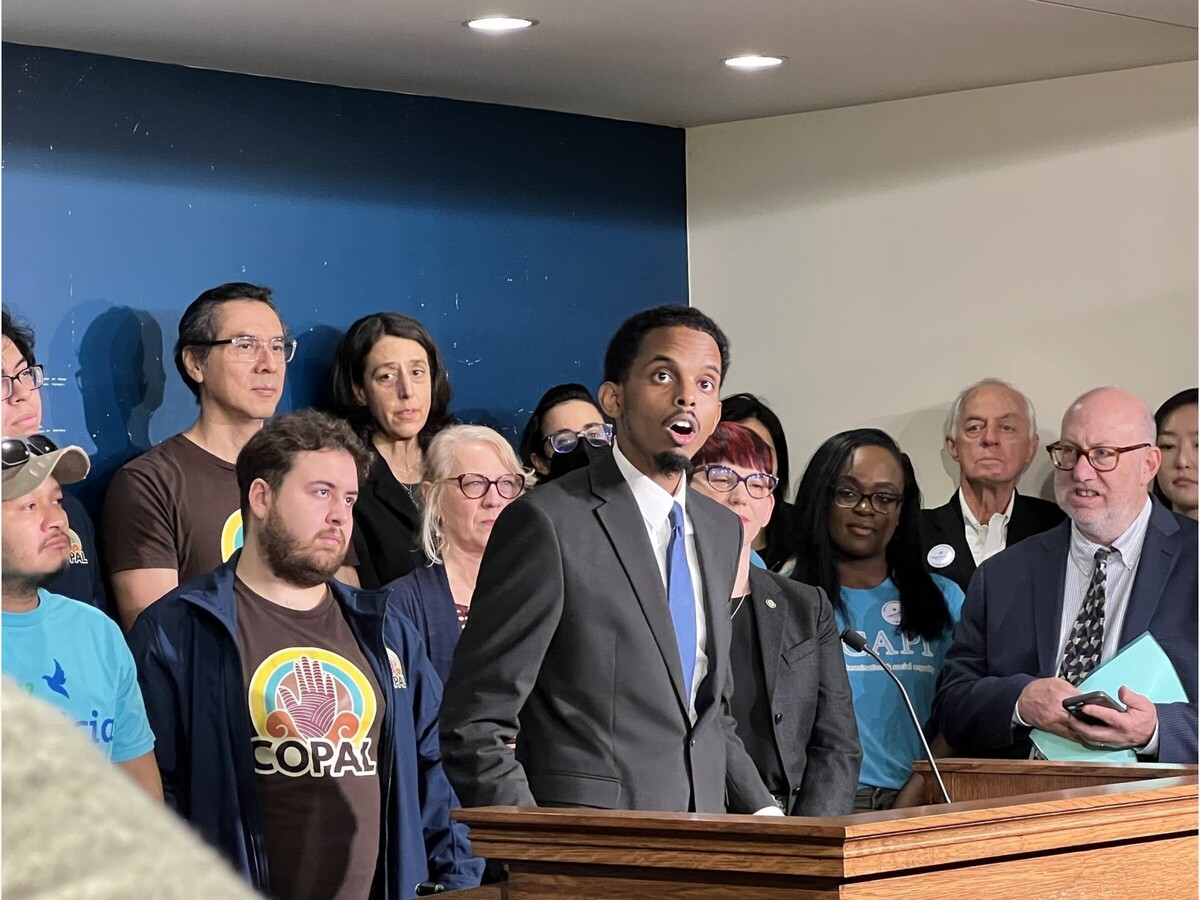
At a press conference in St. Paul, small business owners described what they called a “chilling effect” on commerce.
Jenaro Delgado, a restaurateur and advocate within Minnesota’s Latino business networks, said enforcement surges have changed consumer behavior almost overnight.
“When enforcement ramps up, families retreat,” Delgado said. “They stop shopping. They stop dining out. They stop participating in public life.”
Retailers and restaurant owners in immigrant-dense commercial corridors have reported declines in foot traffic during periods of visible enforcement activity. Economists have long observed similar patterns nationally: when communities fear civil immigration enforcement, even lawful residents and citizens reduce discretionary spending and public engagement.
Delgado framed the issue not as immigration policy, but as economic stability.
“Aren’t we supposed to be about freedom?” he asked. “My family and I, our friends, our neighbors, other business owners, we have not felt free in a long time.”
The impact extends beyond storefronts.
Sarah Lechowich, a third-generation construction company owner in Cottage Grove, said her company halted projects after workers expressed safety concerns tied to enforcement activity.
“We couldn’t guarantee the safety of our workers,” she said, noting that some employees have earned legal immigration status. “The uncertainty affects everyone.”
Construction and agricultural industries rely heavily on immigrant labor nationwide, including workers with lawful permanent residence, work visas or other authorized statuses. Industry groups frequently warn that abrupt enforcement activity can destabilize projects, delay timelines and compound labor shortages already straining the sector.
For Lechowich, the calculus was practical: suspend projects or risk disruption mid-build.
The North Star Act sits at the intersection of two competing narratives.
Law enforcement leaders have expressed concern about ensuring that restrictions do not unintentionally hinder coordination in cases where immigration violations intersect with criminal conduct.
DFL lawmakers have grounded the proposal in constitutional language, emphasizing that civil immigration enforcement does not automatically authorize warrantless detention by state actors.
Courts have repeatedly distinguished between criminal warrants and administrative immigration detainers. The North Star Act’s backers argue that without a judicial warrant, state participation in civil detention risks constitutional violation.
Opponents counter that states historically cooperate with federal authorities in various capacities and warn against creating rigid prohibitions that could complicate lawful collaboration.
Minnesota’s economy is deeply intertwined with immigrant entrepreneurship and labor.
Immigrant-owned businesses contribute billions to the state’s economy through job creation, tax revenue and neighborhood revitalization. In sectors such as hospitality, construction, food processing and retail, immigrant labor plays a visible and essential role.
When enforcement visibility rises, business owners say the ripple effects extend beyond those directly targeted:
For small businesses operating on thin margins, even temporary downturns can be destabilizing.
With the legislative session underway, HF1100 and SF1181 are expected to receive committee hearings before any floor vote.
Passage would place Minnesota among states that have enacted limits on state participation in federal civil immigration enforcement, though the specifics of each state’s framework vary widely.
The bill’s fate will hinge not only on party numbers, but on how lawmakers balance constitutional interpretation, economic stability, federal compliance and public safety concerns.
For now, the debate has shifted from theory to lived experience.
In the hallways of the Capitol, the argument is framed in statutory language and constitutional clauses. In neighborhoods across the Twin Cities, it is framed in quieter terms: whether families feel safe enough to shop, whether workers feel safe enough to report to a job site, whether businesses feel stable enough to grow.
Minnesota calls itself the North Star State. In this legislative session, lawmakers must decide what that metaphor means when federal authority, local autonomy and economic livelihood converge.



Sunny, with a high of 99 and low of 71 degrees. Sunny for the morning, clear overnight.