63° and Moderate rain at times
Image



On a quiet Tuesday morning in early March, a small but engaged group of residents assembled with city officials and police leaders in Blaine, Minnesota, to talk about something deceptively simple: parks.
Yet beneath the discussion of playgrounds, trails, and athletic fields lay a deeper civic question that many growing suburbs across the United States are grappling with. How do cities maintain safe, welcoming public spaces as populations expand and public life increasingly unfolds outdoors?
That question formed the centerpiece of the Blaine Community Alliance meeting held on March 10, 2026, where the city’s Parks and Recreation leadership and the Blaine Police Department (BPD) presented a coordinated look at how Blaine’s parks are maintained, monitored, and protected.
The gathering reflected an approach that has become increasingly common in Minnesota municipalities: bringing residents directly into conversations about public safety and civic infrastructure before problems arise.
Blaine, located in Anoka County and partly in Ramsey County, has grown steadily over the past several decades and is now home to more than 70,000 residents, making it one of the larger suburbs in the northern Twin Cities metropolitan area.
With that growth has come a rapid expansion of parks, trails, and recreational facilities. According to city officials, Blaine now oversees more than 60 parks and over 60 miles of trails, a network of green space that supports everything from youth athletics and neighborhood gatherings to quiet morning walks along wooded paths.
Managing that system requires year-round logistical coordination.
During the Alliance meeting, Jerome Krieger, Blaine’s Parks and Recreation Director, offered residents an inside look at the infrastructure and operational planning required to maintain the system.
Krieger described how the city’s maintenance schedule shifts with the seasons. As winter recedes and spring approaches, staff begin preparing ballfields, inspecting playground equipment, repairing trails damaged by frost and snow, and coordinating with city departments ahead of the busy summer recreation season.
These seasonal transitions are critical. Warmer months bring dramatically higher park usage, particularly as youth sports leagues, outdoor events, and community gatherings fill the calendar.
The department must balance recreational demand with the long-term stewardship of natural spaces.
City officials say the goal is not simply to keep facilities operational but to preserve the environmental integrity of Blaine’s green spaces while making them accessible to the public.
If parks are the city’s communal living rooms, the police department plays a role in ensuring those spaces remain welcoming and secure.
That responsibility was the focus of the meeting’s second presentation, led by Community Service Officer Justin Adamski of the Blaine Police Department.
Adamski explained how the department monitors parks through a combination of patrols, community reporting, and coordination with city staff.
One of the key frameworks guiding the approach is the “observe and report” model, which encourages community service officers and residents alike to alert police when suspicious or unsafe activity occurs.
Community Service Officers, commonly referred to as CSOs, play a unique role within many police departments. They are non-sworn personnel who assist officers with community engagement, ordinance compliance, and non-emergency issues while maintaining a visible presence in neighborhoods and public spaces.
In Blaine’s parks, CSOs help serve as a bridge between residents and sworn officers.
Their work includes monitoring facilities, responding to minor concerns, assisting with lost property or ordinance issues, and reporting potential safety problems before they escalate.
Adamski also discussed how the police department works closely with the Parks Department to identify locations that may require additional attention.
These “hot spots” can include areas where lighting improvements may be needed, where vandalism has occurred, or where higher foot traffic may require more frequent patrols.
The collaboration between departments reflects a preventative philosophy increasingly emphasized in community policing.
Rather than reacting only after incidents occur, officials aim to identify patterns early and address environmental factors that influence safety.
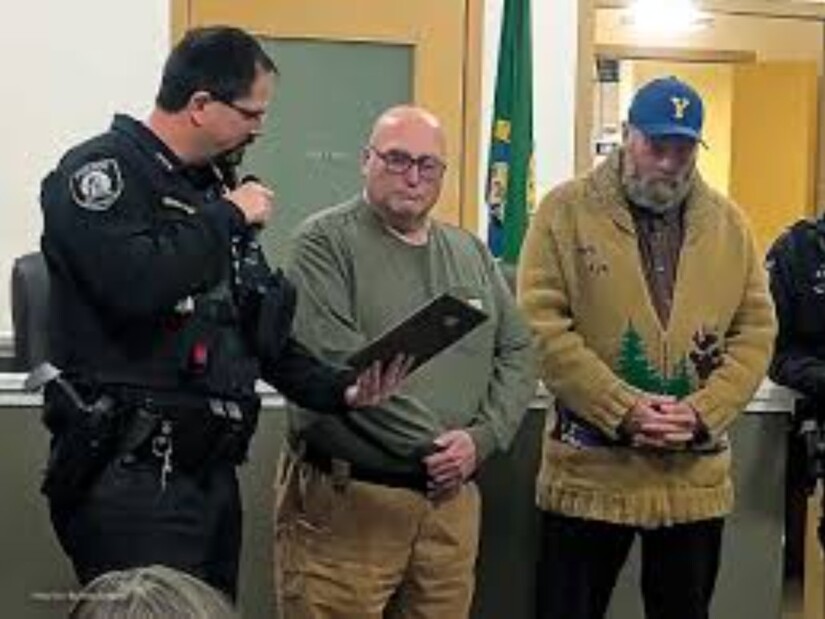
Beyond the presentations themselves, the meeting served as part of a broader civic experiment.
The Blaine Community Alliance functions as a collaborative forum designed to strengthen transparency and communication between residents and law enforcement.
Participants gather regularly to discuss issues affecting neighborhoods, exchange observations from across the community, and hear updates from city departments and police leadership.
The March meeting followed a structured format built around three core segments.
The first segment, known as “The Spotlight,” focuses each meeting on a particular city department or civic issue. In March, that spotlight was placed on the Parks and Recreation system.
The second segment, called “Community Pulse,” invites residents to share observations from their neighborhoods. Participants often raise concerns, offer suggestions, or highlight positive developments in the community.
The final portion of the meeting includes updates from the Blaine Police Department, providing information on crime trends, public safety initiatives, and ongoing departmental priorities.
City officials say the format helps capture something that crime statistics alone cannot.
Numbers may reveal patterns, but residents often see subtle shifts in their neighborhoods long before they appear in official reports.
Community meetings therefore function as a form of qualitative intelligence gathering, giving city leaders insight into concerns that might otherwise go unnoticed.
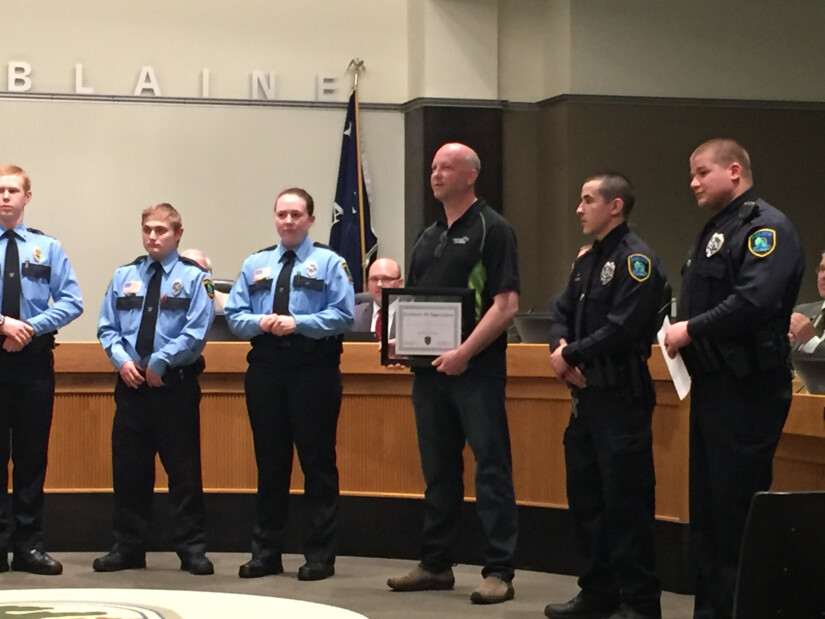
The focus on parks in March was not accidental.
City leaders are preparing for the high-activity months ahead, when parks and trails will become some of the most heavily used public spaces in the city.
Blaine’s recreational calendar includes youth sports leagues, community events, neighborhood gatherings, and daily outdoor activity across its expanding park system.
Ensuring those spaces remain safe and welcoming requires coordination across departments, from maintenance crews and recreation staff to police patrol units and community service officers.
The Alliance meeting offered residents a behind-the-scenes look at how that coordination happens.
For many who attended the meeting, the most important takeaway was not a statistic or policy update.
It was the reminder that maintaining safe public spaces is a shared responsibility between government institutions and the residents they serve.
Community members offered local shoutouts, shared observations about park usage, and engaged directly with city leaders.
Police officials expressed appreciation for the feedback and emphasized the importance of continued civic participation.
These conversations may seem modest, even routine. Yet they represent the quiet infrastructure of democratic local government: residents gathering with public officials, sharing concerns, exchanging information, and collectively shaping the future of their community.
In a city defined by its parks and open spaces, those conversations help ensure that the places where families gather, children play, and neighbors meet remain safe, welcoming, and alive with public life.
For Blaine, the message of the morning was clear.
A healthy community is not built by institutions alone.
It is built by the people who show up.
MinneapoliMedia
Community. Culture. Civic Life.



Sunny, with a high of 80 and low of 57 degrees. Sunny during the morning, clear overnight.