72° and Overcast
Image
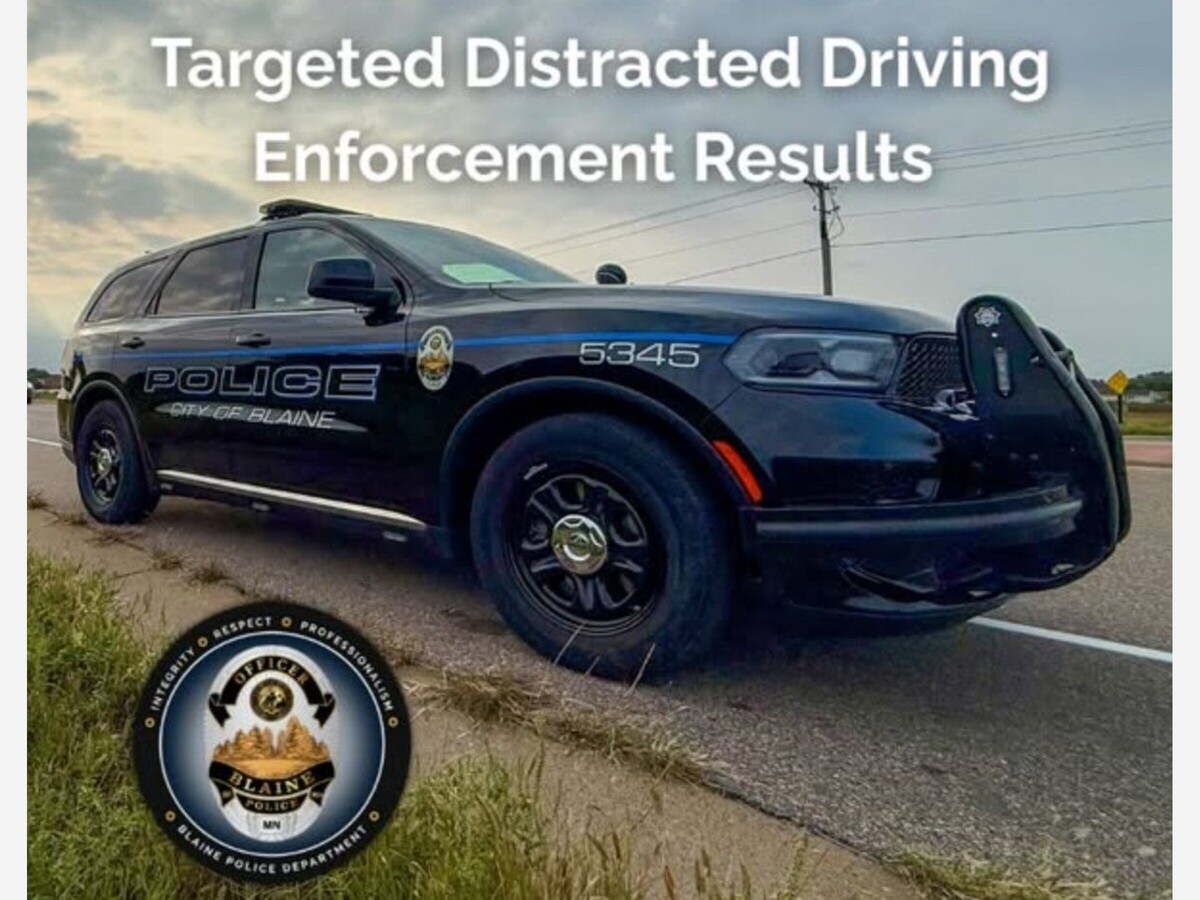



The Blaine Police Department decided to respond.
With a dose of humor and a detailed financial breakdown, the department recently addressed some of the most persistent misconceptions surrounding traffic enforcement, explaining where citation revenue actually goes and why officers conduct traffic stops in the first place.
The answer, according to the department, is considerably less dramatic than internet speculation suggests.
"Traffic enforcement isn't about revenue," the department stated in a public information post. "It's about preventing injuries, saving lives, and helping everyone get home safely."
The clarification comes as law enforcement agencies across Minnesota continue to focus enforcement efforts on distracted driving, speeding, and other dangerous behaviors that remain among the leading contributors to serious and fatal crashes on the state's roadways.
WHERE THE MONEY ACTUALLY GOES
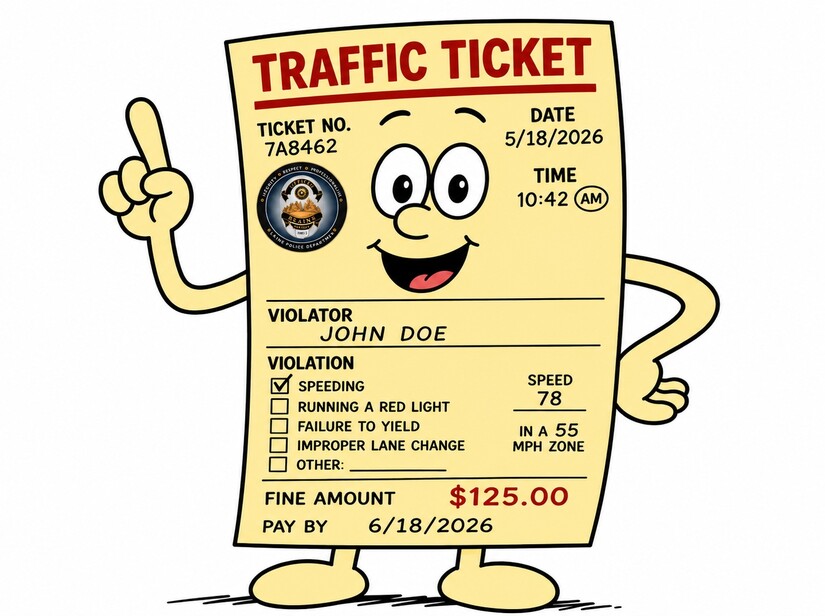
One of the most common assumptions surrounding traffic citations is that local police departments directly profit from ticket revenue.
According to the Blaine Police Department, that assumption is incorrect.
Using the example of a standard $140 Hands-Free Minnesota citation, the department outlined how citation revenue is distributed under Minnesota's court and fine allocation structure.
Of the $140 citation:
• $90, or approximately 64 percent, goes to the State of Minnesota.
• $33.33, or approximately 24 percent, goes to the City of Blaine's general fund.
• $16.67, or approximately 12 percent, goes to Anoka County.
• $0 goes to the Blaine Police Department.
The distribution reflects Minnesota's broader statutory framework governing traffic fines, court fees, surcharges, and local government allocations.
While a portion of citation revenue does return to local government, the money directed to the City of Blaine is deposited into the city's general fund, which supports a wide range of municipal operations and services. It is not earmarked specifically for police operations, officer compensation, or department equipment purchases.
Likewise, the county's share helps support court administration and other county-level governmental functions.
The police department itself receives no direct payment from individual citations.
DEBUNKING THE QUOTA MYTH
The department also addressed another enduring public belief: that officers are rewarded for issuing tickets.
According to Blaine Police, officers do not receive commissions, bonuses, incentive pay, or salary increases based on citation volume.
There are no punch cards.
There are no sales targets.
There are no rewards for reaching a certain number of traffic stops.
Officer compensation is established through municipal employment agreements and salary structures that are entirely independent of the number of citations issued.
The department's statement aligns with Minnesota law, which prohibits traffic enforcement practices that would tie officer compensation to citation production.
For law enforcement leaders, the distinction matters because the perception of revenue-driven policing can undermine public confidence in legitimate traffic safety efforts.
WHY OFFICERS CONDUCT TRAFFIC STOPS
The department's explanation ultimately returned to the reason traffic enforcement exists at all.
Traffic stops, officials say, are designed to change behavior before dangerous driving results in tragedy.
The primary focus remains the driving behaviors most frequently associated with severe injury and fatal crashes.
Among them is distracted driving.
Minnesota's Hands-Free Law, which took effect in August 2019, prohibits drivers from holding a cellphone while operating a motor vehicle. The law was enacted following years of concern from transportation officials, law enforcement agencies, and traffic safety advocates over the increasing role of mobile device distraction in crashes across the state.
Speeding remains another major concern.
Transportation safety research consistently shows that higher speeds reduce driver reaction time while significantly increasing the severity of collisions when crashes occur.
Both distracted driving and speeding remain central focus areas of Minnesota's Toward Zero Deaths initiative, the statewide traffic safety strategy aimed at reducing fatal and serious-injury crashes through a combination of enforcement, education, engineering improvements, and emergency response.
Local law enforcement agencies, including those in Anoka County, routinely participate in coordinated traffic safety campaigns that target these high-risk driving behaviors.
A PUBLIC SAFETY TOOL, NOT A REVENUE STRATEGY
For officers working patrol shifts, traffic enforcement is often one of the most visible aspects of policing and one of the most publicly debated.
Yet the department argues that the purpose remains straightforward.
Every distracted driver who puts down a phone.
Every speeding driver who slows down.
Every motorist who chooses safer behavior after a traffic stop.
Those outcomes, the department says, are the true measure of success.
The simplest way to avoid a traffic citation, Blaine Police noted, is also the safest.
Put the phone down.
Pay attention to the road.
Follow the law.
The result is not merely avoiding a fine. It is reducing the risk that a routine drive becomes a life-altering crash.
And contrary to internet mythology, it will not affect anyone's ability to purchase a gold-plated jet ski.
MinneapoliMedia | Community. Culture. Civic Life.


Overcast, with a high of 68 and low of 54 degrees. Overcast in the morning, clear for the afternoon and evening, overcast overnight.