60° and Cloudy
Image
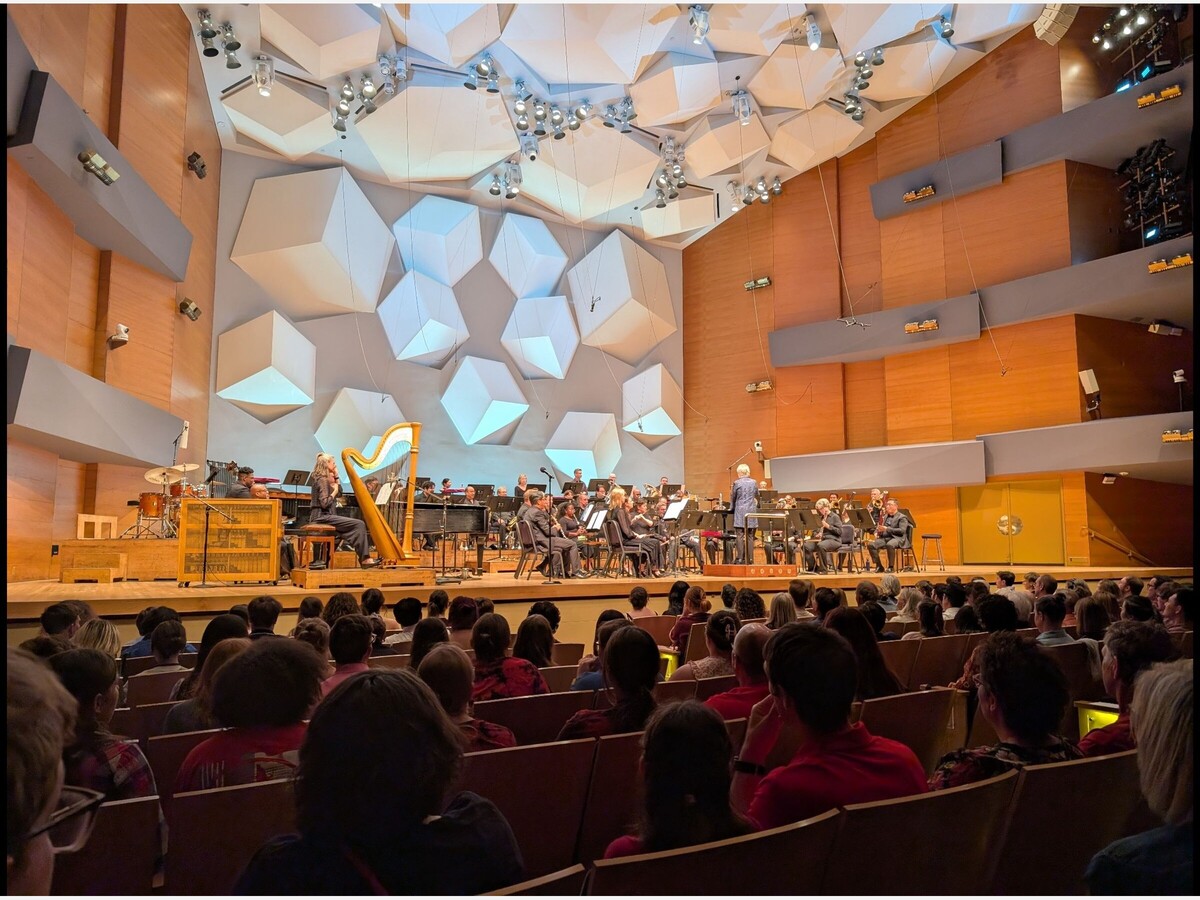



The concert, conducted by internationally recognized band conductor and educator Cynthia Johnston Turner, brought together musicians, music educators, students, composers, and supporters from across the state for what organizers characterized as a historic moment in Minnesota's performing arts landscape.
For generations, concert band music has occupied a prominent place in American music education. Millions of students have participated in school bands, youth ensembles, and community bands. Yet professional concert bands remain relatively uncommon compared with professional orchestras, opera companies, and chamber ensembles.
Minnesota Winds was created to address that gap.
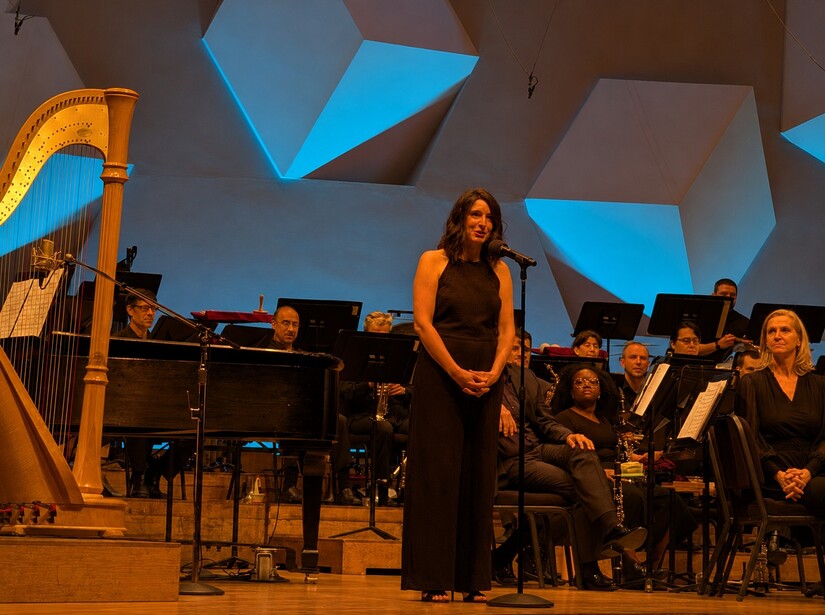
During her opening remarks, Minnesota Winds Co-founder and Executive Director Meagan Bachmayer highlighted the gap between widespread participation in band music and the limited number of professional concert band organizations across the country.
"Despite the fact that there are hundreds of thousands of us who experience the power of music through school and community band, very few professional concert bands exist," Bachmayer told the audience. "Tonight, Minnesota, we're going to change that."
The performance represented the culmination of the ensemble's first season and offered audiences a program that blended established concert band repertoire with contemporary works and a world premiere by Minnesota composer Katherine Bergman.
Held at Orchestra Hall in downtown Minneapolis, the program opened with Joseph Willcox Jenkins' "American Overture," a work long regarded as a staple of the wind band repertoire.
The evening then turned toward new music with the world premiere of Bergman's "Unfurl," commissioned for Minnesota Winds.
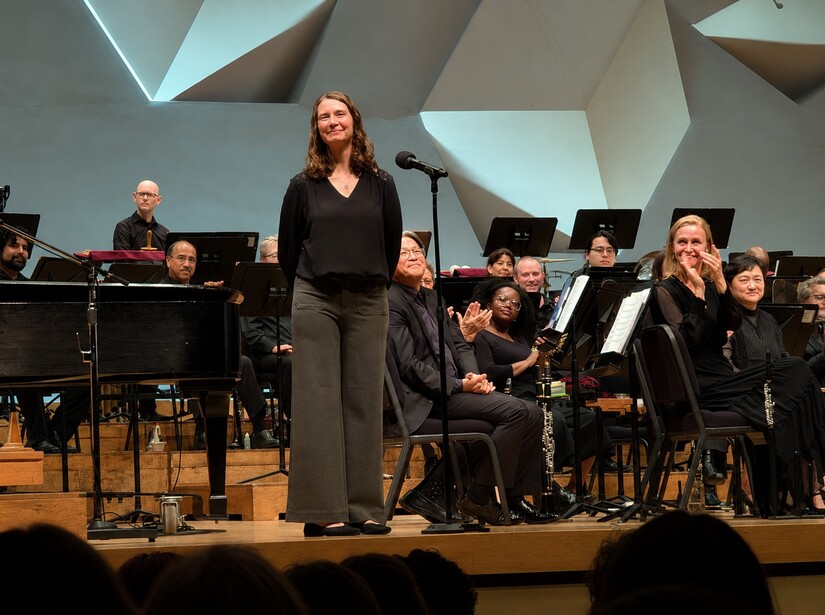
Bergman, a co-founder of the organization, described the composition as a musical reflection of the ensemble's own development from concept to reality.
Speaking from the stage before the premiere, she compared the growth of Minnesota Winds to the emergence of a fiddlehead fern, a plant she said has long fascinated her.
"I wanted to write a piece of music to paint the picture of that path," Bergman told the audience. "I love watching them sprout up in my yard in the spring. They emerge from the soil in this tightly coiled spiral and then gradually unfold into this vibrant plant that brings joy all summer long."
The metaphor mirrored the trajectory of Minnesota Winds itself.
What began as an idea among musicians and advocates for concert band artistry evolved into an organization capable of presenting professional-level performances at one of Minnesota's premier concert venues.
The ensemble's growth was a recurring theme throughout the evening.
Turner repeatedly referenced the vision and persistence required to establish a new professional arts organization, describing the season finale as the product of years of planning, partnership-building, and community support.
"It is the culmination of three years of vision, tenacity, determination, sheer will, partnership building, and community building," Turner told attendees.
Turner, who has spent decades conducting ensembles across North America and internationally, was invited to lead the season finale because of her longstanding contributions to wind ensemble performance, music education, and contemporary repertoire development.
Throughout the evening, she balanced musical leadership with informal commentary that offered audiences insight into both the music and the composers behind it.
That educational approach reflected one of the longstanding traditions of concert band culture: creating direct connections between audiences and the music being performed.
Among the evening's featured works was Alfred Reed's "Armenian Dances, Part I," one of the most frequently performed and celebrated compositions in wind band literature.
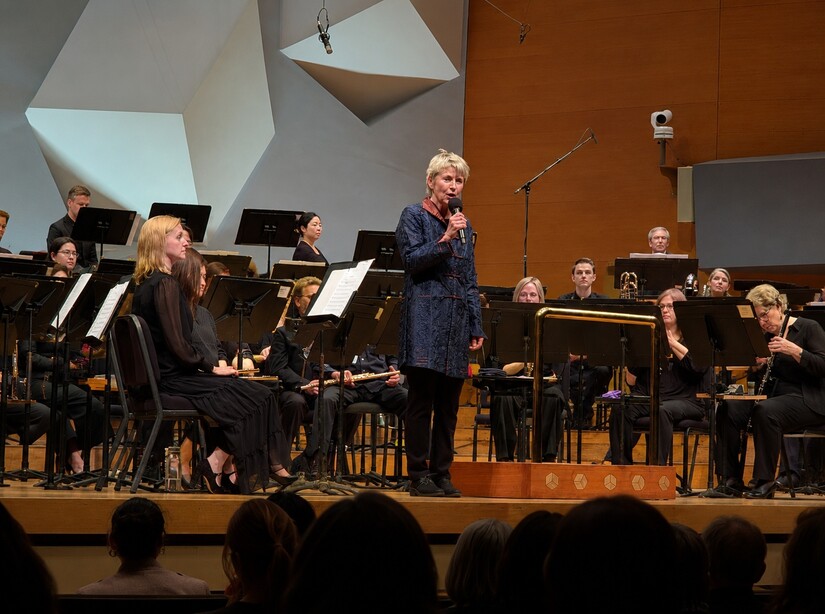
Turner shared personal reflections about knowing Reed during her youth, recalling how the composer and his wife once spent time with her family in Canada when she was a teenager.
She described the work as an example of music that continues to reveal new layers and insights with each performance.
"What makes good music good?" Turner asked rhetorically. "One of the answers is that it stands the test of time."
The program also highlighted contemporary voices shaping the future of concert band music.
Michael Barry's "Boomba" brought a playful and energetic contrast to the program, incorporating unconventional sounds and orchestration techniques that challenged traditional assumptions about wind ensemble performance.
Turner noted that Barry began his career working in film music and orchestration in Southern California before becoming an increasingly prominent composer for concert ensembles.
The second half of the program opened with Adam Schoenberg's "Cool Cat" before turning to one of the evening's most emotionally resonant selections, Viet Cuong's "Deciduous."
Turner explained that the composition emerged following the death of Cuong's father and reflected the composer's journey through grief and creative recovery.
She described the piece as an exploration of memory, transformation, and renewal, themes reinforced through unusual instrumental effects and evolving musical textures.
For many audience members, the work served as one of the most contemplative moments of the evening.
The concert concluded with Kevin Day's "Concerto for Wind Ensemble," a large-scale composition that showcases the full range of colors, textures, and technical capabilities available within a modern wind ensemble.
Day, one of the most prominent young composers working in concert music today, draws influence from jazz, gospel, contemporary American music, and traditional concert band traditions.
Turner encouraged listeners to embrace the emotional energy of the work rather than adhere to traditional expectations about audience behavior during classical performances.
One of the recurring messages throughout the evening was accessibility.
While classical music institutions have often been associated with formal conventions and audience expectations, speakers emphasized the importance of making concert band music welcoming, engaging, and emotionally immediate.
The audience responded enthusiastically throughout the performance, frequently applauding between works and offering sustained ovations following several selections.
The season finale also served as a gathering point for Minnesota's broader music education community.
Students, educators, retired band directors, collegiate musicians, and community ensemble participants were recognized during the concert.
Representatives from schools and music organizations throughout Minnesota stood as audience members acknowledged the role music education has played in developing generations of performers and listeners.
That educational connection remains central to Minnesota Winds' mission.
In remarks throughout the evening, organizers emphasized the organization's commitment not only to professional performance but also to supporting music education, encouraging student engagement, and expanding opportunities for emerging composers.
The world premiere of Bergman's "Unfurl" reflected that commitment by placing a Minnesota composer at the center of one of the organization's most significant performances to date.
The evening also provided a glimpse into the organization's future.
Before the concert concluded, audience members received an early preview of the ensemble's second season.
Organizers announced plans for future performances featuring prominent guest conductors, including Mallory Thompson, former director of bands at Northwestern University, and Jason Fettig, former director of the United States Marine Band and current director of bands at the University of Michigan.
Those announcements signaled continued ambitions for artistic growth and national visibility.
For Minnesota Winds, the season finale represented more than the conclusion of a concert season.
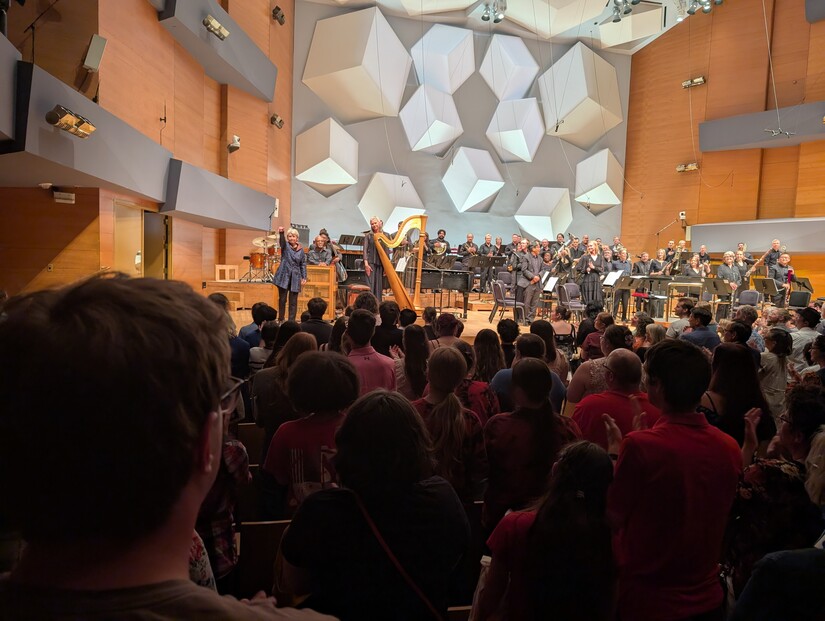
It served as a public declaration that professional concert band performance has established a new home in Minnesota.
In a state already recognized for its strong arts ecosystem, nationally respected music programs, and deep tradition of community music-making, organizers hope Minnesota Winds will become a permanent part of that cultural landscape.
As audience members lingered in the hallways following the performance, conversations centered on the music, the premiere, and the possibilities ahead.
For many in attendance, the evening offered evidence that concert band music can command the same artistic attention and institutional support often reserved for larger and more established performing arts organizations.
Whether measured by audience enthusiasm, artistic ambition, or community engagement, Minnesota Winds concluded its first season with a clear message: the professional concert band movement in Minnesota has begun, and its founders intend for it to endure.
MinneapoliMedia | Community. Culture. Civic Life.


Sunny, with a high of 78 and low of 58 degrees. Overcast for the morning, sunny in the afternoon, overcast in the evening, clear overnight.