56° and Overcast
Image



MINNEAPOLIMEDIA NEWS | WEATHER ALERT! Wildfire Smoke Triggers Unhealthy Air Warning for Twin Cities Through Friday
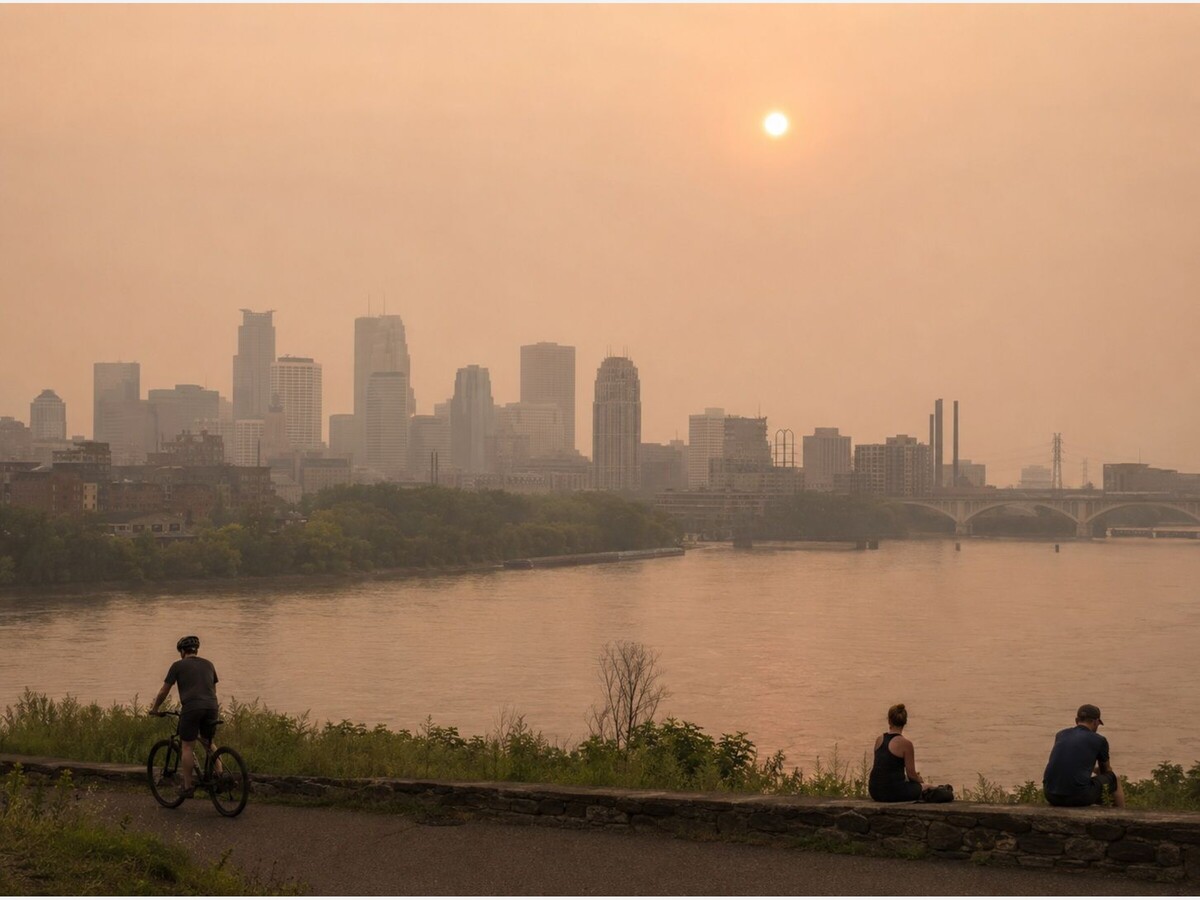
The Minnesota Pollution Control Agency expanded its air-quality alert Tuesday to include the Twin Cities metropolitan area and much of central, western, southeastern and northern Minnesota.
The alert took effect at 9 a.m. Tuesday and will remain in place until 11 a.m. Friday, July 17.
Fine-particle pollution across the Twin Cities is expected to reach the red Air Quality Index category, meaning anyone may begin experiencing health effects. Children, older adults, pregnant people, outdoor workers and residents with heart or lung conditions face an even greater risk.
The alert directly includes Coon Rapids, Minneapolis, Brooklyn Park, Saint Paul and communities throughout Anoka, Hennepin and Ramsey counties.
The MPCA said large wildfires spreading across northeastern Minnesota are producing very heavy smoke over the Arrowhead region.
A frontal boundary is carrying that smoke southward across northern and central Minnesota. The agency warned that the arrival of smoke could be rapid rather than gradual.
The boundary is expected to pass through the Twin Cities and move into southeastern Minnesota on Wednesday or Wednesday evening.
Additional waves of heavy smoke may cross the affected areas Thursday and continue into Friday morning.
Residents may notice hazy skies, reduced visibility and the smell of smoke as fine particles accumulate near ground level.
Conditions can vary significantly over short distances and may change from one hour to the next depending on wind direction, atmospheric conditions and wildfire activity.
The Twin Cities is forecast to reach the red AQI category.
At that level, the air is unhealthy for everyone. Residents may experience irritated eyes, nose and throat, coughing, chest tightness or shortness of breath.
People who are particularly sensitive or receive greater exposure may experience more serious health effects, including worsening asthma, heart disease and other respiratory or cardiovascular conditions.
The MPCA recommends that everyone reduce outdoor physical activity, take additional breaks and avoid intense exertion.
People in sensitive groups should avoid prolonged or vigorous outdoor activity and consider shortening, rescheduling or moving outdoor events inside.
Youth sports programs, summer camps, outdoor workplaces and recreation organizations should monitor local air-quality readings rather than relying only on how the sky looks.
Smoke particles can remain dangerous even when visibility appears relatively normal.
The most severe conditions are expected in northeastern Minnesota.
Air quality around Two Harbors and the Grand Portage Tribal Nation may reach the maroon category, the highest and most hazardous level on the AQI scale.
At that level, everyone is advised to avoid outdoor physical activity and remain indoors.
Parts of east-central and northeastern Minnesota, including Hinckley, Duluth, Hibbing, Ely and the Tribal Nations of Mille Lacs and Fond du Lac, may reach the purple category, which is considered very unhealthy for everyone.
Residents in those areas should avoid prolonged or heavy outdoor exertion. Sensitive individuals should avoid all outdoor physical activity.
The worsening smoke comes as Minnesota responds to active wildfires and emergency conditions in the Boundary Waters and northeastern portions of the state.
The smoke is arriving during a period of dangerous heat across the Twin Cities.
High temperatures can increase strain on the heart and lungs while forcing residents without air conditioning to choose between opening windows for ventilation and keeping smoke outside.
People living in homes without reliable cooling, residents experiencing homelessness and those in buildings that cannot effectively prevent outdoor smoke from entering may face especially difficult conditions.
Public libraries, community centers and other air-conditioned buildings may provide temporary relief, but residents should confirm operating hours before traveling.
Anyone spending time in a public cooling location should choose a building with filtered indoor air whenever possible.
Fine particles in wildfire smoke are small enough to travel deeply into the lungs and enter the bloodstream.
The MPCA identifies the following groups as particularly vulnerable:
Smoke exposure can cause coughing, dizziness, fatigue, chest tightness, irritated eyes and throat, difficulty breathing and worsening of existing medical conditions.
Anyone experiencing chest pain, severe trouble breathing or signs of a heart attack or stroke should call 911 immediately.
Residents experiencing less severe symptoms should move indoors, reduce physical exertion and contact a health-care provider if symptoms persist or worsen.
Residents should keep windows and doors closed when smoke levels rise, provided the indoor temperature remains safe.
Air-conditioning systems should be set to recirculate indoor air when that option is available. Portable air cleaners equipped with high-efficiency particulate filters can help reduce smoke particles inside individual rooms.
Activities that add particles to indoor air should be limited during the alert. Those activities can include smoking, burning candles, using wood-burning devices and unnecessary vacuuming.
Residents should avoid outdoor burning and reduce vehicle idling and unnecessary driving, which can add pollution to already unhealthy air.
People required to work outside should speak with employers about reducing strenuous activity, taking additional indoor breaks and adjusting work schedules when smoke levels are highest.
Air quality may differ considerably among communities, even within the Twin Cities.
Residents should check current readings before exercising, sending children outside, attending outdoor events or beginning physically demanding work.
The MPCA provides current conditions and forecasts through its Air Quality Index website. Residents can also receive alerts through EnviroFlash or monitor conditions using the Environmental Protection Agency’s AirNow mobile application.
The alert is scheduled to remain active until 11 a.m. Friday, but the timeline may be extended or revised if wildfire activity, wind or atmospheric conditions change.
Sources
MinneapoliMedia | Community. Culture. Civic Life.


Overcast, with a high of 84 and low of 52 degrees. Overcast in the morning, sunny for the afternoon and evening, clear overnight.