Image



Editor’s Note: In the landscape of American youth, some stories are written in statistics while others are forged in sanctuaries. For generations, the educational and social frameworks of the Twin Cities have harbored a quiet, systemic crisis, a pattern of institutional exclusion that routinely translates adolescent confidence into behavioral defiance and shuffles Black girls away from learning environments. This process does not occur in a vacuum. It is the predictable outcome of zero tolerance cultures that substitute surveillance for support, establishing structural traps that compromise the emotional and economic independence of young women before they ever reach the threshold of adulthood.
To disrupt this architecture requires more than simple institutional reform; it demands an entirely new blueprint for self-determination. Over a four-day narrative series, MinneapoliMedia explores the work of Project DIVA International, a Minneapolis based nonprofit that has spent nearly two decades quietly dismantling the school to prison pipeline. From the raw metrics of the classroom pushout crisis to the sophisticated mechanics of early wealth creation, this series traces how a community rooted village is anchoring a new generation of Black girls in absolute self-mastery, transforming the traditional narrative of exclusion into an unassailable legacy of leadership.
MINNEAPOLIS, MN "Look at me," the coach said. The room was quiet, save for the rhythmic scratch of pencils on paper. The fourteen-year-old girl kept her eyes down, her thumbs nervously working the edges of a workbook. "I don't need you to tell me what you think I want to hear. Tell me what the numbers are saying about your future." The girl paused, took a breath, and looked up. The defensive posture, so common in classrooms where judgment is instant, dissolved. "The numbers say I am spending money I haven't earned yet," the girl replied. The coach smiled, not with pity, but with absolute respect. "Good. Now let's adjust the blueprint."
If Project DIVA International can be understood through one word, it is probably not the word most people expect. It is not empowerment. Ask founder and Executive Director Neda Kellogg, and she will gently challenge the assumption.

"Language matters," Kellogg explains during an interview in the organization's Minneapolis space. "Words shape identity. They shape expectations. They shape how young people see themselves. If you tell a girl you are empowering her, the underlying implication is that she was powerless until you arrived. We reject that premise."
Over the years, Project DIVA has intentionally reexamined many of the traditional terms used in youth development. That reflection has led to structural changes in the organization's vocabulary, not because of mere semantics, but because language carries culture, values, and vision. The organization no longer speaks primarily about "empowering" girls. Instead, it speaks about inspiring them.
The distinction may appear subtle, but in practice, it changes the entire pedagogical dynamic.
"We believe inspiration must come from within," Kellogg says. "Our responsibility is to help girls discover what is already inside them."
The organization does not see itself as creating confidence, but as uncovering confidence that already exists. It does not define success by changing who young women are; it seeks to help them become more fully themselves. This perspective influences everything from curriculum design to the way staff members interact with cohorts. Even the word program has largely disappeared from the organization's vocabulary, replaced by learning environment and cohort experience, reinforcing the belief that every participant is an active agent shaping her own development.
Another vital distinction sets Project DIVA apart: many youth organizations recruit mentors, but Project DIVA develops coaches. The difference is highly intentional. Mentorship often focuses on offering top-down advice based on adult experience. Coaching, by contrast, emphasizes helping young people identify goals, develop habits, solve problems, and discover solutions for themselves. It is active rather than passive, collaborative rather than prescriptive, and future-focused rather than merely reflective.
The organization's coaches are trained to ask thoughtful questions, encourage self-reflection, and help participants build practical skills they will carry long after graduation. These relationships often continue for years, providing trusted consistency during some of adolescence's most challenging seasons. Research consistently demonstrates that the presence of even one stable, caring adult can significantly improve educational outcomes, emotional well-being, and long-term resilience among young people.
At the center of Project DIVA's curriculum are three foundations that guide nearly every workshop, retreat, discussion, and coaching session. Together, they form what the organization believes are the building blocks of lifelong success:
One of Project DIVA's defining characteristics is that it works proactively rather than reactively. Many systemic interventions begin only after warning signs appear, such as after grades decline, after disciplinary problems emerge, or after emotional struggles become visible. Project DIVA seeks to begin much earlier, investing in preparation for college, careers, healthy relationships, financial independence, and leadership.
This year's Annual Boot Camp theme captures that philosophy in just three words: Handling Your Business. For the young women gathering this week, the Boot Camp is not simply another summer activity. It is an investment in who they will become over the next decade. Foundations, unlike trends, are designed to last.
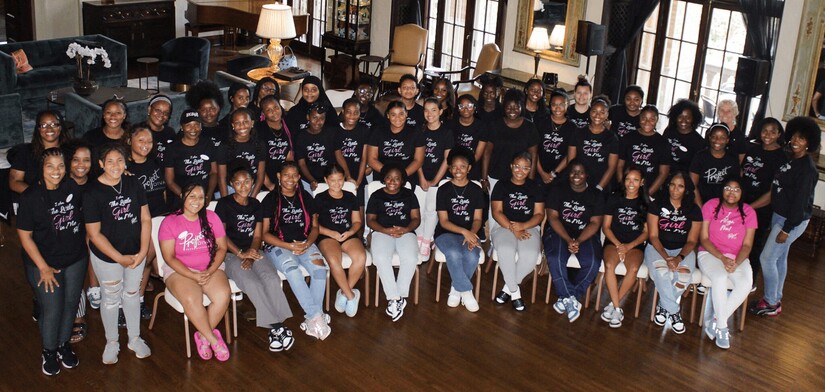
Founded in 2007, Project DIVA International is a Minnesota-based nonprofit organization dedicated to helping adolescent Black girls develop the emotional, intellectual, and economic foundation necessary to achieve lifelong independence. Serving girls from ages 11 to 19, the organization centers its year-round cohort experiences around three core pillars: financial intelligence, emotional fitness, and mental fitness.
Tomorrow in Part Three: The power of the village, the intergenerational spillover of wealth education, and celebrating excellence before crisis.
MinneapoliMedia | Community. Culture. Civic Life.


Sunny, with a high of 85 and low of 49 degrees. Sunny for the morning, overcast for the afternoon and evening, clear overnight.