56° and Overcast
Image




The 2026 FIFA World Cup crossed a historic competitive threshold Tuesday evening as Spain became the initial nation to secure its place in the tournament final, defeating France 2-0 before a capacity crowd of over 80,000 spectators inside Dallas Stadium in Arlington, Texas. The clinical victory not only propelled La Roja into its second World Cup Final appearance in sixteen years but also reinforced the defining strategic reality of the global summer: championship football is ultimately built upon defensive excellence every bit as much as attacking brilliance.
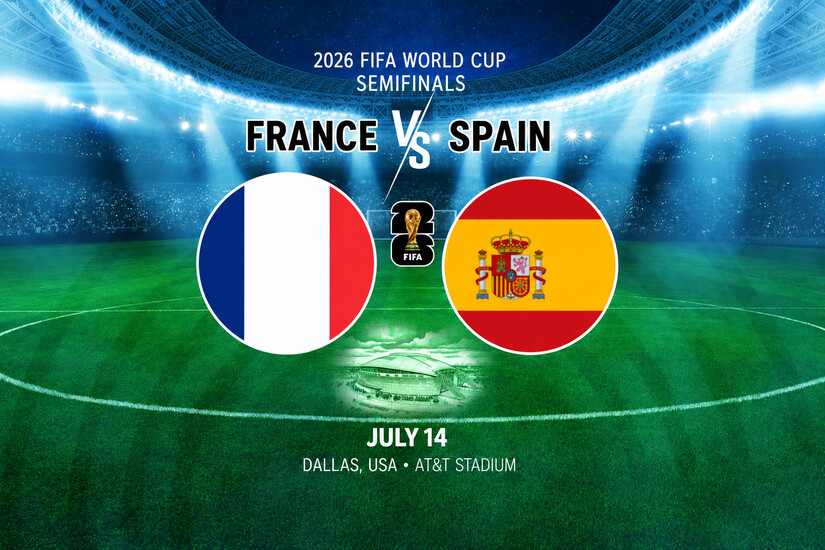
By the conclusion of ninety highly disciplined minutes, Spain had authored its most tactically complete performance of the competition. Luis de la Fuente's side systematically neutralized one of international football's most explosive attacking units, restricting Kylian Mbappé and France to peripheral zones, converting two critical offensive windows, and establishing a new World Cup benchmark by recording an unprecedented sixth clean sheet in a single tournament cycle.
For France, the defeat marked an abrupt, crushing conclusion to an otherwise outstanding campaign. Didier Deschamps' squad entered Arlington unbeaten, carrying the tournament's most feared transition attack and the favorite's mantle after eliminating Sweden, Paraguay, and Morocco. Yet against Spain's extraordinary positional discipline, Les Bleus never discovered the sustained offensive fluidity that had carried them through the previous month. Spain's victory was neither accidental nor dependent upon individual improvisation; it was a systematic, patient, and mature display that positions them exactly one victory away from reclaiming football's ultimate honor. The result transforms Wednesday's semifinal between England and Argentina into an even more monumental global event, while France turns its attention toward the third-place playoff.
|
Match |
Score |
Venue |
Status |
|
Spain vs. France |
2 – 0 |
Dallas Stadium, Arlington, TX |
Spain advances to the World Cup Final |
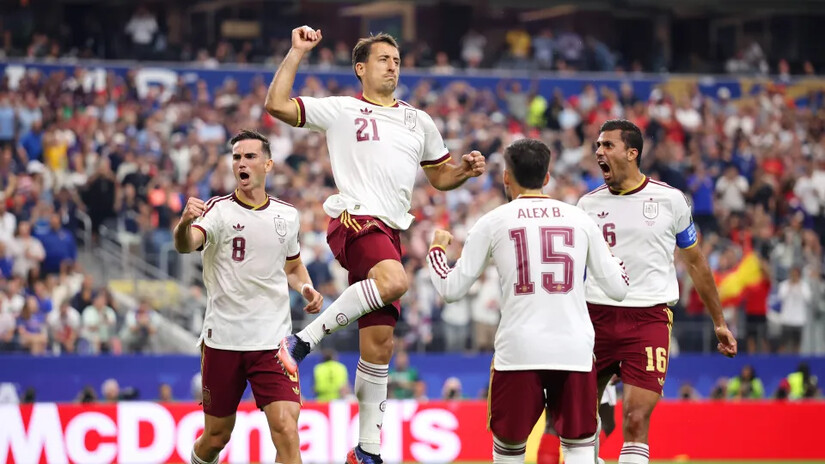
The opening semifinal block had been widely described across global media as a championship final arriving one round early. France entered the pitch possessing arguably the tournament's most devastating transition matrix, while Spain arrived carrying its finest midfield structure in a generation. From the initial whistle, the structural contrast became immediately apparent. Spain established its familiar positional framework, circulating possession through Rodri while Pedri and Fabián Ruiz continuously rotated to manufacture numeric overloads in midfield. France remained patient defensively, prepared to surrender central territory in exchange for rapid opportunities to release Mbappé, Ousmane Dembélé, and Michael Olise into open space following midfield turnovers.
For approximately the opening ten minutes, neither side generated sustained territorial dominance. Instead, the match developed into an intense central struggle, with every passing sequence heavily contested. The first critical disciplinary moment arrived in the 9th minute when, attempting to halt a rapid Spanish counter-attack near the edge of the defensive third, Adrien Rabiot committed a heavy tactical foul that earned the French midfielder an early yellow card.
The booking immediately complicated Deschamps' midfield calculations. Rabiot could no longer challenge aggressively through the central corridors without risking an automatic dismissal, providing Spain slightly greater freedom to circulate possession through Rodri and Pedri. Although France produced several promising transition moments during the opening twenty minutes, Spain's defensive organization consistently forced Mbappé and Dembélé into wider operating positions than either preferred. Rather than attacking directly toward goal, France repeatedly found itself recycling possession around Spain's compact defensive block.
The defining turning point of the first half arrived in the 22nd minute. Spain advanced rapidly through midfield before Lamine Yamal accelerated into the French penalty area, where contact from Lucas Digne sent the young winger to the ground. While play initially continued, the VAR room triggered a mandatory video review. Following an extended evaluation of multiple slowdown angles at the pitchside monitor, the referee overturned his on-field call, pointing directly to the penalty spot.
Mikel Oyarzabal accepted complete operational responsibility from the spot. Showing remarkable composure beneath immense international pressure, the Spanish forward calmly sent the goalkeeper the wrong direction before placing his penalty into the bottom corner to establish a 1-0 advantage. For the first time during the 2026 World Cup, France found itself trailing under a deficit. The goal reinforced a growing tournament pattern: Spain had repeatedly demonstrated an extraordinary capacity to capitalize on isolated moments while maintaining complete defensive control after taking the lead.
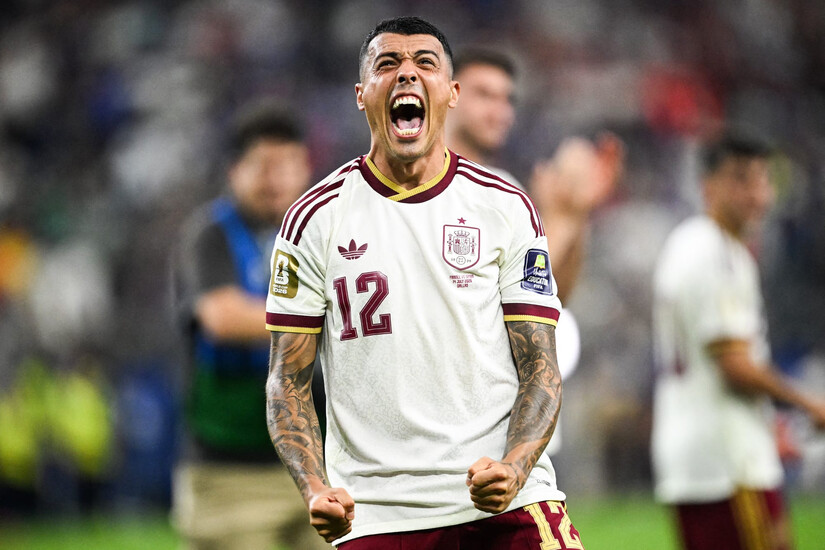
Deschamps immediately encouraged France to increase their attacking urgency after the opening blow. Mbappé drifted across horizontal tracks seeking greater involvement, while Dembélé attempted to isolate fullbacks through direct dribbling out wide. Spain responded with exceptional collective discipline; Marc Cucurella and Pedro Porro carefully managed the wide channels, while Aymeric Laporte and Pau Cubarsí maintained highly compressed spacing between the central defenders. Whenever France attempted to accelerate play through midfield, Rodri consistently disrupted the transition before it could develop into genuine danger.
The Spanish captain again illustrated why he operates as the tournament's most influential deep pivot. His contributions rarely arrived through spectacular, high-risk highlights; instead, they emerged through flawless positioning, structural anticipation, and impeccable timing. The semifinal increasingly unfolded according to Spain's preferred rhythm: France retained brief periods of sterile possession, while Spain retained complete geometric control. Another significant moment arrived in the 31st minute when Cucurella received Spain's first yellow card after interrupting a developing French counter-attack, but Spain's defensive shape remained remarkably stable through the remainder of the opening half to preserve the 1-0 cushion at the interval.
Deschamps attempted to alter the match immediately following halftime, introducing fresh substitutions to inject greater midfield creativity and more aggressive attacking movement between Spain's defensive lines. Initially, France appeared to increase its territorial pressure, yet the tactical adjustments also created larger spaces behind the advancing French midfield. Spain required only a solitary opportunity to punish the shift.
The definitive blow arrived in the 58th minute. A rapid passing combination involving Dani Olmo released Pedro Porro into attacking space. The Spanish defender continued his forward movement before finishing clinically beyond the French goalkeeper to expand the lead to 2-0. The goal fundamentally dismantled the remaining half hour of French strategy, stripping Les Bleus of the luxury of patient buildup.
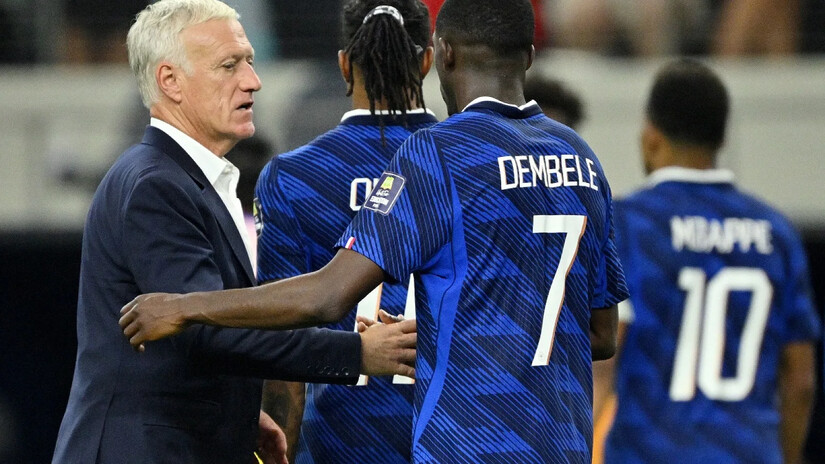
At two goals ahead, Luis de la Fuente shifted the emphasis toward intelligent game management rather than continuous attacking pressure. Rather than retreating entirely into its own defensive third, Spain continued controlling possession whenever opportunities emerged, executing short passing sequences that systematically exhausted France's physical reserves. De la Fuente then introduced a series of carefully timed substitutions to preserve Spain's pressing intensity.
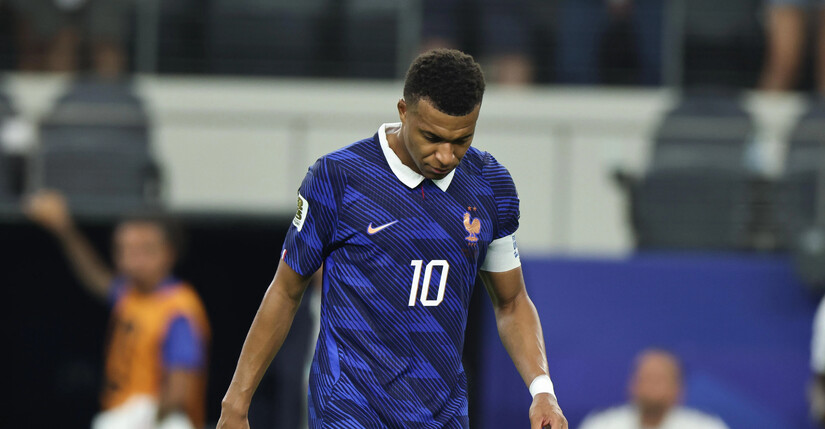
Perhaps the evening's most remarkable accomplishment involved Spain's collective treatment of Mbappé. Whenever the French captain received possession, immediate pressure arrived from multiple directions. When he drifted centrally, Rodri compressed the space; when he attacked wide areas, Porro or Cucurella forced him toward the touchline. The cumulative effect left the forward visibly frustrated, a metric validated in the 86th minute when Mbappé received a yellow card after an emotional exchange during Spain's continued defensive control. When the referee finally sounded the terminal whistle, Spain celebrated a historic ticket to the World Cup Final.
Several vital strategic conclusions crystallized from the opening semifinal block:
The opening component of the World Cup Final is officially locked into the grid. As attention shifts to Wednesday's second semifinal inside Atlanta Stadium, where England and Argentina will renew one of international football's most celebrated rivalries, the benchmark has been firmly established. Spain awaits the survivor in the ultimate match of the summer.
MinneapoliMedia | Community. Culture. Civic Life.



Overcast, with a high of 84 and low of 52 degrees. Overcast in the morning, sunny for the afternoon and evening, clear overnight.