63° and Moderate rain at times
Image
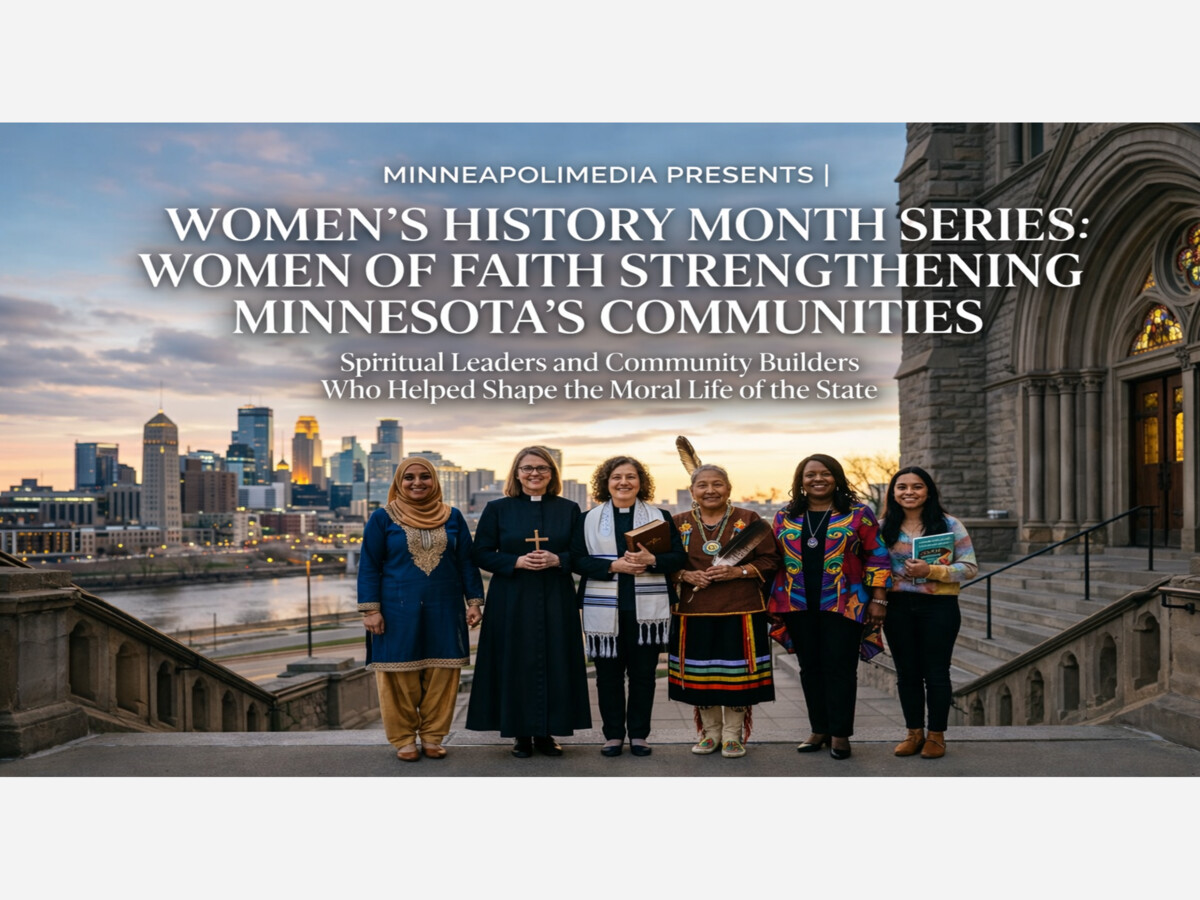



Long before social service agencies and government programs became common features of modern life, communities often turned to places of faith for support, guidance, and refuge.
Churches, mosques, synagogues, and temples were not only places of worship. They were gathering places where families found comfort during hardship, where neighbors organized to solve problems, and where communities built the moral frameworks that guided civic life.
Across Minnesota’s history, women have stood at the center of that work.
Sometimes they served as pastors, ministers, or spiritual teachers. Often they led ministries that fed families, sheltered the vulnerable, and provided education to children whose opportunities were limited by circumstance.
Their work rarely sought headlines.
Yet without their leadership, many communities across Minnesota would have struggled to endure the social and economic challenges of the past century.
Women of faith have been among the most consistent builders of Minnesota’s civic life.
Minnesota’s religious landscape has always been diverse. From the earliest European settlers to the waves of immigrants who arrived throughout the nineteenth and twentieth centuries, faith communities became anchors of social life.
They established schools and hospitals.
They organized charitable work for the poor.
They provided networks of support for families navigating new lives in unfamiliar environments.
Women played indispensable roles in those efforts.
In congregations across the state, women organized food drives, led youth programs, cared for the sick, and built ministries that addressed the everyday needs of their neighbors.
Faith-based leadership often became a bridge between spiritual guidance and practical community service.
Faith institutions in Minnesota have also played important roles in movements for social justice.
Many civil rights leaders drew inspiration from spiritual traditions that emphasized dignity, equality, and the moral responsibility to care for one another.
Women working within those traditions helped organize campaigns for fair housing, employment opportunity, and racial equality.
Among the figures whose leadership intersected with faith and civil rights was Josie R. Johnson. Johnson’s work in advancing civil rights in Minnesota was deeply rooted in the ethical teachings of faith communities that believed justice was not merely a political issue but a moral imperative.
Churches and faith organizations often served as gathering spaces where community members could organize strategies for addressing inequality.
Women were frequently the organizers behind those gatherings.
They coordinated meetings, mobilized volunteers, and ensured that community voices were heard.
While some women became widely known leaders, thousands of others carried out quieter but equally essential forms of service.
Across Minnesota, women of faith have long led ministries that provide:
• meals for families experiencing hardship
• mentorship programs for youth
• counseling and spiritual care for those facing personal crises
• clothing drives and housing assistance programs
• support networks for immigrants and refugees
In many cases, these efforts filled gaps where formal institutions had not yet developed the capacity to respond.
Faith communities became places where people could seek help without fear of judgment.
And women were often the leaders who ensured that help was available.
Over time, women increasingly moved into formal leadership roles within religious communities.
Many denominations that once restricted women from pastoral leadership began opening their pulpits to women who brought new perspectives and renewed energy to congregational life.
Women ministers and spiritual leaders across Minnesota have since helped shape conversations about faith, justice, and community responsibility.
Their leadership reflects a broader shift in religious life, one that recognizes that spiritual wisdom and moral courage are not confined to any single gender.
Faith communities grow stronger when they draw upon the gifts of all their members.
Minnesota’s population has become increasingly diverse over the past several decades, bringing new religious traditions and communities to the state.
Women have played crucial roles in building bridges between these traditions.
Interfaith initiatives led by women have fostered dialogue between Christian, Muslim, Jewish, Buddhist, and other faith communities. These conversations have helped strengthen mutual understanding while addressing shared concerns such as poverty, housing, education, and public safety.
Through interfaith collaboration, women leaders have demonstrated that spiritual traditions can unite communities around common values of compassion and justice.
During times of crisis, faith communities often become centers of resilience.
Economic downturns, social unrest, and public health emergencies have repeatedly tested Minnesota’s communities. During these moments, faith leaders have helped people find hope and stability.
Women have frequently stood at the forefront of those efforts.
They organized relief programs during difficult winters.
They comforted families grieving loss.
They mobilized volunteers to support neighbors in need.
In doing so, they reminded communities that compassion is one of the most powerful forces available to human beings.
The history of Minnesota’s faith communities is not simply a history of religious belief.
It is also a history of service.
Women of faith helped build the moral infrastructure of the state. They nurtured values that encouraged generosity, empathy, and responsibility toward others.
Their leadership strengthened communities not only spiritually but also socially.
When families struggled, they responded with care.
When injustice emerged, they spoke with conviction.
When communities needed guidance, they offered wisdom shaped by faith and experience.
Today, women of faith continue to guide congregations, organize community programs, and advocate for justice across Minnesota.
Their work reflects the enduring power of spiritual leadership grounded in compassion and service.
Faith communities remain places where people gather to seek meaning, connection, and hope.
And women remain among the leaders who ensure that those communities continue to serve the needs of their neighbors.
Minnesota’s civic life has been strengthened by their devotion, courage, and unwavering commitment to the wellbeing of others.
Their legacy reminds us that leadership often grows from a simple conviction.
That caring for one another is not only a spiritual principle.
It is a responsibility shared by every community.
MinneapoliMedia
Community. Culture. Civic Life.



Sunny, with a high of 80 and low of 57 degrees. Sunny during the morning, clear overnight.