63° and Moderate rain at times
Image
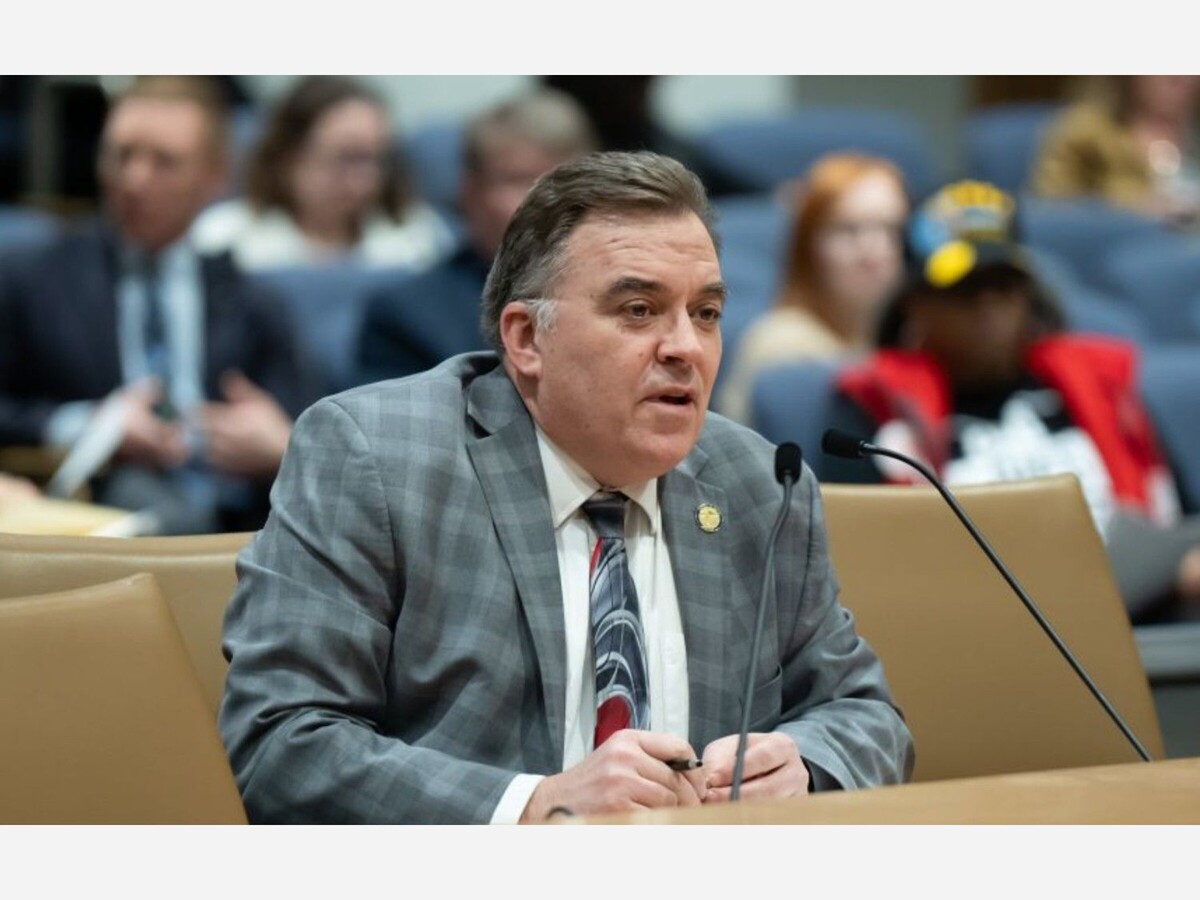



“When I answer the door now, seeing a real officer at your door, I’ll never forget that moment,” Hoffman told members of the Senate Judiciary and Public Safety Committee. “I start crying.”
When he finally did, it was not as a policymaker first, but as a survivor.
“When I answer the door now, seeing a real officer at your door, I’ll never forget that moment,” Hoffman told members of the Senate Judiciary and Public Safety Committee. “I start crying.”
The legislation before the committee was technical in language. Its origins were anything but.
On June 14, 2025, Minnesota experienced one of the most consequential acts of targeted political violence in its modern history. A gunman, posing as a law enforcement officer, carried out coordinated attacks on elected officials.
At his home in Champlin, Senator Hoffman and his wife were shot multiple times and survived. In a related attack, former House Speaker Emerita Melissa Hortman and her husband were killed.
According to investigators and regional reporting, the suspect used deception as a primary tactic. He presented himself as law enforcement and arrived in a vehicle that reinforced that claim. The authority conveyed in that moment was not incidental. It was instrumental.
It created hesitation. It created access. It nearly cost lives.
Less than a year later, Hoffman returned to the Capitol with two bills designed to close the gaps that made that deception possible.
Under current Minnesota law, impersonating a peace officer is typically treated as a misdemeanor. Hoffman’s proposal, introduced in the 2026 session as part of a broader public safety package, seeks to fundamentally change that.
The bill would:
The intent is both punitive and preventative. In an era of targeted attacks and sophisticated social engineering, impersonation is no longer symbolic. It is operational.
The second bill addresses a quieter but equally consequential vulnerability: the resale of decommissioned law enforcement vehicles.
Under current practices, retired police cruisers can enter the civilian market with minimal modification. In many cases, they retain visual features that closely resemble active-duty units.
Hoffman’s proposal would require:
The objective is straightforward but profound. A vehicle in a rearview mirror should not carry the authority of the state unless it is, in fact, the state.
What Hoffman described in committee was not only the memory of violence, but the afterlife of it.
He spoke of hyper-vigilance. Of the hesitation that now accompanies routine interactions. Of the emotional rupture that occurs when symbols of safety become indistinguishable from tools of harm.
In his words, the trauma did not end that night. It reappears, unannounced, in ordinary moments.
For lawmakers, the testimony reframed the issue. This was no longer a question of statutory classification. It was a question of public trust.
When authority can be replicated, trust becomes a vulnerability.
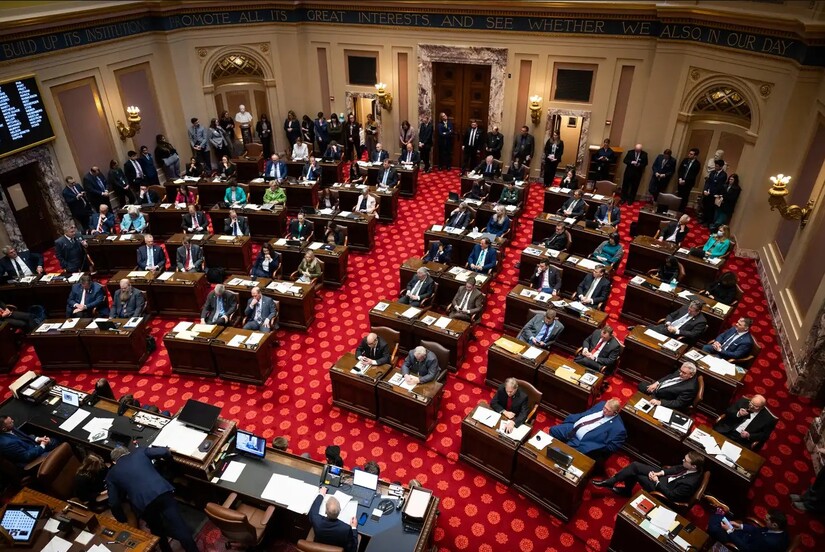
Despite the broader political tensions shaping the 2026 legislative session, both bills advanced out of the Senate Judiciary and Public Safety Committee with bipartisan support.
The measures now move forward for additional consideration, including potential fiscal review and full Senate debate.
Support for the bills has extended beyond the legislature, with law enforcement organizations and public safety advocates signaling agreement that existing statutes have not kept pace with evolving threats.
While earlier references have circulated regarding a 2023 incident involving impersonation at Hoffman’s home, official records and verified reporting confirm that the catalytic event for this legislation occurred on June 14, 2025.
That distinction matters.
It situates the bills not in abstraction, but in direct response to a documented act of political violence that exposed structural vulnerabilities in how authority is signaled, perceived, and exploited.
The Minnesota Legislature now finds itself grappling with a reality that extends beyond a single incident.
Across the country, law enforcement impersonation has increasingly been used in robberies, home invasions, and targeted attacks. Public records, surplus equipment markets, and visual mimicry have lowered the barrier to deception.
What Hoffman’s legislation attempts to do is raise it again.
Not through rhetoric, but through statute.
In the end, these bills are about something both simple and fragile.
The expectation that when someone knocks on your door and identifies as law enforcement, that claim can be trusted.
For Senator John Hoffman, that expectation was broken in an instant.
His legislation is an effort to restore it.
And for Minnesota, it marks a recognition that in a time where authority can be imitated, the law must evolve to protect not only lives, but the meaning of trust itself.
MinneapoliMedia
Community. Culture. Civic Life.



Sunny, with a high of 80 and low of 57 degrees. Sunny during the morning, clear overnight.