66° and Overcast
Image
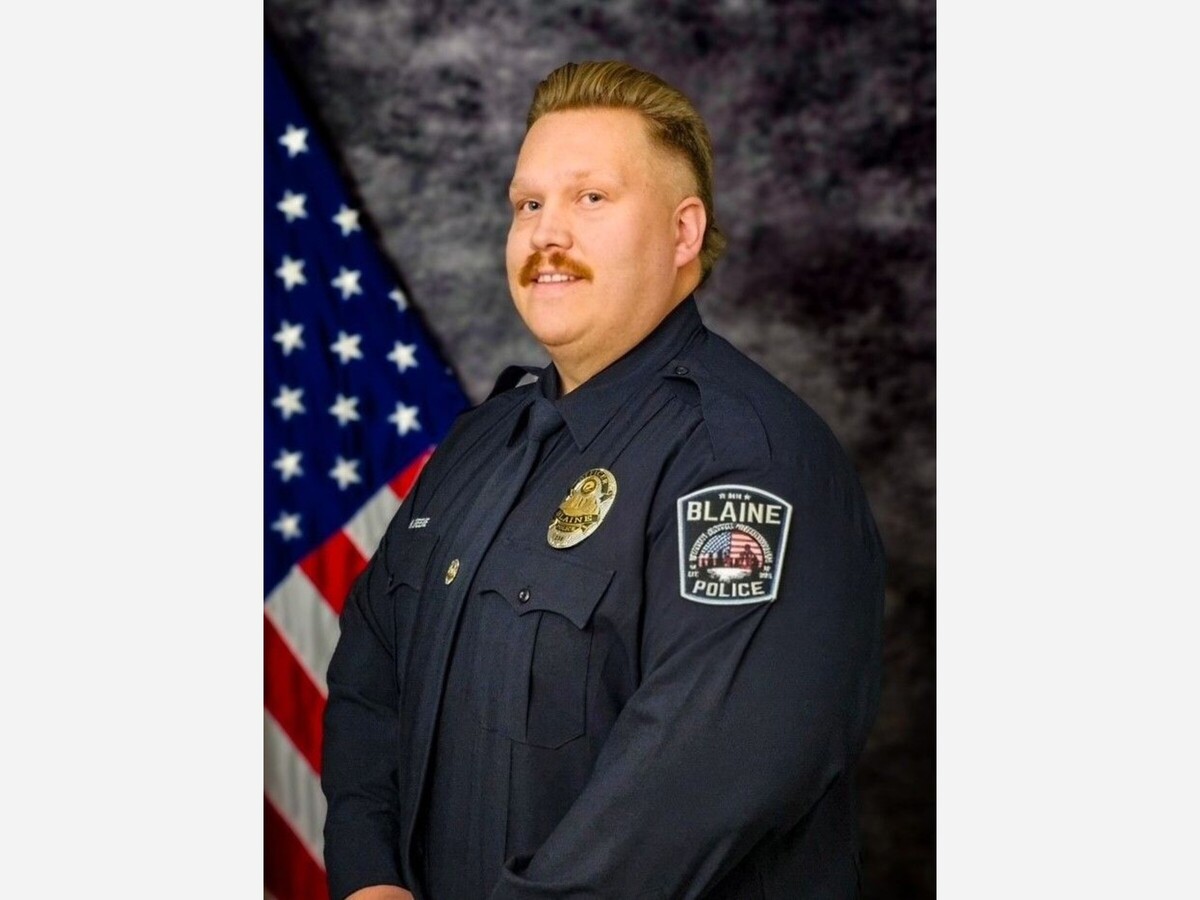
Blaine Officer Kurt Greene | Courtesy: Blaine PD



It is a deliberate presence.
Greene, a member of the Blaine Police Department since 2021, serves in the department’s Traffic Unit, where the mission is not simply enforcement, but prevention. His assignment places him at the intersection of visibility, education, and accountability, with a singular focus on reducing crashes before they happen.
“I am extremely passionate about the safety of our residents and those who travel through the city,” Greene said in the department’s March 2026 Employee Spotlight. “My main goal is to lower the number of injuries and fatal crashes by educating drivers.”
That work reflects a broader statewide priority. According to the Minnesota Department of Public Safety, traffic fatalities and serious injuries continue to be driven by a consistent set of factors: distracted driving, speeding, and impairment. Local enforcement strategies, particularly in suburban corridors like Blaine, have increasingly centered on targeted visibility and sustained engagement with drivers.
Greene brings nearly a decade of law enforcement experience to his current role. Before joining Blaine, he served five years with the St. Francis Police Department, working primarily night patrol shifts that exposed him to a wide range of calls, from routine disturbances to high-risk incidents.
Since arriving in Blaine, his responsibilities have expanded well beyond traffic enforcement.
He is part of the department’s Honor Guard, participates in the Mobile Field Force, contributes to new hire academy training, and serves within the Police Federation. These assignments reflect the structure of modern mid-sized departments, where officers often operate across multiple functions to maintain readiness, mentorship, and institutional continuity.
Greene’s day begins and ends with school zones, where enforcement is both visible and intentional. Research and state-level safety campaigns have consistently shown that visible enforcement in school corridors reduces speeding and increases driver compliance.
Between those windows, his work shifts across the city.
He responds to traffic complaints submitted by residents, monitors high-risk corridors, and actively enforces Minnesota’s hands-free driving law, which prohibits holding a phone while operating a vehicle. Since its implementation in 2019, the law has become a central pillar of traffic safety enforcement across the state.
The work is repetitive by design. It is also essential.
In traffic policing, success is often measured by what does not happen.
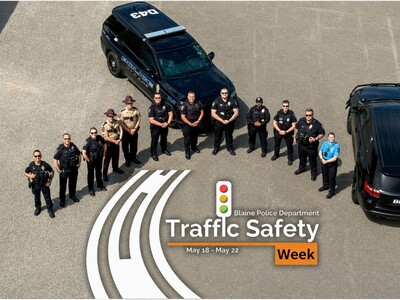
During a coordinated traffic safety initiative, Greene’s work drew attention beyond the department. After noticing Blaine Police Department social media posts, the team from K102, including radio host Chris Carr, traveled to Blaine to produce a series of traffic safety segments.
The collaboration extended the department’s messaging to a broader audience and introduced Greene to the public in a more personal way. It also resulted in a nickname that has followed him since: “Mullet Man.”
The moment, while informal, reflects a growing approach in policing that blends enforcement with communication. Departments across Minnesota have increasingly used media partnerships and digital platforms to reinforce safety messaging in ways that resonate beyond traditional press releases.
Greene’s path into law enforcement was shaped by a range of early work experiences that grounded him in both structure and responsibility.
He began working at age 15 at McDonald's, later working at a tree farm and in the outdoor lumber yard at Menards, where he operated forklifts. He also worked security at Target Field, and spent time in a juvenile residential treatment center, an environment that often introduces early exposure to crisis response and behavioral health challenges.
Retail roles with Under Armour and Carhartt rounded out his early employment before he entered policing full-time.
Taken together, those experiences form a throughline that is common among officers who enter the profession through community-based work and hands-on environments rather than direct academic pipelines alone.
Despite serving a growing suburban population, Greene describes the Blaine Police Department as maintaining a close internal culture.
“It feels like a family,” he said. “Everyone has each other’s backs during stressful calls and is willing to help.”
That cohesion has become increasingly important as departments nationwide navigate staffing shortages, evolving public expectations, and the complexity of modern policing. Internal trust and coordination often translate directly into field performance, particularly in high-pressure situations.
Away from the patrol car, Greene’s life reflects a balance of discipline and personal expression.
He is heavily tattooed, with 29 tattoos spanning his arms, legs, chest, and back. He is also an avid motorcycle rider, traveling extensively with his wife across the country. Their trips have included rides to Yellowstone National Park, through Tennessee, along Lake Superior, and up Pikes Peak in Colorado.
He points to St. Lucia as a standout destination and describes his happiest moments as those spent on the open road.
At home, his interests are simpler. He enjoys cooking, particularly meals prepared on a smoker.
Greene does not dismiss the challenges facing law enforcement. He acknowledges the scrutiny that can accompany the profession, particularly in recent years.
But his advice to those entering the field is grounded in experience.
“Keep your head up,” he said. “There are far more positive interactions where you are helping people than negative ones.”
The Blaine Police Department’s spotlight on Greene offers more than a personal profile. It provides a clear view into the mechanics of local policing, where public safety is often built through routine, consistency, and presence rather than singular high-profile moments.
In Blaine, that work unfolds daily. It is measured in slower traffic through school zones, in fewer distracted drivers, and in the quiet absence of crashes that might otherwise have occurred.
For Officer Kurt Greene, the job is not defined by visibility alone, but by its outcome.
And on most days, success looks like nothing happening at all.
MinneapoliMedia
Community. Culture. Civic Life.



Patchy rain nearby, with a high of 66 and low of 53 degrees. Overcast in the morning, partly cloudy in the afternoon, clear in the evening, patchy rain nearby overnight.