63° and Moderate rain at times
Image



In Minnesota’s largest school district, a quiet but consequential shift is underway.
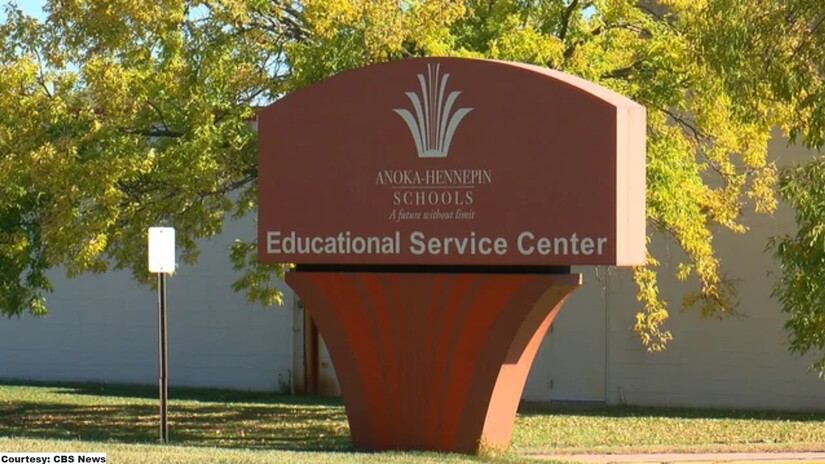
The Anoka-Hennepin School District, serving more than 36,000 students across the north metro, is navigating one of the most significant financial contractions in its recent history. At the same time, a newly organized parent-led nonprofit is stepping forward, attempting to redirect the district’s trajectory through a voter-approved levy.
What is emerging is not simply a budget story. It is a test of how a community responds when the financial architecture of public education begins to strain under competing pressures.
By early 2026, the district had completed a three-phase budget reduction strategy totaling approximately $22.2 million since 2024. The cuts were not abrupt. They were methodical, layered, and, district leaders argue, unavoidable.
The underlying forces are widely documented across Minnesota school systems:
The district’s approach unfolded in stages:
Phases 1 and 2 focused primarily on administrative restructuring, eliminating more than 200 central office and non-classroom positions.
Phase 3, approved in December 2025, extended reductions into the classroom environment, targeting $8.1 million for the 2026–2027 school year.
By March 2026, the consequences became visible. Approximately 75 staff members were notified that their positions would be cut, including:
District officials have maintained that these decisions were made to avoid larger class sizes, framing the cuts as a necessary rebalancing rather than a retreat from student services.
Yet for many families, the distinction is difficult to accept.
In public testimony and community conversations, parents have pointed to a different reality.
Support staff such as social workers and counselors are not peripheral roles, they argue, but central to how students experience school. These positions often sit at the intersection of academic performance, behavioral support, and mental health.
The removal of those roles, even in limited numbers, reverberates beyond spreadsheets.
Parents described the reductions as destabilizing, particularly at a moment when student needs remain elevated in the aftermath of the pandemic. Some called the cuts an “injustice,” questioning whether the district’s financial strategy is aligned with the realities inside classrooms.
Out of that tension, a new force has emerged.
A parent-led nonprofit, widely identified as “Parents for Good,” has begun organizing across the district, attending school board meetings, and pressing for a local operating levy referendum.
Their position is clear. Without new revenue, they argue, the district will remain locked in a cycle of recurring cuts.
The group’s advocacy has centered on three core arguments:
Protecting Student Support Systems
Parents have expressed alarm that mental health professionals and student support staff are among those being reduced, arguing that these roles are essential, not optional.
Challenging the Narrative
Some advocates have criticized district communications, particularly during recent teacher contract discussions, alleging that the full financial picture has not been clearly conveyed to the public.
Stabilizing the System
At the center of their campaign is the belief that a voter-approved levy is the only viable mechanism to restore stability, retain educators, and preserve programming.
In Minnesota, operating levies function as locally approved property tax increases, allowing districts to supplement state funding. For districts that have historically relied less on levies, the question becomes not just financial, but cultural. It asks whether a community is willing to directly invest in its schools at a higher level.
Complicating the moment is a change at the top.
Superintendent Cory McIntyre has announced he will not seek renewal of his contract and will step down on June 30, 2026. The district is now searching for new leadership that will inherit both the financial framework already in motion and a community increasingly mobilized around it.
The next superintendent will not begin with a blank slate. They will step into a district that has already reduced tens of millions of dollars in spending, with a public now actively debating whether that path should continue.
The convergence of budget cuts, parent advocacy, and leadership transition has created a rare inflection point.
At issue is not only whether Anoka-Hennepin will pursue a levy referendum. It is whether the community will redefine its relationship to public education funding.
For years, the district has managed within its means, making incremental adjustments to align expenses with revenue. What parents are now proposing is something different: a direct appeal to voters to expand those means.
The outcome of that conversation will shape more than a balance sheet.
It will determine:
Across the country, school districts are confronting similar pressures as temporary federal aid disappears and structural costs rise. What distinguishes Anoka-Hennepin is the scale of both the district and the response.
Here, families are not waiting for the system to recalibrate on its own. They are organizing, advocating, and preparing to place the question directly before voters.
In that sense, the story unfolding in Anoka-Hennepin is not only about cuts or levies.
It is about who ultimately decides the future of public education and how far a community is willing to go to sustain it.
MinneapoliMedia
Community. Culture. Civic Life.



Sunny, with a high of 80 and low of 57 degrees. Sunny during the morning, clear overnight.