63° and Moderate rain at times
Image
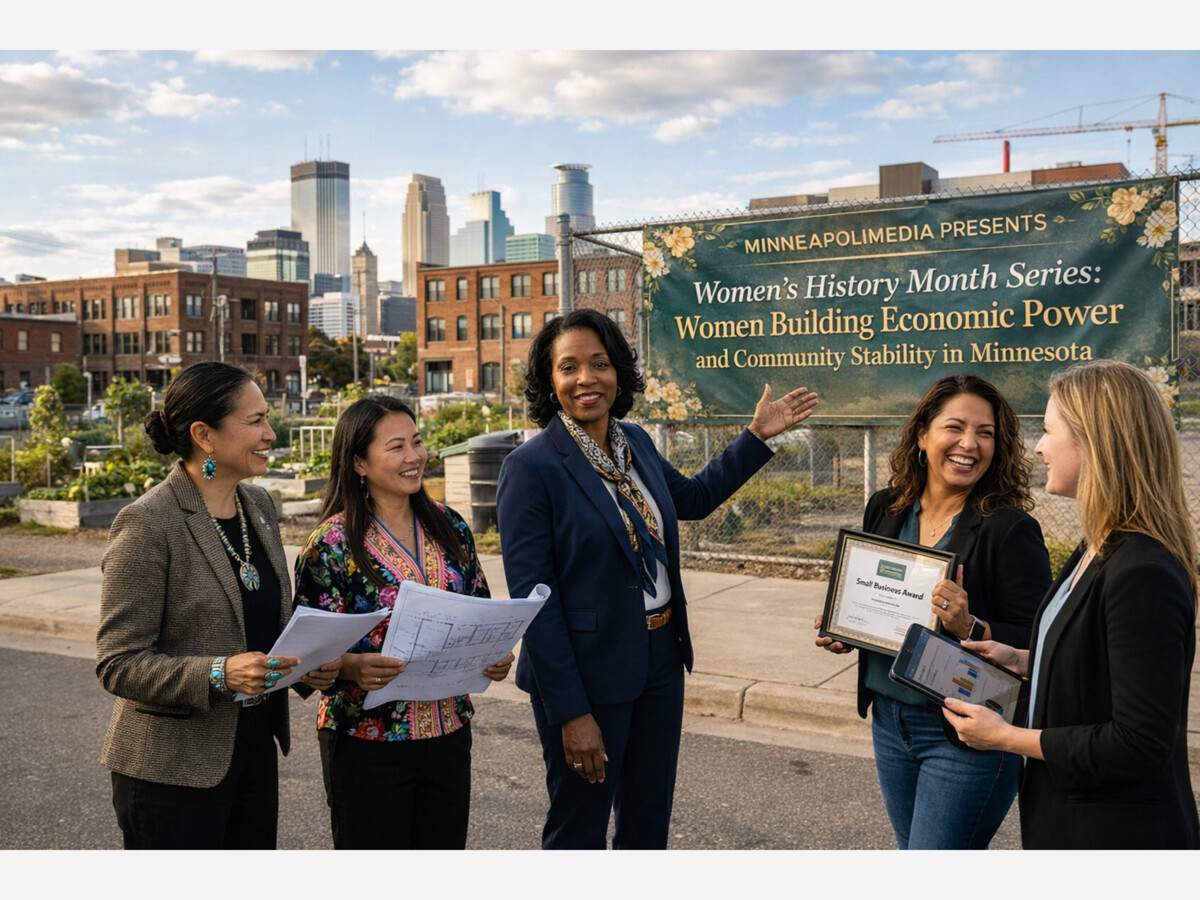



Minnesota’s economy is often described as stable.
Reports point to employment numbers, industry growth, and regional development. Headlines track inflation, workforce participation, and business expansion. On paper, the system appears structured and measurable.
But stability is not something most people experience on paper.
It is experienced at the end of the month.
It is experienced when rent is due, when groceries run low, when childcare falls through, or when a paycheck does not stretch as far as it did the year before.
That is where the economy becomes real.
And in Minnesota, that reality is held together, day after day, by women.
Not in theory.
In practice.
There is a version of the economy that does not appear in official measurements.
It does not show up in GDP.
It is not reflected in quarterly reports.
It is not captured in most policy discussions.
But it is one of the primary reasons households remain stable.
Women across Minnesota manage the daily economics of survival.
They track what is coming in and what is going out. They decide which bill gets paid first. They adjust meals, transportation, and spending when costs increase but income does not. They absorb financial pressure in ways that prevent households from collapsing under it.
This is not occasional work.
It is continuous.
And it is rarely acknowledged as economic labor, even though it directly determines whether families remain stable.
Women make up a significant portion of Minnesota’s workforce in sectors that are essential to daily life.
Healthcare.
Education.
Retail.
Hospitality.
Public-facing service roles.
These jobs keep systems operating.
They ensure that hospitals remain staffed, classrooms remain functional, and businesses remain open. They provide services that communities rely on every day.
But many of these roles operate with limited margin for error.
Schedules are fixed. Flexibility is minimal. Wages, in many cases, do not fully match the cost of living, particularly in urban areas where housing costs continue to rise.
For women working in these sectors, stability is not built into the job.
It is built around it.
Minnesota’s economy depends on labor that does not always guarantee stability for the people performing it.
That gap is managed at the individual and household level.
Women close that gap.
They take on additional hours. They combine income sources. They adjust spending in real time. They coordinate with family members. They make decisions that allow households to remain functional under conditions that are often unpredictable.
This is not an abstract issue.
It is the difference between maintaining housing and losing it. Between consistent childcare and disruption. Between long-term planning and constant adjustment.
For African American women in Minnesota, economic participation often takes place within systems where disparities are already established.
Wage gaps remain measurable. Access to capital is uneven. Opportunities for advancement are influenced by structural factors that extend beyond individual effort.
Despite this, African American women continue to build economic pathways.
They start businesses with limited access to traditional funding. They create networks that support employment and mentorship. They develop strategies that allow others to navigate systems more effectively.
This work is both economic and structural.
It is not only about participation.
It is about creating stability where systems have not provided it.
Entrepreneurship is often framed as innovation.
In many cases, it is also a response to limitation.
Across Minnesota, women are building businesses not only to pursue opportunity, but to create flexibility where traditional employment does not provide it.
A home-based business may allow for childcare that a fixed schedule does not. A service-based operation may fill a gap in the local economy while creating income for its owner. A small enterprise may grow into a larger operation that supports additional families.
These businesses operate under constraint.
Access to capital is not always equal. Networks of support vary. Risk is often personal and immediate.
And still, they are built.
Economic stability is not achieved through individual effort alone.
Women in Minnesota have long been involved in organizing efforts that connect individual experience to collective action.
This includes labor organizing, advocacy for workplace protections, and engagement in policy discussions that affect wages, benefits, and working conditions.
Organizing is often the mechanism through which systemic issues are addressed.
It creates leverage.
It allows individuals to act collectively in response to conditions that cannot be changed alone.
There is no accurate account of Minnesota’s economy that does not include caregiving.
Women across the state provide care for children, aging parents, and family members experiencing illness or disability.
This work is essential.
Without it, workforce participation would decrease, healthcare systems would face increased strain, and families would lose a critical layer of stability.
Caregiving is not secondary to the economy.
It is one of its foundations.
And yet, it remains under-recognized and often under-supported.
When formal systems fall short, communities respond.
Across Minnesota, informal networks provide economic support in ways that are immediate and practical.
Shared childcare.
Food distribution.
Short-term financial assistance.
Transportation support.
These systems are often organized and sustained by women.
They operate without formal recognition but with clear impact.
They are flexible, responsive, and grounded in trust.
They are also necessary.
Minnesota’s current economic conditions are defined by pressure.
Housing costs have increased across much of the state. Childcare remains expensive and, in some areas, difficult to secure. Inflation has affected the cost of everyday goods. Workforce shortages have created both opportunity and instability.
These pressures are not theoretical.
They are experienced daily.
Women navigating these conditions are doing so in real time, adjusting decisions and strategies as circumstances change.
Minnesota’s economy is often evaluated through aggregate performance.
But aggregate performance does not reflect how stability is distributed.
It does not show who is carrying the most weight.
It does not show who is absorbing the most risk.
It does not show who is making the daily decisions that allow households to remain intact.
Women are central to that reality.
Minnesota’s economy is not sustained by markets alone.
It is sustained by people who make it function on a daily basis.
Women are central to that process.
They work in essential roles.
They manage household economies.
They build businesses under constraint.
They organize for better conditions.
They provide care that allows others to work.
These contributions are interconnected.
They form a system within the system.
And without them, the broader economy would not hold.
If Minnesota is to understand its own economic reality, it must account for the work that is often left out of official narratives.
Because the truth is direct.
The economy does not hold itself together.
Women hold it together.
They stabilize it.
They sustain it.
They carry it through periods of pressure.
And they do so whether that work is recognized or not.
That is not a supporting role.
That is a central one.
MinneapoliMedia
Community. Culture. Civic Life.



Sunny, with a high of 80 and low of 57 degrees. Sunny during the morning, clear overnight.