Image

The Dome at the Minnesota Capitol



In a 10–10 tie vote inside the House Public Safety Finance and Policy Committee, lawmakers failed to advance two bills that would have banned unserialized “ghost guns,” re-established restrictions on binary triggers, and strengthened penalties for straw purchasing of firearms. Under Minnesota legislative procedure, a tie vote means a motion fails. Without a majority, neither bill can be reported out of committee, effectively halting their progress for the remainder of the session.
The outcome was not simply procedural. It was structural.
With the Minnesota House evenly divided this biennium, committee compositions mirror that balance. In that environment, the path forward for any contested legislation runs through bipartisan agreement. In this case, no Republican member crossed the aisle, leaving both proposals suspended in legislative limbo.
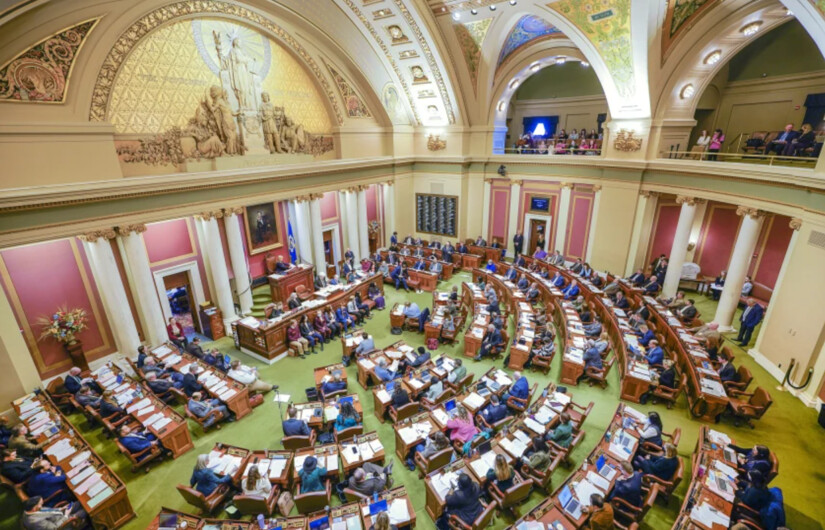 Minnesota House Photography file photo
The deadlock underscores a broader reality shaping policymaking in St. Paul. In prior sessions, majorities allowed public safety proposals to move forward along party lines. In 2026, parity has replaced momentum.
What emerges is not just a stalled bill, but a system in which disagreement alone is enough to stop policy in its tracks.
Even mechanisms designed to bypass committee gridlock, such as a “motion to blast” a bill directly to the House floor, are rarely successful and require political alignment that does not currently exist. While the bills are not permanently dead in a technical sense, their path forward this session is, for all practical purposes, closed.
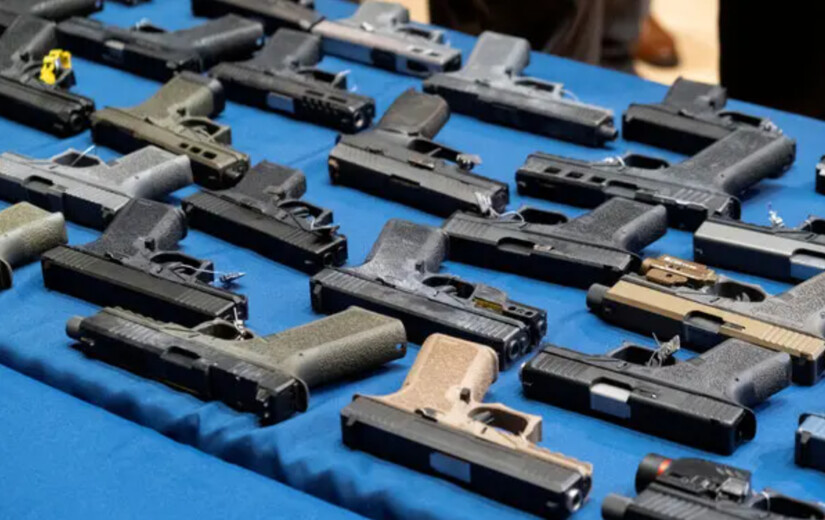 Ghost guns. Courtesy: New York Times
At the center of one proposal was the regulation of so-called ghost guns. These firearms, typically assembled from kits or produced using 3D printing technology, lack serial numbers and are therefore largely untraceable by law enforcement.
The bill sought to require serialization and registration of all firearms, including those built privately, and to restrict the manufacture and distribution of key components used in assembling these weapons.
Supporters, including public safety advocates and state officials, have argued that ghost guns represent one of the fastest-growing challenges in modern policing. Without serial numbers, these weapons often evade traditional investigative tools, complicating efforts to trace firearms used in crimes.
Opponents, however, framed the proposal as both overreaching and impractical. They pointed to the longstanding legal tradition of private firearm assembly in the United States and questioned whether such a ban could be effectively enforced, particularly in an era of decentralized digital manufacturing.
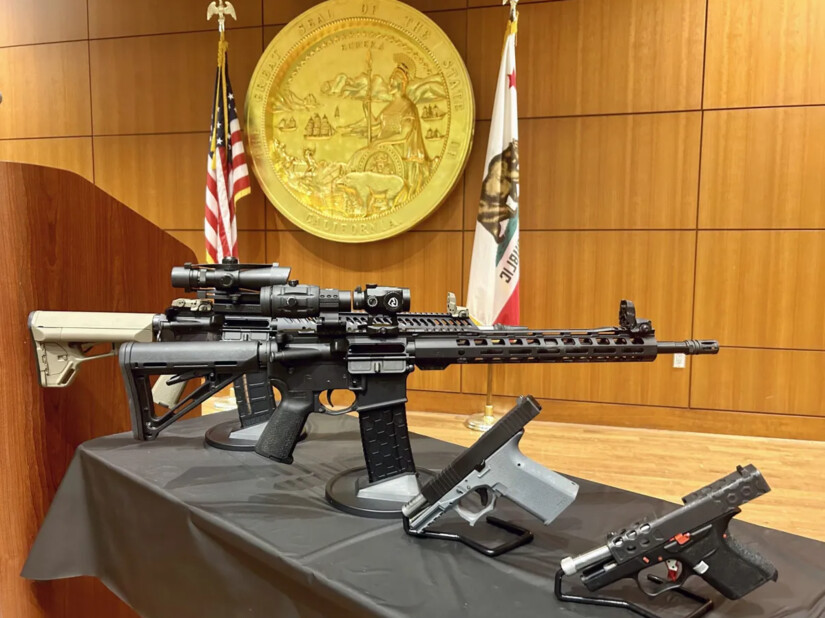 Ghost guns. Courtesy: California Department of Justice
The second bill addressed the evolving capabilities of firearms themselves, focusing in part on binary triggers.
A binary trigger allows a firearm to discharge one round when the trigger is pulled and another when it is released. While technically distinct from fully automatic weapons, the modification significantly increases a firearm’s rate of fire, narrowing the functional gap between semi-automatic and automatic systems.
Minnesota has previously placed restrictions on similar rapid-fire devices. The current proposal sought to reassert and clarify those limits amid ongoing legal and regulatory shifts.
For supporters, the issue is one of intent and outcome. Devices that increase firing speed, they argue, elevate the potential lethality of firearms in high-risk situations. For opponents, the concern lies in regulatory overreach and the classification of devices that remain, in their view, within the bounds of lawful firearm ownership.
The legislation also aimed to strengthen penalties for straw purchasing, a practice in which an individual legally eligible to buy a firearm does so on behalf of someone who is prohibited from owning one.
Though already illegal under federal law, straw purchasing remains a persistent pathway through which firearms enter illicit markets.
The proposal would have elevated the offense to a higher felony tier under Minnesota law, increasing criminal consequences in an effort to deter would-be offenders and disrupt illegal supply chains.
Advocates argued that state-level enforcement tools remain critical, particularly when federal prosecution resources are limited. Critics questioned whether additional penalties would meaningfully impact behavior, pointing instead to the need for stronger enforcement of existing laws.
Taken together, the failure of these bills reflects more than disagreement over policy details. It highlights a Legislature operating under conditions where consensus is no longer optional but required, and where the absence of it carries immediate consequences.
For gun control advocates, the committee vote represents a significant setback in efforts to modernize Minnesota’s firearm regulations in response to technological change and evolving patterns of gun violence.
For opponents, the outcome reinforces a check on proposals they view as unnecessary, burdensome, or constitutionally questionable.
What remains unresolved is the central question that has defined gun policy debates across the country and now, unmistakably, in Minnesota: how to balance the realities of public safety with the boundaries of individual rights in a rapidly changing technological landscape.
For now, that question remains unanswered in St. Paul.
And in a tied Legislature, unanswered questions have a way of staying that way.
MinneapoliMedia
Community. Culture. Civic Life.


Sunny, with a high of 70 and low of 52 degrees. Sunny in the morning, clear in the afternoon and evening, patchy rain nearby overnight.