63° and Moderate rain at times
Image
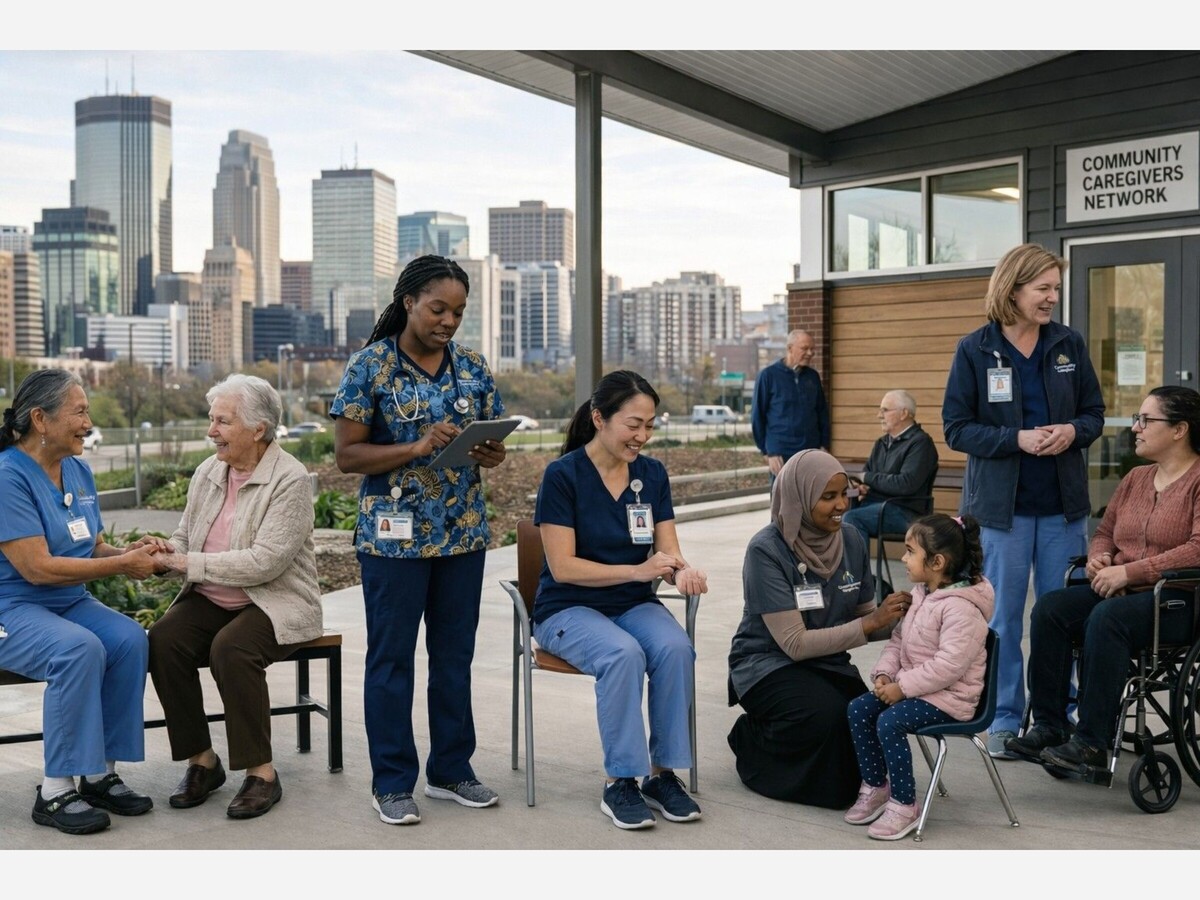



On a winter evening in North Minneapolis, long after most offices have closed and formal workdays have ended, a different kind of work continues. Inside a modest living room, a small group has gathered. Phones are open. Names are being written down. One person is coordinating rides for the next morning. Another is checking on a family that has not been heard from during the day. A third is updating a list of available resources, verifying information before it is shared more broadly.
There is no formal agenda. No institutional directive has brought them together. What guides the work is a shared understanding that people in their community need support and that the responsibility to organize that support cannot wait. Scenes like this are rarely documented in official accounts of how Minnesota functions, yet they are part of the state’s operating reality.
Minnesota is often described through the strength of its public systems. Its schools, healthcare infrastructure, public agencies, and economic indicators are used as markers of stability and capacity. These systems provide essential structure. They define how services are delivered, how resources are allocated, and how governance is carried out.
But the measure of any system is not found only in how it performs under stable conditions. It is revealed when conditions become strained. When a family faces sudden financial pressure, when access to care is delayed, when information is unclear, or when needs arise faster than formal processes can respond, the limits of structure become visible. In those moments, stability is no longer theoretical. It becomes immediate, and it becomes dependent on response.
Every system operates within constraints. Funding defines reach. Policy defines eligibility. Process defines timing. As a result, there is always a space between what is needed and what can be delivered in real time. That space is not empty. It is where communities operate, and across Minnesota, women have consistently taken on the responsibility of filling it.
This work does not begin with formal assignment. It begins with recognition. Someone notices that a neighbor has not been outside. A parent realizes that transportation has fallen through for a child who needs to get to school. A family faces a gap that cannot be immediately addressed through official channels. In each case, a response is required before a system can act.
Consider a morning when a student cannot get to school because transportation has failed. A parent is already at work. There is no immediate institutional solution available. In that moment, someone calls, someone offers assistance, and someone adjusts their own schedule to ensure that the student arrives. The issue is resolved before it expands into a larger disruption. That action does not appear in attendance data as an intervention, yet it directly affects educational continuity. Repeated across communities, these moments form a pattern that helps explain how stability is maintained.
This pattern reflects a form of infrastructure that is not physical but is no less essential. Infrastructure is commonly understood through roads, bridges, and buildings. These structures enable movement, connection, and service delivery. Communities, however, rely on another form of infrastructure built on relationships, trust, communication, and responsiveness. This infrastructure determines whether people know where to turn, whether they can ask for help, and whether help will be provided.
Women across Minnesota play a central role in building and maintaining this network. They organize meetings, maintain communication channels, and establish patterns of response that allow communities to function under varying conditions. This work is ongoing and cumulative. It strengthens the capacity of communities to respond when formal systems are delayed or limited.
Within this landscape, African American women have carried a particularly significant share of responsibility, especially in communities where systems have not consistently delivered equitable outcomes. Their work is not episodic. It is sustained over time and grounded in an understanding of both community needs and institutional limitations.
In neighborhoods across Minneapolis and other parts of the state, African American women coordinate food access during periods of economic strain, support families navigating housing instability, and mentor young people moving through educational systems that do not always reflect their lived realities. They also serve as interpreters of systems, helping individuals understand processes, access resources, and advocate when those resources are not readily available.
This role requires both knowledge and trust. Trust is built through consistency. It develops when individuals demonstrate, over time, that they will respond, follow through, and remain present. African American women have built that trust through sustained engagement, creating networks that function even when formal structures fall short.
Much of this work exists outside formal recognition. It is not tied to official titles or institutional roles. Yet it reflects leadership in its most direct form. Leadership is present in the person who organizes information when confusion spreads, in the individual who coordinates support during hardship, and in those who ensure that communication reaches people who might otherwise be overlooked. This leadership is measured by outcome rather than visibility.
Periods of increased pressure make this work more visible. Economic strain, public health challenges, and social uncertainty all place additional demands on both systems and communities. During these times, coordination becomes more deliberate. Support networks expand, communication increases, and attention is directed toward areas of greatest need.
Women are often at the center of this adjustment. They identify where resources must be directed, organize responses, and maintain continuity. This is not reaction in the sense of disorder. It is response grounded in experience and understanding of how communities function under pressure.
A critical aspect of this role is the ability to bridge systems and individuals. Women working within communities often help people navigate processes that are complex or difficult to access. They translate requirements into practical steps and ensure follow-through. At the same time, they communicate back to institutions, identifying where systems are not functioning as intended and advocating for change.
This two-way function strengthens both sides. Systems become more responsive, and communities gain greater access to available resources. Without this connection, the distance between policy and practice widens.
Much of what women do in this space prevents issues from escalating into crises. Early intervention reduces isolation, shared resources alleviate financial strain, and coordinated efforts address needs before they expand. These actions reduce pressure on formal systems while preserving stability at the community level.
Minnesota’s strength is frequently attributed to its institutions. However, institutions alone do not account for how communities remain stable during periods of strain. There exists a parallel structure that operates continuously, one that is not centralized, not formally funded, and not always visible, yet remains consistent in its function.
Women are central to that structure. They organize, respond, and sustain. They ensure that when systems reach their limits, communities do not.
This community-based structure functions alongside formal systems. It fills gaps, accelerates response, and provides continuity. It ensures that when systems reach their limits, communities do not. This is not a temporary function. It is ongoing.
Understanding Minnesota requires acknowledging both layers of this reality. Public systems provide structure, but communities provide continuity. Women operate within both, ensuring that systems remain connected to the people they serve and that communities remain stable when formal structures are under pressure.
There is a point at which systems stop, whether because of delay, limitation, or constraint. There is also a point at which response begins. Across Minnesota, women have consistently stepped into that space. They act without waiting for instruction, organize without formal authority, and sustain effort over time.
Minnesota’s stability is not accidental. It is maintained through daily decisions, coordinated responses, and consistent attention to the needs of others. Women have been central to that process. They hold communities together when conditions make that work necessary, ensuring that gaps do not become failures and that systems remain supported by the people they are meant to serve.
That work is not secondary to how Minnesota functions. It is part of its foundation, and it continues.
MinneapoliMedia
Community. Culture. Civic Life.



Sunny, with a high of 80 and low of 57 degrees. Sunny during the morning, clear overnight.