63° and Moderate rain at times
Image
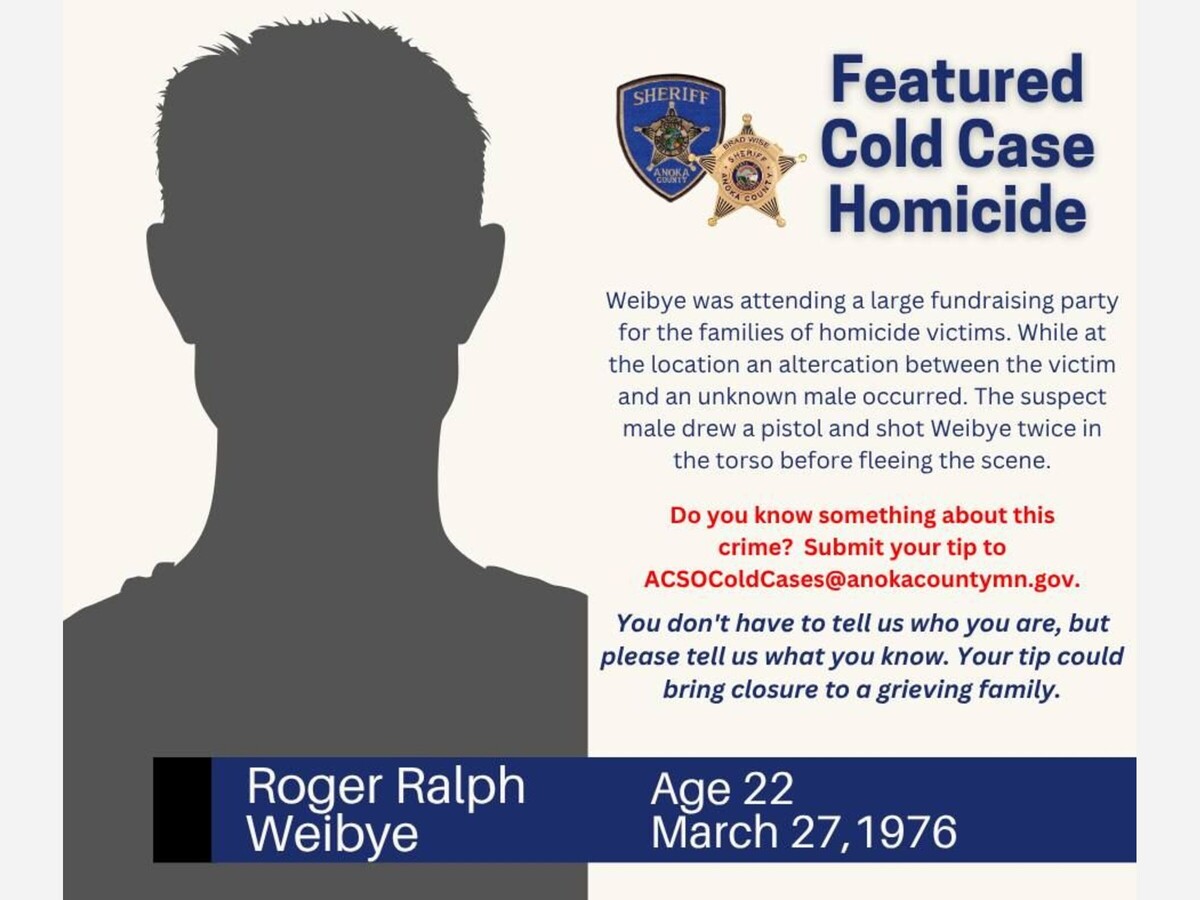



Roger Ralph Weibye, a 22-year-old man, was shot and killed shortly after midnight near what was then known as Gallagher’s Dump, in the area of 91st Avenue Northeast and Highway 65 in the City of Blaine. According to records maintained by the Anoka County Sheriff's Office, the killing occurred at approximately 12:20 a.m. during a large fundraising party organized for families of homicide victims.
The setting itself adds a layer of stark irony to the case. The event, intended as a space of remembrance and solidarity for those affected by violent loss, instead became the backdrop for another life cut short.
Investigators documented that an altercation broke out between Weibye and an unidentified male at the gathering. Details surrounding the confrontation remain limited in public records, but authorities confirmed that the dispute escalated quickly. At some point during the encounter, the suspect produced a handgun and fired two shots into Weibye’s torso.
The gunman fled the scene immediately. Despite the presence of a large crowd, no arrest was made that night.
Weibye was pronounced dead as a result of his injuries. The case was assigned number 76-015297.
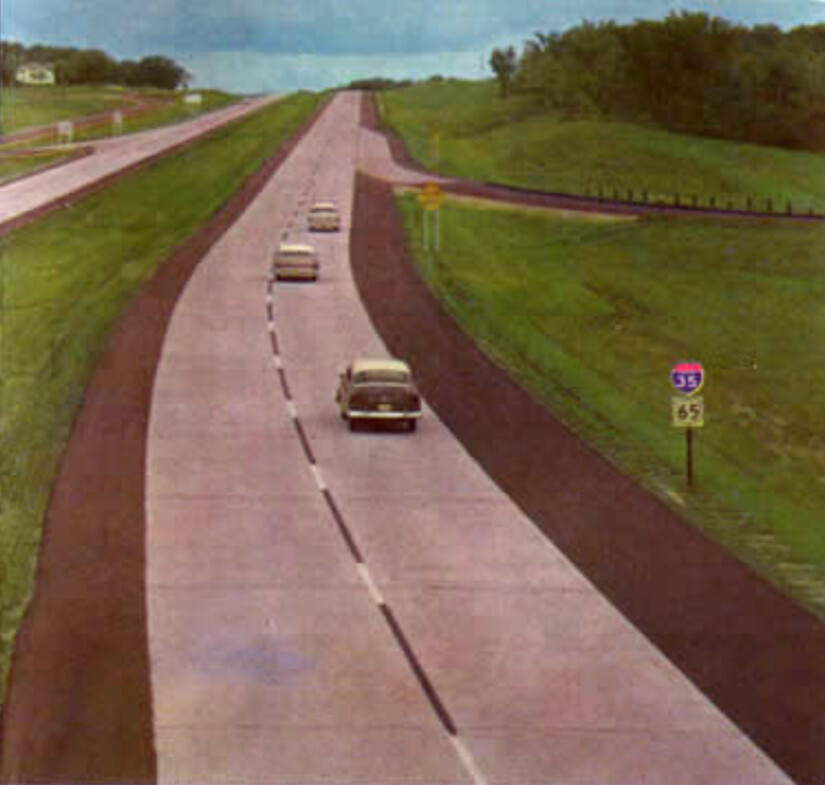 I-35, 1958-1975. Courtesy: DeadPioneer
At the time of the shooting, Blaine was still transitioning from rural outskirts into a more developed suburban community. Areas like the stretch along Highway 65 near 91st Avenue were less populated, with informal gathering sites that could draw large crowds without the infrastructure or oversight common in urban venues.
“Gallagher’s Dump,” referenced in case records, reflects a now largely vanished landscape of open, loosely regulated spaces where events could unfold beyond immediate law enforcement visibility.
That context has complicated the investigation. The combination of a large crowd, limited lighting, and the transient nature of attendees has made identifying witnesses and reconstructing the sequence of events particularly difficult.
The killing of Roger Weibye remains one of several unsolved homicides under the jurisdiction of the Anoka County Sheriff’s Office Cold Case Unit. Over the years, advancements in forensic science, data systems, and investigative techniques have reopened pathways in many long-dormant cases. Yet, like others from the 1970s, this case faces structural challenges.
Physical evidence collected at the time may be limited by the standards and preservation methods of that era. Witness memories, if not formally documented, may have faded or been lost altogether. And individuals who were present that night may have since moved, aged, or died.
Still, authorities emphasize that cold cases are not closed cases.
The Sheriff’s Office continues to actively encourage the public to come forward with any information, no matter how small or seemingly insignificant. In many historical investigations, a single overlooked detail has proven decisive years or even decades later.
Cases like Weibye’s exist not only in law enforcement files but also in the collective memory of communities. For residents who lived in or around Blaine in the mid-1970s, the event may remain a point of recollection—an incident tied to a place, a night, or a gathering that took a sudden and irreversible turn.
Law enforcement officials note that individuals who may have been reluctant to speak at the time, for reasons ranging from fear to uncertainty, may now feel differently. Time can shift perspective, loosen silence, and create opportunities for information to surface.
The Anoka County Sheriff's Office is asking anyone with knowledge related to the murder of Roger Ralph Weibye to come forward. Tips can be submitted via email to ACSOColdCases@anokacountymn.gov, and individuals are not required to identify themselves.
Authorities are also seeking photographs of Weibye for public use, as part of ongoing efforts to humanize victims and renew visibility around unsolved cases.
Additional information about other cold case homicides in Anoka County is available through the Sheriff’s Office Cold Case Unit.
Nearly 50 years later, the questions surrounding that early morning in March remain unanswered. Who was the man involved in the altercation? What sparked the confrontation? And who pulled the trigger in a crowd gathered to mourn violence, only to witness it again?
For investigators, and for those who remember, the case remains open—not only in a procedural sense, but in the deeper understanding that justice delayed is still justice sought.
Roger Ralph Weibye’s story, like so many others in the archive of unsolved crimes, stands as both a record of loss and a call that has yet to be answered.
MinneapoliMedia
Community. Culture. Civic Life.



Sunny, with a high of 80 and low of 57 degrees. Sunny during the morning, clear overnight.