Image
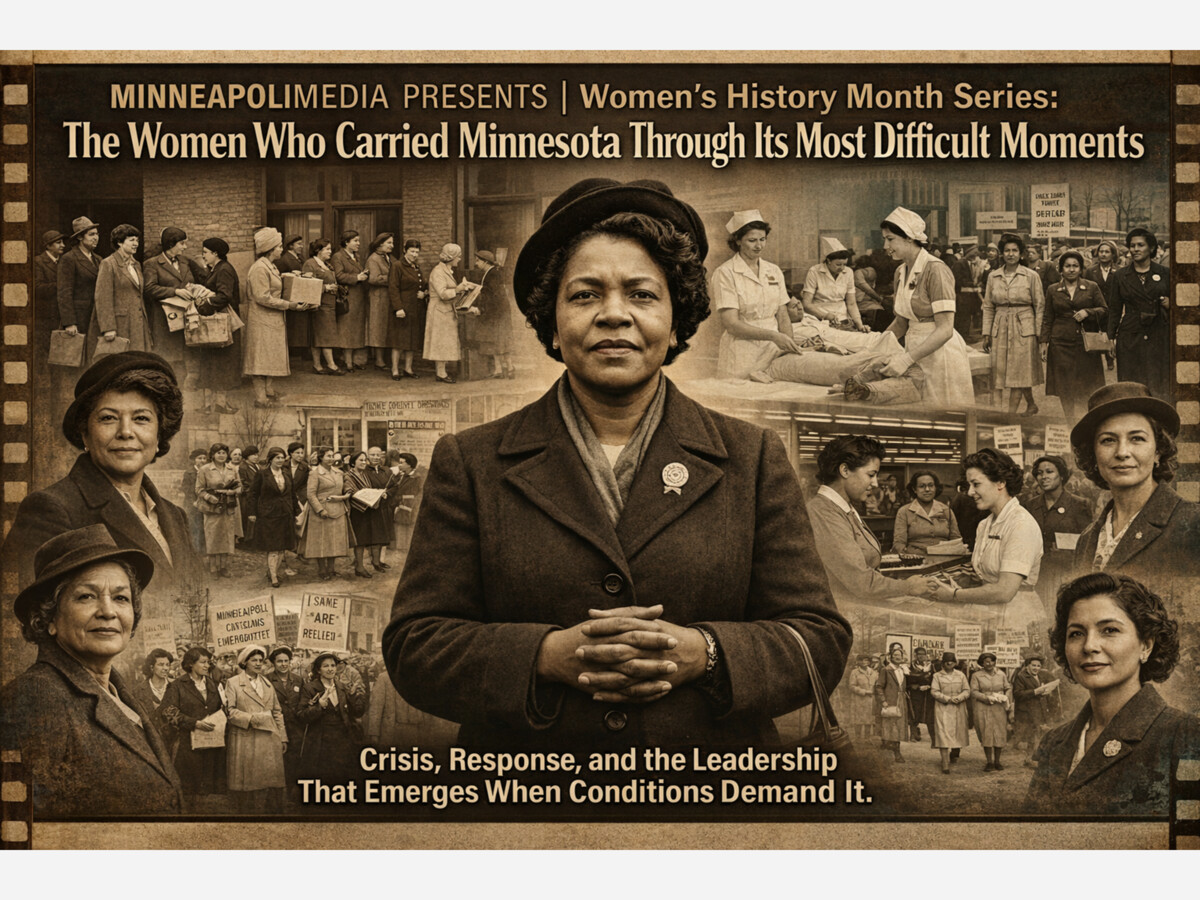
Illustration By MinneapoliMedia



On a winter evening in Minneapolis, a small group gathers in a neighborhood home to coordinate support for families facing immediate needs. The work is practical and time-sensitive. Rides are arranged. Information is verified before it is shared. Calls are made to check on individuals who have not responded earlier in the day. There is no formal structure guiding the meeting, but there is a clear understanding of what must be done.
This type of coordination is not unusual. It takes place across Minnesota in different forms and in different communities, often without visibility beyond those directly involved. While public attention tends to focus on how institutions respond during periods of difficulty, much of the initial response occurs at the community level.
In these spaces, response is immediate because it is informed by proximity. The people organizing support are often the same people who see the need as it develops. They do not rely on formal reporting channels to understand what is happening. They witness it directly, and that proximity allows them to act without delay.
Minnesota is widely regarded as a state with strong public systems. Its schools, healthcare infrastructure, and government agencies are often cited as examples of stability and organization. These systems play a critical role in addressing large-scale challenges. They provide structure, allocate resources, and establish processes for response.
However, the effectiveness of these systems is often tested during moments of strain. Economic disruptions, public health challenges, and social instability can create conditions where needs arise faster than formal processes can respond. In those situations, the first layer of response does not come from institutions.
It comes from people.
Institutional response requires coordination. It depends on verification, eligibility, and available capacity. These elements are necessary for consistency and scale, but they also introduce delay. That delay, even when measured in hours or days, can be significant for individuals facing immediate need.
Across Minnesota, women have consistently played a central role in that initial response.
When a household experiences a sudden loss of income, immediate support is rarely available through formal systems. Applications must be submitted, reviewed, and processed. In the interim, individuals rely on those within their immediate networks. Women often organize that support, connecting families to available resources, coordinating assistance, and ensuring that basic needs are met while longer-term solutions are pursued.
During public health challenges, similar patterns emerge. Access to care may be delayed due to demand or logistical constraints. In those cases, early response takes place at the community level. Women monitor conditions, share information, and help individuals navigate available options. They ensure that people are not left without guidance during periods of uncertainty.
In many instances, this work determines whether a situation stabilizes or escalates. Early coordination can prevent a short-term disruption from becoming a long-term crisis.
These actions are not isolated. They form a consistent pattern across different types of challenges. Whether the issue is financial, health-related, or social, the initial response often begins before systems are fully engaged.
This pattern appears in different communities and across different circumstances. It is not dependent on a single event or condition. It reflects a broader structure of response that exists alongside formal systems.
Over time, repetition reinforces reliability. Communities come to expect that response will occur, and that expectation itself becomes part of how stability is maintained.
African American women in Minnesota have played a particularly significant role in this area, especially in communities where disparities in access and outcomes are well documented. Their work often involves bridging gaps between institutions and individuals, ensuring that resources are both understood and accessible.
This includes coordinating food access during periods of economic strain, assisting families navigating housing challenges, and supporting young people within educational systems that do not always reflect their lived experiences. It also includes advocacy, where systemic issues are identified and brought forward in ways that can lead to change.
In many cases, this work operates across multiple layers at once. A single effort may involve immediate support, connection to longer-term resources, and communication with institutions about gaps in service. This layered approach increases effectiveness, but it also requires sustained effort.
Trust is a key factor in this work. Effective coordination depends on relationships that have been built over time. Individuals are more likely to seek help and respond to guidance when it comes from a source they trust. African American women have developed that trust through consistent engagement and demonstrated reliability.
Much of this work does not appear in official reports or metrics. It is not always documented, and it is rarely quantified. However, its impact is measurable in outcomes. Situations are stabilized before they escalate. Individuals receive support before conditions worsen. Communities maintain continuity during periods of disruption.
The absence of formal measurement does not indicate absence of impact. It reflects the limits of what current systems track. Much of the work that sustains stability operates outside those tracking mechanisms.
Recognizing this gap is important for understanding how communities function in practice, rather than only in theory.
Local knowledge also plays an important role. Women working within communities often have a detailed understanding of the conditions around them. They know which families may require assistance, what resources are available, and how to connect individuals to those resources efficiently.
This knowledge is not static. It is updated continuously through interaction and observation. It allows for targeted response and reduces delays that could otherwise increase the severity of a situation.
It also allows for prioritization. When multiple needs arise at once, local knowledge helps determine where attention is most urgently required.
In addition to immediate response, women often serve as a link between individuals and formal systems. They help navigate processes that can be complex or difficult to access. They follow up to ensure that support is received. They also communicate back to institutions, identifying areas where systems are not functioning as intended.
This two-way interaction strengthens both sides. Systems become more responsive, and communities gain better access to available services.
Without this bridge, individuals may not access the support available to them, and institutions may not fully understand where adjustments are needed.
The importance of early intervention cannot be overstated. Addressing issues before they escalate reduces the overall impact on both individuals and systems. A coordinated response at the community level can prevent financial instability from becoming housing loss, or a health concern from becoming a more serious condition.
This preventative function reduces strain on formal systems while preserving stability at the community level.
It also allows for more efficient use of resources, as early action often requires less intervention than crisis response.
Minnesota’s ability to navigate periods of difficulty depends on more than institutional capacity. It depends on how effectively communities are able to respond in real time.
Women have been central to that capacity.
They recognize when something requires attention. They organize support without waiting for formal direction. They maintain effort until stability is restored or systems are able to take over.
Their work ensures continuity during periods when formal structures are still mobilizing.
This pattern is not limited to a specific moment or type of crisis. It appears across different situations and over time. It reflects a consistent approach to addressing immediate needs while working toward longer-term solutions.
Understanding how Minnesota functions during its most difficult moments requires acknowledging both the role of institutions and the role of community-based response. These two layers operate together, but they do not begin at the same time.
Systems respond.
People act first.
Across Minnesota, women have consistently been the ones who take that first step.
Their work has helped ensure that communities remain stable during periods of uncertainty. It has provided continuity when systems are under pressure. And it has contributed to the overall resilience of the state.
This is not a temporary role.
It is an ongoing function that continues to shape how Minnesota responds to challenge and change.
MinneapoliMedia
Community. Culture. Civic Life.



Patchy rain nearby, with a high of 80 and low of 68 degrees. Don't forget your umbrella! Patchy rain nearby during the morning, clear for the afternoon and evening,