63° and Moderate rain at times
Image
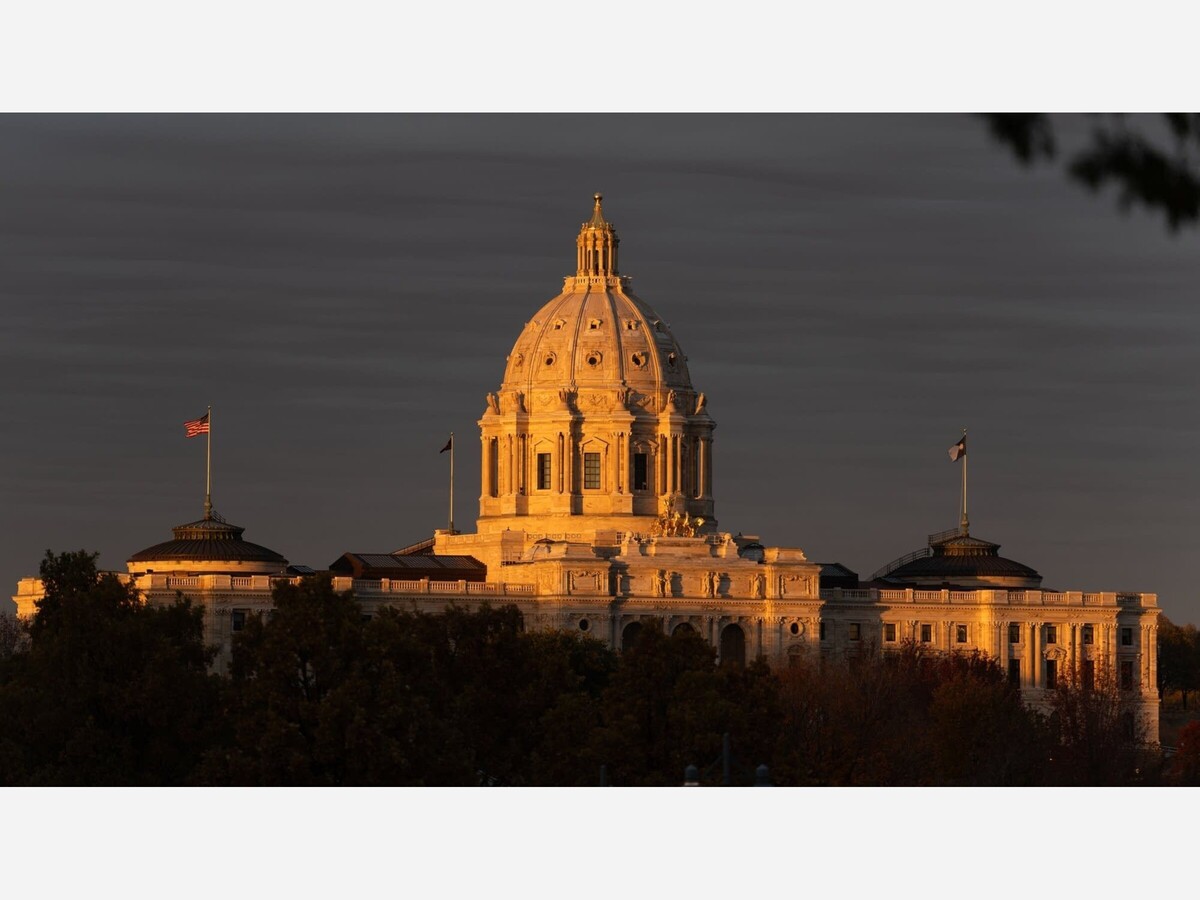



On Friday, March 27, at precisely 5:00 p.m., lawmakers adjourned for the Legislature’s annual Easter and Passover recess, stepping away from a session that has already been defined by urgency, tension, and the early contours of consequential policy fights. For now, floor debates have stopped. Committee rooms are empty. The pace that defined the first half of the 2026 session has given way to a brief pause.
But beneath that pause lies a narrowing timeline and a set of unresolved issues that will define the final weeks of Minnesota’s legislative year.
The 2026 session operates under a fixed constitutional endpoint. Lawmakers must adjourn by May 18, leaving just over six weeks once they return on Tuesday, April 7 at 8:00 a.m.
The break follows the completion of the Legislature’s first and second committee deadlines on March 27, milestones that narrowed hundreds of proposals into a smaller set of viable legislation. The next major checkpoint, the third committee deadline on April 17, will serve as a final filter for finance and appropriations bills before attention shifts almost entirely to the House and Senate floors.
In Minnesota’s even-numbered years, the legislative focus traditionally shifts. Unlike budget-setting years, which dominate odd-numbered sessions, the second year of the biennium centers on policy refinements and capital investment. That structure now places increased weight on a handful of major proposals that must be negotiated, amended, and passed within a compressed window.
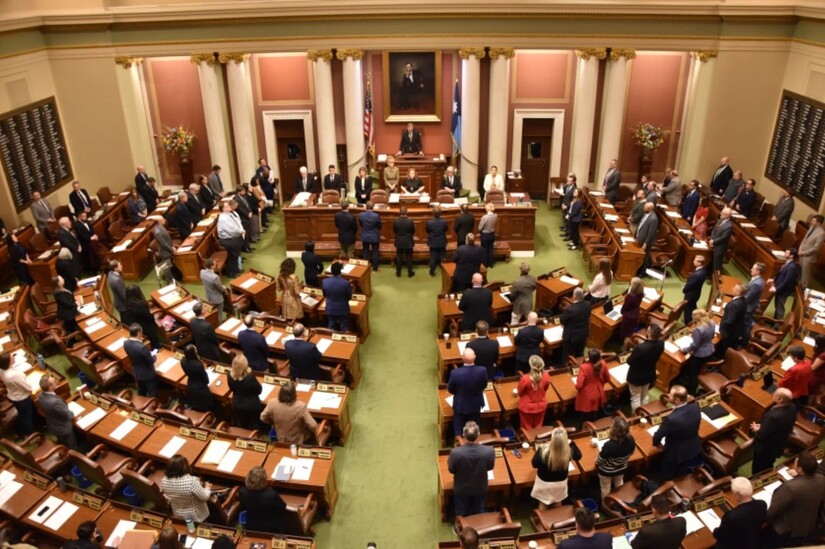
When lawmakers return, they will do so in one of the most politically delicate environments in recent state history.
The Minnesota House stands in a rare 67–67 tie, while the Senate holds a narrow one-vote majority for the Democratic–Farmer–Labor Party. That balance ensures that no major piece of legislation can advance without at least some level of bipartisan agreement.
In practical terms, it transforms nearly every major bill into a negotiation.
It also raises the stakes for leadership, who must navigate not only policy differences but also the arithmetic of votes in a chamber where a single defection can halt progress.
When the Legislature reconvenes, lawmakers will face a docket shaped by three dominant issues: public safety, government accountability, and infrastructure investment.
Gun policy has emerged as one of the most emotionally and politically charged issues of the session, shaped in part by recent acts of violence that continue to reverberate across Minnesota communities.
Proposals from DFL lawmakers include restrictions on certain types of firearms and accessories, safe storage requirements, and regulations targeting untraceable “ghost guns.” Republicans, meanwhile, have largely centered their approach on expanding mental health resources and strengthening school security infrastructure.
The divide reflects fundamentally different approaches to public safety. Yet the structure of the Legislature means neither approach can move forward without negotiation.
If gun policy represents division, fraud prevention represents something closer to alignment, at least in principle.
In the wake of high-profile cases involving misuse of public funds, lawmakers in both parties have acknowledged the need for stronger oversight. Proposals under discussion include the creation of an independent Office of the Inspector General, expanded auditing authority, and modernization of state information systems to better detect irregularities.
Where consensus exists on the problem, disagreement remains on implementation. The question is no longer whether reforms will occur, but how far they will go.
Every even-numbered year in Minnesota carries a familiar legislative centerpiece: the bonding bill.
This year is no exception. Governor Tim Walz has proposed a capital investment plan approaching $1 billion, targeting infrastructure projects that range from transportation and water systems to public facilities across the state.
Bonding bills require a three-fifths supermajority to pass, making them among the most bipartisan-dependent pieces of legislation in the state. In a divided Legislature, that requirement effectively guarantees negotiation.
Republican lawmakers have signaled concerns about the scale of new borrowing, while DFL leaders have emphasized the long-term economic and civic value of infrastructure investment. The final shape of the bill will likely emerge only after weeks of negotiation behind closed doors.
The Easter and Passover recess is more than a scheduling pause. It is a structural moment in the legislative process.
Lawmakers return to their districts. They meet with constituents, local officials, and stakeholders. They test the political viability of their positions outside the Capitol. And they refine their strategies for what remains.
When they return to St. Paul, the tone shifts.
Committee work gives way to floor action. Proposals become amendments. Ideas become votes.
And increasingly, negotiations move into conference committees, where members of the House and Senate work to reconcile competing versions of legislation into a single bill that can pass both chambers.
When gavels fall again on April 7, the Legislature will enter its most intense phase.
There will be little room for delay. Each remaining day will carry weight, each vote consequence. The distance between proposal and law will narrow quickly.
The quiet at the Capitol this week is temporary.
What follows will determine not only which policies become law, but how Minnesota responds to some of its most pressing challenges, from public safety to public trust to the physical infrastructure that shapes daily life across the state.
The clock is already running.
MinneapoliMedia | Community. Culture. Civic Life.



Sunny, with a high of 80 and low of 57 degrees. Sunny during the morning, clear overnight.