60° and Clear
Image
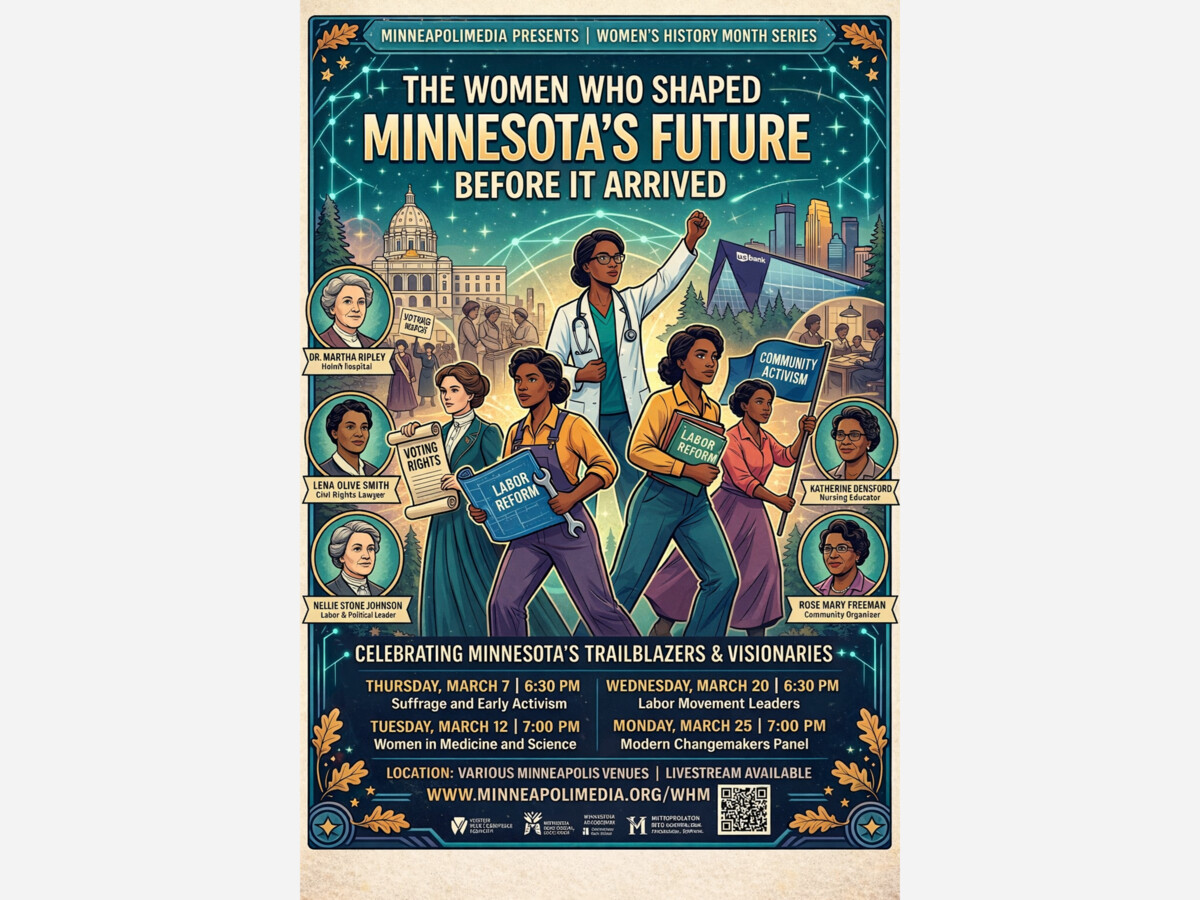



In Minnesota, change is often measured after it becomes visible.
A new program is announced. A policy is implemented. Funding is allocated. Data is collected and analyzed. Reports follow, documenting how conditions have shifted and how systems have responded. These markers are used to define progress and to explain how the state adapts to new challenges.
What these markers do not capture is the work that occurs before any of this becomes visible.
Long before policies are drafted or resources are distributed, there are individuals who recognize that conditions are shifting. They observe changes in cost, access, behavior, and need. They identify patterns that suggest future pressure points. They begin adjusting their actions and organizing others, often without formal authority and without the certainty that their concerns will be validated by institutions.
Across Minnesota, women have consistently been central to this early stage of response.
Their work has not been limited to addressing current conditions. It has included identifying what is coming next and preparing communities to meet it.
The first indication that conditions are changing rarely appears in formal data.
It appears in daily life.
A parent notices that grocery costs are rising faster than expected. A caregiver observes that appointments are becoming harder to secure. A worker recognizes that hours are being reduced or that schedules are becoming less predictable. A community member sees that more families are relying on informal support.
These observations are not isolated.
They accumulate.
Women working within households and communities are often the first to detect these changes because they are directly responsible for managing their impact. They track expenses, coordinate care, and maintain daily routines. When something shifts, they see it immediately.
This awareness allows for early action.
Before systems formally identify a trend, adjustments are already being made at the household and community level.
Preparation does not begin with formal planning sessions.
It begins with practical decisions.
A household adjusts its budget in anticipation of rising costs. A community organizer compiles updated information about available resources. A network of neighbors strengthens communication to ensure that information can be shared quickly. A caregiver identifies alternative options in case access to services becomes more limited.
These actions are small in isolation.
Collectively, they form a system of preparation.
Across Minnesota, women have led this work. They gather information, build relationships, and establish patterns of coordination that can be activated when conditions change.
Preparation does not eliminate future challenges.
It reduces their impact.
This pattern is visible across different regions of Minnesota.
In urban neighborhoods, where housing costs and access to services create ongoing pressure, women anticipate changes in affordability and prepare accordingly. They identify resources, connect families, and adjust support networks to absorb potential disruptions.
In suburban communities, where access to services may vary depending on location, women monitor changes in availability and ensure that families understand their options before gaps become critical.
In rural areas, where distance and limited infrastructure can delay response, women plan for access in advance. They coordinate transportation, identify alternative service providers, and maintain communication networks that allow for quicker response when needed.
The conditions differ across these environments.
The approach does not.
Women observe, anticipate, and prepare.
African American women in Minnesota have played a particularly significant role in this form of leadership, especially in communities where disparities in access and outcomes require constant navigation.
Their work often begins with recognizing patterns that may not yet be acknowledged at the institutional level. They see how policy decisions affect access to housing, healthcare, and education. They observe how economic changes impact employment stability and cost of living. They identify gaps that, if left unaddressed, will widen over time.
In response, they act.
They build support networks that can operate under strain. They ensure that information about available resources is shared within communities. They advocate for adjustments before conditions become more difficult to manage.
This work is proactive.
It is based on the understanding that waiting for formal recognition of a problem can increase its impact.
Trust is essential in this process. Effective preparation depends on relationships that allow information to move quickly and accurately. African American women have built that trust through consistent engagement and demonstrated reliability.
Public systems are designed to respond to identified needs.
They rely on data, analysis, and formal processes to determine when and how to act. This approach provides consistency and accountability, but it also introduces a delay between the emergence of a condition and the implementation of a response.
Foresight operates within that delay.
Women working within communities often identify emerging issues before they are reflected in system-level data. They act on these observations, preparing individuals and networks for potential changes.
When systems eventually respond, they do so in an environment that has already been partially prepared.
This relationship improves outcomes.
It allows systems to operate more effectively because groundwork has been established in advance.
One of the most significant outcomes of this work is the ability to build stability before it becomes necessary.
Communities that have engaged in preparation are better able to absorb disruption. They have established communication networks, identified available resources, and developed strategies for coordination.
This reduces reliance on reactive response.
It also allows for faster recovery.
Preparation does not prevent challenges from occurring.
It changes how those challenges are experienced.
Foresight requires managing both present and future conditions.
Women engaged in this work often balance immediate responsibilities with long-term considerations. They address current needs while also preparing for potential changes.
This dual focus is demanding.
It requires attention to detail, the ability to adapt, and the willingness to act without immediate confirmation that a predicted need will materialize.
Despite these challenges, this work continues.
It reflects a commitment to maintaining stability not only in the present, but over time.
Foresight appears across multiple areas of daily life.
In education, women recognize when students are falling behind and develop strategies to address gaps before they widen. They coordinate support, communicate with educators, and ensure that students remain engaged.
In healthcare, they monitor access to services and prepare for changes in availability. They help individuals understand their options and plan for potential delays.
In the economy, they track changes in employment, wages, and cost of living. They adjust budgets, identify additional income sources, and connect others to opportunities.
These efforts are interconnected.
They contribute to overall stability.
The value of foresight lies in its ability to connect observation to action.
Recognizing a potential issue is only the first step.
Women working within communities translate that recognition into practical steps. They communicate information, organize support, and establish processes that can be activated when conditions change.
This ability to act on early information is what distinguishes foresight from awareness alone.
Communities that engage in preparation experience crisis differently.
When conditions worsen, they are not starting from zero. They have already identified resources, established communication channels, and developed strategies for coordination.
This allows for quicker response and reduces the severity of disruption.
It also shortens recovery time.
Preparation creates resilience.
Minnesota benefits from this work in ways that are not always immediately visible.
Communities maintain stability during periods of change. Systems are able to respond more effectively because groundwork has already been established. Individuals are better equipped to navigate challenges.
These outcomes are the result of preparation.
They reflect decisions made before conditions required them.
The work that shapes future outcomes often takes place before it is formally recognized.
It occurs in daily decisions, in conversations, and in coordination that does not receive public attention.
Women have been central to this work across Minnesota.
They have identified emerging needs, prepared communities, and positioned systems to respond more effectively.
This work is not always visible.
But it is measurable in outcomes.
There is a point at which change becomes visible.
There is a point at which systems respond.
Before both, there is a period where preparation determines outcome.
Across Minnesota, women have consistently worked within that period.
They do not wait for urgency to be declared.
They act when patterns begin to form.
They prepare before response is required.
Minnesota’s future is not shaped only by how it responds to change.
It is shaped by how it prepares for it.
Women have played a central role in that preparation.
They have ensured that communities are not caught without support. They have built the conditions that allow for effective response. They have shaped outcomes before they became visible.
That work continues.
And it remains essential to how Minnesota moves forward.
MinneapoliMedia | Community. Culture. Civic Life.



Patchy rain nearby, with a high of 80 and low of 58 degrees. Sunny for the morning, thundery outbreaks in nearby during the afternoon, partly cloudy for the evening, clear overnight.