76° and Sunny
Image



That is the challenge now facing Brooklyn Park following Operation Metro Surge, a concentrated law enforcement effort aimed at addressing violent crime across parts of the northwest metro. While the operation was designed to enhance public safety, its secondary effects have exposed the fragile balance between enforcement and economic stability in one of Minnesota’s most diverse and steadily evolving cities.
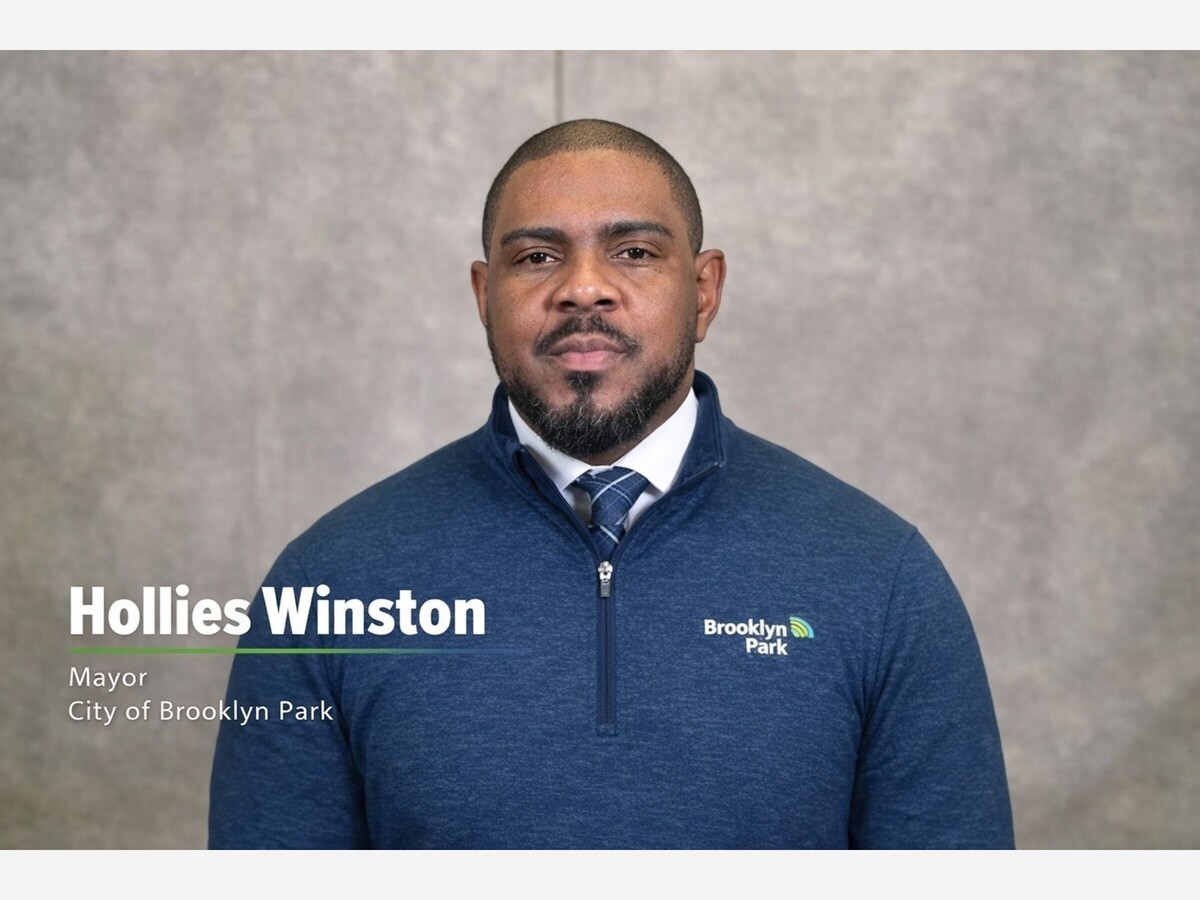
Mayor Hollies Winston is responding with urgency and clarity. In a recent interview with CCX Media, he outlined a coordinated set of measures designed not only to stabilize the moment, but to prevent it from becoming something more enduring.
The visible presence of Operation Metro Surge brought increased patrols, enforcement activity, and heightened public awareness. Less visible, but no less consequential, was the economic disruption that followed.
“Some businesses were down 50, 75 percent. Some had to close their doors,” Winston said.
For small business owners, particularly those operating on narrow margins, even a short-term decline of that magnitude can be destabilizing. For workers, many of whom rely on hourly wages, the consequences were immediate. Missed shifts, reduced hours, and in some cases fear of reporting to work compounded the financial strain.
The result is a familiar but urgent pattern. A public safety intervention produces an unintended economic contraction, which, if left unaddressed, can ripple into housing instability and longer-term community disruption.
Brooklyn Park’s response is rooted in a principle that has gained increasing traction among housing and policy experts: intervene early, or pay later.
To that end, the city is deploying rental assistance for residents who have experienced income disruption, with the explicit goal of preventing households from falling into prolonged arrears.
“We want people to get ahead of this thing,” Winston said. “We don’t want them to get 10 months behind.”
In parallel, the city is implementing a structural safeguard. Eviction notice periods have been extended from 14 days to 30 days, providing residents with additional time to access assistance, stabilize income, or negotiate payment arrangements.
The approach reflects a broader understanding that eviction is not a single event, but a cascade. Once initiated, it often leads to job loss, school disruption, and long-term financial instability. Preventing that cascade has become a central pillar of Brooklyn Park’s response.
If housing stability is one pillar, small business continuity is the other.
Local businesses, Winston emphasized, are not merely commercial entities. They are anchors of neighborhood life, providers of employment, and indicators of a city’s vitality.
The downturn experienced during Operation Metro Surge has placed many of those anchors under strain.
In response, the city is advancing financial and structural support for businesses, including assistance designed to help them recover lost revenue and maintain operations. While specific program details continue to evolve, the intent is clear: prevent temporary disruption from becoming permanent closure.
“We want them to stay vibrant because we want our city to stay vibrant,” Winston said.
The city’s actions come at a moment of measurable progress.
According to Mayor Winston, crime in Brooklyn Park is at a 35-year low, a benchmark that reflects long-term investments in policing strategy, community partnerships, and prevention efforts. While comprehensive year-by-year data varies by category, regional reporting and local summaries have shown declines in several key areas following pandemic-era increases.
Yet the mayor’s framing is deliberate. Progress is not a conclusion. It is a condition that must be maintained.
“We’re actively looking to push it down,” he said.
That dual focus, continuing enforcement while protecting economic stability, reflects a broader shift in how cities are defining public safety. It is no longer measured solely by crime rates, but by whether residents can remain housed, businesses can remain open, and communities can remain intact.
That broader story will come into focus on April 7, when city leaders gather for the annual State of the City address at Edinburgh USA.
The event is expected to serve as both reflection and roadmap, outlining:
“I want people to know the progress we’ve made,” Winston said, “but I also want people to know, just as importantly, the direction we’re going.”
For residents, business owners, and community stakeholders, the gathering represents more than an annual update. It is an opportunity to understand how the city intends to navigate a moment where safety, economics, and trust intersect.
Brooklyn Park now finds itself in a defining moment, not because of the operation itself, but because of how it chooses to respond to its consequences.
The question is not simply whether enforcement reduces crime. It is whether the city can absorb the shock without fracturing the systems that sustain everyday life.
In that sense, the response underway is both practical and philosophical. Rental assistance, extended eviction timelines, and business support are immediate tools. But they are also signals of a broader commitment.
A commitment to continuity.
A commitment to stability.
A commitment to ensuring that progress, once earned, is not undone by the very efforts meant to protect it.
As Winston put it, with a clarity that reflects both urgency and resolve:
The goal is to keep Brooklyn Park moving forward, and to make sure no one is left behind in the process.
MinneapoliMedia | Community. Culture. Civic Life.


Sunny, with a high of 81 and low of 51 degrees. Sunny in the morning, clear overnight.