60° and Clear
Image
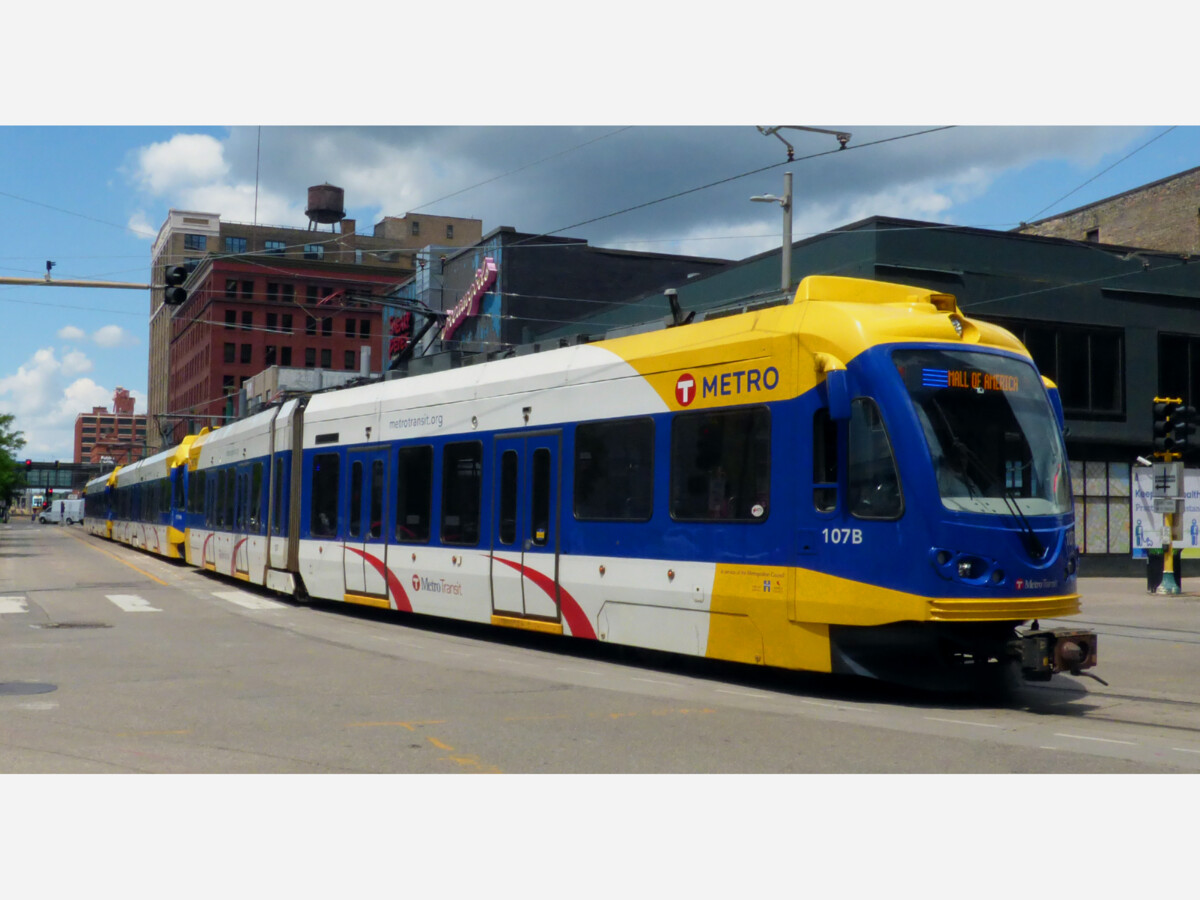



At the center of the dispute are the proposed Northern Lights Express rail line between Minneapolis and Duluth and the Metro Blue Line Extension, a light rail expansion connecting downtown Minneapolis to the northwest suburbs. Together, the projects represent billions in planned investment and years of coordinated local, state, and federal planning. Their fate now hinges on federal appropriations decisions that could either advance or stall them indefinitely.
The opposition is being led by Tom Emmer, who, along with other Minnesota Republicans in Congress, has urged the House Appropriations Committee to remove funding for both projects. In public statements, Emmer has characterized the rail investments as “unpopular” and “unsuccessful,” arguing they place an undue burden on taxpayers and fail to deliver sufficient returns.
The delegation’s position reflects a broader policy stance that prioritizes road and bridge infrastructure over fixed rail systems, emphasizing flexibility, broader usage, and long-term cost control. Republican lawmakers have also pointed to rising project costs and evolving ridership projections as reasons to reassess federal commitments.
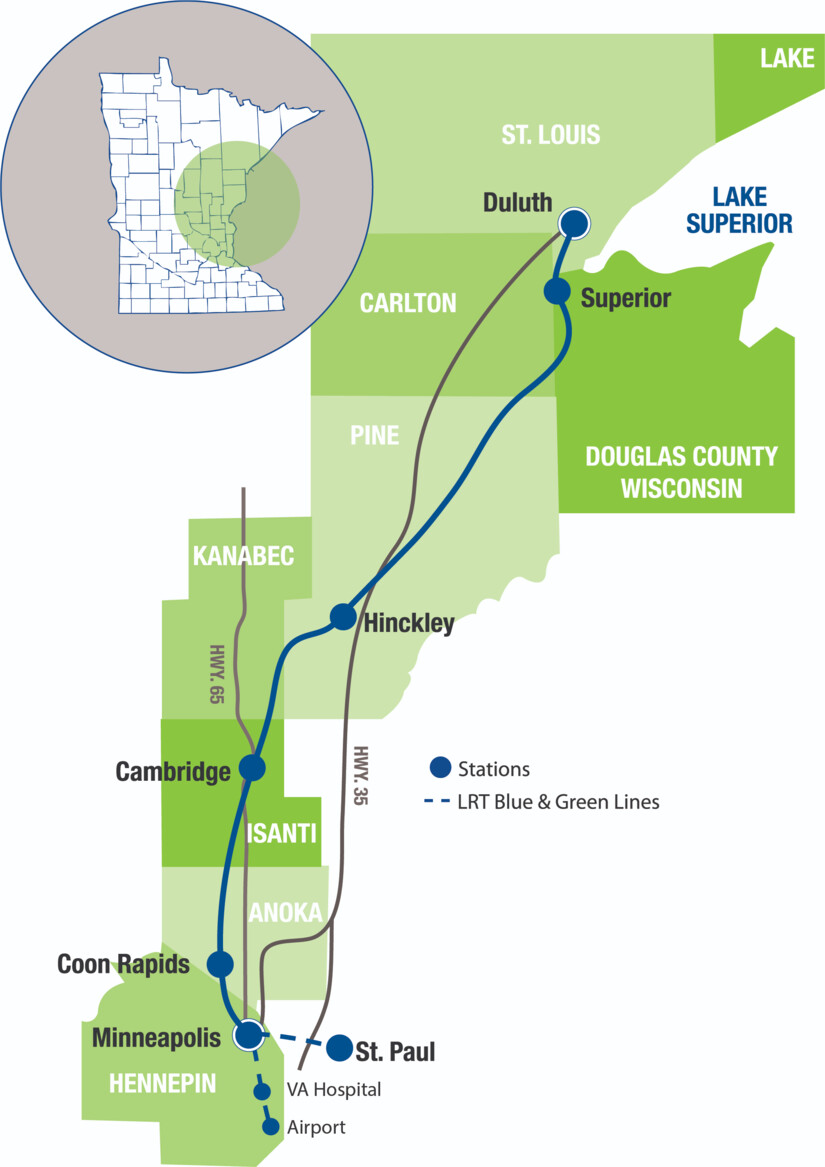 Northern Light Express. Courtesy: MnDOT
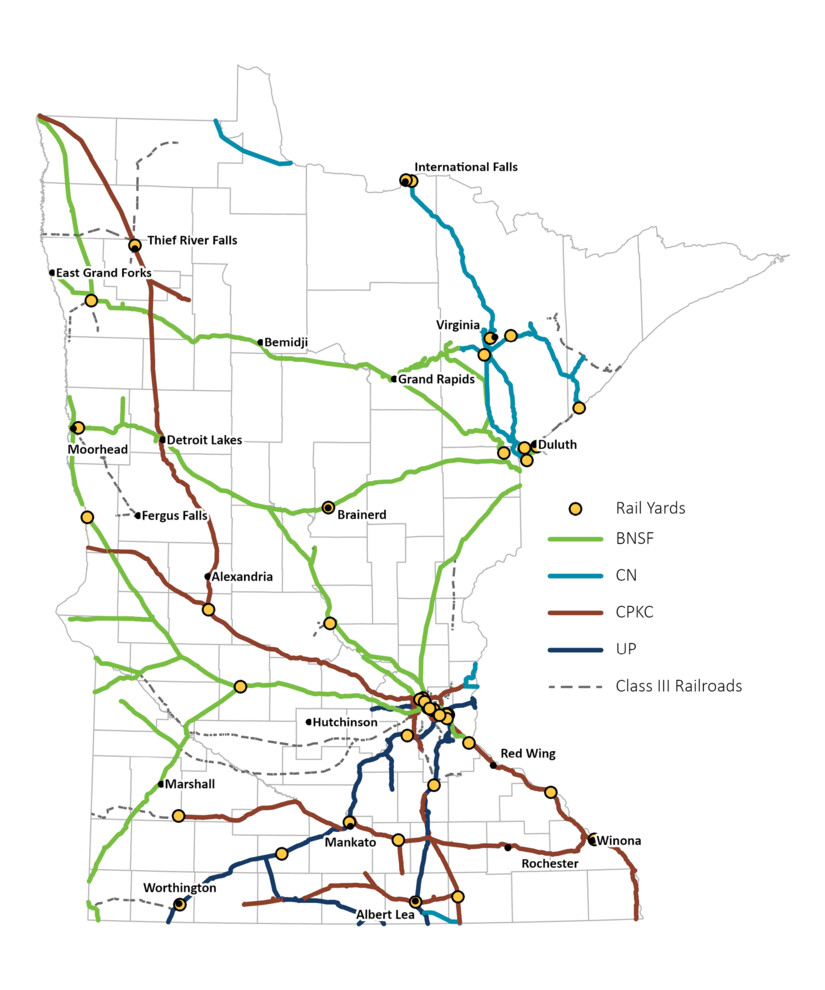 Minnesota rail network. Courtesy: MinnesotaGO
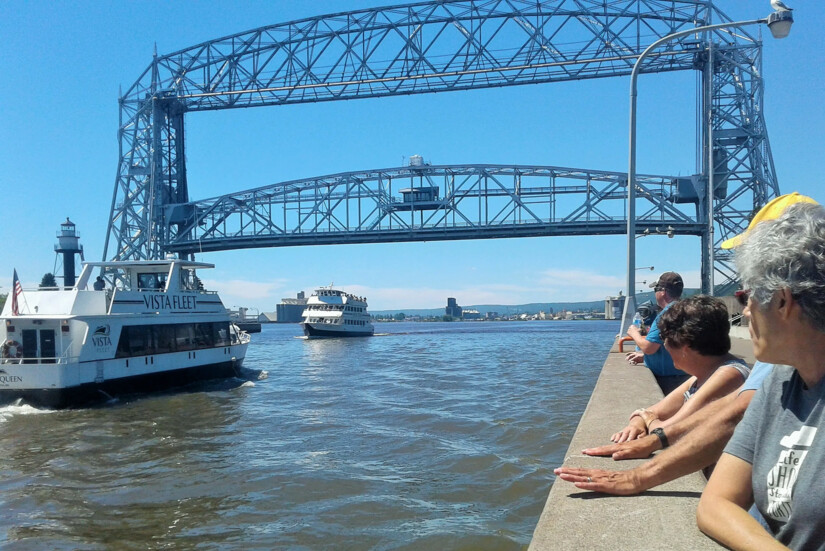 Duluth Port. Courtesy: Press Citizen
The Northern Lights Express, commonly known as NLX, is a proposed 152-mile higher-speed passenger rail line that would connect Minneapolis and Duluth using existing BNSF Railway corridors. Planned stops include Coon Rapids, Cambridge, Hinckley, and Superior, Wisconsin, positioning the line as both a regional connector and an economic development tool for Greater Minnesota.
The Minnesota Legislature approved approximately $194.7 million in 2023 to match anticipated federal funding, signaling strong state-level commitment. In late 2023, the project also secured a $27.5 million federal grant to advance engineering and design work, moving it closer to construction readiness.
Supporters argue the line would offer a viable alternative to Interstate 35, reduce travel times, and strengthen tourism and business ties between the Twin Cities and the Duluth region. Critics, however, point to concerns about long-term operating subsidies and question whether ridership levels would justify continued public investment.
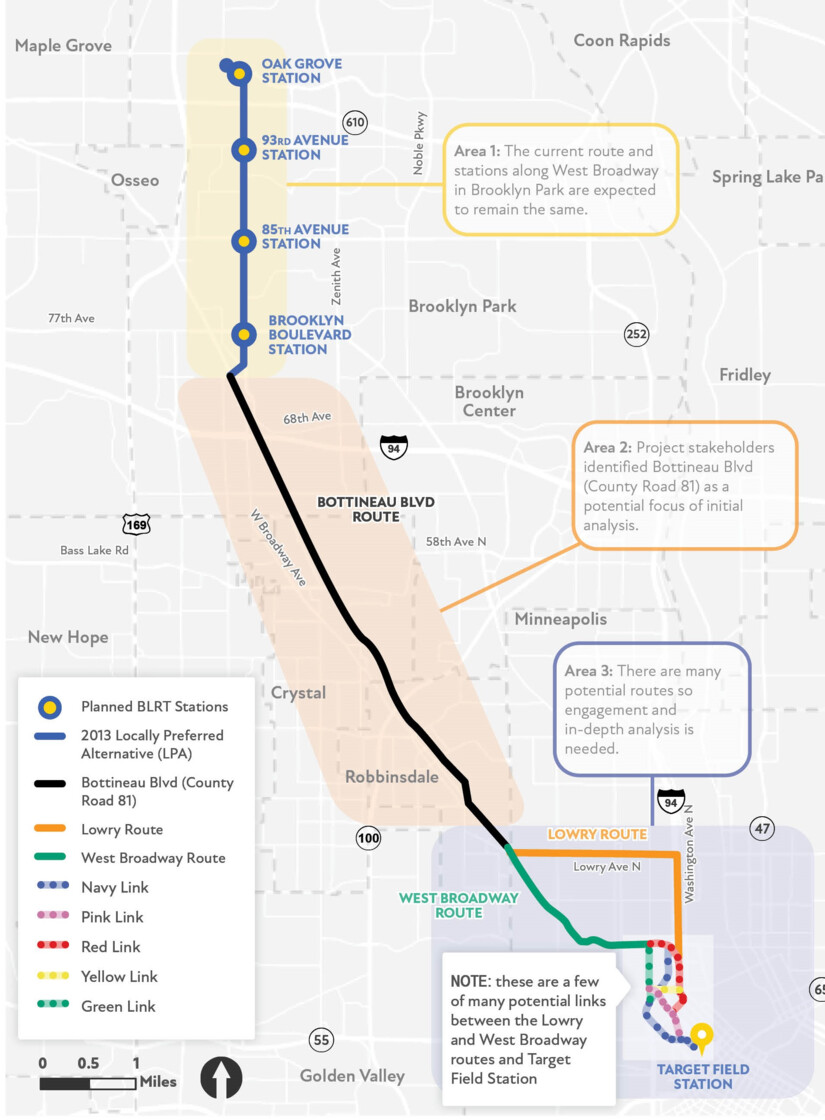 New Blue Line Extension. Courtesy: Metropolitan Council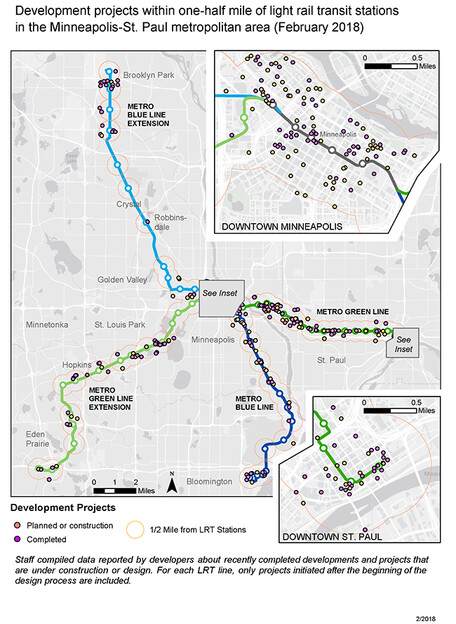
The Metro Blue Line Extension would extend light rail service from downtown Minneapolis northwest through communities including Robbinsdale and Brooklyn Park. The project has undergone significant redesign in recent years after negotiations with BNSF Railway over freight corridor use collapsed, forcing planners to identify an alternative route.
That shift has contributed to escalating cost estimates, now projected between approximately $2.2 billion and $3.2 billion. Supporters maintain the extension is critical to improving transit access in historically underserved corridors and linking residents to employment centers across the metro area. Opponents argue the rising price tag underscores broader concerns about cost overruns and long-term financial sustainability.
Beneath the political dispute lies a deeper disagreement over how public transit investments should be evaluated.
For advocates, success is measured not solely by farebox recovery or short-term profitability, but by long-term public value, including reduced congestion, expanded access to jobs, environmental benefits, and regional economic growth.
Brian Nelson of All Aboard Minnesota has been among the most vocal defenders of continued investment. He describes the push to eliminate funding as “very unfortunate and short-sighted,” pointing to recent passenger rail performance as evidence of strong public demand.
Central to that argument is the performance of the Borealis service, a passenger rail line connecting the Twin Cities to Chicago by way of Milwaukee. Launched in May 2024, the line quickly exceeded expectations, carrying more than 100,000 passengers in its first 22 weeks and averaging roughly 660 riders per day. Over its first year, ridership outpaced projections by a significant margin, reinforcing what advocates describe as “pent-up demand” for rail alternatives to heavily traveled corridors like I-94.
For Nelson and others, the Borealis line is not an outlier but a preview of what expanded passenger rail could achieve statewide.
Republican lawmakers, by contrast, frame success through a fiscal lens. They argue that many rail systems nationwide struggle to cover operating costs and require ongoing subsidies, creating what some critics describe as a cycle of declining ridership and increasing public expense. From that perspective, they contend limited federal dollars are better directed toward infrastructure that serves a broader share of daily commuters.
Despite the current opposition, both projects remain positioned within the framework of the federal Infrastructure Investment and Jobs Act, which has provided a pathway for large-scale transportation funding across the country.
At this stage, the critical battleground is the federal appropriations process. While prior grants and state matching funds have advanced planning, Congress retains the authority to approve or strip future funding allocations. A successful effort by House Republicans to remove line-item support could delay or derail both projects, even after years of development.
The outcome of this debate will shape not only the trajectory of two major infrastructure projects, but also the broader direction of transportation policy in Minnesota.
For supporters, the stakes extend beyond rail lines themselves. They see the decision as a test of whether the state will invest in diversified, forward-looking mobility systems designed to meet changing economic and environmental realities.
For opponents, it is a question of fiscal discipline and prioritization in an era of constrained public resources.
What remains clear is that the demand question, once theoretical, is now being tested in real time. And as ridership data, cost projections, and political priorities collide, Minnesota finds itself at a pivotal moment in determining how its residents will move, connect, and build in the decades ahead.
MinneapoliMedia | Community. Culture. Civic Life.



Patchy rain nearby, with a high of 80 and low of 58 degrees. Sunny for the morning, thundery outbreaks in nearby during the afternoon, partly cloudy for the evening, clear overnight.