60° and Clear
Image




She did not arrive on time. She arrived early.
It was a small moment, easy to overlook, but it said something about how she moves through the world. She prepares. She pays attention. She shows up with intention.
At 25, Ross is a self-discovery coach and executive assistant at Project DIVA International, where she works closely with Neda Kellogg to support and mentor young women. Her role places her in a position of quiet influence. She is not the public face of the organization, but she is present in the daily work that shapes it.
The conversation began simply. A greeting. A check-in. A reflection on a recent trip to Houston, where she had traveled to celebrate her 25th birthday with family and friends.
There was warmth in her tone, but also steadiness.
When asked whether she considered herself a workaholic, she did not hesitate.
“I wouldn’t say that I’m a workaholic,” she said. “I’m someone that really enjoys what I provide for people.”
It was not a rejection of work. It was a clarification of motivation.
That distinction would define everything that followed.

Ross was raised in Omaha, Nebraska, in a household led by a single mother raising six children. Five girls and one boy. She is the oldest daughter.
In that position, responsibility was not optional.
“Very early on, I knew that being responsible would be one of my pillars,” she said.
Responsibility meant paying attention. It meant stepping in when needed. It meant making sure others were accounted for while also learning how to account for herself.
She describes those early years as formative, not in a dramatic sense, but in a steady accumulation of expectations and decisions.
“If my mom called me and I needed to do something, I knew I needed to do it with intention,” she said.
That language matters. Intention is a word she returns to often. It reflects a way of thinking that developed over time. She is not someone who reacts without reflection. She considers. She evaluates. She moves deliberately.
“I’ve always been on my own path,” she said. “Making sure things make sense to me before I act.”
In a household defined by movement and noise, she learned how to create internal order.
She also learned the importance of boundaries, though she did not have that word for it at the time.

Ross speaks about her grandfather with a clarity that suggests his influence remains present in her daily life.
He stepped in as a father figure in the absence of her biological father. What he provided was not just presence, but consistency.
“He carried all the attributes of someone that is capable and confident,” she said.
More than that, he carried calm.
Even in moments of uncertainty, he maintained a sense that things could be figured out. That problems were not permanent. That solutions were possible.
“There was always that ‘we’ll figure this out,’” she said.
That outlook became part of how Ross approaches challenges. Not with urgency or panic, but with steadiness.

As a child, Ross understood work through observation.
Her mother worked as a waitress. It was not presented as something to be enjoyed. It was presented as something necessary.
“I couldn’t tell if she enjoyed it,” Ross said. “It was just something that paid the bills.”
Work, in that sense, was tied directly to survival. It meant stability. It meant continuity. It meant that the household functioned.
That understanding shaped her early definition of work.
“A task that you complete to provide for yourself and others,” she said.
There was no expectation that work would align with passion. That idea would come later.

After graduating from high school, Ross entered a period that lacked structure.
She was living with her grandmother. She did not have a steady income. The systems that had defined her earlier years were no longer in place.
“It was a lot going on,” she said.
She describes that time without dramatizing it. There was uncertainty, but also awareness. She understood that something needed to change.
It was during this period that she deepened her connection with Neda Kellogg.
Their relationship had begun earlier, through Kellogg’s son, but it developed into something more intentional through conversation.
Ross spoke openly about where she was.
Kellogg responded with equal clarity.
“She said, ‘I need an assistant,’” Ross recalled. “And I said, ‘I need a job.’”
The exchange was direct. It was also consequential.
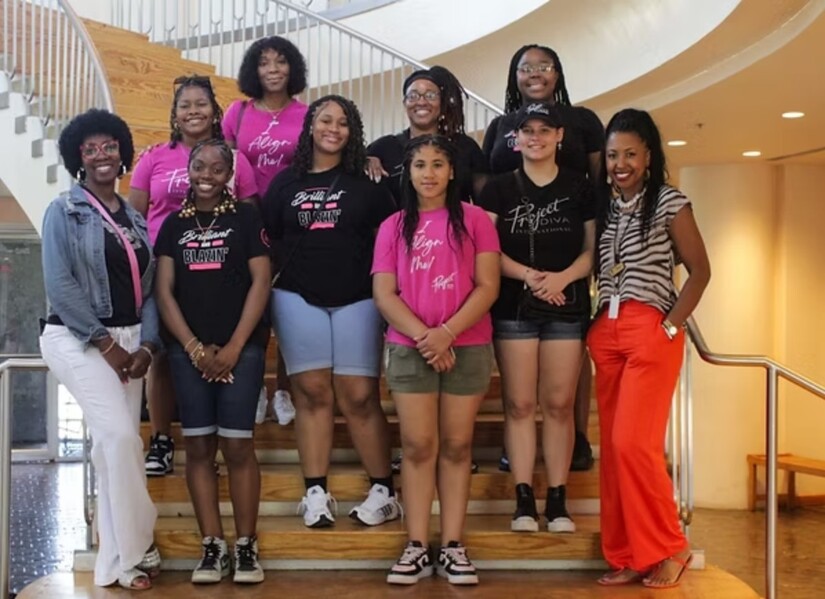
That moment marked the beginning of Ross’s formal relationship with Project DIVA International.
What began as employment quickly became something more layered.
The organization provided structure. It provided expectations. It provided a framework for growth.
But it also required work.
“I knew I had to do the intense work,” she said.
That work included developing habits, setting boundaries, and learning how to manage different areas of her life.
She credits Project DIVA not only with professional development, but with personal stability.
Through her involvement, she secured her first apartment. She later moved into her second. She developed financial awareness. She gained emotional clarity.
“It brought out parts of me that I didn’t even remember were there,” she said.

Today, Ross works as a self-discovery coach within the organization.
Her role is structured. She works with a small group of girls, meeting with them regularly and guiding them through different areas of development.
Each participant tracks goals across three categories: short-term, long-term, and emergency savings.
But the work extends beyond numbers.
Ross creates space for conversations that include emotional challenges, decision-making, and self-perception.
“If they didn’t accomplish a goal, we talk about why,” she said. “Where they feel stuck.”
She is deliberate about the environment she creates.
“I always tell them this is a space where they can say anything,” she said.
That includes discomfort. That includes uncertainty. That includes silence.

One of the patterns Ross sees consistently is a reluctance among young women to advocate for themselves.
“Sometimes people feel like speaking up is talking back,” she said.
She works to shift that understanding.
Communication, in her view, is not defiance. It is clarity.
She teaches the girls to express themselves without guilt.
“No one should feel bad about saying how they feel,” she said.
It is a lesson she continues to apply in her own life.
Ross speaks about boundaries with precision.
Earlier in her life, she did not maintain them consistently. She took on too much. She absorbed the experiences of others without creating space for herself.
That changed through intentional work.
“I carry my boundaries with me wherever I go,” she said.
Her routine reflects that commitment.
Each morning begins with what she calls a “power hour,” a period dedicated to centering herself before engaging with others.
Throughout the day, she evaluates what she can realistically take on.
“If I can’t take something on, I communicate that,” she said.
The goal is not to do everything. The goal is to do what she can do well, without compromising her well-being.
The work she does is not without weight.
She listens. She supports. She guides.
There are moments when that responsibility accumulates.
“I used to take on too much,” she said.
What has changed is her awareness.
She now relies on what she describes as her “self-care team,” a group of people who help her maintain balance.
“They make sure I’m good,” she said.
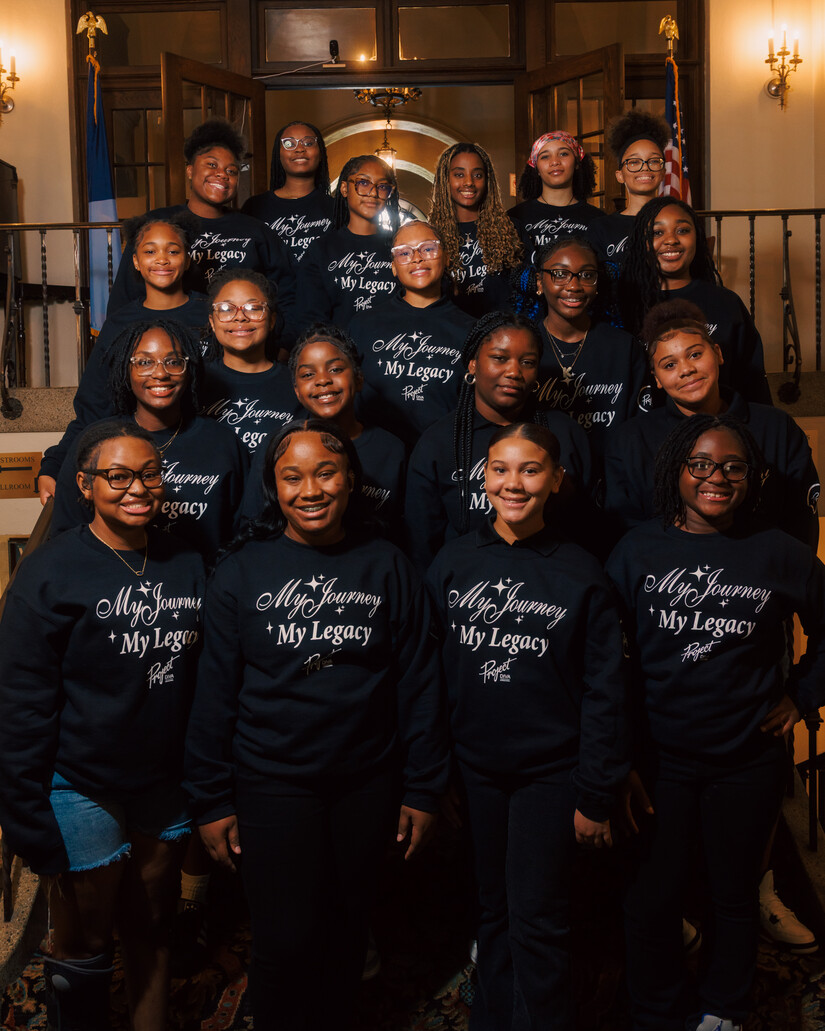
For Ross, the reward is not abstract.
It is visible in the girls she works with.
It appears in moments when they begin to speak with more confidence. When they express themselves more clearly. When they begin to see themselves differently.
“I leave every call on a natural high,” she said.
The impact is cumulative. It builds over time.
“It’s the growth,” she said. “Seeing it, experiencing it.”
Rest has not always come easily.
Ross describes periods where she struggled to get consistent sleep.
“I don’t always get a good night’s rest,” she said.
She has begun to address that intentionally, adjusting her routines and paying attention to habits that affect her ability to rest.
Her recent trip to Houston provided a rare opportunity to disconnect.
“That was the first time in a long time I got really good rest,” she said.
It was intentional. It was necessary.
Ross defines success in terms that are internal rather than external.
“Success looks like no stress,” she said. “Abundance in all areas.”
That includes mental clarity, physical health, financial stability, and emotional balance.
It also includes acceptance.
“I’ve accepted my past,” she said.
She does not frame her life in terms of overcoming. She frames it in terms of alignment.
When asked how she hopes to be remembered, Ross focuses on how she made people feel.
“How I loved them,” she said.
She describes herself as someone who brings energy into spaces. Someone who can shift a moment from tension to ease.
She values connection. She values presence.
Ross does not identify as a workaholic.
She does not measure her life by output or hours.
What defines her is consistency.
She shows up. She pays attention. She invests in others.
Her work is not driven by pressure.
It is driven by purpose.
MinneapoliMedia | Community. Culture. Civic Life.



Patchy rain nearby, with a high of 80 and low of 58 degrees. Sunny for the morning, thundery outbreaks in nearby in the afternoon, partly cloudy in the evening, clear overnight.