Image
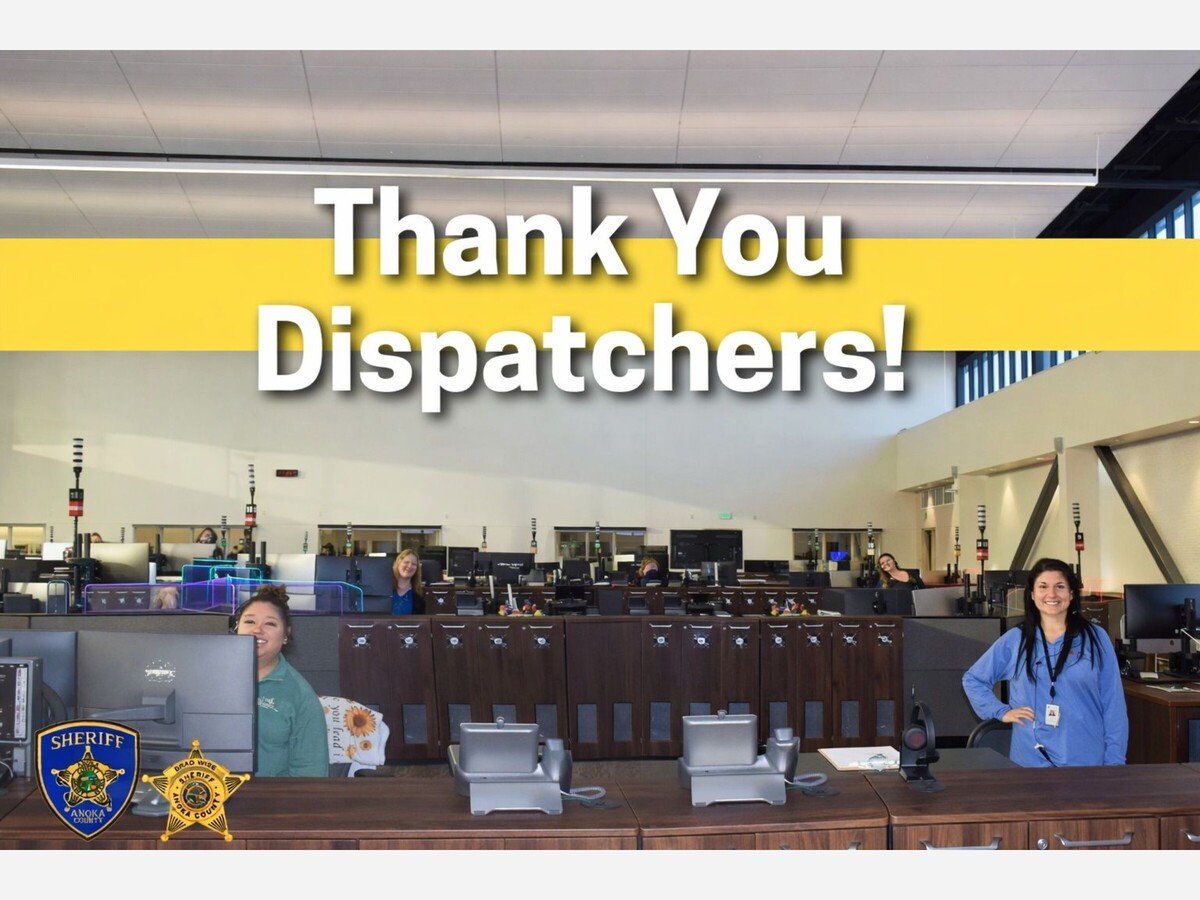



The annual observance, held each year during the second full week of April, honors public safety telecommunicators who serve as the first point of contact during emergencies, answering 911 calls and coordinating responses for law enforcement, fire, and emergency medical services.
History and National Recognition
National Public Safety Telecommunicators Week was first established in 1981 by Patricia Anderson of the Contra Costa County Sheriff’s Office in California. The observance was later recognized at the federal level when Congress designated the second week of April for the recognition, with the proclamation signed into law by Bill Clinton in 1991.
The designation highlights the role of dispatchers in managing high-pressure, time-critical situations while maintaining communication between the public and emergency responders.
Emergency communications in the county are centralized through the Anoka County Emergency Communications Center, the region’s primary public safety answering point.
According to county information, the center coordinates a multi-agency response system that includes:
Dispatchers also receive emergency medical calls and transfer them to ambulance dispatch providers, who deliver pre-arrival medical instructions while responders are en route.
In addition, the center manages the county’s connection to Minnesota’s statewide 800 MHz public safety radio system, supporting communication across more than 3,500 radios used by field personnel.
Public safety telecommunicators operate on a continuous 24/7/365 schedule, handling emergency and non-emergency calls while maintaining communication with first responders in the field.
Responsibilities include:
Dispatchers are trained to manage multiple systems simultaneously, including computer-aided dispatch platforms, mapping tools, and emergency alert systems.
The role requires specialized training and ongoing certification. New telecommunicators typically complete a 12- to 18-week initial training program, followed by extended on-the-job development that can continue for up to two years.
Personnel must demonstrate the ability to process information quickly, communicate clearly under stress, and manage sensitive situations involving public safety.
Officials emphasize that telecommunicators are a critical component of emergency response infrastructure. Their responsibilities include identifying caller locations, assessing risks to responders, and ensuring timely deployment of appropriate resources.
Because outdoor warning systems and first responders rely on accurate and timely information, dispatchers serve as the operational link between the public and emergency services.
Authorities encourage residents to recognize the role of emergency dispatchers and to use 911 services appropriately to ensure system availability for life-threatening situations.
Additional information on the role of public safety telecommunicators is available through national awareness resources and agency outreach materials, including educational content shared by the Anoka County Sheriff’s Office.
MinneapoliMedia | Community. Culture. Civic Life.



Sunny, with a high of 76 and low of 53 degrees. Sunny for the morning, clear overnight.