Image
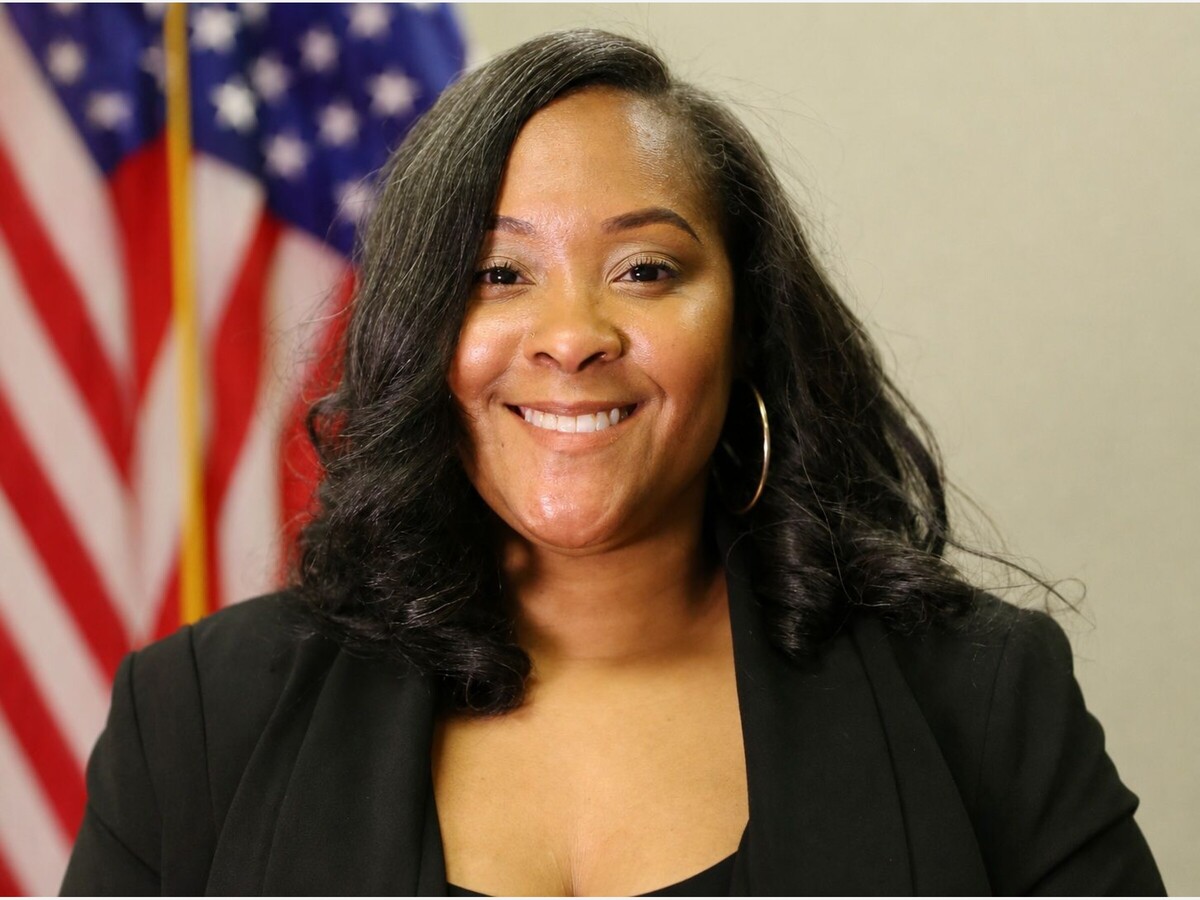



There are moments when government creates a new office, appoints a new director, issues a press release, and moves forward as though a structural announcement alone represents progress. Bureaucracies are often measured in timelines, staffing structures, appropriations, strategic plans, and public rollout language. Yet some offices are born not from institutional ambition, but from accumulated grief.
The Office for Missing and Murdered Black Women and Girls within the Minnesota Department of Public Safety exists because too many families spent too many years searching for loved ones while navigating systems that did not always move with urgency, communication, consistency, or visible care. It exists because advocates, survivors, organizers, and families continued insisting that the disappearances and deaths of African American women and girls could no longer remain peripheral within statewide public safety conversations. It exists because data, community testimony, and lived experiences collectively forced a deeper reckoning with how visibility, race, vulnerability, and institutional response intersect across Minnesota.
At the center of that office stands Kaleena J. Burkes, the inaugural director tasked with helping shape one of the most significant public safety and equity initiatives currently unfolding inside Minnesota state government.
Burkes occupies a position that is both administrative and deeply human. Her work requires navigating policy structures, legislative expectations, interagency coordination, victim support frameworks, community relationships, public trust concerns, and the emotional realities carried by families whose lives have been permanently altered by violence, disappearance, uncertainty, and institutional frustration.
That complexity became immediately clear during a recent conversation with MinneapoliMedia as part of The Power of Her: A Spotlight on Women Building Legacy, Leadership, and Liberation in Minnesota, a long form interview series dedicated to documenting women whose work is shaping the civic, institutional, cultural, and moral future of Minnesota.
What emerged from the conversation was not a portrait of a public official interested in visibility for its own sake. Instead, Burkes spoke with the measured seriousness of someone who fully understands why her office had to be created in the first place.
“When I first accepted the position, it was difficult for me to fully receive the congratulations,” she said. “Because while it is historic, I also know the weight behind why this office was created.”
That distinction matters.
Minnesota’s Office for Missing and Murdered Black Women and Girls did not emerge in a vacuum. It emerged amid longstanding concerns regarding disparities in violence, victimization, public awareness, institutional response, and investigative urgency affecting African American women and girls. It also emerged during a broader national conversation examining how race, gender, public safety, and media visibility influence which victims receive sustained public attention and which families are often left navigating grief with limited institutional support.
For Burkes, celebration and grief occupy the same space.
“This work is heavy,” she said during the interview. “It is facing the reality that women are being murdered. It is facing the reality that women and girls are going missing.”
She did not attempt to soften the language.
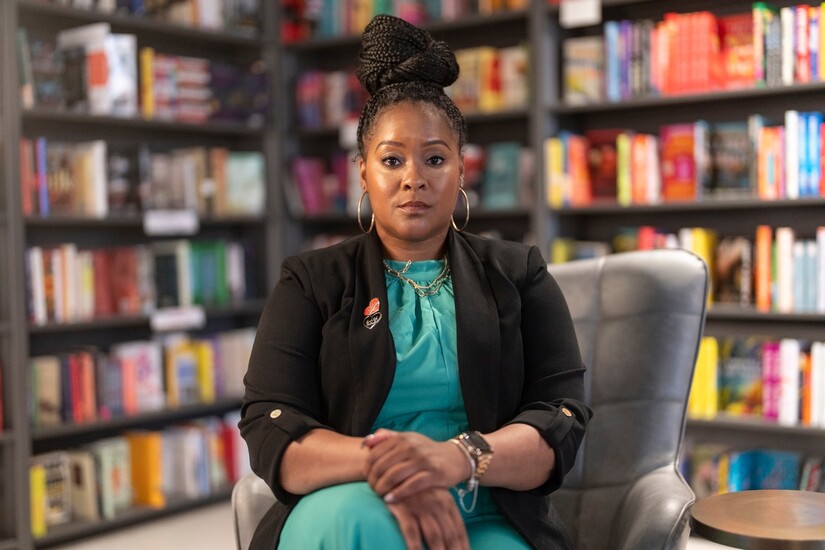
Throughout the conversation, Burkes consistently resisted the kind of polished institutional distance that often dominates public sector interviews. Instead, she returned repeatedly to humanity, empathy, accountability, and the need for systems to remember the people behind every report, case file, or investigation.
Her perspective appears shaped as much by personal history as by professional training.
Burkes was born in Detroit, Michigan, during a period when violence, drug activity, economic instability, and the long tail of the War on Drugs shaped many urban communities across the country. Later, she spent formative years in Alabama before eventually living in Florida and later establishing her career in Minnesota.
Growing up, she watched communities wrestle with violence while simultaneously observing how institutions sometimes failed the very people they were supposed to protect.
“You see crime. You see violence. But you also see people getting swallowed by systems that were not designed to help them,” she said.
Those experiences left an impression early.
“Even as a child, I recognized how close people were to systems that could completely alter their lives.”
She remembers observing not only criminal justice systems, but broader institutional structures affecting communities, families, and vulnerable individuals. That awareness would eventually guide her academic and professional path toward criminal justice and criminology.
Still, Burkes does not describe herself as someone naturally drawn toward attention or public visibility.
In fact, she repeatedly described herself as introverted and observant during childhood.
“I was quiet,” she said. “And when I did speak up, I often felt like nobody was really listening.”
That memory remains significant for her today.
“It feels full circle now,” she explained. “To be in a position where I am using my voice for people who often feel unheard or unseen.”
That idea of visibility became one of the defining themes of the conversation.
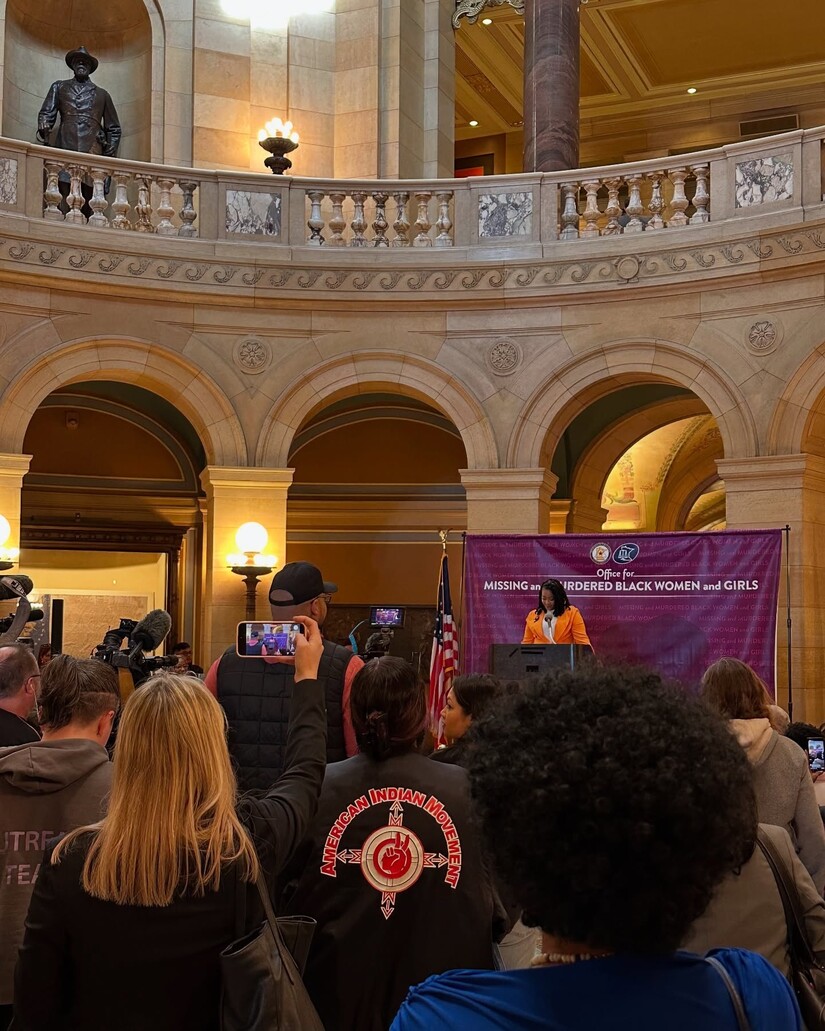
For families who have experienced the disappearance or violent death of a loved one, invisibility can take many forms. It can appear through delayed responses, fragmented communication, insufficient public attention, inconsistent investigative coordination, or the emotional exhaustion that often accompanies prolonged uncertainty. It can also emerge through the quiet perception that some cases receive broader institutional urgency than others.
The creation of Minnesota’s Office for Missing and Murdered Black Women and Girls represents an acknowledgment that those concerns could no longer remain unaddressed within state government.
Burkes understands that symbolism alone, however, is insufficient.
“This office alone will not solve the problem,” she said plainly.
Her answer reflected a practical understanding of systems. No single office, agency, or initiative can independently resolve issues connected to violence, disappearances, victim support, trauma, community trust, and investigative disparities. Sustainable progress requires coordination across multiple institutions.
“There has to be collaboration,” she said. “Law enforcement, community organizations, advocates, state agencies, families. Everyone has to come to the table.”
That phrase, “come to the table,” surfaced repeatedly during the interview. Yet Burkes also made clear that invitation alone is not enough.
“Over the last several years, we have invited communities to the table,” she said. “But we also have to follow through.”
For her, trust is built less through rhetoric than consistency.
“We have to show up the way we say we are going to show up.”
That may sound straightforward, but within public institutions, follow through often determines whether communities experience engagement as genuine or performative.
Burkes believes communities themselves frequently understand their own needs more clearly than institutions assume.
“We need to listen to people,” she said. “Communities know what they need.”
That perspective shapes much of how she approaches leadership inside state government. Throughout the conversation, she repeatedly returned to one principle that now appears central to her philosophy:
“We have to treat people like people again.”
The statement was not delivered dramatically. If anything, Burkes spoke with unusual calmness and clarity throughout the interview. Yet the sentence carries significant weight because it reflects a critique of institutional culture itself.
Modern systems often prioritize efficiency, process, compliance, liability management, timelines, procedural frameworks, and administrative structure. Those elements matter. Burkes herself openly acknowledges that she values organization and policy.
“I am a rule follower,” she said with a brief laugh. “I like policies. I like checklists.”
But she believes institutions become dangerous when procedure overtakes humanity.
“We have rules. We have systems. But when families come to us during the hardest moments of their lives, we cannot forget that they are people.”
That distinction matters especially in cases involving violence, disappearance, and trauma.
Burkes noted that one of the most common responses families share after interacting with her office is gratitude for simply being treated with care.
“We hear people say all the time that we are the first office that made them feel cared for,” she said.
She paused briefly afterward.
“That should not be unusual.”
The statement reveals both progress and indictment simultaneously.
On one hand, it suggests her office is helping establish a different approach grounded in communication, empathy, and responsiveness. On the other hand, it raises difficult questions about how families experienced previous interactions elsewhere.
Burkes does not dismiss those realities.
Instead, she appears determined to confront them directly.
“There is this idea sometimes that professionalism means you should not show emotion or empathy,” she said. “But people need to know that you care.”
That emotional dimension is impossible to separate from the work itself.
“It is hard not to carry these stories,” she admitted.
The emotional demands of the position are substantial. Families arrive carrying grief, fear, confusion, anger, exhaustion, and trauma. Some are navigating uncertainty after a loved one disappears. Others are dealing with irreversible loss. Many are also carrying frustration accumulated through prior institutional experiences.
Burkes understands that those realities cannot simply be compartmentalized.
“I think about what people have gone through,” she said. “I think about what they needed in those moments.”
She also reflected on her own experiences navigating hardship throughout life.
“I have gone through difficult things myself,” she said. “So I think about what support looked like during those times.”
That reflection influences how she designs programs, engages families, and approaches systems development.
“If people have already been harmed by systems, then we have to remember that when we are building responses.”
Her emphasis on harm caused by systems themselves represents an important distinction. Violence and disappearance create trauma, but institutional failures can deepen that trauma when families feel dismissed, ignored, unsupported, or forgotten.
That understanding shapes how Burkes defines success.
Asked what she hopes the office accomplishes five or ten years from now, she immediately focused on measurable outcomes.
“Fewer homicides,” she said. “Fewer women and girls going missing.”
She also emphasized faster recoveries and stronger support systems for families navigating investigations and trauma.
But her answer extended beyond statistics alone.
“Success also means decreasing gaps between systems,” she explained.
Those gaps may include communication breakdowns, fragmented services, inconsistent coordination, delayed responses, or disparities in attention and support.
The office itself operates within a broader ecosystem involving local law enforcement agencies, state agencies, advocacy organizations, nonprofit groups, victim services programs, legislators, and community organizations. Burkes repeatedly emphasized that long term progress requires those entities to work together more effectively.
“If we can build strong multidisciplinary collaboration across the state, then we are moving in the right direction.”
Throughout the conversation, Burkes also discussed the importance of believing victims and taking reports of harm seriously before situations escalate further.
“We need to believe people when they tell us they are being harmed,” she said firmly.
She pointed specifically to women and children whose warnings are often minimized, dismissed, or ignored.
“Sometimes people speak up and they are not believed until after something terrible happens.”
Burkes also raised concerns regarding the adultification of children, particularly girls of color who are frequently perceived as older, more mature, or less vulnerable than they actually are.
“They are children,” she said plainly. “We have to stop treating them like adults.”
That issue, she believes, has direct implications for safety and protection.
“We are supposed to create safe spaces for children,” she continued. “That responsibility belongs to adults and institutions.”
Her framing consistently returned to responsibility. Not abstract responsibility, but practical responsibility rooted in action, follow through, and institutional conduct.
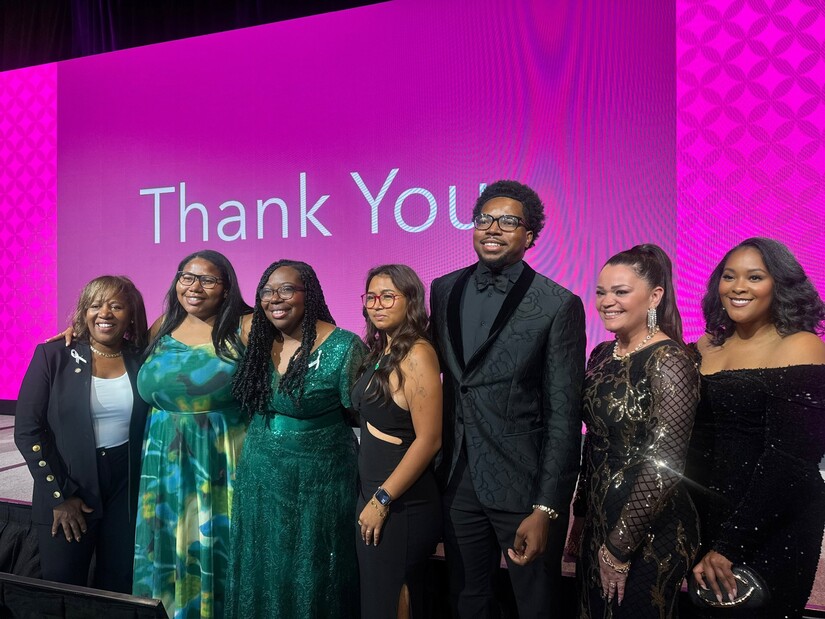
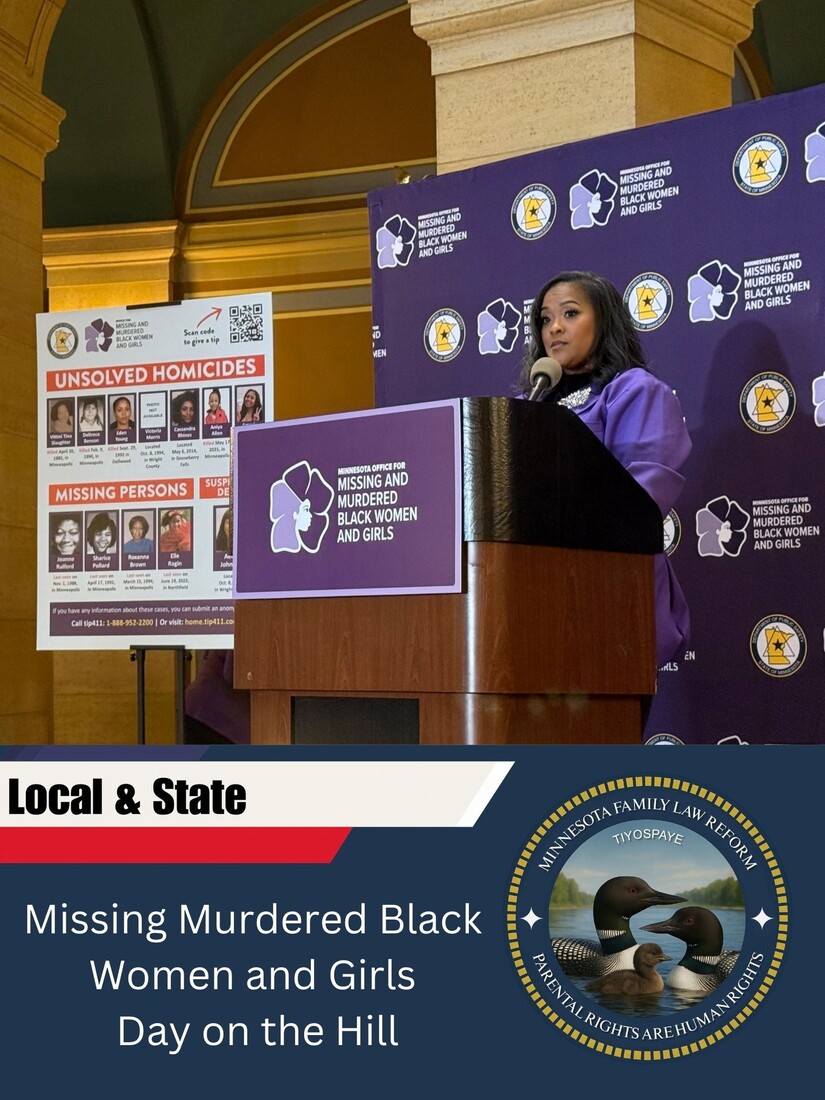
During one particularly reflective portion of the interview, Burkes discussed the unveiling of the office’s logo and what it represented to her personally.
“One thing it says is that we are here,” she said.
The logo, she explained, was intentionally designed to reflect the diversity within Minnesota’s Black communities, including African Americans, African immigrants, biracial individuals, and others whose experiences intersect through race, visibility, and public safety concerns.
“We are not all the same,” she said. “But there are shared realities that connect us.”
For Burkes, representation matters because visibility matters.
She understands that historically marginalized communities often measure institutions not only by policy language, but by whether they genuinely feel acknowledged within public systems.
“I wanted people to see themselves reflected,” she explained.
That focus on acknowledgment also appears connected to her own childhood experiences.
As a young girl, Burkes often felt quiet, overlooked, and uncertain whether her voice carried significance.
Today, she sits inside state government helping shape institutional responses affecting communities across Minnesota.
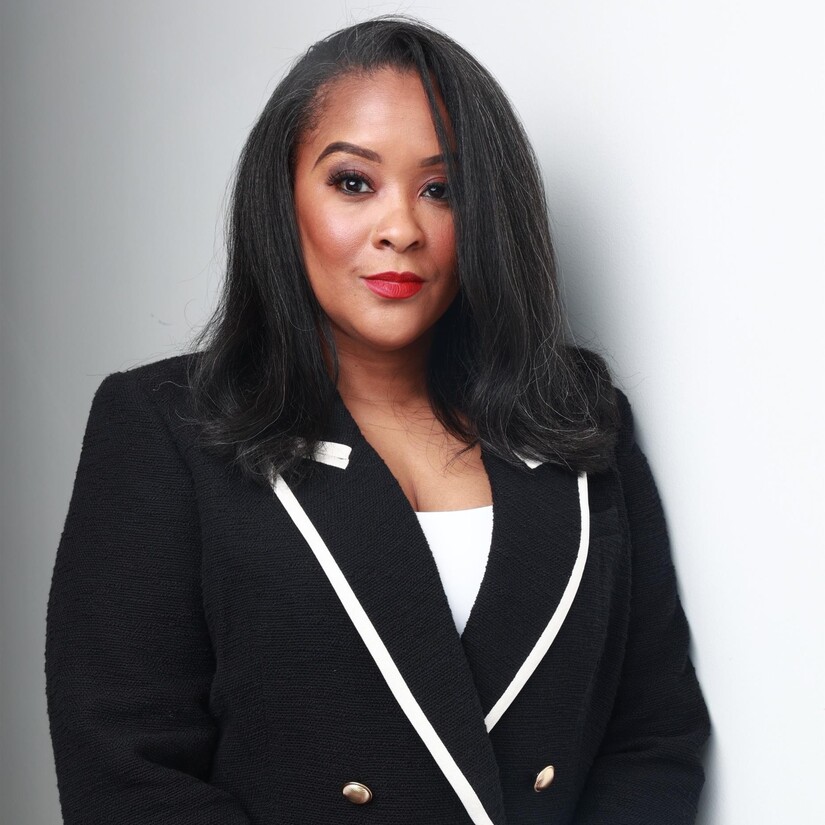
When asked what message she would share with young girls who may now look at her journey and imagine possibilities for themselves, her answer centered less on ambition than purpose.
“Stay true to your values,” she said.
She encouraged young people to continue learning, remain grounded in service, and believe there is space for them even when they cannot yet see it clearly.
“Twenty years ago, I probably would not have imagined myself in this role,” she admitted.
Still, she credits persistence, curiosity, and what she describes as a “servant’s heart” for guiding her path.
“I have always wanted to help people,” she said.
That desire appears to remain the central force driving her work today.
At the conclusion of every Power of Her interview, guests are invited to recognize other women whose leadership deserves greater visibility within Minnesota. Burkes immediately named Ruth Richardson and Artika Roller as women whose support and leadership have significantly impacted her.
The answer felt appropriate within the broader context of the conversation. Leadership rarely emerges in isolation. It is sustained through networks of mentorship, collaboration, encouragement, and shared responsibility.
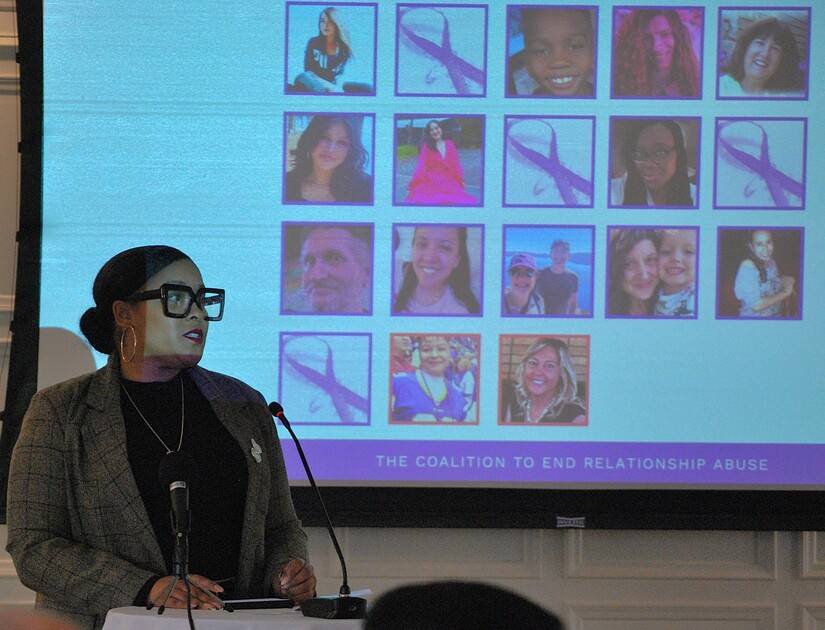
As Minnesota continues confronting difficult questions connected to violence, institutional trust, victim support, racial disparities, and public safety, Burkes occupies a role that requires balancing empathy with structure, advocacy with accountability, and policy with humanity.
It is demanding work.
It is emotionally costly work.
And as she made clear throughout the interview, it is work she does not approach casually.
“This office was created because there was a need,” she said.
That reality remains central to everything she carries forward.
For families searching for answers, for communities seeking accountability, and for a state continuing to examine how institutions respond to those who have historically felt unheard, the long term significance of Minnesota’s Office for Missing and Murdered Black Women and Girls may ultimately be measured not only by legislation, reports, or administrative milestones.
It may instead be measured by something more foundational:
Whether systems learn once again how to recognize humanity clearly, respond consistently, and treat every life as worthy of urgency, dignity, protection, and care.
MinneapoliMedia | Community. Culture. Civic Life.



Sunny, with a high of 85 and low of 60 degrees. Sunny in the morning, clear overnight.