Image
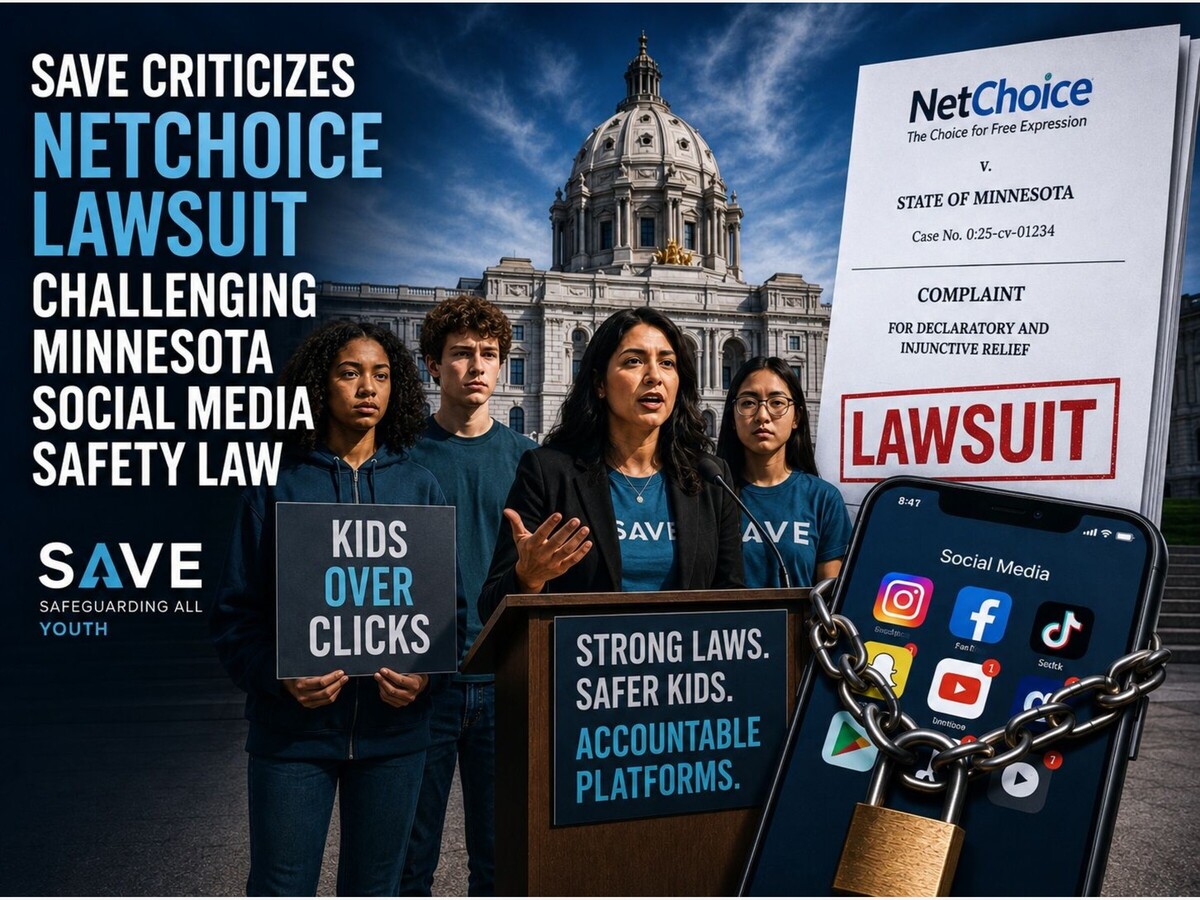



BLOOMINGTON, MN (May 12, 2026) Minnesota nonprofit SAVE, formerly known as Suicide Awareness Voices of Education, is criticizing a federal lawsuit filed by technology industry trade association NetChoice seeking to block Minnesota’s new social media safety law, arguing the measure is intended to protect children and families from documented online mental health harms rather than restrict speech.
The lawsuit, filed April 29 in federal court, challenges legislation approved during Minnesota’s 2025 legislative session that is scheduled to take effect July 1, 2026. The case, filed as NetChoice v. Ellison, names Minnesota Attorney General Keith Ellison and Minnesota Department of Health Commissioner Brooke Cunningham as defendants.
The law, authored by Zack Stephenson, would require social media platforms operating in Minnesota to implement a series of consumer safety notifications intended to address youth mental health concerns associated with prolonged social media use.
Under the legislation, social media platforms would be required to display state-designed mental health warning labels each time a user logs in. The warnings would reference concerns associated with features such as infinite scrolling, social comparison driven by edited images, and excessive platform usage. The notices would also include mental health resources, including contact information for the 988 Suicide & Crisis Lifeline.
The law would additionally require platforms to issue timer notifications every 30 minutes informing users how much total time they have spent on the application that day.
SAVE, headquartered in Bloomington, has emerged as one of the law’s most vocal supporters. The organization said the lawsuit represents an effort by major technology companies to avoid accountability over platform designs that advocacy groups and some researchers say contribute to rising youth mental health concerns, including anxiety, depression, self-harm, and suicidal ideation.
SAVE Chief Executive Officer Erich Mische said the law should be viewed as a public health measure comparable to warning labels required for tobacco or alcohol products.
“It has nothing to do with free speech,” Mische said in a statement. “It is the same type of warning label that we would see on cigarettes or alcohol.”
SAVE officials said the organization plans to continue working with parents, educators, youth advocates, lawmakers, and mental health organizations in support of the legislation.
NetChoice, a national trade association representing technology companies including Meta, Google, and TikTok, argues in its complaint that the Minnesota law violates First Amendment protections by compelling private companies to display government-mandated messaging. The group contends the state cannot require platforms to disseminate what it characterizes as government opinions or contested claims regarding social media use and mental health.
The organization also argues that the law imposes a “one-size-fits-all” requirement affecting all users, including adults, regardless of individual usage patterns or risk factors. NetChoice has previously filed similar legal challenges against social media regulations in multiple states, including Colorado and Arkansas, often arguing that such measures constitute unconstitutional compelled speech.
Minnesota officials defending the law have argued the state has a compelling public interest in addressing addictive platform design features and protecting minors from documented harms associated with excessive social media use.
The debate comes amid increasing national scrutiny over the mental health effects of social media use among adolescents. Public health officials, lawmakers, and advocacy organizations across the United States have pushed for stronger platform accountability measures, citing concerns related to online bullying, addictive engagement systems, self-harm content, and declining youth mental health indicators.
Research examining online behavioral patterns and suicide-related digital content has found that vulnerable adolescents may face elevated mental health risks associated with certain forms of prolonged or harmful social media exposure.
As of Tuesday, the case remained pending in federal court. Unless an injunction is granted before July 1, Minnesota social media users could begin seeing the required warning labels and usage timer notifications later this summer.
MinneapoliMedia | Community. Culture. Civic Life.


Sunny, with a high of 85 and low of 60 degrees. Sunny in the morning, clear overnight.