Image




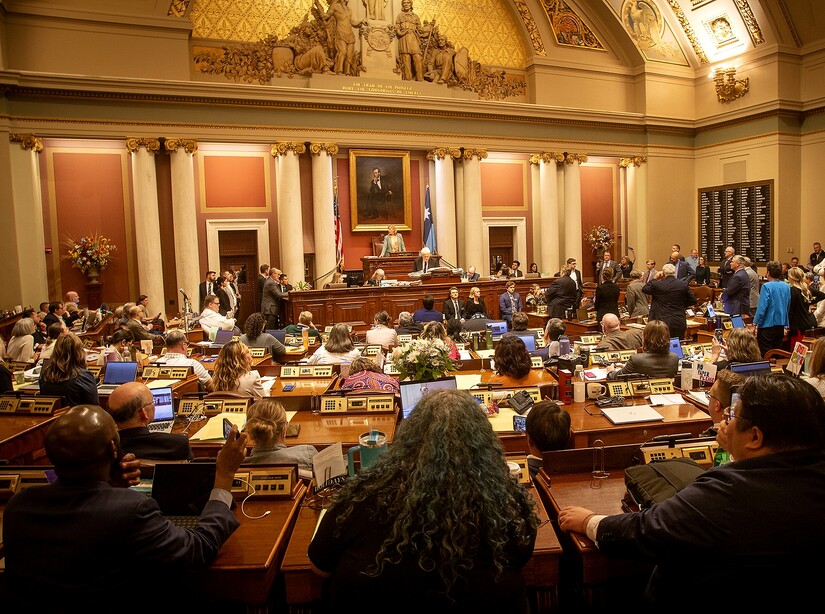
The measure passed Monday on a narrow 34-33 party-line vote, reflecting ongoing political divisions at the Minnesota Capitol over immigration enforcement, civil liberties, and state cooperation with federal authorities. The bill is not expected to advance in the Minnesota House, where Republican leaders have publicly opposed the proposal.
Under the legislation, federal agents with Immigration and Customs Enforcement (ICE) or Customs and Border Protection (CBP) would be required to obtain a judicial warrant before entering certain protected public spaces for immigration enforcement purposes. Administrative warrants issued internally through federal immigration agencies would not satisfy the proposed state requirement.
The bill designates several categories of “sensitive locations” where the restrictions would apply, including K-12 schools, early childhood education centers, hospitals, emergency medical facilities, and courthouses.
Supporters of the legislation said the proposal is intended to ensure residents can seek medical care, attend school, access emergency services, and participate in court proceedings without fear of immigration-related detention or enforcement actions.
The legislation also creates a private right of action allowing individuals or families to pursue civil damages if their rights under the proposed law are violated during federal immigration enforcement operations.
Senate Majority Leader Erin Murphy said the measure was partly driven by recent federal immigration enforcement operations in Minneapolis that drew criticism from immigration advocates and civil rights organizations.
“This legislation carries the right of civil action so the families of Ms. Good and Mr. Pretti have recourse and have a path to justice because what happened in the streets of Minneapolis was wrong and we will continue to fight to make that right,” Murphy said during the Senate debate.
Murphy’s remarks referenced the deaths of Renée Good and Alex Pretti following federal immigration enforcement activity tied to “Operation Metro Surge,” a large-scale immigration operation that generated legal and political controversy earlier this year. Public reporting surrounding the operation included allegations involving aggressive enforcement tactics, warrantless entries, and civil rights concerns raised by advocacy organizations and attorneys representing affected families.
Republican lawmakers opposed the legislation, arguing the restrictions could interfere with federal law enforcement operations and hinder efforts to apprehend individuals accused of violent or serious crimes.
Jim Abeler said during debate that while he supported portions of the bill, he did not believe the legislation would ultimately become law.
House Republicans have also criticized the proposal, arguing it could move Minnesota closer to “sanctuary state” policies and create legal barriers that limit cooperation with federal immigration authorities. GOP lawmakers contend the bill could create loopholes that individuals attempting to evade federal enforcement may exploit.
Supporters rejected those claims, arguing the legislation is focused on constitutional protections involving judicial oversight, due process, and access to essential public institutions.
The proposal now faces uncertain prospects in the Republican-controlled Minnesota House, where no committee hearing or floor vote had been scheduled as of Wednesday. Without bipartisan support or a significant shift in legislative negotiations, the measure is widely expected to stall before reaching the desk of Tim Walz.
MinneapoliMedia | Community. Culture. Civic Life.



Sunny, with a high of 85 and low of 60 degrees. Sunny in the morning, clear overnight.