68° and Clear
Image
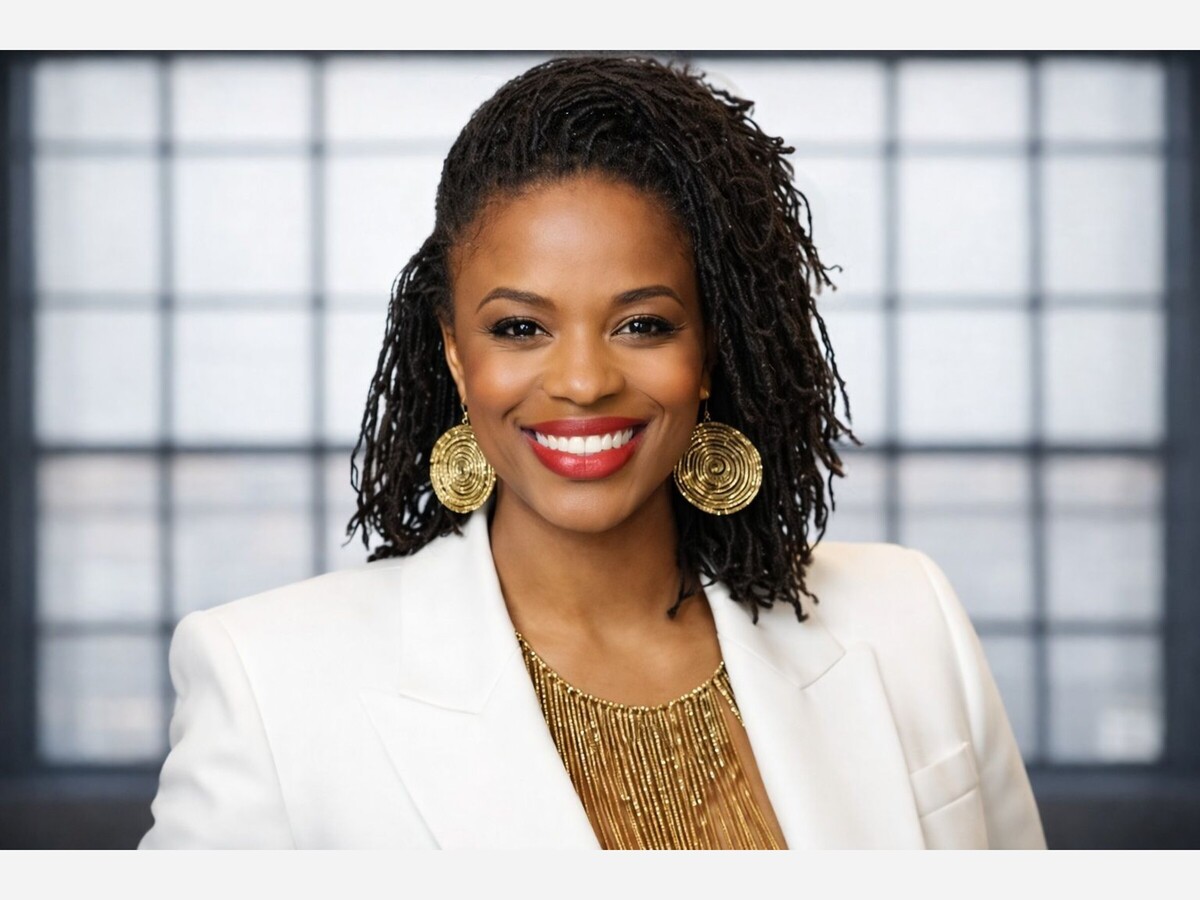



ST. PAUL, MINNESOTA. Some conversations begin with a carefully prepared list of questions. Others begin with life interrupting the plan.
When I connected with Nneka Constantino for what was intended to be a future Voices From Across America feature, I expected a dialogue centered neatly on leadership, civic engagement, and the institutional experiences that shaped her career. Those subjects would eventually surface, but not in the manner either of us anticipated. Instead, our conversation began with illness.
Constantino appeared briefly on camera before offering a quick apology for her appearance, laughing about the lack of makeup and joking about being caught off guard by a video call. It was the kind of polite, self-deprecating exchange that often fills the opening minutes of a professional interview. Then, the tone shifted. What emerged was not a formal, structured Q&A, but a deeply personal exploration of health, family history, and the complex ties linking Africa and America.
The formal interview would ultimately be postponed, but the unscripted conversation became something worth documenting. Before the public accomplishments, professional titles, and leadership positions, there is always a human story, and that story often reveals far more than a résumé ever can.
When Constantino appeared on screen, it quickly became apparent that she was not fully herself. Her voice was noticeably strained, her baseline energy drastically reduced. Though she was still actively managing her professional responsibilities and trying to maintain a veneer of normalcy, she was recovering from an ordeal far more severe than I initially understood.
To my surprise, she explained that she had been battling pneumonia for approximately eight weeks. The illness had been severe enough to force two separate hospitalizations, and even now, she was visibly wrestling with its lingering effects.
For many, pneumonia is an abstraction associated primarily with elderly or compromised patients. Constantino admitted that she, too, initially underestimated the condition. Having survived a previous bout with the illness, she assumed her body would mount a swift recovery. Instead, the infection deepened and lingered. By the time she fully grasped the severity of the situation, her body had been fighting an exhausting, subterranean battle for two months.
The crisis forced an uncomfortable confrontation with reality: she had not been prioritizing her own well-being. Like many high-performing professionals, Constantino was conditioned to push forward regardless of physical cost. There was always another responsibility waiting, another civic commitment, another family obligation, or another person relying on her strength. Even while recovering, her roster of duties remained immense, spanning church commitments, community service, corporate work, and helping her young daughter build a micro-business.
Yet severe illness has a precise way of reducing life to its absolute essentials. Suddenly, the narrative shifts from achievement to survival, from ambition to healing, and from rigid schedules to the quiet reclamation of physical strength.
As Constantino reflected on her recovery, it became clear that the illness had transitioned from an adversary into a teacher. There was no self-pity in her delivery, nor any attempt to dramatize the experience; instead, there was a grounded, meditative reflection.
She described focusing strictly on the fundamentals of recovery: medication, hydration, short walks, rest, fasting, and prayer. These basic disciplines become paramount when everything else is stripped away. She spoke candidly about the stubborn habit of working even as her health deteriorated. Like countless Americans caught in the gears of relentless productivity, she had convinced herself that pushing through pain was the responsible choice. The body, however, eventually enforces its own boundaries, and pneumonia forced her to listen.
One of the most revealing dimensions of our exchange was her new understanding of personal investment. For decades, Constantino had invested heavily in building frameworks of opportunity for others, her family, her corporate clients, her church, her community, and her daughter. Now, she faced the unfamiliar challenge of learning how to invest in herself.
The experience fundamentally altered her perspective. Health was no longer a variable to be managed around an existing calendar; it was the baseline foundation upon which all other endeavors depended. Without it, the rest becomes entirely irrelevant. While the realization sounds obvious on paper, it is a truth many only truly integrate after a personal crisis.
Watching her on screen, I found myself moving away from her professional timeline, drawn instead to the individual in front of me: a person forced to a complete halt, currently rebuilding, and discovering that true recovery alters perspective far more than it alters the physical body.
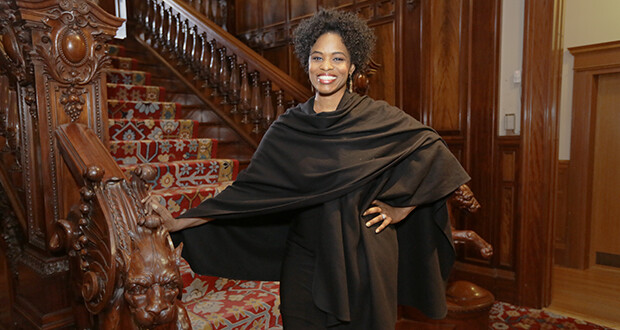
As our dialogue drifted past the immediate realities of health, we arrived at a subject that has served as a cultural marker throughout her life: her name. To the casual observer, "Nneka" immediately sparks curiosity within the American lexicon. Over the years, countless individuals have assumed she was a first- or second-generation Nigerian immigrant, given that Nneka is a distinct Igbo name originating from southeastern Nigeria. When meeting Nigerians, that assumption of a direct, recent genealogical link is almost immediate.
The historical reality, however, is different. Constantino is a descendant of enslaved Africans, possessing no traceable, documented lineage to a specific modern Nigerian village. Yet the name remains central to her identity, reflecting a deliberate, radical choice made by her parents during a specific era of American history.
For her parents, naming was never a mere administrative task; it was a cultural, spiritual, and highly intentional act. They wanted their children to carry monikers that tethered them to a history larger than themselves, ensuring they understood that African American history did not begin in chains on a slave ship. Throughout our conversation, this philosophy surfaced repeatedly. Her name was designed as an early shield against the historical limitations often imposed on Black identity, serving as an enduring invitation for deeper conversations regarding ancestry, heritage, and the broader diaspora.
The name was simply one piece of an expansive childhood architecture. Constantino grew up in a Minnesota household where Africa was never treated as a distant, abstract continent, but rather as an intimate chapter of the family’s ongoing story. Her parents intentionally cultivated a rigorous Pan-African worldview that went far beyond aesthetics.
The family home functioned as an educational ecosystem, filled with African art, historical texts, and constant discourse surrounding African liberation movements, systemic colonialism, and the domestic civil rights struggle. Her parents insisted on a foundational truth they felt mainstream American education actively obscured: history did not begin with slavery, and Africa did not begin with European colonialism. The real story was older, richer, and vastly more complex.
Growing up, Constantino was introduced to ancient African civilizations and anti-colonial leaders, learning to approach the continent with curiosity rather than emotional distance. The result was a sophisticated worldview that framed Africa not as a foreign entity, but as a shared inheritance.
This upbringing directly shaped her subsequent approach to travel, identity, and cross-cultural relationships. Rather than viewing continental Africans and African Americans as distinct, isolated populations occupying entirely different socio-political worlds, she increasingly recognized them as kindred groups deeply connected by historical currents, even when lacking a precise, individualized knowledge of one another.
The conversation eventually turned toward the architect of this worldview: her mother. To global music historians and pop-culture fans, Cynthia Johnson is recognized as the iconic, powerhouse vocalist behind the multi-platinum hit "Funkytown." For Nneka Constantino, however, Johnson was far more than an artist with a permanent place in music history; she was a primary educator, a cultural guide, and the chief intellectual anchor of her daughter's life.
Constantino described her mother as a well-traveled woman who carried an uncompromising sense of cultural pride. Long before contemporary terms like "representation" and "intersectionality" became commonplace in corporate and public discourse, those exact principles were being actively lived and debated inside their home. Her mother believed that children must understand their origins, not merely in a geographical sense, but culturally, spiritually, and intellectually.
The lessons were reinforced daily: names mattered, history was alive, and precise historical knowledge was a prerequisite for self-actualization. It is clear that Constantino’s current global outlook did not emerge by accident or osmosis; it was meticulously cultivated by parents who refused to let their children’s identities be defined by the truncated narratives found in standard American textbooks. That very foundation would eventually carry her far beyond the borders of Minnesota and into spaces that reshaped her understanding of the global landscape.
While many undergraduate students utilize college simply to discover a career path, others use it to discover themselves. For Constantino, her years at Howard University expanded the Pan-African framework established during her childhood. Howard was not merely an institution of higher learning; it was a global crossroads where students from across the African diaspora intersected on a daily basis.
In those classrooms and courtyards, young people from urban America walked alongside peers from the Caribbean, continental Africa, and Europe. The debates extended far past the syllabus, diving into global politics, macroeconomics, post-colonial identity, and liberation movements. The experience shattered the myth of homogeneity, reinforcing the reality that neither the continental African experience nor the African American experience is a monolith. Both contain immense internal diversity, distinct cultural variations, and unique structural challenges. Yet underneath those surface differences lay the historical connective tissue that continues to influence populations on both sides of the Atlantic.
Howard provided a physical space to witness these dynamics firsthand while challenging the narrow provincialism that marks much of American upbringing. By exposing students to global perspectives daily, the university fostered an environment where deep listening was a prerequisite for comprehension. It did not invent Constantino's global outlook, but it provided the intellectual steel and real-world relationships that solidified it.
At a specific juncture in her adult life, Constantino found herself feeling professionally successful but personally unfulfilled, searching for clarity and spiritual renewal. Rather than remaining static, she boarded a flight to South Africa. The journey was explicitly designed to bypass traditional luxury tourism; she was seeking an unvarnished understanding of a nation navigating its own historical reckoning.
The South Africa she encountered was beautiful, contradictory, and deeply complicated. The institutional scars of apartheid were visible everywhere, manifested in neighborhoods still defined by structural segregation and economic hardship. Yet alongside these realities, Constantino encountered something that defied Western media portrayals: an unyielding sense of communal pride, sophistication, and resilience. She met people who flatly refused to allow their identities to be reduced solely to their historical struggles.
For many Americans, images of the African continent are heavily filtered through a pathology-focused lens, with international news coverage fixating almost exclusively on poverty, famine, or political instability. While those crises require attention, they do not constitute the whole truth. Constantino found herself deeply frustrated by these reductive narratives. What she witnessed instead was an environment bustling with intellectual ambition, corporate creativity, and familial determination, communities actively building enterprises, pursuing advanced education, and engineering their own futures. South Africa reinforced a permanent lesson: there is no substitute for firsthand observation, and one must never allow external entities to define a place they have never walked.
This observation naturally led to a critique of what is often termed "poverty tourism", the tendency of Western travelers to seek out impoverished enclaves as a voyeuristic proxy for cultural authenticity. The practice deeply troubled her. The critique was not an argument for ignoring systemic poverty, but an indictment against treating material hardship as the entirety of a people's human story.
A visitor can traverse affluent metropolitan districts, elite universities, and thriving commercial centers to gain an entirely different, equally valid perspective on contemporary Africa. Yet external narratives remain magnetically drawn to the imagery of lack. For Constantino, the most striking element of her travels was not the poverty, but the absolute dignity maintained in spite of it. The experience upended conventional Western assumptions regarding success and fulfillment, while underscoring a vital journalistic truth: who tells the story matters, which angles are highlighted matters, and which perspectives are intentionally left in the margins matters most of all.
If South Africa deepened her connection to her ancestral roots, living and studying in Japan provided an entirely different lesson in identity. Immersed in a visually and culturally homogenous society, she learned the language, adapted to the social etiquette, and navigated daily life as an outsider. In doing so, she discovered something unexpected about her position in the world.
Within the United States, race is often the primary, overwhelming lens through which African Americans are categorized and evaluated. Abroad, however, the primary analytical lens shifted. In the eyes of Japanese society, the most critical element of her identity was not her race, but her nationality. She was, first and foremost, an American.
This realization left an indelible mark. For the first time, Constantino experienced an identity that felt detached from the specific historical baggage of American racial dynamics. The shift did not erase her Blackness or rewrite history, but it demonstrated the fluid, contextual nature of identity. Living overseas forced a reevaluation of concepts she had previously taken for granted, strengthening her understanding that identity is defined not just by how we see ourselves, but by where we are standing when the world looks back at us.
Another vital institution emerged as a cornerstone of her development. For approximately two decades, Constantino was deeply involved with the Sounds of Blackness, the Grammy-winning, Minnesota-based musical ensemble directed by Gary Hines. While audiences worldwide revere the group for its sonic excellence, for Constantino, the ensemble served as an intense historical seminar and a powerful vehicle for diaspora advocacy.
Through their expansive repertoire, she absorbed lessons in musicology, cultural memory, and global history. The group’s performances were explicitly educational, charting the journey of African descendants from ancient royalty, through the horrors of the Middle Passage, past the struggles of Jim Crow, and into the contemporary global arena.
Constantino spoke with immense reverence for Gary Hines and his lifelong commitment to preservation. Here, music was deployed not as mere entertainment, but as an oral archive and an educational tool designed to introduce audiences to histories left out of mainstream curricula. The experience unified the distinct threads of her life, proving that identity is not a static inheritance to be stored away; it must be actively examined, nurtured, and passed forward to the next generation.
Every disparate thread of Constantino's life, her name, her mother's influence, her time at Howard, her travels through South Africa and Japan, and her decades with Sounds of Blackness, converges on a singular, urgent thesis: the necessity of building authentic bridges between continental Africans and African Americans.
The subject emerged organically during our talk, reflecting an issue she had clearly parsed for decades. She noted that despite a shared genetic ancestry, these two communities often exist in a state of profound mutual isolation. Many continental African immigrants arrive in the United States carrying assumptions about African Americans that have been distorted by global media stereotypes. Conversely, many African Americans view contemporary Africa through an outdated, colonial lens. The resulting chasm breeds missed economic opportunities, cultural misunderstandings, and fractured relationships.
Constantino insists that both groups possess profound insights to offer one another, not because their historical trajectories are identical, but because their destinies are linked. Her advocacy is completely devoid of academic abstraction; it is rooted in the practical realities of a life spent traveling, listening, and actively working to heal the fractures within the diaspora.
Our conversation peaked during a comparative analysis of the unique strengths forged within each community. When discussing continental Africans, Constantino highlighted an unvarnished, institutional confidence, an innate sense of agency possessed by individuals who grew up seeing Black faces on their currency, their television screens, and at the highest levels of corporate and state governance. She deeply admired this baseline assumption of capability and leadership.
Concurrently, she emphasized that the African American journey offers a masterclass in institutional resilience that deserves global recognition. Much of African American history remains profoundly misunderstood both internationally and domestically. The sophisticated strategies of the Civil Rights Movement, the creation of robust economic enclaves in the face of legal terror, the preservation of family structures through centuries of forced separation, and the sheer scale of cultural innovation that defines global popular culture, these are not minor historical footnotes. They represent a monumental triumph of the human spirit. Meaningful global alliances, she argues, can only begin when both communities stop relying on secondhand caricatures and begin studying each other's historical blueprints.
As our exchange drew to a close, the formal boundaries of the interview dissolved entirely, replaced by a fluid, intellectual partnership between two individuals navigating the complexities of the diaspora. We parsed the intersections of geography, race, family, and the ongoing search for institutional belonging, concluding that neither side holds a monopoly on answers, though both hold invaluable pieces of the larger puzzle.
Building deep community alignment does not require an absolute uniformity of thought; it requires a baseline of cultural curiosity, mutual respect, and an unyielding willingness to engage. Constantino’s counsel is elegantly simple: bypass the corporate labels, interrogate the secondhand narratives, travel with intentionality, remain aggressively curious, and listen to the human being across from you. It is straightforward advice that remains exceedingly rare in a polarized world.
The formal, structured interview that originally brought us together has yet to happen. What began as a brief logistics call transformed into an expansive dialogue on physical vulnerability, generational legacy, global geography, and the invisible threads that bind people across oceans and eras.
The result was something far more vital than a standard profile. It was a potent reminder that profound insights occur when we possess the courage to abandon our prepared scripts. For Nneka Constantino, the conversation revealed a woman whose life has been meticulously engineered by conscious parenting, global immersion, and a permanent commitment to cultural bridging. It showcased a leader who continues to see immense strategic value in building alliances rather than policing borders.
The formal interview remains on the horizon. The standard inquiries regarding executive leadership, corporate governance, and community milestones will inevitably be recorded. But before those public chapters are cataloged, this unscripted exchange earned its own permanent place in the archive. Every great epic begins somewhere; this one began with an unexpected phone call, an illness that forced a pause, and two individuals discovering common ground.
MinneapoliMedia | Community. Culture. Civic Life.



Sunny, with a high of 94 and low of 67 degrees. Sunny during the morning, clear overnight.