59° and Mist
Image
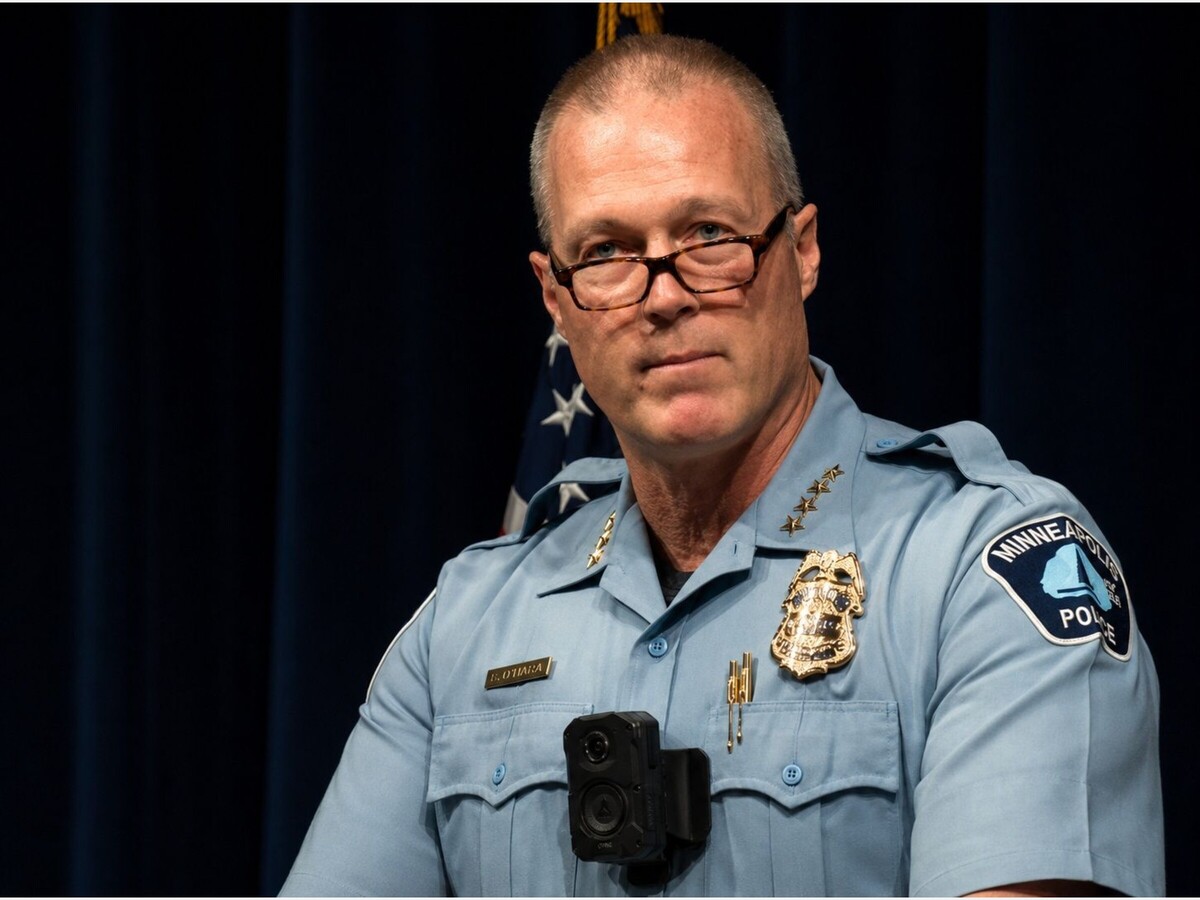



The appointment places one of the department's most experienced leaders at the helm of an agency that remains at the center of national conversations about public safety, police reform, accountability, and community trust.
Peterson assumes leadership at a consequential moment for Minneapolis.
The city continues implementing sweeping reforms mandated through state and federal oversight agreements while simultaneously confronting the challenges of officer recruitment, retention, violent crime reduction, and rebuilding public confidence in law enforcement following the murder of George Floyd in 2020.
In announcing the appointment, Frey emphasized both Peterson's experience and his reputation within the department.
"Bill Peterson is the right leader for this moment," Frey said in a statement released by the city. "He's spent three decades serving Minneapolis, he's earned the respect of officers across the department, and he understands that trust with the people of Minneapolis is paramount. Bill understands that trust is earned, and he has established a reputation of working every day to earn it."
Peterson replaces O'Hara, whose resignation last week came after an outside investigation concluded he likely interfered with an internal misconduct inquiry involving allegations about his workplace conduct.
Although investigators reportedly found insufficient evidence to substantiate claims of an inappropriate relationship with a city employee, the investigation determined O'Hara likely violated city policy by discussing aspects of the investigation and deleting information from a city-issued device while the inquiry was underway. Faced with potential disciplinary action, O'Hara resigned on May 27.
The departure abruptly ended the tenure of a chief whom city leaders had previously praised for helping guide the department through one of the most challenging periods in its history.
Immediately following O'Hara's resignation, Assistant Chief Katie Blackwell was appointed acting chief to ensure continuity of operations while city leaders evaluated next steps. Her temporary leadership role lasted less than a week before Frey finalized Peterson's appointment.
For many Minneapolis officers, Peterson is a familiar figure.
A 30-year veteran of the Minneapolis Police Department, Peterson has spent much of his career in frontline policing, investigations, emergency response operations, and command leadership. Since 2019, he has served as inspector of the First Precinct, overseeing public safety operations across some of Minneapolis' most visible and heavily traveled neighborhoods, including Downtown Minneapolis, the North Loop, Cedar-Riverside, Elliot Park, Loring Park, and surrounding commercial districts.
The First Precinct encompasses the city's central business district and many of its largest entertainment venues, cultural institutions, government buildings, and tourism destinations, making it one of the department's most complex command assignments.
Throughout his career, Peterson has served in several specialized assignments, including patrol operations in the Fourth Precinct, robbery investigations within the Violent Crimes Investigations Division, and leadership positions within the department's Special Operations Division.
City officials also pointed to Peterson's experience managing major emergencies and high-profile public safety events.
His leadership assignments have included operational roles during the 2007 Interstate 35W bridge collapse, the response to the 2011 North Minneapolis tornado, civil unrest following George Floyd's murder in 2020, and large-scale regional events such as Super Bowl LII and Major League Baseball's All-Star Game.
Those experiences, city leaders said, provide him with a unique understanding of how Minneapolis responds during periods of crisis and heightened public attention.
Yet Peterson made clear during a Tuesday news conference that his role is intended to be temporary.
Standing alongside Community Safety Commissioner Todd Barnette, Peterson said he does not intend to seek the permanent chief position once the national search process begins.
"I don't want the permanent position," Peterson told reporters, explaining that while he is committed to leading the department during the transition, he is not interested in assuming the long-term demands and scrutiny that accompany the chief's role.
His decision removes him from consideration in what city officials expect will become a highly competitive national search.
Barnette indicated that Minneapolis will conduct a broad recruitment effort that includes both internal and external candidates. The process is expected to take approximately six months and will include opportunities for community engagement before a permanent chief is selected.
The next chief will inherit one of the most scrutinized policing jobs in the United States.
Since 2020, the Minneapolis Police Department has operated under extraordinary public and governmental oversight. The Minnesota Department of Human Rights settlement agreement and the federal consent decree process require extensive changes involving use-of-force policies, officer supervision, training standards, accountability systems, community engagement practices, and departmental culture.
Those reform efforts continue regardless of leadership changes.
City officials emphasized Tuesday that implementation of reform mandates remains on schedule and will proceed uninterrupted during Peterson's tenure.
For residents, the leadership transition represents another chapter in Minneapolis' continuing effort to redefine public safety while restoring confidence in the institutions responsible for protecting the city.
The challenges facing Peterson are substantial.
He inherits a department still rebuilding its workforce after years of departures, still working to meet reform benchmarks established by state and federal authorities, and still operating under the intense scrutiny that has followed Minneapolis since 2020.
Yet city leaders appear confident that Peterson's institutional knowledge, operational experience, and familiarity with both the department and the communities it serves can provide stability during the months ahead.
For now, Minneapolis is turning not to an outsider, but to a veteran officer who has spent three decades navigating the city's streets, responding to its emergencies, and helping lead its police department through some of the most defining moments in modern Minnesota history.
The search for Minneapolis' next permanent chief begins immediately.
MinneapoliMedia | Community. Culture. Civic Life.


Overcast, with a high of 67 and low of 51 degrees. Partly Cloudy in the morning, overcast in the afternoon, clear overnight.