73° and Overcast
Image




A new report released this week concludes that Minnesotans are devoting an increasingly larger share of their incomes to health insurance while warning that continued consolidation among large hospital systems could place even greater upward pressure on prices. At the same time, the Minnesota Attorney General's Office is conducting one of the state's most significant health care transaction reviews in years, asking residents to help determine whether Sanford Health's proposed acquisition of North Memorial Health serves the public interest.
Taken together, the developments have intensified an already growing debate over the future of health care in Minnesota: Can large health system mergers preserve hospitals and improve patient care without making health care less affordable?
The answer could shape how millions of Minnesotans receive—and pay for—medical care for years to come.
The debate arrives as a newly published analysis by North Star Policy Action paints a troubling picture of health care affordability in Minnesota.
The report, Rising Health Care Spending in Minnesota, concludes that the financial burden of health care has steadily shifted onto working families, even during years of relatively strong wage growth.
According to the report, employee contributions toward employer-sponsored health insurance premiums increased 67 percent between 2013 and 2024, while median wages in Minnesota increased 42 percent during the same period.
Researchers argue that the widening gap means health insurance is consuming an ever-growing share of workers' earnings, leaving many households with less disposable income despite larger paychecks.
The report concludes that the state's affordability challenge is increasingly driven by the price of medical care itself rather than by patients using significantly more health services.
"Most people are quick to blame health insurance companies for their high premiums," said Jen Schultz, a University of Minnesota economics professor and one of the report's authors. "But folks only need to look at their bill or explanation of benefits to see another reason: high hospital prices. Higher hospital prices mean smaller paychecks and inflated premiums."
Researchers also point to rising prescription drug costs, increasing deductibles and expanding out-of-pocket expenses as contributing factors affecting household budgets.
Polling cited in the report found that approximately 26 percent of Minnesotans have delayed receiving medical care because of cost, while nearly half reported experiencing stress related to health care expenses.
Although health care costs stem from numerous factors, the report identifies one trend as particularly significant: consolidation among hospitals and health systems.
According to the authors, mergers can reduce competition by increasing the negotiating leverage of large health systems when setting reimbursement rates with insurance companies.
Those higher negotiated prices, researchers argue, are frequently passed on to employers and consumers through increased insurance premiums and higher out-of-pocket costs.
The report highlights the proposed acquisition of Allina Health by California-based Sutter Health as one example of a transaction that deserves close public scrutiny.
Announced earlier this year, the proposal would unite Minneapolis-based Allina Health with Sacramento-based Sutter Health into a nonprofit system operating 39 hospitals, more than 400 outpatient care sites, and employing approximately 88,000 people across California, Minnesota and western Wisconsin.
While the report stops short of concluding that the transaction would necessarily increase prices, its authors argue that additional concentration within Minnesota's health care market warrants careful regulatory examination before any transaction proceeds.
The proposal has already drawn attention from consumer advocates and organized labor.
The Minnesota Nurses Association has expressed concerns about local accountability, affordability and patient access should one of Minnesota's largest nonprofit health systems come under the ownership of an out-of-state organization. Supporters of the transaction, meanwhile, argue that larger integrated systems can improve operational efficiency, expand access to specialty services and strengthen long-term financial sustainability.
Regulatory review of the proposed acquisition remains ongoing.
At the same time Minnesota continues evaluating the Allina-Sutter proposal, another major transaction is advancing through state review.
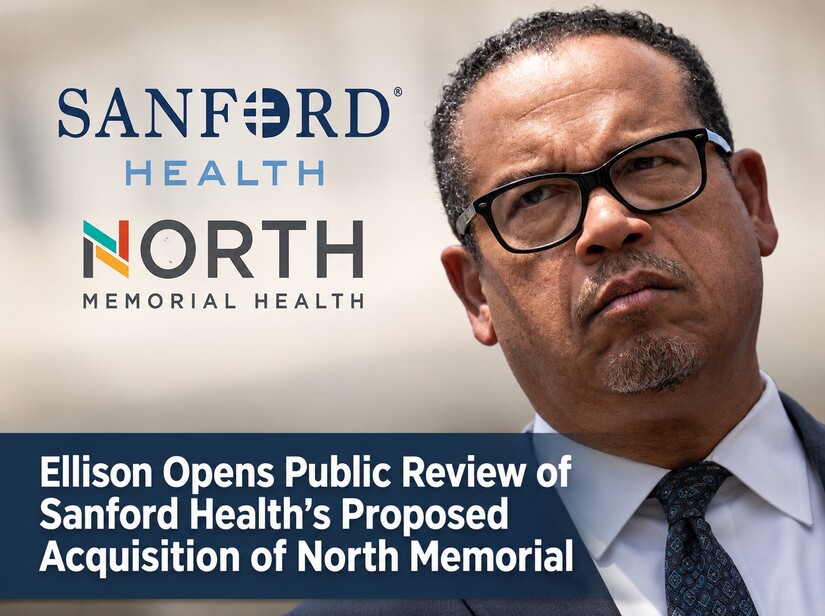
In May, Sanford Health and North Memorial Health announced plans to affiliate, with North Memorial becoming a wholly owned subsidiary of Sanford Health while continuing to operate as a Minnesota nonprofit corporation.
If completed, the transaction would dramatically expand Sanford's presence in Minnesota.
Headquartered in Sioux Falls, South Dakota, Sanford Health is among the nation's largest nonprofit integrated health systems, employing approximately 55,000 people and serving more than 2 million patients across South Dakota, North Dakota, Minnesota, Iowa, Wisconsin, Wyoming and Michigan's Upper Peninsula.
North Memorial Health occupies a unique position within Minnesota's health care landscape.
The nonprofit system operates North Memorial Health Hospital in Robbinsdale, one of Minnesota's busiest Level I Trauma Centers, Maple Grove Hospital, more than 20 primary care, specialty care and urgent care clinics, and one of the state's largest medical transportation operations.
More than 6,500 employees provide care to approximately 55,000 patients each month.
Sanford has pledged approximately $600 million in investments should the affiliation move forward.
According to the health systems, the investment would modernize Robbinsdale Hospital, preserve its Level I Trauma Center, expand Maple Grove Hospital by nearly doubling its capacity, improve clinical technology and strengthen long-term access to care across the Twin Cities metropolitan area.
Supporters say those investments would help address aging infrastructure and growing workforce challenges that increasingly strain independent nonprofit health systems nationwide.
Critics caution that hospital consolidation has historically produced mixed results.
Numerous economic studies have found that mergers can reduce market competition, increase prices, narrow patient choice and weaken local governance without consistently improving quality of care.
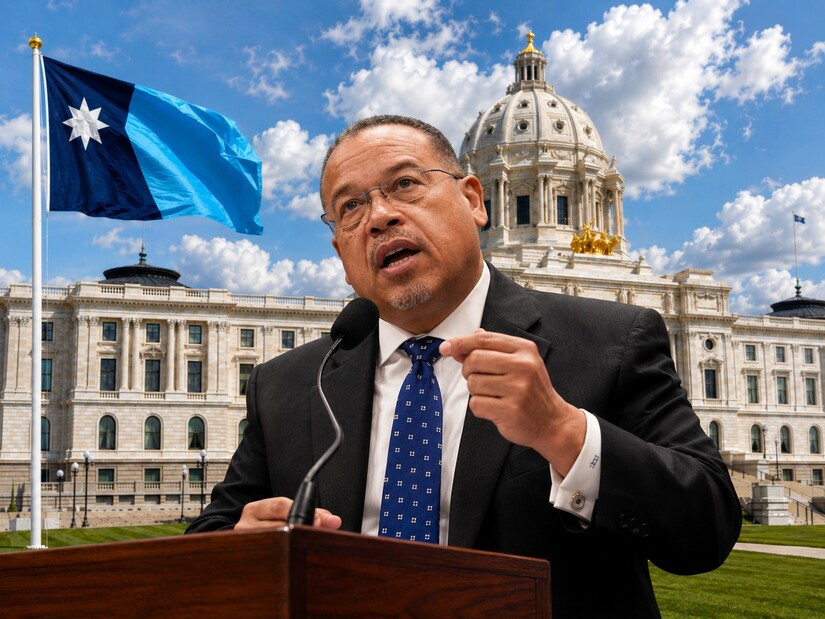
Because of those concerns, the proposed Sanford-North Memorial transaction is undergoing extensive review by the Minnesota Attorney General's Office in consultation with the Minnesota Department of Health.
Unlike most private business acquisitions, nonprofit hospital transactions in Minnesota receive heightened regulatory scrutiny under the state's Health Care Entity Transactions law, charitable trust statutes and antitrust laws.
The review examines whether the proposed affiliation could affect:
Although the Attorney General does not formally approve or reject the transaction, the office has authority to seek judicial intervention if it determines the proposal violates Minnesota law or fails to serve the public interest.
"As we have done and are currently doing with other health care transactions, we are conducting a thorough review of this potential acquisition to ensure it complies with the law and is in the public interest," Attorney General Keith Ellison said when announcing the review.
"Proposed health care consolidation requires careful examination. As long as I am Attorney General, I will use the full range of regulatory tools to protect Minnesotans' access to quality, affordable health care."
Those concerns closely mirror the conclusions reached in the North Star Policy Action report.
Research Director Aaron Rosenthal, another report co-author, argued that policymakers should not accept rising health care spending as inevitable.
"The worst thing we could do is treat rising health care spending as inevitable. Even so, we have the power to make health care more affordable for working families in this state, and we should use it."
The timing of the report and the Sanford review illustrates a larger conversation unfolding across Minnesota and much of the nation.
Hospitals continue facing labor shortages, inflation, aging infrastructure, reimbursement pressures and growing demand for specialized care.
Many health systems argue that larger regional partnerships provide the financial strength necessary to sustain services that smaller organizations increasingly struggle to support independently.
At the same time, consumer advocates, economists and antitrust experts warn that consolidation can reduce competition in ways that ultimately increase prices for employers, workers and patients.
Whether the proposed Allina-Sutter and Sanford-North Memorial transactions ultimately move forward under their current terms remains uncertain.
What is becoming increasingly clear, however, is that decisions made over the coming months could influence the affordability, accessibility and structure of Minnesota's health care system for decades to come.
For Minnesota families already facing insurance premiums that are rising faster than wages, the debate extends far beyond corporate restructuring. It reaches into household budgets, emergency rooms, physicians' offices and communities where access to affordable, high-quality health care remains one of the state's most pressing public policy challenges.
The Minnesota Attorney General's Office is inviting members of the public to share their views on Sanford Health's proposed acquisition of North Memorial Health.
Date: Tuesday, July 7, 2026
Time: 6:00 p.m. to 8:00 p.m.
Location:
Fellowship Minneapolis
3333 North 4th Street
Minneapolis, MN 55412
The Attorney General's Office encourages participation from:
Representatives from Sanford Health, North Memorial Health, and staff from the Minnesota Attorney General's Office are expected to attend to answer questions and receive public comments. Attorney General Keith Ellison will not attend because of a previously scheduled commitment.
Residents may still submit comments to the Attorney General's Office through the online Community Input Form or by calling:
Twin Cities: (651) 296-3353
Greater Minnesota: (800) 657-3787
Registration is requested for those planning to attend or provide comments. Public comments submitted as part of the review are generally treated as nonpublic data under the Minnesota Government Data Practices Act until the review process is complete.
MinneapoliMedia | Community. Culture. Civic Life.


Sunny, with a high of 78 and low of 51 degrees. Sunny for the morning, partly cloudy in the afternoon, clear for the evening,