 62° and Partly Cloudy
Image
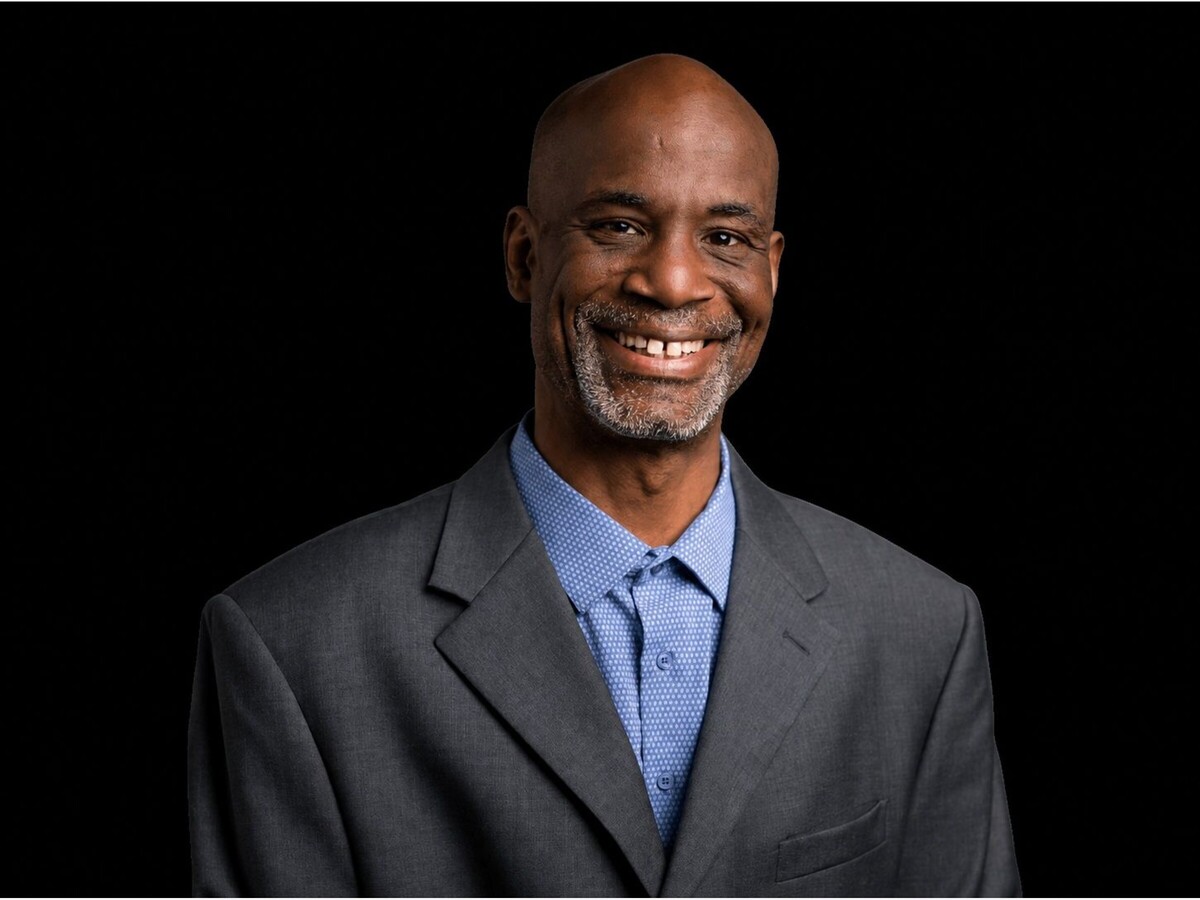



When historical accounts of upper Midwestern civil rights movements are written decades from now, the narrative will likely center on moments of acute crisis: street demonstrations, international news broadcasts, and high-profile courtroom verdicts. Yet the work that produces lasting structural change often begins long before cameras arrive and continues long after they depart. It takes place in neighborhood centers, recording studios, electoral campaigns, urban gardens, family living rooms, community meetings, and municipal government offices.
In this installment of the MinneapoliMedia Community Interview Series, founder and publisher Tom Akaolisa sat down for an extended conversation with Trahern Crews, co-founder and lead organizer of Black Lives Matter Minnesota, political strategist, community organizer, educator, and Saint Paul native. Recorded on July 2, 2026, the long-form interview traces Crews' journey from a childhood shaped by family, loss, and Saint Paul's Black community through independent hip-hop, political campaigns, education, urban agriculture, civil rights organizing, police accountability, and reparations advocacy.
The conversation also provides a record of how Crews understands those different parts of his life. To him, they are not isolated pursuits. His work in music taught him how to organize people. Electoral politics taught him how institutions make decisions. Agriculture reinforced his belief in independence and collective responsibility. Civil rights organizing placed him alongside families confronting institutions at moments of profound loss. Reparations work gave him a way to connect present-day disparities to the historical systems that helped create them.
This archival editorial preserves that history while placing Crews' testimony within the broader Black experience in Minnesota. His story cannot be fully understood by separating protest from the conditions that produced it, or by separating Black political organizing from the longer struggle over land, housing, policing, wealth, education, food, culture, and the ability of Black communities to exercise greater control over their own futures.
To understand the political philosophy Trahern Crews developed as an adult, it is useful to begin with the family and community structures that shaped him as a child. Crews grew up with roots in Saint Paul's Rondo community, historically the center of Black life in the city and a neighborhood whose residential, commercial, and cultural core was profoundly disrupted by the construction of Interstate 94.
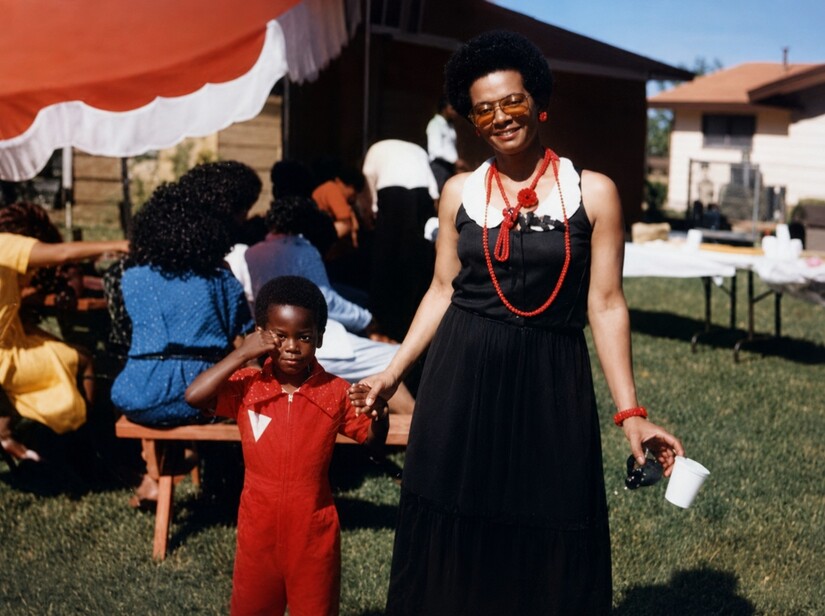
Personal tragedy entered Crews' life early. He was about five years old when his older brother died. Crews remembers watching his mother struggle with the grief of that loss and, even as a child, feeling that he needed to provide whatever comfort he could.
"I had to provide as much comfort for my mother as I could as a child," Crews recalled. "My mother was dealing with the grief of that loss, constantly turning to her faith. But I was also surrounded by a large extended family. She had many brothers, which meant I had uncles, cousins, and a whole network around me. When people say it takes a village, I truly was raised by a village."
That extended family provided emotional support while also instilling a strong work ethic. During summers, his uncles took young family members to cabins in northern Minnesota. Recreation came after the necessary work had been completed.
"We learned work ethic early," Crews explained. "We had to put in the boat docks, clear brush, and mow acres of grass up north. But once the work was finished, we got to fish, swim, and play football. That balance taught me to respect hard work and to enjoy the process of accomplishing a collective task."
Back in Saint Paul, Crews' daily life revolved around community institutions and an extended family network. He played youth football at the Jimmy Lee Recreation Center, attended Saint Paul Central High School, and spent time around relatives who lived close enough that family and neighborhood frequently overlapped.
Those experiences gave Crews an early understanding of community as something practical rather than theoretical. People contributed different things, adults shared responsibility for young people, and individual well-being was connected to the stability of the larger group. The philosophy Crews would later describe as "collective uplift" had not yet acquired that name, but many of its foundations were already present in the family and community that raised him.
Long before Crews entered formal political organizing, he found an outlet in independent hip-hop. For many Black young people of his generation, rap music was more than entertainment. It could carry political analysis, history, social criticism, cultural affirmation, and arguments about Black empowerment directly to audiences that were not necessarily receiving those perspectives in classrooms or through mainstream media.
Crews remembers being influenced by politically conscious hip-hop, including Public Enemy and Chuck D, KRS-One, and other artists whose work encouraged Black listeners to examine history, racism, political power, and the institutions governing their lives.
By seventh or eighth grade, Crews said, he was part of a rap group called H2O, an acronym for "Hard to Oppose." He remembers working with neighborhood friends and DJs, including Rudy Claiborne and Big Reece, while becoming immersed in the Twin Cities independent music scene.
"We were organizing before we even knew what political organizing was," Crews recalled. "Throwing shows, printing flyers, booking venues, managing audio equipment, and doing radio interviews taught us logistically how to move crowds and communicate a clear message."
That history is important because music was not simply a youthful interest that Crews abandoned when he became politically active. It was one of the environments in which he learned skills he would later apply to politics and community organizing.
Crews recalled participating in recordings that reached beyond Minnesota. He described contributing to an album titled Dust, Static and Plastic with local collaborators and said the project received distribution in the United Kingdom through IQ Records. He also recalled working with independent producer Freddy Fresh and Butterbeat Records on a 12-inch vinyl release featuring "No Compromise" on one side and his solo track, "The Seventh Angel," on the other.
Crews later became involved with Gladiator Records, which he described as a collective rather than a traditional label built around a rigid hierarchy. Participants contributed according to their abilities. Some made beats, some DJed, some performed, and others promoted events. In that environment, Crews experienced an early version of the philosophy he would later apply to community work: individual talent became more valuable when it contributed to a larger collective effort.
The practical value of those experiences became particularly clear during Saint Paul's Grand Old Day festival. Crews recalled his group establishing an independent hip-hop performance area near Grand Avenue and Saint Albans Street. According to his recollection, an early gathering attracted roughly 50 people. By the following year, grassroots promotion and word of mouth had expanded the audience into the thousands.
The experience required far more than performing music. Crews and his collaborators had to identify an audience, promote events, negotiate space, communicate with media, coordinate performers, manage logistics, and solve problems with limited resources. Those were entrepreneurial skills, but they were also organizing skills. When Crews later moved into electoral politics and civil rights advocacy, the subject matter changed considerably, but many of the practical skills he relied upon had already been developed through hip-hop.
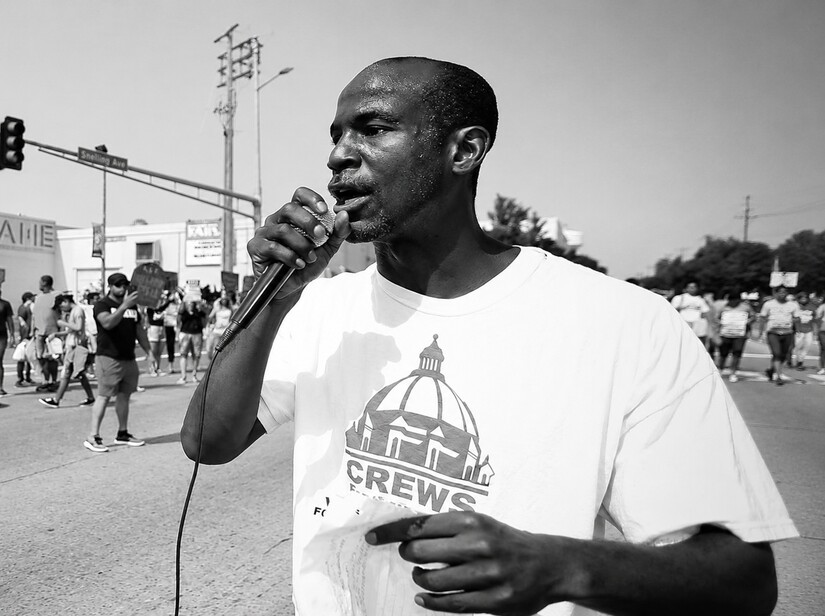
Crews' transition from cultural organizing into electoral politics accelerated when Marcus Walker, whom he knew through music and community circles, decided to seek a Minnesota Senate seat and asked Crews to manage his campaign.
Official Saint Paul records identify Crews as Walker's campaign manager during the 2012 Minnesota Senate campaign. Crews later managed Lena Denise Buggs' campaign for Minnesota state representative. His work with Buggs deepened his relationship with the Green Party, whose platform included issues he already cared about, including reparations, grassroots democracy, economic justice, and opposition to war.
Crews initially wondered why Walker had selected him to manage a political campaign. The answer became clearer when he considered how much of the required work resembled what he had already been doing through independent music.
"Basically, the skills that we learned from doing hip-hop, doing music, doing shows, we just transferred that into community organizing," Crews recalled.
Crews later served as chair of the Green Party of Minnesota, chaired the Green Party of the United States Reparations Working Group, and served as a Saint Paul Green Party spokesperson. Eventually, he became a candidate himself.
When he ran for office in Saint Paul, Crews said, he centered his campaigns on four issues: a $15 minimum wage, rent stabilization, reparations, and requiring police officers to carry professional liability insurance, an approach he compared with professional insurance requirements in other occupations.
For Crews, campaigns could serve a purpose even when a candidate did not prevail at the ballot box. He viewed them as vehicles for placing ideas into public debate and forcing political institutions to address issues they might otherwise ignore.
"Sometimes in politics, success is not strictly measured by whether you win the specific seat on election night," Crews reflected. "If you can fundamentally alter the trajectory of the political debate and force the city or state to adopt policies that directly benefit the working class, your campaign has achieved a structural victory."
Over the following years, issues Crews had championed, including higher minimum wages, rent stabilization, and municipal reparations, moved from the political margins into mainstream debate in Saint Paul. He does not claim sole ownership of those developments. His point is that political organizing can influence the direction of government even when the organizer does not personally acquire political power.
That distinction would become central to his understanding of movements. The question was not simply who occupied an office after an election. It was whether organizing changed what government was ultimately required to confront.

Alongside his electoral and civil rights work, Crews has advocated for urban agriculture and food sovereignty as elements of Black self-determination. Official Saint Paul records document that Crews taught Black history and urban agriculture at Truth Academy and mentored Black youth through New Lens and Gladiator Records.

For Crews, agriculture is not separate from civil rights. Food access affects health, health is influenced by geography, geography is shaped by housing, housing is connected to land ownership, and property ownership has historically been one of the primary ways American families have accumulated and transferred wealth.
During the interview, Crews discussed the historic decline of Black farming and Black-owned agricultural land in the United States. His argument is rooted in a well-documented history in which Black farmers acquired millions of acres after emancipation and subsequently lost enormous amounts of that land through discriminatory lending, unequal access to government programs, violence, partition sales, and other mechanisms.
Crews is interested not only in the economic consequences of that history but also in its psychological legacy. For generations of Black Americans, agricultural labor has carried unavoidable associations with slavery, sharecropping, exploitation, and coerced labor. Crews argues that this painful history should not permanently separate Black communities from land ownership, agricultural knowledge, and food production.
"Because of the legacy of chattel slavery and sharecropping, many young Black people historically equated agricultural work strictly with oppression," Crews said. "We have to correct that narrative."
For Crews, correcting that narrative does not mean minimizing slavery or forgetting the violence associated with forced agricultural labor. It means distinguishing coerced labor performed for someone else's enrichment from owning land, possessing agricultural knowledge, and growing food for oneself and one's community.
"When a young person puts their hands in the dirt, plants a seed, waters it, and watches it yield tomatoes, cucumbers, or peppers, something shifts inside them," Crews explained. "They realize that food does not simply originate from a grocery store shelf."
Crews wants young people to understand where food originates, how nutrition affects health, what happens when neighborhoods lack access to healthy food, and how the ability to produce something essential can reduce dependence on institutions outside the community.
That philosophy connects directly to what Crews calls "collective uplift."
"You want to come up and do good," he said, "but then you want to be in a community, too, where other people are doing good with you."
His conception of advancement therefore combines individual development with communal responsibility. People should learn, acquire skills, build successful lives, and become more independent, but they should also bring knowledge and opportunity back into the communities from which they emerged.
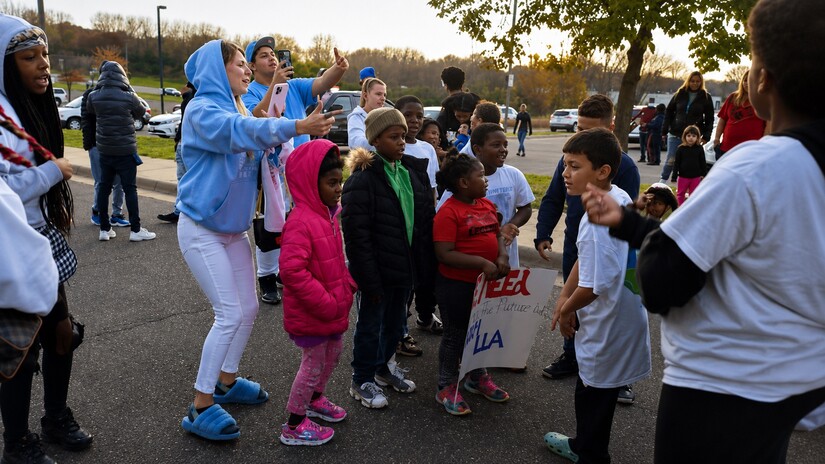
One of the most important distinctions Crews drew during the interview was between political moments and sustained movements.
"There are movements, and then there's moments," he said.
A moment can begin when a crisis forces people into the streets. A death generates public outrage, demonstrations grow, television cameras arrive, politicians issue statements, and social media attention intensifies. A movement, in Crews' understanding, is what remains after that attention recedes.
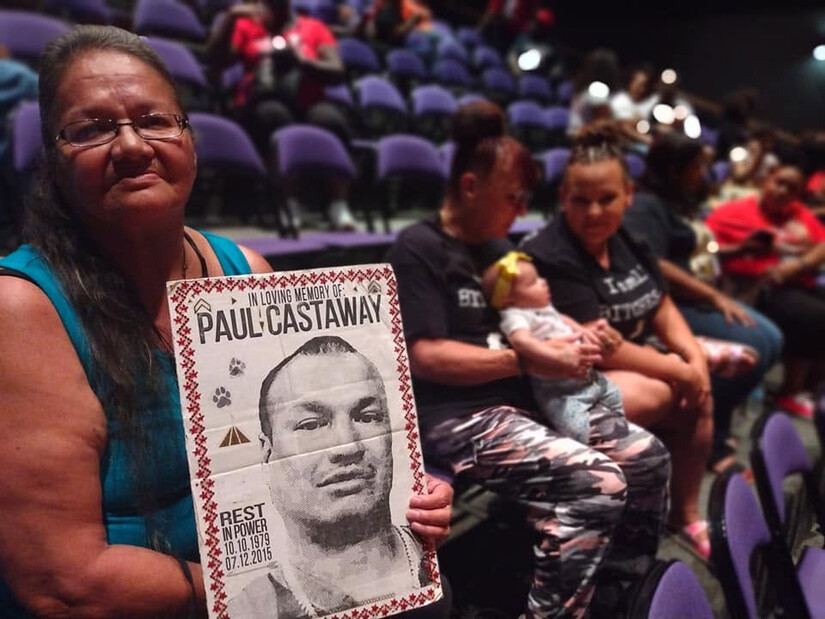
That distinction became increasingly important through his years of organizing around fatal encounters involving law enforcement. Crews described working with families and communities following deaths including those of Marcus Golden, Cordale Handy, Thurman Blevins, and others. Through those experiences, he said, organizers began recognizing recurring patterns in the public narratives that followed police killings.
Crews described what he believed they were confronting as "the art of the cover-up." In his view, public attention could quickly shift from the circumstances surrounding a person's death to information about the person who died, including physical size, criminal history, alleged behavior, or statements portraying that person as inherently dangerous.
For Crews, challenging those narratives did not require pretending that every person killed by police had lived a flawless life. It required refusing to allow a person's humanity to be reduced to a criminal history, allegation, mistake, or official characterization after death.
"He is a husband. He's a father. He's a cousin. This is somebody's grandma's grandson," Crews said.
Crews recalled that sometimes grieving relatives themselves would begin conversations by acknowledging mistakes their loved one had made. His response was that previous mistakes did not automatically mean that person deserved to die.
Through repeated experiences with families, organizers developed methods for responding to fatal encounters. Crews described standing with relatives, demanding access to evidence, seeking video footage, helping families connect with attorneys, maintaining public attention, and challenging narratives they believed unfairly criminalized people after death.
He also rejects the idea that community organizing begins and ends with police accountability. Helping someone confronting housing discrimination is community organizing. Supporting parents whose child experiences racism at school is community organizing. Helping residents grow food in neighborhoods with inadequate access to healthy options is community organizing. Remaining connected to grieving families after television cameras and public attention have moved elsewhere is also community organizing.
For Crews, the defining characteristic is continuity. A large crowd can gather around a crisis, but building community requires people who remain engaged after the crisis is no longer a headline.
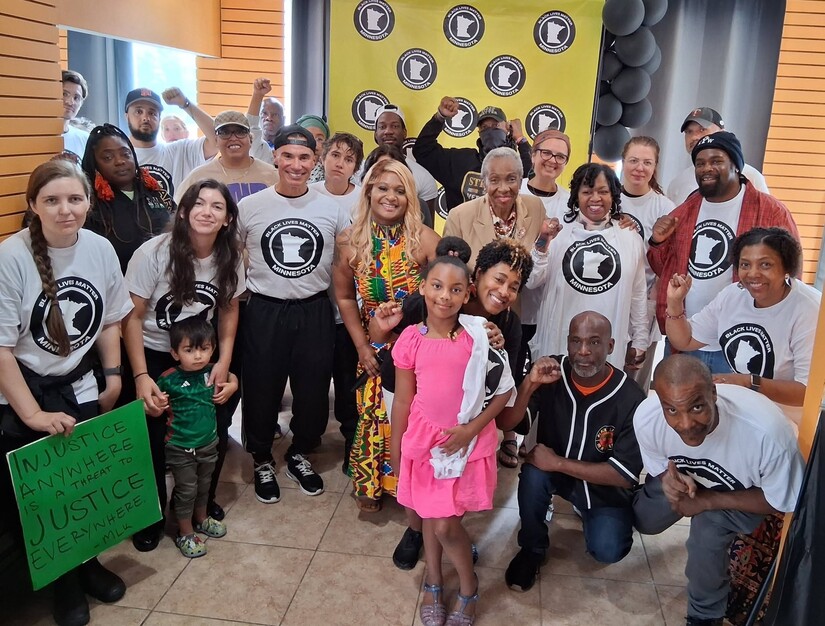
Crews believes Minnesota has made meaningful progress in police accountability while maintaining that substantial work remains. During the interview, he pointed to changes involving body-camera access, restrictions on no-knock warrants, mental-health response programs, and other reforms as examples of what can happen when sustained organizing creates pressure for institutional change.
His argument is not that Black Lives Matter Minnesota, Trahern Crews, or any single organization should receive exclusive credit for those developments. Public policy is shaped through families, activists, lawmakers, attorneys, community organizations, coalitions, agencies, and public institutions. Crews' point is that those institutions do not make decisions in a political vacuum. Grassroots pressure can change the conditions under which government is forced to act.
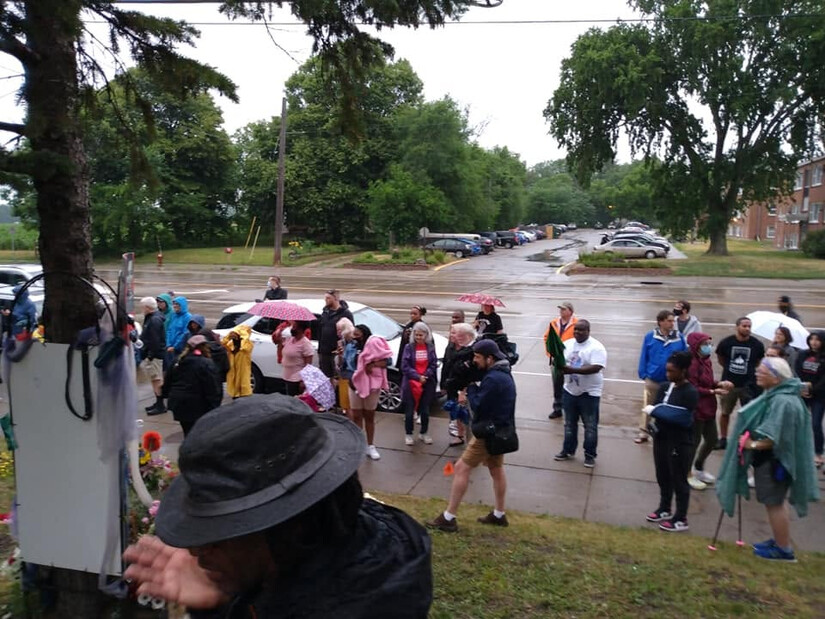
For years, Black families and organizers in Minnesota had marched, held news conferences, attended meetings, testified, demanded evidence, challenged official narratives, and insisted that fatal police encounters not simply disappear into routine institutional processes. That accumulated pressure formed part of the political environment in which subsequent reforms were debated.
The conviction of former Minneapolis police officer Derek Chauvin for murdering George Floyd became, for Crews, one of the clearest symbols that accountability long regarded as extraordinarily difficult to obtain could occur.
"When Derek Chauvin got convicted," Crews said, "that was like winning the Super Bowl."
Crews' comparison reflected the significance he attached to the verdict after years of watching Black families demand accountability following police killings. It also illustrated why he believes movements must create room for what he calls Black joy.
Civil rights organizing can demand enormous emotional energy. Families grieve. Organizers encounter trauma repeatedly. Communities are asked to return to the same difficult subjects after each new death. Crews believes victories therefore have to be recognized, not because a conviction or policy change erases the underlying loss, but because communities need evidence that sustained action can produce results.
His concept of Black joy is consequently not a retreat from political work. It is part of sustaining the people who perform it. Black communities, in his view, cannot be expected to exist permanently in a state of mourning, resistance, vigilance, and trauma. A movement concerned with Black life must also be concerned with the ability of Black people to experience ordinary happiness, family, celebration, security, and peace.
A central element of Crews' political analysis is his rejection of the idea that slavery, institutional racism, and government-sanctioned racial exclusion belong primarily to the history of the American South. Minnesota's own historical record complicates that mythology.
Dred and Harriet Scott lived at Fort Snelling as enslaved people even though slavery was prohibited there. Historical records show that U.S. Army officers and others nevertheless enslaved African Americans at the fort during the nineteenth century. The Scotts' residence in free territory later became part of their legal argument for freedom, a struggle that eventually reached the U.S. Supreme Court and resulted in the infamous 1857 Dred Scott v. Sandford decision.
For Crews, that history matters because it establishes that Black exclusion and exploitation are not external to Minnesota's story. The same is true of housing.
Racially restrictive covenants were inserted into property deeds throughout the Twin Cities to prevent people who were not White, particularly Black residents, from purchasing or occupying homes. Those restrictions helped determine who could acquire property in neighborhoods that would later appreciate substantially in value.
The economic consequences extended beyond where families were permitted to live. Homeownership became one of the principal mechanisms through which American households accumulated wealth during the twentieth century. Families who owned appreciating property could build equity, borrow against that equity, finance education or businesses, and eventually transfer assets to their children. Families excluded from those opportunities lost far more than access to particular neighborhoods. They lost decades of wealth accumulation and inheritance.
This historical continuum is central to Crews' understanding of reparations. If public policies and private systems restricted where Black families could live, limited their ability to acquire appreciating property, and constrained their access to wealth-building opportunities available to White families, he argues that contemporary racial wealth disparities cannot be understood solely through individual behavior.
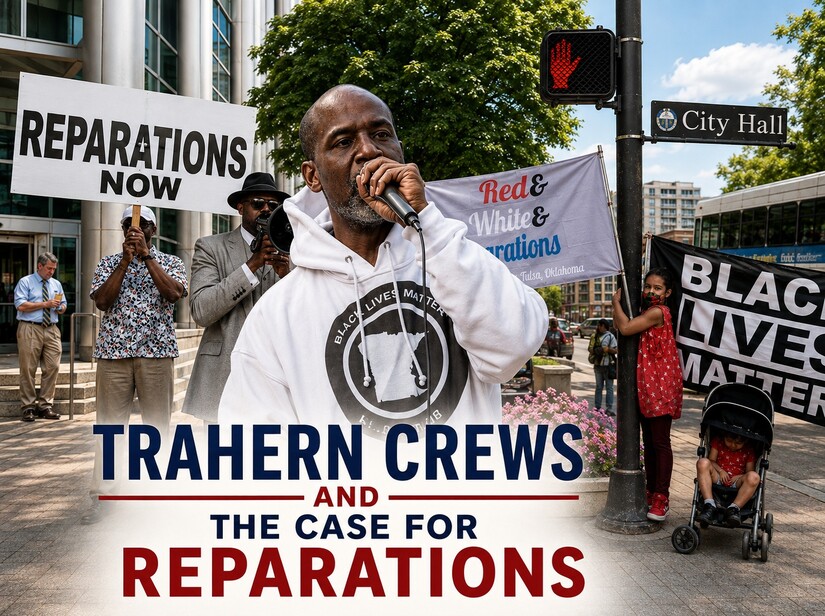
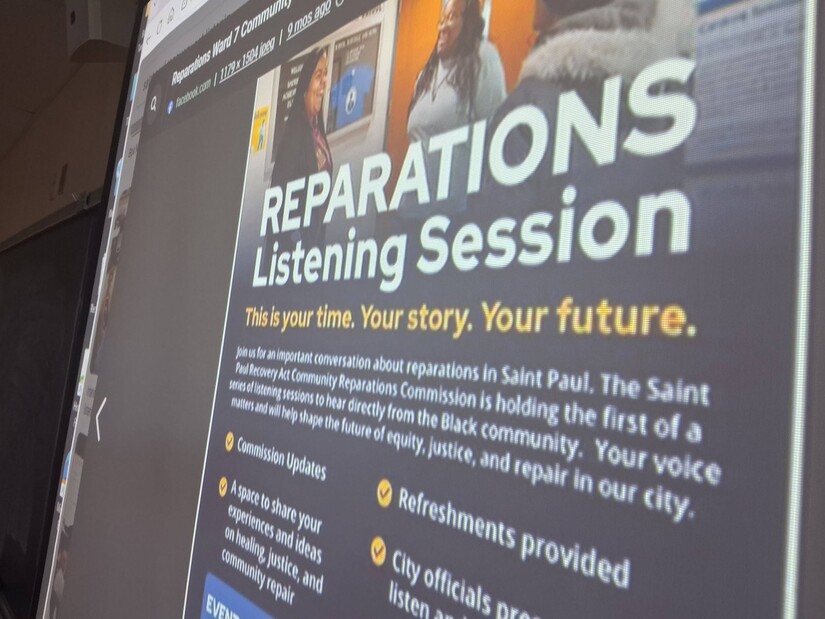
Crews' reparations advocacy eventually moved from grassroots organizing into the formal machinery of Saint Paul government. He co-chaired the Saint Paul Recovery Act Steering Committee and later served as a convener of the city's Reparations Legislative Advisory Committee. That work contributed to the establishment of Saint Paul's permanent reparations commission, an advisory body charged with examining policies and budgets related to repairing damage caused by systemic racism and addressing disparities in areas including generational wealth, homeownership, health care, education, employment, pay, and the criminal justice system among American descendants of chattel slavery.
Crews has also advocated for what he calls the Minnesota Migration Act, a state-level reparations framework connected to the history of Black migration to Minnesota and the discriminatory systems Black residents encountered after arriving.
For Crews, reparations are not an appeal for generosity.
"Reparations are not about charity or special treatment," he said.
His argument is based on repair for documented historical injury. If discriminatory systems deprived Black communities of land, housing, capital, and opportunities to build wealth, Crews believes government has an obligation to examine both the continuing consequences of those systems and appropriate forms of restitution.
This is also where his distinction between moments and movements becomes especially important. A demonstration can force reparations into public discussion, but creating an institution capable of studying policy, recommending remedies, and remaining inside government after public attention moves elsewhere represents a different form of political work. For Crews, the movement becomes durable when demands are translated into structures capable of continuing the work.
The public image of Trahern Crews has been shaped by demonstrations, political campaigns, speeches, meetings, policy disputes, and media appearances. The person he described during his MinneapoliMedia interview is considerably broader.
Crews is a father, son, brother, fiancé, and uncle. He likes to read and enjoys plants. He finds satisfaction in watching flowers grow and in watching his children grow. He enjoys spending time with people he loves and being near Minnesota's water. Despite decades of public speaking and organizing, he said people might be surprised to discover that he is fundamentally quiet.
These details are important because Black public figures associated with protest are often documented primarily in moments of confrontation. The public sees the march, speech, disagreement, police line, government hearing, or television interview. Less attention is given to the ordinary human life that continues around those events.
Crews' reflections on resilience exposed another dimension of that problem. Resilience is frequently used admiringly to describe Black communities, but Crews questions the conditions that make extraordinary resilience necessary.
"We want to get to the point where Black people don't have to be more resilient," he said.
Crews is not dismissing resilience as a virtue or denying the extraordinary strength Black communities have demonstrated across generations. His concern is with a society that can admire Black endurance without adequately questioning why Black people have repeatedly been required to endure conditions that demand such extraordinary strength.
He wants a future in which Black children can develop resilience as one of many valuable human qualities rather than inherit it primarily as a survival requirement.
That idea helps connect the different areas of Crews' life. His music, political campaigns, agricultural work, mentorship, civil rights organizing, support for grieving families, and reparations advocacy are different forms of engagement, but each is concerned with expanding the ability of Black people and communities to exercise greater control over their lives. His work is not solely about resisting harmful systems. It is also about creating the conditions in which Black communities have greater capacity to own, build, create, teach, grow food, accumulate wealth, raise families, celebrate, and determine their futures without having to devote so much energy to surviving preventable inequities.
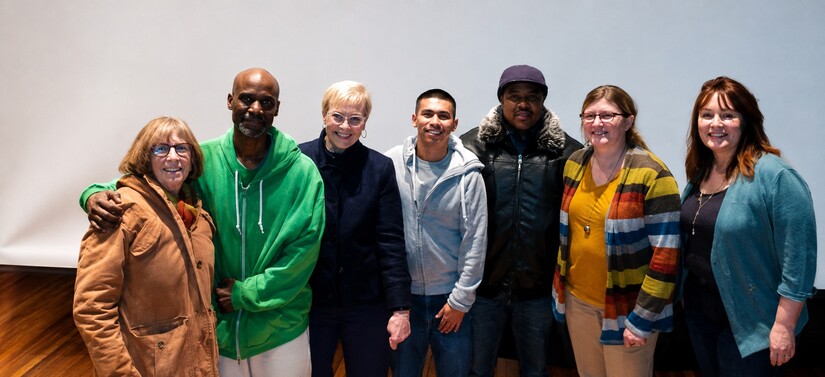
When Crews was asked what advice he would offer the next generation of organizers, entrepreneurs, educators, and community leaders, he emphasized listening.
"The expertise is in the community," Crews said.
That statement summarizes much of his organizing philosophy. Crews cautions emerging leaders against assuming that expertise belongs only to people with formal credentials, institutional titles, academic degrees, or access to government. People living with the consequences of a policy often possess forms of knowledge that cannot be acquired by studying the issue from a distance.
A parent trying to feed children in a neighborhood without adequate access to healthy food understands food insecurity in a way statistics alone cannot convey. A family that has spent years navigating the aftermath of a police killing understands institutional processes differently from someone encountering those systems theoretically. Residents who have watched their neighborhood change over decades possess knowledge about housing, displacement, public safety, schools, and community relationships that may never appear in an official report.
Crews therefore encourages emerging leaders to talk less and listen more. He advises them to speak with people outside their familiar racial, professional, political, and social circles, remain open to information that challenges their assumptions, and resist confusing formal education with complete understanding.
That philosophy returns the story to Crews' childhood. He grew up in an extended family in which different people contributed different forms of knowledge and responsibility. As an adult, he has applied a similar principle to organizing. Lawyers, young people, elders, farmers, artists, grieving relatives, neighborhood residents, political organizers, and public officials may possess different forms of expertise. Effective community work requires recognizing what each person brings and creating structures through which that knowledge can contribute to a larger purpose.
As the interview turned toward archival history, Crews emphasized the importance of documenting people whose daily work sustains movements but whose names may never receive the public attention afforded to the most visible leaders.
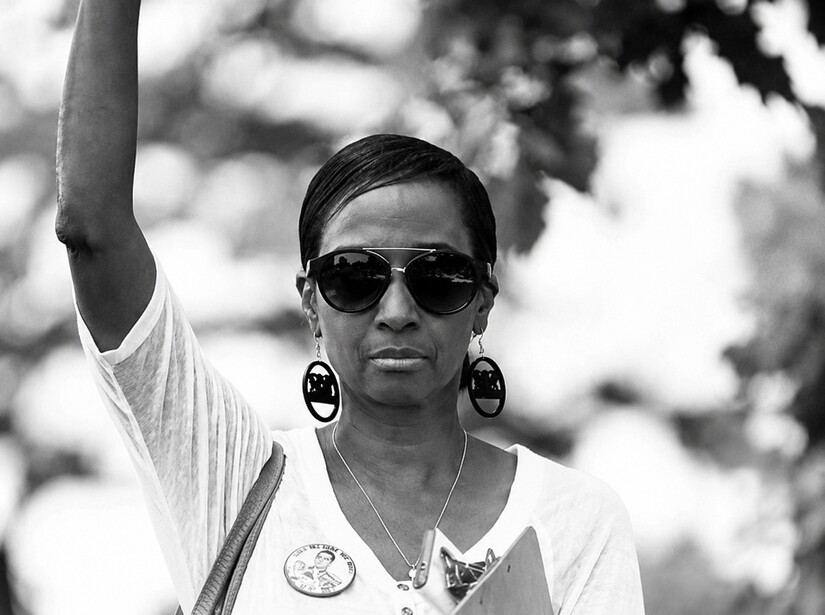
He identified Monique Cullars-Doty, whom he described as a fellow co-founder of Black Lives Matter Minnesota and a longtime advocate for families affected by police violence. Crews spoke particularly about her solidarity work and her willingness to connect struggles involving Black liberation with broader human rights concerns.
He also recommended Jeremie English, his colleague in Saint Paul's reparations work, as another community figure whose story deserves greater public attention. Crews offered to help MinneapoliMedia make those introductions.
His response reinforced a principle that had surfaced repeatedly throughout the interview. Crews does not understand movement work as the product of a single personality. Public movements depend upon networks of people performing work that may never become visible outside their immediate communities. Some research policies. Others organize families, teach children, grow food, attend meetings, knock on doors, provide legal assistance, make telephone calls, preserve history, comfort people in grief, or maintain organizations during periods when public attention has moved elsewhere.
An archival project concerned with Black history therefore cannot limit itself to the people whose names became widely known. Preserving the historical record requires documenting the networks that made movements possible and the people whose contributions occurred away from cameras.
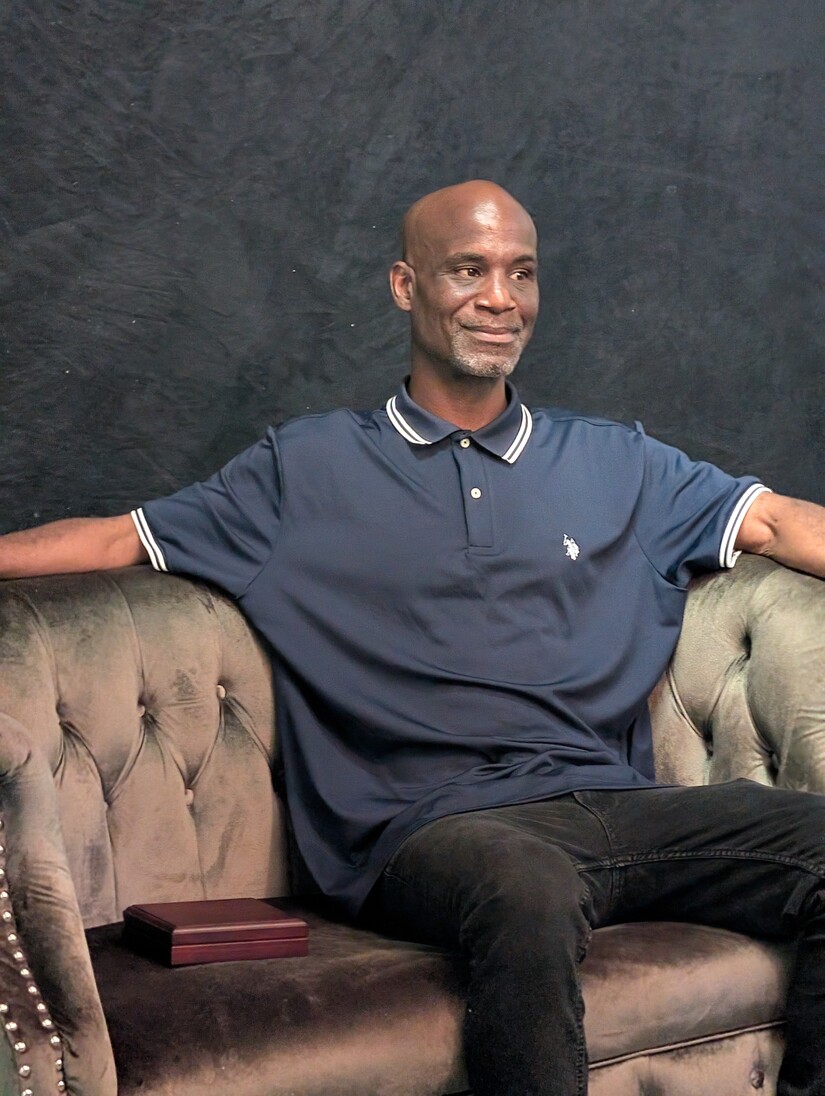
Most people who know Trahern Crews through public life know him first as an activist. The extended conversation with MinneapoliMedia revealed why that description, while accurate, is incomplete.
His organizing philosophy can be traced to a childhood in which he experienced profound loss but was also surrounded by an extended family that taught him the practical meaning of a village. His introduction to organizing came through hip-hop, where he and his collaborators learned how to promote events, communicate messages, coordinate people, and create opportunities without waiting for established institutions to provide them. Those skills followed him into electoral politics, where he learned that campaigns could influence public debate even when candidates did not win office.
His work as an educator and advocate for urban agriculture expanded the same philosophy into questions of food, health, land, and independence. His civil rights organizing placed him alongside families confronting police departments and public institutions during some of the most painful moments of their lives. His reparations advocacy connected those contemporary struggles to a longer Minnesota history involving slavery at Fort Snelling, racial exclusion from housing, the destruction of Black neighborhoods, and barriers to wealth accumulation.
The connections among these experiences become clearer when considered through Crews' concept of collective uplift. He believes individuals should acquire knowledge, develop skills, build successful lives, and become increasingly independent, but he also believes those achievements carry a responsibility to strengthen the communities from which people emerge. That philosophy explains why music, agriculture, education, political campaigns, police accountability, and reparations can coexist within the same body of work. Each represents a different way of increasing a community's capacity to act on its own behalf.
Crews' reflections on resilience add an important dimension to that philosophy. He respects the strength Black communities have demonstrated, but he does not want Black survival to remain dependent upon extraordinary endurance. His hope is for conditions in which Black children inherit opportunity alongside strength, and in which their lives can be measured by what they create and experience rather than by how much adversity they can withstand.
His advice to future leaders follows naturally from that belief. Listen to communities before attempting to lead them. Respect knowledge that exists outside institutions. Talk to people whose experiences differ from your own. Remain willing to learn. Recognize that movements depend upon many people rather than a single public figure.
This is ultimately why the distinction Crews makes between moments and movements is so important to understanding his life. Moments draw attention to injustice, but movements require people to remain after attention disappears. They require organizations, relationships, knowledge, political strategy, economic capacity, cultural memory, and institutions capable of carrying work from one generation into the next.
Most people know Trahern Crews the activist. The MinneapoliMedia conversation provided an opportunity to meet Trahern Crews the educator, mentor, entrepreneur, music lover, strategist, community builder, father, and human being. Those identities are not competing versions of the same man. Together, they explain how he came to understand civil rights work as something larger than protest.
Crews' story is therefore not only about resistance to systems he believes have harmed Black communities. It is also about construction: building cultural institutions through music, developing political capacity through campaigns, teaching young people to understand history and agriculture, supporting families during crises, creating mechanisms for accountability, and moving reparations from public argument into the formal work of municipal government.
For future readers trying to understand this period in Minnesota's civil rights history, that broader record matters. Black Minnesotans were not simply populations affected by the policies, institutions, and conflicts of their time. They were participants in determining how those institutions would be challenged and changed. They organized, educated, created businesses and cultural institutions, cultivated land, supported families, developed policy, demanded accountability, preserved history, and built structures intended to outlast the immediate crises that brought their work to public attention.
That is the larger architecture revealed through Trahern Crews' story. Resistance is part of it, but resistance alone does not describe the work. The more complete record is one of Black communities continuing to build the knowledge, institutions, relationships, and economic capacity necessary to participate fully in shaping Minnesota's future.

Local stories matter. Subscribe free to MinneapoliMedia and receive independent news, community reporting and important updates from Minneapolis, the North Metro and communities across Minnesota.
SUBSCRIBE FREE: https://minneapolimedia.town.news/subscribe
MinneapoliMedia | Community. Culture. Civic Life


Overcast, with a high of 91 and low of 60 degrees. Overcast during the morning, clear overnight.






What an awful human being she is. Funny she did not talk about the women of color in her IT Department she put out on the street when she arrived because of the corrupt vendor she enjoys so much. Look at her ratings on rate-my-professors, it tells you everything you need to know about this narcissist.