 62° and Partly Cloudy
Image



At that table, there are no accounting tricks. There is no line item called "right-sizing." There is only one bank account, and when the money runs out, the spending stops.
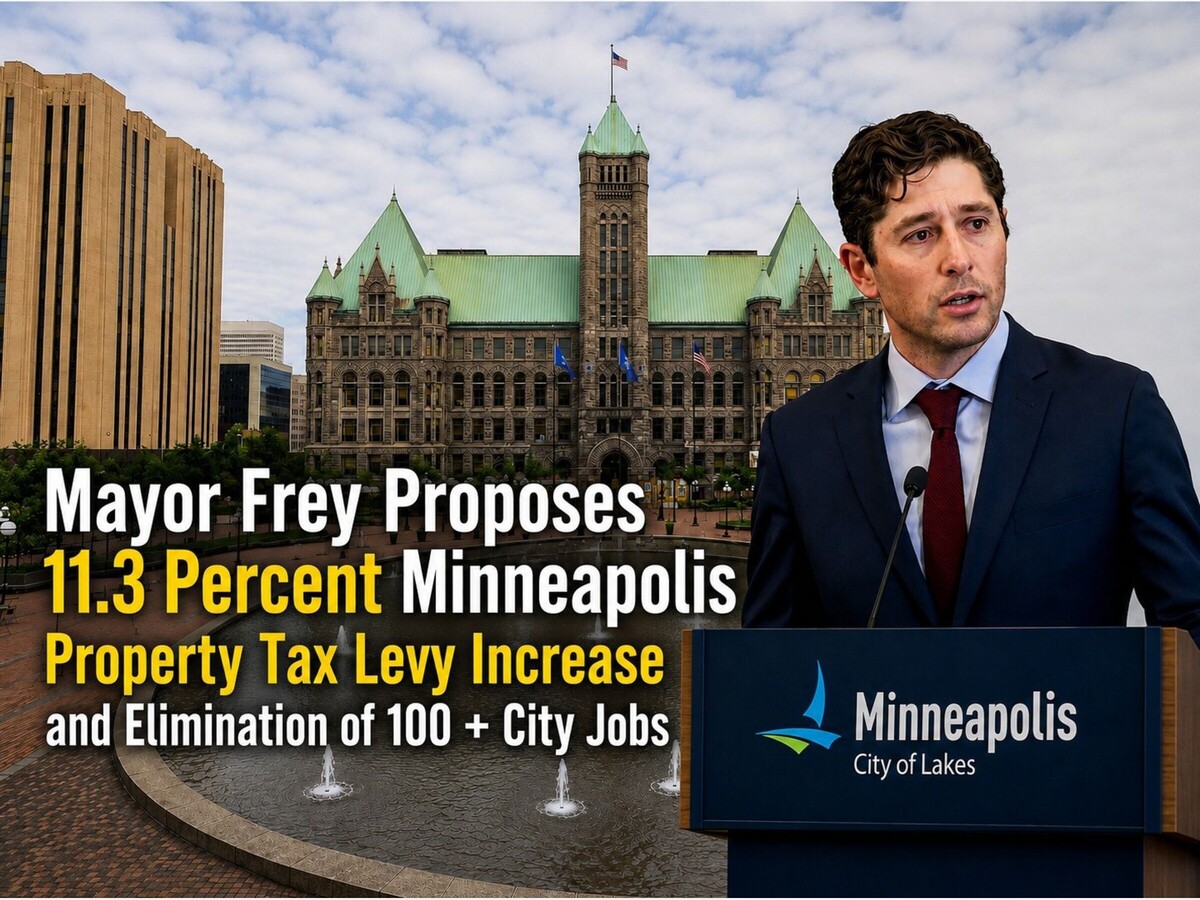
This week, Mayor Jacob Frey presented a $2.3 billion city budget that asks those very families to absorb an 11.3 percent property tax levy increase. At the same time, the administration proposes eliminating roughly 100 city jobs to help close a $60 million budget gap.
To a bureaucrat, 11.3 percent is a percentage on a slide deck. To the person signing the mortgage or rent check, it is a direct withdrawal from their family’s peace of mind.
Budget documents are full of numbers, but civic trust is built on human memory.
Just one year ago, Mayor Frey stood before the city and rejected a projected 13 percent tax increase. He did not merely call it high; he spoke with empathy. He called it "unacceptable and unaffordable to working families." He proudly trimmed the increase to 7.8 percent, emphasizing that Minneapolis had protected its workers and spared its residents.
Those working families have not vanished in twelve months. Their paychecks have not stretched to match the rising cost of childcare, health insurance, and everyday goods.
If 13 percent broke faith with working families in 2025, how does 11.3 percent paired with 100 lost public service jobs honor them in 2026?
When a city asks its residents to pay significantly more while offering them fewer hands to plow the streets, answer emergency calls, or maintain public spaces, it creates a deep, uncomfortable dissonance. It tells the taxpayer that City Hall’s budget takes precedence over theirs.
No one argues that running a major American city is easy or cheap. Minneapolis residents value their city deeply. They willingly contribute because they believe in public safety, safe parks, stable housing, and dignified services for the vulnerable. They know that good public services require real sacrifice.
What hurts the soul of a community is not the cost of good governance, but the realization that basic foresight was missing.
When millions of dollars in predictable police overtime and recruitment costs are omitted from past budgets only to reappear later as an urgent budget emergency, it does not feel like an unavoidable economic crisis. It feels like a promise broken quietly over time.
Taxpayers are being asked to fund the difference, not because their city grew better, but because previous balance sheets were incomplete.
As the Minneapolis City Council receives this budget, its members must look beyond the departmental spreadsheets and see the human lives attached to every decimal point.
True leadership does not ask how much more pain a community can absorb before it breaks. True leadership asks how much discipline the government can show before it demands another sacrifice from its people.
Before approving a double-digit tax increase, City Hall owes its residents a moment of profound transparency and moral accountability:
Great cities do not fall apart in a single dramatic moment. They fade quietly, person by person, family by family, when living there simply becomes too heavy a burden to carry.
When a young family decides they can no longer afford to stay in the neighborhood they love, or when a renter is priced out by property tax pass-throughs, Minneapolis loses a piece of its heart.
City Hall owes Minneapolis more than a balanced set of books. It owes its people the grace of self-restraint. Before asking working families to dig deeper into wallets that are already empty, the leaders of Minneapolis must ask themselves if they have given everything they have to fix the problem from within.
That is not a political question. It is a matter of basic fairness to the people who call this city home.

Local stories matter. Subscribe free to MinneapoliMedia and receive independent news, community reporting and important updates from Minneapolis, the North Metro and communities across Minnesota.
SUBSCRIBE FREE: https://minneapolimedia.town.news/subscribe
MinneapoliMedia | Community. Culture. Civic Life



Overcast, with a high of 91 and low of 60 degrees. Sunny during the morning, overcast in the afternoon, clear overnight.









What an awful human being she is. Funny she did not talk about the women of color in her IT Department she put out on the street when she arrived because of the corrupt vendor she enjoys so much. Look at her ratings on rate-my-professors, it tells you everything you need to know about this narcissist.
So she literally killed one college in New Jersey and now is killing another one. St. Thomas is wiping the floor with what is left of St. Kate's, which is why I transferred there. And yes, I am a student of color.