Image



COON RAPIDS, Minn. - Metro Transit will retire express Route 852 and introduce a newly designed local line, Route 827, on Saturday, Dec. 6, marking a major redesign of transit service across the north-metro region. The change is part of the agency’s NetworkNOW initiative, which aims to deliver more frequent, flexible service in response to shifting travel patterns and community feedback.
Route 827 maintains long-standing north-suburban connections through Anoka, Coon Rapids, and Blaine, while extending service into areas that previously lacked all-day coverage. The line now runs farther south of I-694 along East River Road in Fridley and through parts of northeast Minneapolis via Marshall Street NE.
The new alignment improves access to several major destinations, including:
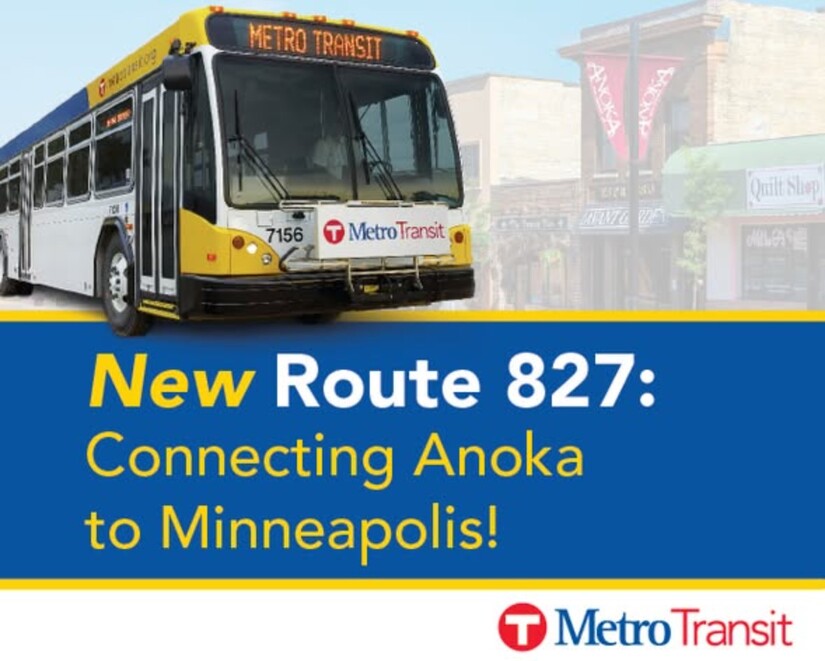
Metro Transit officials say the redesign shifts the corridor from a commuter-express model to an all-day, bidirectional route better suited to students, shift workers, and residents who travel outside traditional peak hours.
Under the new service plan:
Because Route 827 is a local service making more frequent stops, travel times between the Northtown Transit Center and downtown Minneapolis may be 15–20 minutes longer compared with the retiring express Route 852. Riders seeking the fastest downtown service are encouraged to use Route 850, which continues to operate as an express line from Foley Park & Ride.
The change to Route 827 comes as the region prepares for a broader transition. The Northstar Commuter Rail is scheduled to end regular operations the first weekend of January 2026, following years of declining ridership and high operating costs. Beginning Jan. 5, 2026, Metro Transit will replace most rail service with two expanded bus routes: Route 827 and the newly introduced Route 888, which will connect Ramsey, Anoka, Coon Rapids, and downtown Minneapolis.
Regional officials say the move will deliver more frequent service at a lower cost while providing riders with greater flexibility than the rail line’s limited peak-period schedule allowed.
For many residents in Anoka, Coon Rapids, Blaine, Fridley, and northeast Minneapolis, Route 827 brings more reliable all-day service, increased access to schools and healthcare, and improved connections to major transit hubs. For downtown-bound commuters, the trade-off will be slightly longer travel times, unless they shift to remaining express options such as Route 850.
Transit planners note that this redesign reflects permanent changes in how Minnesotans travel — with fewer traditional 9-to-5 commutes and greater need for off-peak, cross-suburban, and local mobility options.
If early ridership meets expectations, Metro Transit officials say the approach used to design Route 827 may serve as a blueprint for future suburban service restructurings across the Twin Cities.



Sunny, with a high of 99 and low of 71 degrees. Patchy rain nearby in the morning, sunny during the afternoon, cloudy overnight.