36° and Overcast
Image



In early February, Children’s Minnesota, the state’s largest pediatric health system, announced it would temporarily pause the prescription of certain gender-affirming medical treatments for patients under 18, a decision that has rapidly escalated into a defining conflict between federal authority, state protections, and the medical autonomy of pediatric providers.
The pause, set to take effect on February 27, 2026, applies to puberty-suppressing medications and pubertal hormone therapies, including estrogen and testosterone. Hospital leaders emphasized that the decision does not reflect a change in clinical judgment about the safety or efficacy of gender-affirming care. Instead, they cited escalating federal actions that threaten the hospital’s financial stability and legal standing.
“This was not a clinical decision,” Children’s Minnesota said in a public statement. “It was a decision driven by unprecedented federal pressure that puts the continued operation of our hospital at risk.”
At the center of the decision is the hospital’s heavy reliance on federal funding streams. Nearly 48 percent of Children’s Minnesota patients are covered by Medicaid, known in Minnesota as Medical Assistance. Hospital officials warned that new federal rules under consideration by the U.S. Department of Health and Human Services and the Centers for Medicare and Medicaid Services could bar any hospital providing gender-affirming care to minors from participating in Medicare or Medicaid programs.
Such a loss, executives said, would be catastrophic, threatening not only specialty services but the viability of the entire pediatric system, including emergency care, neonatal units, and trauma services relied upon statewide.
Children’s Minnesota confirmed that while the medical interventions are being paused, its Gender Health Program will continue to provide mental health care, counseling, care coordination, and family support, as well as referrals and guidance for patients navigating treatment decisions.
The hospital’s announcement follows a series of federal actions targeting pediatric gender-affirming care. In late 2025, Robert F. Kennedy Jr., serving as Secretary of Health and Human Services, signed a formal declaration asserting that certain gender-affirming treatments for minors do not meet “professionally recognized standards of health care.” Kennedy has repeatedly referred to such treatments as “sex-rejecting procedures,” language that has drawn condemnation from medical associations and civil rights groups.
In January 2026, HHS General Counsel Michael Stuart formally notified Children’s Minnesota that it was under federal investigation related to billing practices for hormone medications prescribed through its gender health program. Hospital officials said the investigation intensified concerns that continued care could expose the system to enforcement actions, civil penalties, or funding termination.
These developments follow a second-term executive order issued by Donald Trump, directing federal agencies to end all federal support for gender-affirming care for minors nationwide.
The response from Minnesota lawmakers was swift and forceful.
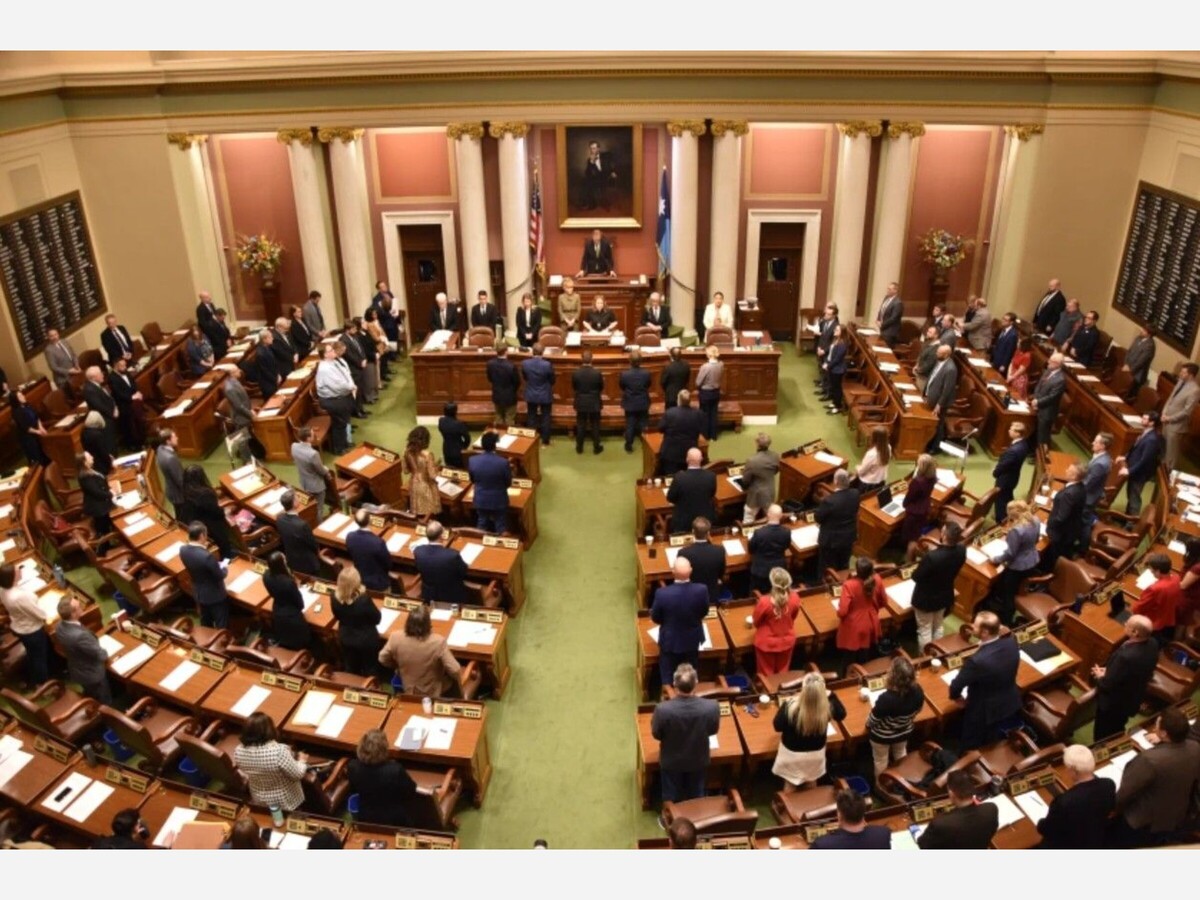
Members of the Minnesota Queer Legislators Caucus, a bicameral group of state lawmakers, issued a joint statement condemning what they described as “political bullying” and “federal coercion” aimed at overriding state law and medical expertise.
“Gender-affirming care remains legal in Minnesota,” the statement read. “The federal government is placing hospitals in an impossible position and forcing families to bear the consequences of political ideology.”
Among the signatories were Leigh Finke, the first openly transgender woman elected to the Minnesota Legislature, and Liish Kozlowski, both of whom emphasized that Minnesota’s protections remain intact under the state’s 2023 “trans refuge” law.
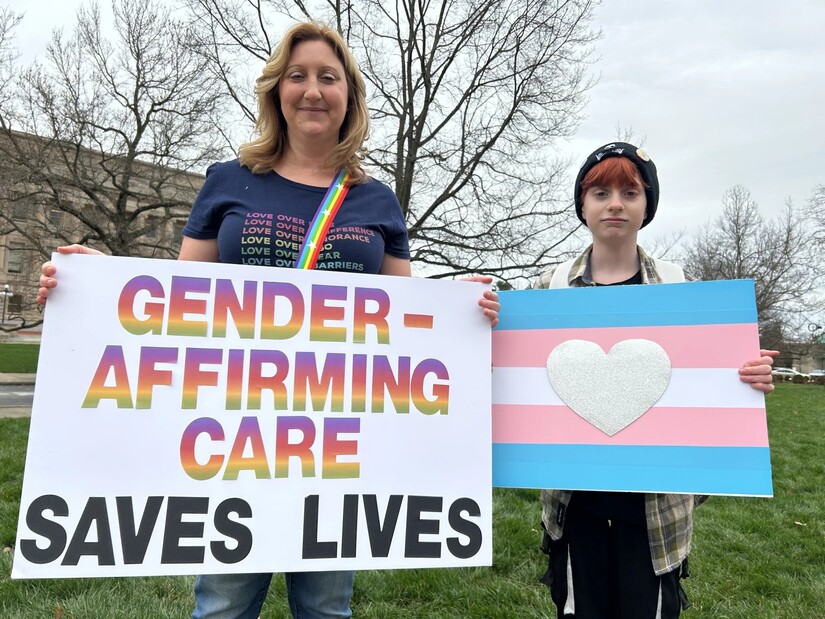
Lawmakers warned that families across the state, particularly in Greater Minnesota and the Northland, now face abrupt disruptions to care that had often required years of coordinated medical oversight. For many, they said, the pause introduces uncertainty, fear, and logistical barriers that disproportionately affect rural patients.
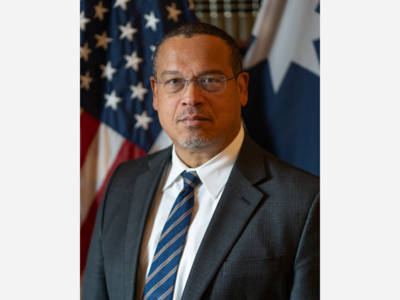
Minnesota Attorney General Keith Ellison is leading a multi-state legal challenge against the new HHS rules, arguing that the federal government is unlawfully conditioning healthcare funding in ways that discriminate against transgender patients and interfere with state-regulated medical practice.
A preliminary court hearing in the case is scheduled for March 2026. Until then, hospitals like Children’s Minnesota remain exposed to regulatory risk even as state law continues to permit gender-affirming care.
“This is not a question of legality in Minnesota,” Ellison said in a recent statement. “It is a question of whether the federal government can strong-arm hospitals into abandoning patients by threatening their ability to exist.”
Republican lawmakers in Minnesota have largely praised the hospital’s decision, framing it as a necessary precaution amid what they characterize as unresolved medical debate. Several GOP legislators cited evolving guidance from some medical organizations to bolster calls for statewide restrictions.
While the American Medical Association has historically affirmed gender-affirming care as medically necessary, political pressure and internal debate have coincided with more cautious positions from other professional bodies. The American Society of Plastic Surgeons, for example, has recently recommended deferring certain irreversible surgical procedures until adulthood.
Minnesota Republicans backing legislation such as the proposed “Zywiec Act” have pointed to these shifts as justification for banning gender-affirming care for minors altogether, despite opposition from major pediatric and mental health associations.
For Children’s Minnesota, the pause represents an attempt to navigate an increasingly hostile federal environment without dismantling a pediatric health system that serves tens of thousands of children each year. For Minnesota lawmakers, it is a warning that state protections alone may be insufficient when federal funding is wielded as leverage.
And for families, the consequences are immediate.
“This is what it looks like when politics collides with medicine,” the Queer Legislators Caucus wrote. “Children are the ones who pay the price.”
As the legal battle unfolds, Minnesota has become a national test case, exposing how deeply federal power, healthcare financing, and state civil rights protections are now entangled, and how fragile access can become when ideology enters the exam room.

Patchy rain nearby, with a high of 43 and low of 31 degrees. Don't forget your umbrella! Overcast during the morning, clear for the afternoon and evening, patchy rain nearby overnight.