69° and Clear
Image
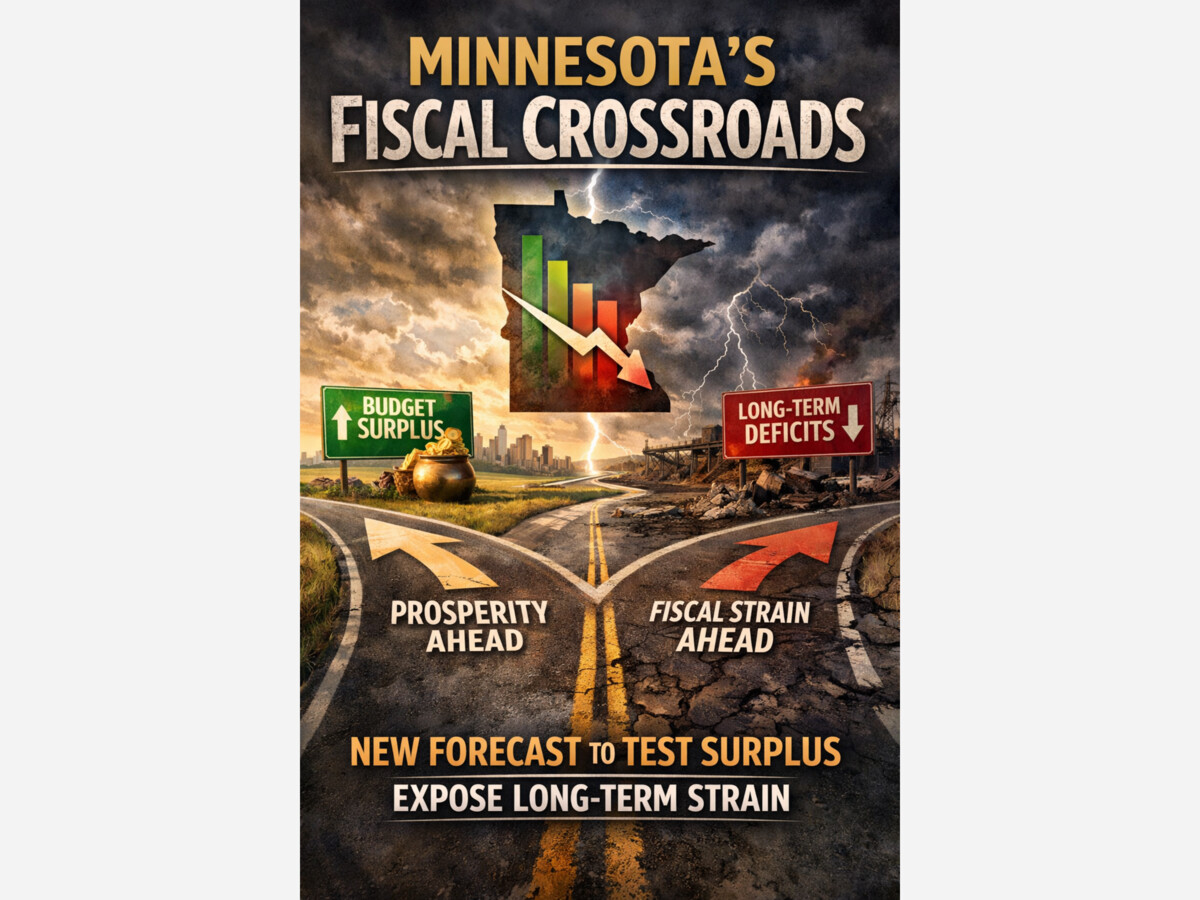



By statute, Minnesota issues formal economic forecasts each November and February. Lawmakers build their budget targets around these projections, which estimate general fund revenues, spending under current law, and the resulting balance for the current biennium and the next planning window. In practice, the February forecast often becomes the session’s fiscal guardrail, determining whether there is room for supplemental spending or whether restraint becomes the dominant theme.
This year’s update arrives at a moment of unusual tension, shaped by slowing economic growth, long-term spending pressures in health care and education, and uncertainty surrounding federal policy.
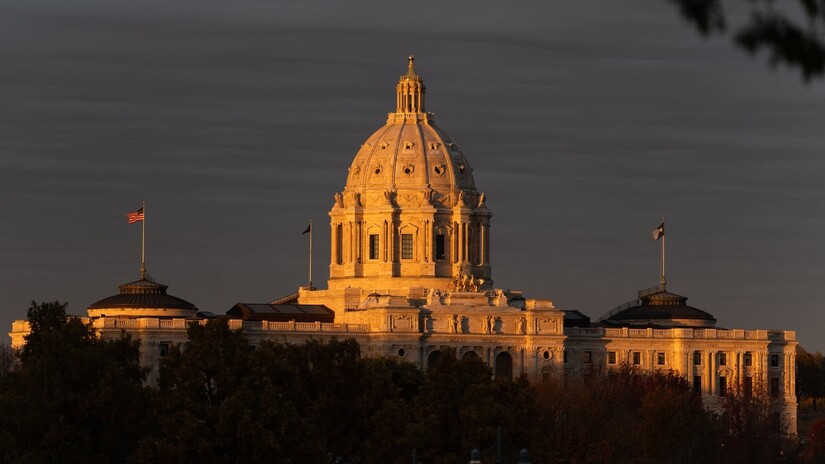
The most recent forecast, released in December 2025, projected a $2.465 billion surplus for the 2026–27 biennium. Stronger-than-expected income tax collections and a solid close to the prior fiscal year helped buoy the near-term outlook.
But beneath that headline number, a different picture emerged. For the 2028–29 biennium, the state projected a $2.96 billion deficit, signaling what budget officials describe as a “structural imbalance” in which ongoing spending commitments are growing faster than projected revenues.
The drivers are familiar:
Planning estimates do not predict a guaranteed deficit four years out. Rather, they measure whether current law spending trajectories align with expected revenue growth. In November, they did not.
Friday’s forecast will answer a critical question: Has that long-range gap narrowed, stabilized, or widened?
Layered onto Minnesota’s internal fiscal pressures is uncertainty in Washington.
Governor Tim Walz and legislative leaders have warned that federal funding reductions could significantly affect the state budget. Minnesota relies heavily on federal dollars to finance health care, food assistance, transportation, emergency management, and education initiatives.
Several areas are drawing scrutiny:
Proposals in Congress to restructure Medicaid financing, including block grants or per-capita caps, could shift a larger share of costs to states. Minnesota’s Medicaid program, known as Medical Assistance, serves hundreds of thousands of residents. Even modest federal reductions would reverberate quickly through the state’s general fund.
Changes to the Supplemental Nutrition Assistance Program would likewise alter state administrative and programmatic costs, particularly during periods of economic strain.
Federal tariff and trade decisions influence inflation. For states, higher inflation translates directly into higher costs for road construction, school infrastructure, employee compensation, and health services.
State officials have also cited new expenditures tied to federal immigration enforcement activities and related public safety responses, adding incremental pressure to the budget framework.
The February forecast will not speculate beyond available data, but its narrative sections often acknowledge known federal policy risks. Lawmakers will study not only the numbers but the tone.
The updated forecast is likely to sharpen philosophical divides at the Capitol.
DFL leaders have signaled a desire to use the current surplus as a buffer against potential federal cuts, arguing that health care access, food security, and education stability must be preserved even if Washington reduces support.
Republican lawmakers counter that the looming 2028–29 deficit reflects overspending during the period following the state’s record $17.6 billion surplus in 2023. They have called for tighter spending controls, structural reforms, and in some cases tax reductions to strengthen long-term stability.
The forecast will provide ammunition for both sides. A shrinking surplus could embolden calls for restraint. A widening long-term deficit could intensify demands for structural adjustments. If revenues outperform expectations, the debate may instead focus on how much cushion is truly prudent in an uncertain federal climate.
Once the forecast is released Friday afternoon, the governor will refine his supplemental budget proposal. Legislative committees face late-March deadlines to advance major fiscal bills, meaning the numbers unveiled this week will immediately shape negotiations.
Minnesota’s constitution requires a balanced budget. Lawmakers cannot simply defer the imbalance. They must either align spending with projected revenues, adjust taxes, or deploy one-time resources to bridge gaps.
Minnesota enters this forecast cycle with enviable short-term strength and unmistakable long-term strain. A $2.465 billion surplus suggests fiscal health today. A projected $2.96 billion deficit in the next biennium warns of imbalance tomorrow.
Friday’s report from Minnesota Management and Budget will not settle the ideological debate over spending and taxation. But it will define its parameters.
At stake is more than a ledger line. The numbers will shape decisions about classrooms and clinics, roads and public safety, food assistance and family budgets. In a year shadowed by federal volatility and economic crosscurrents, Minnesota’s fiscal roadmap may hinge on what those pages reveal.



Sunny, with a high of 94 and low of 66 degrees. Sunny for the morning, clear overnight.