Image
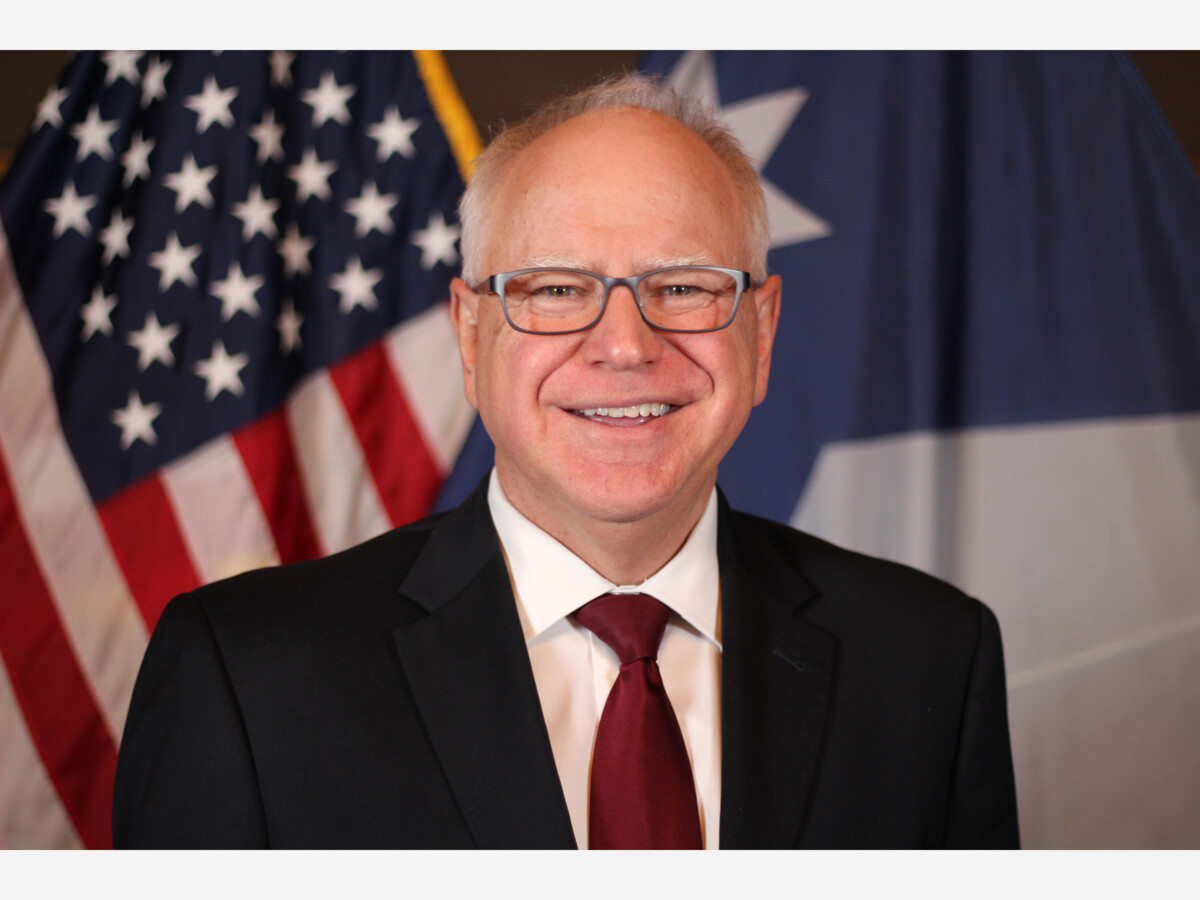



The announcement on February 24, 2026 came six months after a mass shooting at Annunciation Catholic Church and School in Minneapolis that left two children dead and 28 others injured. The attack, which reverberated across the state, has become the emotional and political fulcrum of the governor’s final legislative session. Walz has repeatedly described the tragedy as a turning point, saying Minnesota can no longer rely on incremental change.
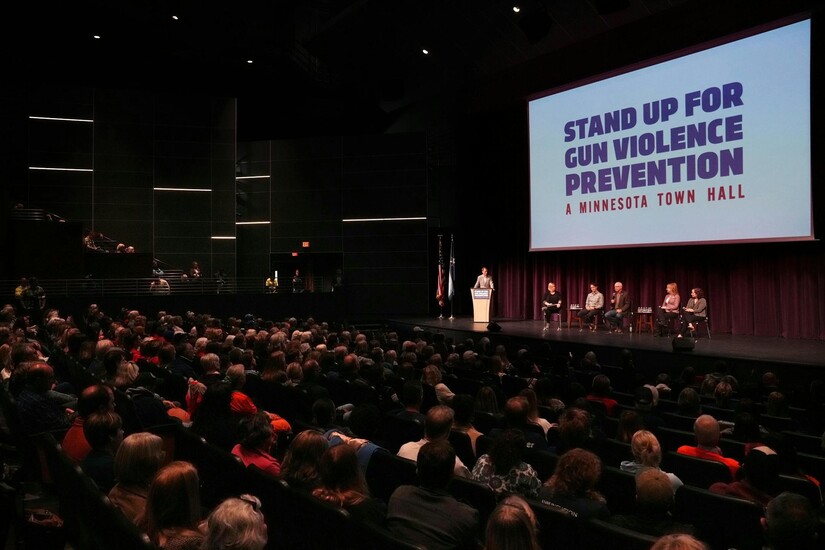
Joined by Democratic lawmakers, survivors, and parents from Annunciation, the governor outlined a comprehensive strategy that would restrict certain firearms and accessories, impose new responsibilities on gun owners, and grant local governments broader authority over firearm regulation.
Within hours, the first bills tied to that package were moving through committee, setting up an immediate and deeply polarized fight at the Capitol.
The governor’s proposal is built around several major pillars, combining bans on specific types of firearms with regulatory and accountability measures.
At the center of the package is a proposed ban on the sale and possession of military-style assault rifles and high-capacity magazines, defined in the governor’s materials as those capable of holding more than 10 rounds. Supporters argue that limiting magazine capacity reduces the lethality of mass shootings and creates opportunities for victims to escape during reloads.
Similar bans have been enacted in states such as California and New York, and at the federal level from 1994 to 2004. Opponents, including Republican lawmakers and gun rights groups, argue such measures violate the Second Amendment and would face immediate constitutional challenges.
The plan would require gun owners to store firearms securely using safes or locking devices and to report lost or stolen firearms within a defined timeframe. Law enforcement leaders have long testified that stolen guns are a significant source of weapons used in crimes, and that delayed reporting can hinder tracing efforts.
Minnesota already has certain negligent storage provisions; the governor’s proposal would expand and clarify those requirements, tying them more directly to criminal penalties.
Another provision targets unserialized firearms, often referred to as “ghost guns,” which can be assembled from parts kits and lack serial numbers that allow tracing. Federal regulators under the Biden administration moved in 2022 to require serialization of certain kits, but states have adopted varying approaches. Walz’s proposal would codify a statewide prohibition on possession and distribution of unserialized firearms.
One of the most novel elements would require gun owners to carry liability insurance, similar to automobile coverage, to account for potential harm caused by negligent use or storage. Versions of this concept have surfaced in other states and municipalities but have faced legal scrutiny. Supporters frame it as a mechanism of shared responsibility; critics call it an unconstitutional financial barrier.
Minnesota currently restricts cities from enacting firearm regulations stricter than state law. Walz’s proposal would repeal that preemption, allowing cities such as Minneapolis or St. Paul to adopt their own firearm ordinances. Business groups and gun rights advocates warn this could create a patchwork of regulations across the state.
Later that day, the House Public Safety Finance and Policy Committee took up the first bills in the package, including measures tied to the assault weapons and high-capacity magazine bans.
The hearing room was filled with survivors and parents from Annunciation. Among them was Lydia Kaiser, an eighth grader who was shot in the head while shielding a younger student during the August attack. Her testimony, delivered in a steady voice, described the sound of gunfire echoing through a classroom and the chaos that followed.
Republican lawmakers on the committee expressed sympathy for victims but argued that the proposed bans would not have prevented the tragedy. They raised constitutional concerns and questioned enforceability, suggesting that lawmakers should focus instead on school security upgrades and expanded mental health services.
The Minnesota Gun Owners Caucus and other advocacy groups testified in opposition, characterizing the bans as government overreach.
When the vote was called, the assault weapons and high-capacity magazine bans failed to advance, deadlocked in a 10 to 10 tie. In an evenly divided House, that tie effectively stalled the measures at their first stop.
The political terrain facing the governor is as narrow as the vote margin that halted the bills.
The Minnesota House is evenly split between Democrats and Republicans. The Minnesota Senate is controlled by Democrats by a single seat. Any measure perceived as controversial must either win bipartisan support or navigate a procedural minefield.
For Walz, the stakes are heightened by timing. This is his final legislative session as governor. Allies say he is prepared to spend the remainder of his political capital on gun violence legislation. Opponents counter that sweeping restrictions lack the bipartisan consensus needed to survive.
While the assault weapons proposal has drawn the most attention, other elements of the package may find a more viable path forward. Safe storage requirements and mandatory reporting of lost or stolen firearms have garnered support in other states, sometimes with bipartisan backing. Efforts to curb ghost guns have also gained traction nationally.
Even so, the package as a whole represents one of the most ambitious gun reform efforts in Minnesota’s recent history.
As the session unfolds, lawmakers will confront not only constitutional arguments and electoral calculations but also the lived memory of a school hallway turned crime scene.
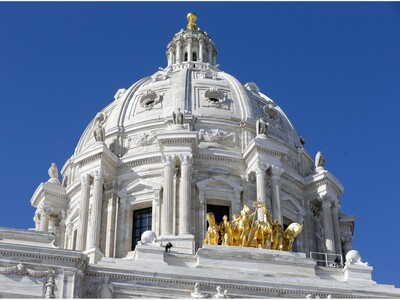
Under the Capitol dome, the debate is procedural and partisan. Outside, for families who have buried children or watched them recover from bullet wounds, it is personal and urgent.
Minnesota now stands at a crossroads, balancing constitutional rights, public safety, and the limits of political will. Whether Walz’s final session yields sweeping reform or incremental change will depend not only on votes counted in committee rooms, but on whether lawmakers can reconcile grief with governance.



Sunny, with a high of 74 and low of 49 degrees. Sunny for the morning, clear in the afternoon and evening, smoky haze overnight.