Image




Tomorrow morning, January 4, 2026, a train will leave Big Lake for downtown Minneapolis one last time.
There will be no ceremony. No ribbon cutting in reverse. No formal reckoning. Just a conductor, a schedule, a handful of riders, and then silence.
When the Northstar Commuter Rail makes that final run, Minnesota will officially become a state that built its first and only dedicated commuter rail line, sustained it for nearly two decades, and then chose to walk away from it. Not because it could not be fixed. Not because alternatives were exhausted. But because the political will to fight for communities beyond the Twin Cities quietly evaporated.
This is not simply the end of a transit service. It is the end of a promise that opportunity in Minnesota should not stop at the metro border.
And it did not happen by accident.
It happened through power, how it is used, how it is withheld, and how easily the lives of people outside the political center can be reshaped by those who never depended on the system they dismantled.
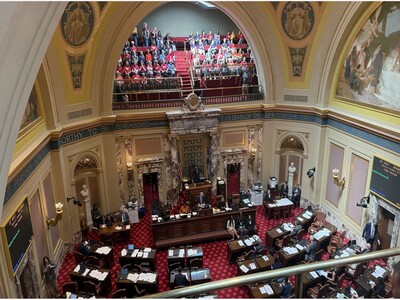
At the center of that story is Jon Koznick, a Republican from Lakeville who, as Chair of the Minnesota House Transportation Finance and Policy Committee, became the most visible and consequential legislative force pushing Minnesota toward the termination of its only commuter rail line.
Northstar was never just a train.
It was time.
It was certainty.
It was access.
For nearly 17 years, Northstar connected Big Lake, Elk River, Ramsey, Anoka, and Fridley to downtown Minneapolis in a way highways never could. It offered something profoundly rare in modern American life, a fast, predictable, weather resilient way to reach the economic heart of the state without owning a car.
For seniors who no longer drove.
For workers priced out of Minneapolis but still employed there.
For students commuting to colleges, apprenticeships, and internships.
For families juggling one vehicle across multiple jobs and schedules.
Northstar was not a luxury enjoyed by the urban core. It was regional infrastructure built for communities that live beyond it.
Tomorrow, that infrastructure disappears.
During the 2025 to 2026 legislative session, Rep. Koznick introduced HF 269, a bill directing the Minnesota Department of Transportation and the Metropolitan Council to seek federal approval to discontinue Northstar service and to develop a formal shutdown plan.
This was not a neutral study.
It was not an exploratory exercise.
It was a legislative off ramp.
Once the chair of the House Transportation Finance and Policy Committee frames a rail line as a failed experiment, the debate shifts. Agencies listen. Budgets tighten. Political cover disappears. What had once been a question of how to improve service for regional riders became a race to wind it down.
HF 269 did not merely reflect the end of Northstar. It accelerated it.
Supporters of the shutdown argue that the Metropolitan Council made the final call. Technically, that is true. Practically, it misses the point.
In Minnesota, transportation policy does not exist in isolation.
The Legislature controls funding.
Committee chairs control agendas.
Bills signal priorities.
When a powerful legislator introduces a bill to end a transit service and repeatedly frames its continuation as fiscally irresponsible, the message to agencies is unmistakable. Do not invest here. Prepare to exit.
That is how public systems serving outer metro and regional communities are dismantled, not with a dramatic vote, but with sustained political framing that makes alternatives seem reckless.
Yes, Northstar’s ridership declined after the pandemic.
Yes, its subsidy per rider increased.
Those facts are real. But they are not the whole truth.
Northstar was never allowed to function like a modern commuter rail system. It was constrained by a restrictive operating agreement that limited midday, evening, and weekend service. It was denied the long promised extension to St. Cloud, where ridership potential was strongest. It received minimal marketing and was never fully integrated into a statewide rail vision.
Northstar did not fail on its own. It was constrained, undercut, and then judged for not thriving.
Every transportation system in Minnesota is subsidized. Highways are subsidized. Parking ramps are subsidized. Road expansions are subsidized. When subsidies serve drivers, they are called investments. When they serve transit riders, especially those living beyond the Twin Cities, they are labeled waste.
That distinction is political, not fiscal.
Officials insist expanded bus service will replace Northstar. It will not.
Buses sit in traffic.
Buses slow in snowstorms.
Buses detour around crashes.
Trains do not.
Northstar offered time certainty, the single most valuable currency for working people who commute long distances. It allowed riders from outer metro and regional communities to plan their lives with confidence. It offered accessibility, space, and dignity buses cannot replicate, no matter how frequent the schedule.
And critically, Northstar provided a direct, uninterrupted connection from communities beyond the Twin Cities to downtown Minneapolis.
That connection is now gone.
Minnesota will still have light rail, such as the Hiawatha Line, but those lines serve the urban core. Northstar served the region beyond it. That difference matters.
The people most affected by Northstar’s shutdown will not appear in legislative press releases.
They are home health aides commuting before dawn from Big Lake and Elk River.
They are warehouse workers finishing late shifts in Fridley and Ramsey.
They are students traveling long distances to campuses and training programs.
They are seniors reaching specialty medical care unavailable closer to home.
They are losing access not because they failed to show up, but because their communities lacked the political clout to be defended.
If Northstar primarily served affluent, high influence neighborhoods at the center of the metro, the conversation would be about expansion, not elimination.
That uncomfortable truth sits at the heart of what this decision means for communities beyond the Twin Cities.
This is not an allegation that Rep. Koznick acted alone. Institutions made choices. Agencies complied. Appointed bodies followed signals.
But leadership matters.
HF 269 mattered.
Committee authority mattered.
Public framing mattered.
Rep. Koznick used his position to move Minnesota away from repairing regional transit and toward abandoning it. Once that shift occurred, the outcome became increasingly inevitable.
That is what power looks like, not a single dramatic act, but a series of decisions that narrow the future for people who live farther from the Capitol and the city core.
Tomorrow, Minnesota wakes up without its only commuter rail line.
Years from now, when traffic worsens, emissions rise, and residents of outer metro and regional communities ask why reaching the Twin Cities became harder, slower, and more expensive, the answer will be painfully clear.
There was a choice.
And Minnesota chose to give up on them.
Northstar’s final run should not pass quietly into history. It should be remembered as the moment the state decided which communities were worth fighting for and which were not.
Killing Northstar is not just the end of a train.
It is a defining statement about what it means to live beyond the Twin Cities in Minnesota today.
History will remember who helped pull the plug.
And communities beyond the Twin Cities will live with the consequences.
Did you rely on Northstar to reach work, school, medical care, or essential services?
MinneapoliMedia wants to hear from you.
The final run of the Northstar Commuter Rail is more than a policy decision. It is a life change for thousands of Minnesotans across Big Lake, Elk River, Ramsey, Anoka, Fridley, and beyond. If this shutdown affects your daily routine, your finances, your job opportunities, or your access to the Twin Cities, your story matters.
We are documenting the real world consequences of Northstar’s termination to ensure that the people most impacted are not erased from the public record.
Share your experience with us:
Email: minneapolimedia@.gmail.com
Subject line: My Northstar Story
With permission, selected responses may be published or featured in future MinneapoliMedia coverage



Sunny, with a high of 50 and low of 34 degrees. Sunny in the morning, partly cloudy for the afternoon, clear in the evening,