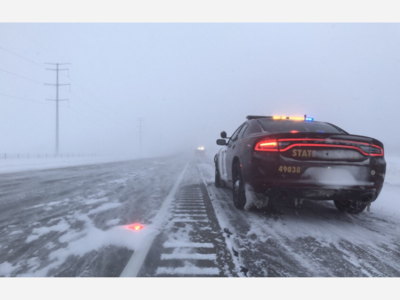
36° and Moderate snow
Image



Public education has always been shaped by community values. Schools are, after all, one of the few civic institutions where nearly every family intersects with government in a deeply personal way. What children learn, how they learn it, and who decides those answers have never been neutral questions.
But when political ideology overtakes educational judgment, when culture war talking points replace pedagogical expertise, and when governance becomes performative rather than purposeful, the consequences are not abstract. They show up in classrooms, in staff lounges, and in the quiet erosion of trust between families and the very institutions meant to serve their children.
That is the moment the Anoka-Hennepin School District finds itself in today.
Over recent years, the Anoka-Hennepin School Board has become a flashpoint for some of the most polarized debates in Minnesota public education. Contentious votes and prolonged disputes over diversity, equity, and inclusion initiatives, curriculum frameworks, textbook selection, and the future of advanced coursework have transformed board meetings into battlegrounds. What should be a forum for stewarding student success has increasingly mirrored the national political divide.
The cost of that transformation is being paid by students and educators alike.
School boards exist to provide oversight, ensure fiscal responsibility, and set broad educational priorities. They are not meant to function as shadow curriculum committees or ideological referees. Yet in Anoka-Hennepin, debates over social studies standards, culturally responsive teaching, and the structure of advanced placement and college-level courses have blurred that line.
Curriculum decisions, once guided primarily by educators trained in pedagogy, developmental psychology, and subject-matter expertise, have become politicized proxies for larger cultural anxieties. Discussions that should center student outcomes and evidence-based practices instead spiral into arguments about identity, national narratives, and perceived ideological threats.
This shift has consequences. Curriculum coherence suffers when instructional frameworks are repeatedly challenged or reversed. Teachers are left navigating uncertainty, unsure whether the materials they are using today will be publicly scrutinized or politically undone tomorrow. Students experience inconsistency, confusion, and disruption in learning environments that thrive on stability.
Education does not improve under siege. It deteriorates.
Teacher morale is not a peripheral issue. It is central to student success.
In districts across the country, educators are leaving the profession at alarming rates, citing burnout, politicization, and a lack of institutional support. Anoka-Hennepin is not immune. When teachers feel their professional judgment is distrusted, publicly questioned, or overridden by ideological pressure, the message is unmistakable: expertise is optional, compliance is expected.
This environment breeds caution rather than creativity. It discourages innovation and honest engagement with complex topics. It replaces professional confidence with fear of controversy. Over time, it drives experienced educators out of classrooms and deters new ones from entering the field.
The irony is profound. Many of the policies advanced in the name of protecting students end up depriving them of the very educators most capable of guiding them through a complex world.
Students do not arrive at school as blank slates, nor should they. They bring histories, cultures, questions, and lived realities that shape how they understand the world. A strong education does not avoid complexity; it equips students to engage with it critically and thoughtfully.
When debates over DEI or social studies standards are framed as zero-sum conflicts, students lose access to that depth. Limiting exposure to diverse perspectives does not create neutrality. It creates absence. And absence leaves students less prepared for college, careers, and citizenship in an increasingly interconnected society.
Advanced coursework controversies are particularly telling. AP and college-level classes are not ideological tools; they are academic opportunities. Restricting or politicizing access to rigorous learning pathways sends a chilling signal about whose excellence is encouraged and whose is suspect.
The result is not equity. It is constraint.
Parents have every right to engage with their children’s education. Transparency, dialogue, and accountability are essential to a healthy school system. But engagement becomes interference when it dismisses professional expertise entirely.
There is a critical difference between community input and curricular micromanagement. Educators are trained to sequence learning, assess developmental appropriateness, and align instruction with state and national standards. School boards are entrusted to ensure those processes are sound, not to replace them with ideological litmus tests.
Democracy in education does not mean every decision is a referendum. It means systems are designed so that expertise and public accountability coexist. When one eclipses the other, governance falters.
An effective board asks: Are students learning? Are teachers supported? Are outcomes improving? A distracted board asks: Whose ideology is winning?
Anoka-Hennepin does not lack capable educators, engaged families, or committed students. What it lacks at this moment is clarity of purpose.
Leadership requires restraint as much as conviction. It requires knowing when to listen and when to defer. It requires recognizing that not every national controversy belongs in a local classroom, and not every political battle belongs on a school board agenda.
Most of all, leadership requires remembering who the system is for.
Public schools are not stages for political theater. They are lifelines for children. They are workplaces for educators. They are trust-based institutions that depend on stability, respect, and good faith.
The path forward is not silence or suppression. It is a re-commitment. To evidence over ideology. To students over slogans. To collaboration over confrontation.
The question before Anoka-Hennepin is not whether disagreement exists. Disagreement is inevitable in a pluralistic society. The question is whether governance will rise above division or be consumed by it.
History will not judge school boards by the loudness of their debates, but by the learning environments they leave behind.
And students, whether we listen or not, will remember the difference.

Light snow, with a high of 37 and low of 30 degrees. Don't forget your umbrella! Light snow in the morning, moderate snow during the afternoon, patchy moderate snow overnight.