38° and Light rain
Image
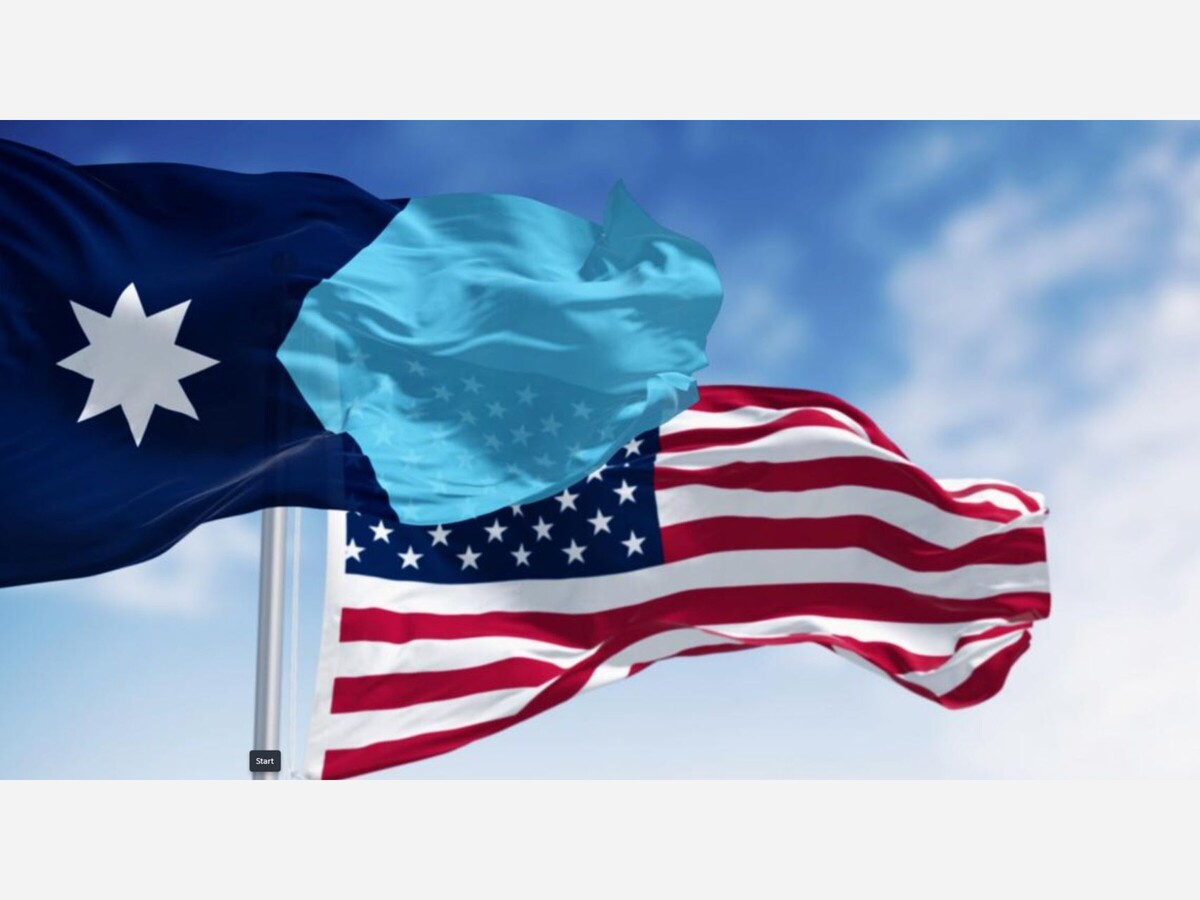



ST. PAUL, Minn. — In the amber light of a Minnesota winter, the State Capitol usually stands as a monument to a particular, stubborn kind of hope. Its self-supporting marble dome was designed for the long view, its walls adorned with pioneers, poets, and legislators who believed governance was a shared civic duty rather than a partisan conquest.
As the 2026 legislative session begins, that dome feels less like a sanctuary of governance and more like a bunker.
Minnesota once believed it governed differently. Not without conflict, not without ambition, but with a shared understanding that politics was a means, not an end. That showing up mattered. That rules were guardrails, not weapons. That compromise, while often unsatisfying, was preferable to paralysis.
That governing ethic had a name. The Minnesota Miracle.
Today, that miracle is not merely fading. It is frozen.
More than half a century ago, Minnesota offered the country a rare political alchemy. In 1971, amid divided government and national turmoil, lawmakers forged a sweeping agreement on school funding and tax reform that equalized opportunity across communities and stabilized local governments. The achievement was so striking that it earned a name and became a model.
In August 1973, Time magazine put Governor Wendell Anderson on its cover, smiling in a plaid shirt, holding a northern pike. The headline was almost defiant in an America battered by Watergate and Vietnam: “Minnesota: A State That Works.” The article marveled at a place where politics was described as “almost unnaturally clean,” where fierce disagreement still produced functional government.
The Miracle was never about unanimity. It was about maturity. About an institutional culture that understood today’s majority could be tomorrow’s minority, and that restraint was not weakness but survival.
That culture did not disappear overnight. It eroded.
As the 2026 session opens, Minnesota’s Capitol is consumed not by debates over schools, roads, housing, or public safety, but by procedural brinkmanship. Court filings over legislative authority. Open discussion of strategic absences. Threats to deny quorum. Power-sharing arrangements driven less by cooperation than by mutual suspicion.
These are not isolated episodes. They are symptoms of a deeper shift.
On January 14, 2025, the House did not open with a prayer or a gavel. It opened with a boycott. A single disputed seat, tied up in court over residency papers, temporarily transformed a 67–67 chamber into a one-vote majority. Rather than negotiate, one caucus vanished, denying quorum and turning the constitutional machinery of the state into a game of procedural hide-and-seek.
When the gavel finally fell weeks later, it did so under a power-sharing agreement that functioned less like a partnership and more like a ceasefire. In the era of the Miracle, a tie-breaking vote was a bridge. In the politics of 2026, it is a hostage.
Procedure has become power. Presence has become leverage. Governance itself has become secondary.
Minnesota did not arrive here by accident. It was overtaken.
Over the past decade, state politics across the country have been nationalized. Local concerns are filtered through national party narratives. Legislators are rewarded less for solving problems than for staging conflict. Compromise is recast as surrender. Cooperation as disloyalty.
Minnesota, long proud of its distance from Washington’s dysfunction, has not escaped the contagion.
For generations, lawmakers prided themselves on being state-minded. They debated the mechanics of Local Government Aid formulas and the needs of sugar beet farmers in the Red River Valley. Today, those conversations are often crowded out by message bills scripted far from Saint Paul, designed less to govern Minnesota than to signal allegiance to national audiences.
When lawmakers return this winter, the loudest debates will not center on the projected multi-billion-dollar structural deficit looming later in the decade. They will echo the same cultural and ideological battles being waged in Florida, Texas, and Washington. Minnesota is no longer governing as a state. It is performing as a proxy.
In that environment, the Minnesota Miracle becomes impractical. It asks leaders to trust in a system organized around distrust, to slow down in a politics that rewards escalation, and to accept limits in a culture that celebrates domination.
Much of what is unfolding remains technically legal. That is precisely what makes it dangerous.
Democratic institutions rarely collapse through outright illegality. They decay when norms are abandoned while rules remain intact. When showing up becomes optional. When participation is conditional. When every tactic is justified as necessary given the stakes.
Each maneuver can be defended in isolation. Together, they corrode legitimacy.
Legitimacy is not manufactured through control of gavels or clever exploitation of quorum rules. It is earned through process, consistency, and restraint. When citizens watch leaders prioritize advantage over responsibility, trust drains away. Cynicism fills the gap.
This is how democracies weaken. Not in a single dramatic rupture, but through a steady normalization of behavior once considered unthinkable.
There is a comforting myth circulating in Saint Paul that a narrowly divided legislature forces cooperation. The reality is harsher.
In a winner-take-all political climate, a tie does not produce moderation. It produces paralysis. Under power-sharing arrangements, co-chaired committees give both sides a pocket veto. No one wants to be the first to blink, because in nationalized politics, compromise is often punished more severely than obstruction.
The result is a legislative cold war. Despite available resources and pressing needs, critical decisions are delayed, not because solutions are absent, but because leverage is more valuable than outcomes.
This is not governance by consensus. It is governance by standoff.
For Minnesotans outside the Capitol, these battles are not abstractions.
When legislatures stall, budgets are delayed. Infrastructure projects languish. Long-term planning becomes impossible for cities, schools, and service providers. The costs ripple outward, borne not by political actors but by communities waiting for certainty.
Perhaps most damaging is the lesson being taught. That democracy is a game to be manipulated. That showing up is negotiable. That responsibility is secondary to winning.
In a moment of declining civic trust, that lesson is corrosive.
The question facing Minnesota this winter is not whether it can return to the past. Political cultures evolve. The Minnesota Miracle cannot be resurrected intact.
The question is whether Minnesota still believes in the principles beneath it.
That institutions matter more than momentary victories. That restraint is a form of leadership. That legitimacy cannot be coerced. That democracy survives only when its participants choose not to exhaust every available weapon.
A 67–67 split is not a mandate for war. It is a mathematical demand for conversation. Voters did not hand either party the keys to the state. They handed them a shared responsibility to keep it running.
To govern like Minnesota once meant accepting that disagreement did not negate obligation. That losing did not justify sabotage. That power carried responsibility.
The northern pike on that Time magazine cover was a symbol of a state that worked. Today, the pike is gone, and the water is freezing over.
Whether Minnesota knows how to break the ice will determine whether the Miracle remains a relic, or whether this winter becomes the moment the state chose governance over brinkmanship once again.
The answer is no longer theoretical.
It is unfolding now.


Light snow, with a high of 37 and low of 30 degrees. Don't forget your umbrella! Light snow in the morning, moderate snow during the afternoon, patchy moderate snow overnight.